

Cable de alta tensión ISO 19642, XLFE 200°C, 1500 V CC
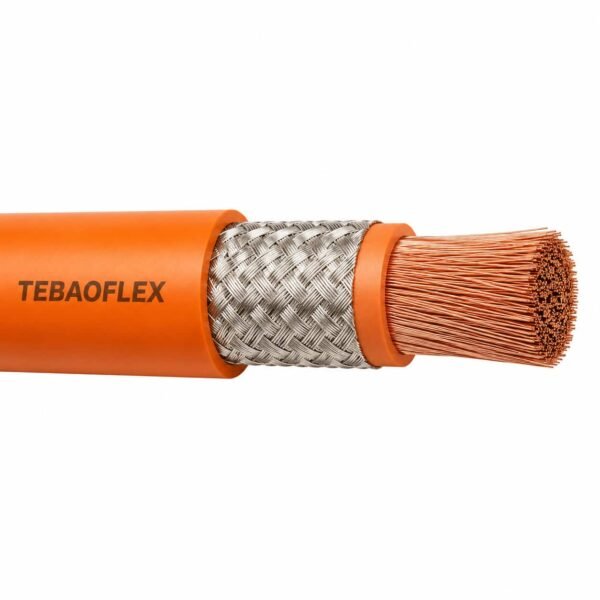
Cable de alta tensión para vehículos eléctricos y almacenamiento de energía conforme a ISO 19642, con aislamiento XLFE y clase térmica F. Versiones con pantalla y sin pantalla.
- Norma: ISO 19642-5 (núcleo único sin pantalla) y ISO 19642-9 (redondo, con cubierta y con pantalla)
- Valores nominales: 1,000 V AC / 1,500 V DC
- Clase de temperatura: F — 200 °C, demostrada mediante 3,000 h de envejecimiento; límite inferior −40 °C
- Aislamiento: fluoroelastómero reticulado por irradiación (XLFE), pared delgada
- Secciones: 3,0 a 150 mm²; hasta 250 mm² bajo pedido
- Pantalla: trenza de cobre estañado, cobertura mínima del 85 % (parte 9)
- Trenzado: ISO flexible o ISO estándar — misma especificación eléctrica, radio de curvatura muy distinto
Envíe la parte ISO, la sección transversal, con o sin pantalla y la curva más cerrada del recorrido.
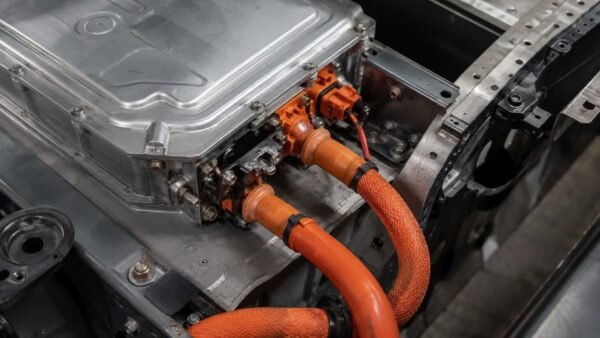
El arnés de alta tensión de un vehículo eléctrico es el único lugar de un coche donde 1,500 V DC y 150 mm² de cobre tienen que convivir dentro de un radio de curvatura medido en centímetros, junto a un paquete de baterías que funciona caliente, durante quince años. ISO 19642 es la norma redactada exactamente para eso, y este es nuestro cable fabricado conforme a ella.
El aislamiento es un fluoroelastómero reticulado por irradiación (XLFE). La reticulación por haz de electrones, en lugar de por vía química, da una pared delgada que no se funde, no fluye bajo presión a 150 °C y resiste el refrigerante, el aceite y la química del entorno de la batería que atacan a la silicona y al EPDM. Eso es lo que hace posible la clase de temperatura F de 200 °C — 3,000 horas de envejecimiento a 200 °C sin grietas ni perforación — con una pared lo bastante fina para que el cable terminado siga cabiendo en el recorrido que ya ha diseñado.
Dos construcciones cubren todo el arnés. ISO 19642-5 es el núcleo único sin pantalla: del paquete de baterías al inversor, del inversor al motor, tramos cortos de conexión a barras colectoras, en cualquier lugar donde la EMC se resuelve por otros medios. ISO 19642-9 es la versión redonda, con cubierta y con pantalla, con una cobertura mínima de la trenza del 85 %, para los tramos en los que el propio arnés tiene que ser silencioso.
Los tamaños van desde 3.0 mm² a 150 mm², con construcciones mayores de hasta 250 mm² bajo pedido, con valores nominales de 1,000 V AC / 1,500 V DC. Están disponibles tanto el trenzado ISO flexible como el ISO estándar, y esa elección vale más de lo que parece — consulte la pestaña Especificaciones.
Este cable se distingue de todo lo demás en nuestra gama de cable de alta temperatura : es una norma automotriz, no un estilo UL AWM, y se especifica por número de parte ISO en lugar de por material. Si el material en sí aún está por decidir, nuestra descripción general sobre cable de alta temperatura compara entre sí los fluoropolímeros, las siliconas y las poliolefinas reticuladas. Envíe el número de parte, la sección transversal, con o sin pantalla, y la curva más cerrada del recorrido.
Dos construcciones comparten un mismo sistema de aislamiento. Lo que cambia entre ellas es todo lo que está fuera del aislamiento, y lo que eso le cuesta es diámetro, peso y radio de curvatura.
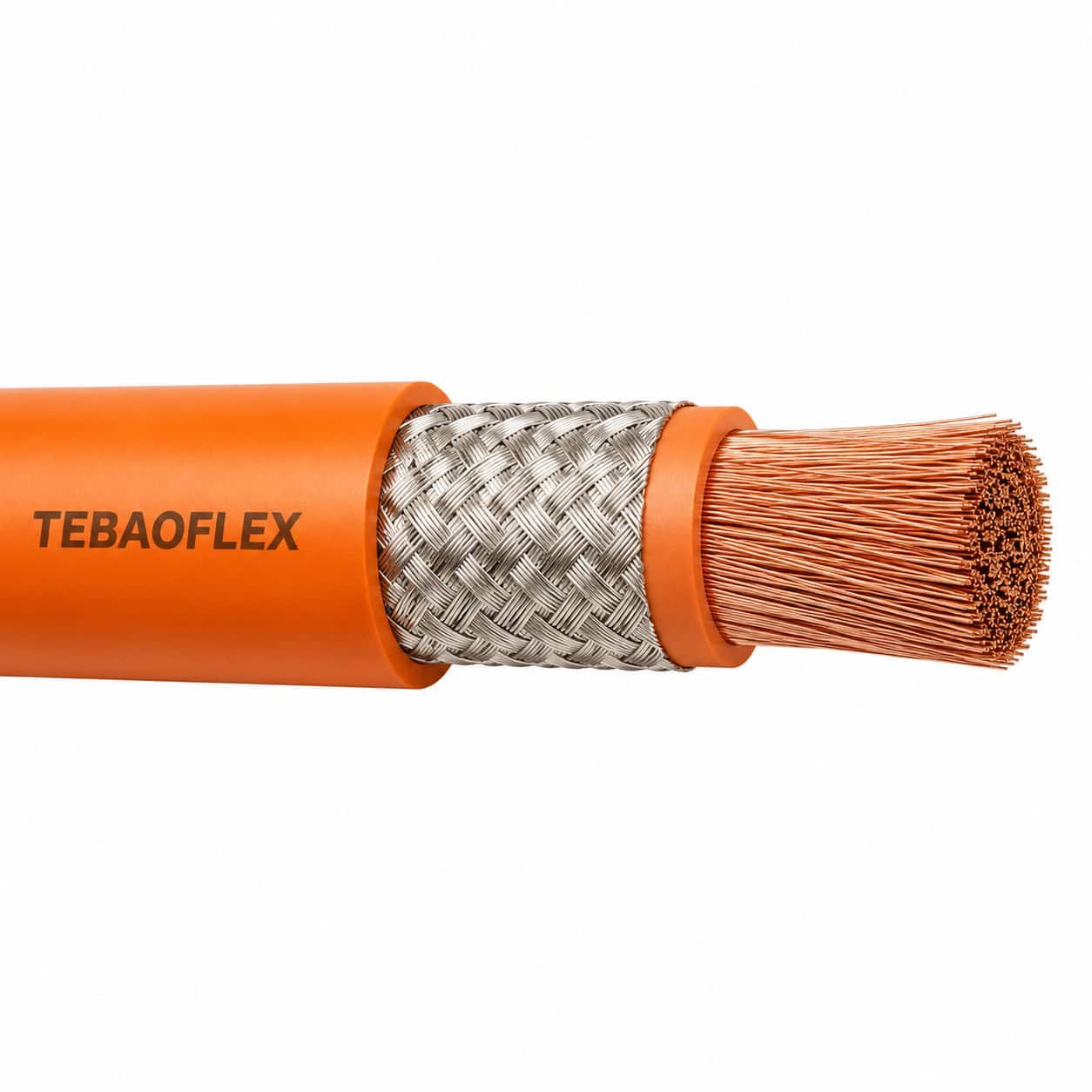
ISO 19642-5 — núcleo único sin pantalla
- Conductor: cobre desnudo, de hilos finos, con trenzado ISO flexible o ISO estándar
- Aislamiento: fluoroelastómero reticulado por irradiación (XLFE), pared delgada. Es todo el cable.
ISO 19642-9 — redondo, con cubierta y con pantalla
- Conductor: como arriba.
- Aislamiento primario: la misma pared de XLFE.
- Pantalla: una trenza de cobre estañado con una cobertura mínima de 85 %.
- Cubierta: una segunda capa XLFE sobre el trenzado, por lo que el exterior del cable tiene el mismo comportamiento químico y de temperatura que el interior.
Por qué la reticulación por irradiación, y no un compuesto reticulado químicamente
Un termoplástico se funde, y un caucho reticulado químicamente se cura en un baño o en un tubo, lo que limita lo delgada y uniforme que puede ser la pared. La reticulación por haz de electrones se produce después de la extrusión, sobre la pared terminada, de modo que la pared puede extruirse primero delgada y precisa y convertirse después en termoestable. El resultado es la combinación que esta aplicación realmente necesita: una pared que no fluye bajo una abrazadera a 150 °C, no se agrieta a −40 °C, resiste el corte por presión donde el arnés cruza un soporte y sigue siendo lo bastante delgada para que un núcleo de 150 mm² termine en unos 21 mm en lugar de 30.
Frente a los dos materiales que suele sustituir: es más resistente que silicona, que es flexible pero se desgarra y se corta con facilidad y necesita una trenza para soportar un recorrido de arnés; y soporta la temperatura mucho mejor que EPDM, que es, como mucho, un material de 150 °C. También es resistente a los rayos UV, lo que importa en los tramos bajo el piso del vehículo y en la infraestructura de carga.
La pantalla es un sándwich, no un añadido de última hora
Añadir una trenza cuesta aproximadamente 3 mm de diámetro y un tercio más de peso a 35 mm², y aumenta el radio de curvatura mínimo en aproximadamente una cuarta parte. Es un costo real en espacio de montaje, así que ponga pantalla en los tramos que la necesitan en lugar de en todo el arnés por defecto. Cuando las carcasas del paquete de baterías, del inversor y del motor ya forman un recinto blindado continuo, el cable parte 5 sin pantalla dentro de ese recinto es la respuesta más ligera, más barata y más fácil de tender.
Trenzado: flexible o estándar
La norma ISO define ambos. Son eléctricamente idénticos para una sección transversal dada — misma resistencia de los conductores y diámetro acabado casi idéntico—, pero el trenzado flexible utiliza muchos más hilos, mucho más finos, y permite un radio de curvatura mucho menor. Los números figuran en la pestaña Especificaciones y son la palanca menos utilizada de este producto.
Es una norma para vehículos de carretera, y el cable se diseñó en torno al único problema que tiene un arnés de alta tensión de un EV y que no tiene ningún otro arnés: cobre de sección muy grande, tensión DC muy alta, un paquete de baterías caliente y un espacio de tendido definido por la carrocería en blanco mucho antes de que nadie eligiera un cable.
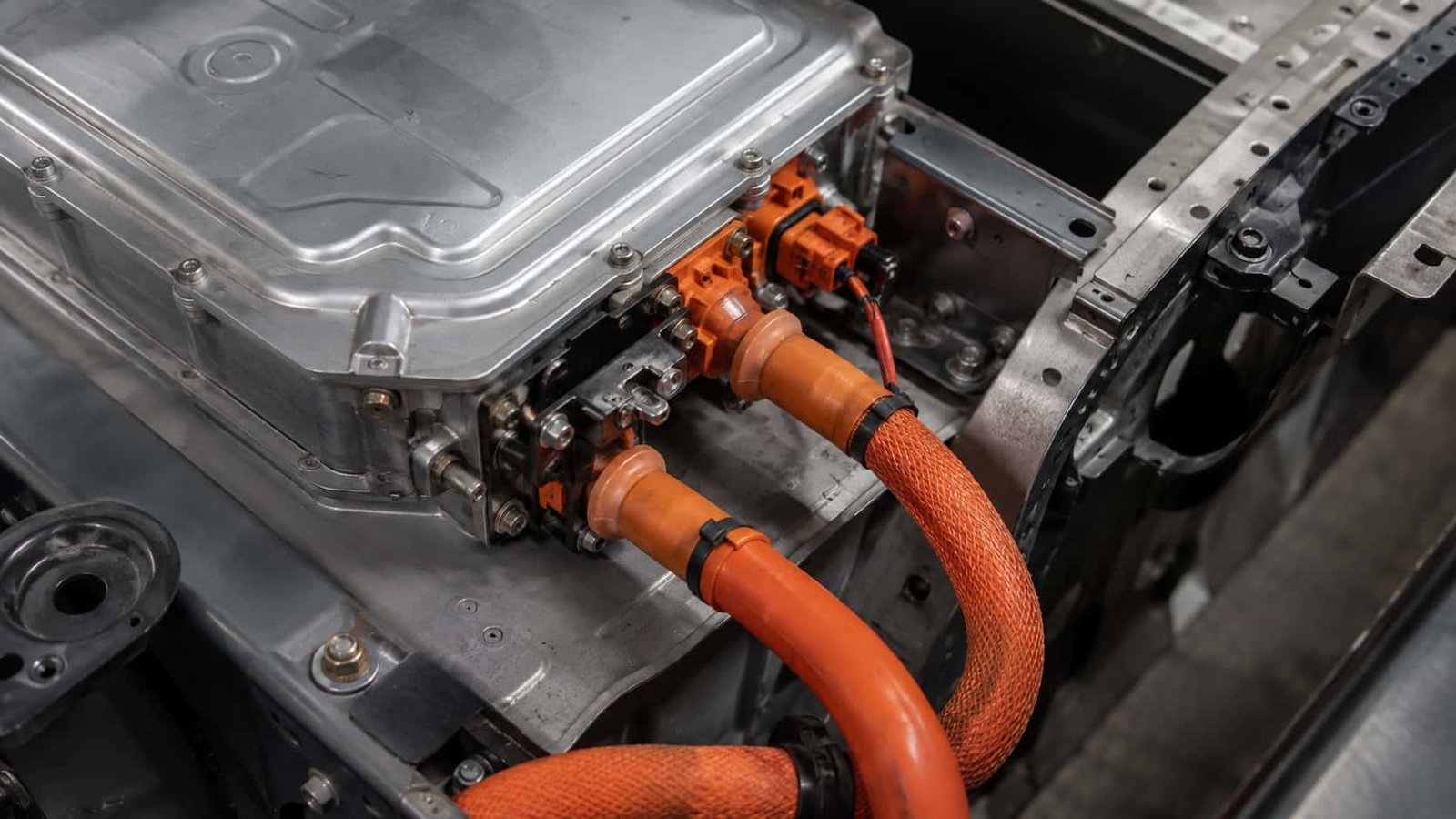
Dónde se utiliza
- Del paquete de baterías al inversor — las secciones más grandes del vehículo, y generalmente las curvas más ajustadas.
- Inversor a motor de tracción — tres fases, alta corriente de rizado y un problema de EMC que decide entre con pantalla o sin pantalla.
- Dentro del paquete de batería — interconexiones de módulos, conexiones cortas de contactores y fusibles, cableado del seccionador de servicio, donde la clase de 200 °C responde al caso de falla, no al ciclo de trabajo.
- De la toma de carga DC al paquete de baterías — el tramo que tiene que conducir toda la corriente de carga con el vehículo detenido y sin flujo de aire.
- Almacenamiento de energía estacionario — conexiones cortas a barras colectoras en racks y contenedores, conexiones del PCS y envolventes BESS que toman prestada la norma automotriz porque es más estricta que la industrial.
- Electrificación comercial y fuera de carretera — autobuses, camiones, máquinas mineras y agrícolas, donde la vibración y la temperatura son peores que en un coche.
- bancos de pruebas y plataformas HIL — donde los cables se vuelven a tender constantemente y el trenzado flexible justifica su costo.
Con pantalla o sin pantalla: la decisión
La regla honesta es que la pantalla corresponde allí donde se interrumpe el recinto blindado. Una salida de inversor que sale de una carcasa blindada y va hasta una carcasa de motor blindada al aire libre necesita un cable con pantalla y una terminación de 360° en ambos extremos. El mismo conductor dentro de un único paquete de baterías sellado, donde el recinto ya es continuo, no lo necesita — y ponerle pantalla cuesta un diámetro y un radio de curvatura que quizá no tenga.
Dos cosas que hay que resolver antes de especificar: cómo se termina la pantalla (un pigtail desperdicia la mayor parte del beneficio en las frecuencias que importan) y si su objetivo de EMC es conducido o radiado. Una pantalla elegida sin respuesta a ninguna de las dos es peso de integración comprado a ciegas.
Donde la especificación generalmente va mal
- El radio de curvatura se comprueba al final. Lo determina el diámetro terminado, y en un cable con pantalla de 95 mm² es de 58 mm como mínimo en estático. Si el soporte permite 40 mm, ningún esfuerzo de tirado lo solucionará — pero cambiar a un trenzado flexible quizá sí.
- 200 °C se lee como la temperatura de funcionamiento. Clase F es una capacidad, ensayada hasta 3,000 h. Se adquiere pensando en el caso de falla, en el margen de reducción de capacidad y en la vida útil de quince años, no porque el arnés funcione a 200 °C.
- Se ha citado la parte ISO equivocada. La parte 5 y la parte 9 son documentos distintos para cables distintos. Citar solo “ISO 19642” no le dice casi nada a un proveedor — consulte la pestaña Normas.
- En la consulta se confunden el aluminio y el cobre. La ISO los asigna a partes separadas. Si alguien propone aluminio para ahorrar peso, se trata de las partes 6 y 10, no de las 5 y 9.
- La terminación se trata como un problema ajeno. Un conductor de 150 mm² con 4,788 hilos necesita un proceso de engaste calificado para él. Indíquenos el terminal y le diremos si el trenzado que ha elegido es adecuado para él.
Lo que este cable no es
- No es un estilo UL AWM. ISO 19642 es una norma automotriz. Si su equipo se está certificando por una vía norteamericana para electrodomésticos o equipos industriales, un estilo AWM como Cable de conexión UL PFA es el documento correcto, no este.
- No es un cable de carga EV. El cable de la caja de pared al coche está cubierto por EN 50620 / IEC 62893 y necesita una construcción completamente diferente.
- No es un sustituto de las barras colectoras. Por encima de 250 mm², la respuesta suele ser una barra colectora laminada, no más cobre dentro de una cubierta.
- No apto para flexión dinámica repetida como cable de cadena de arrastre. El trenzado ISO flexible es para guiado y vibración, no para un servicio festón de un millón de ciclos.
Valores nominales
| Propiedad | Valor |
|---|---|
| Norma | ISO 19642-5 (núcleo único sin pantalla) / ISO 19642-9 (redondo, con cubierta, con pantalla) |
| Tensión nominal | 1,000 V AC / 1,500 V DC |
| Clase de temperatura | Clase F - 200 °C, 3,000 h de envejecimiento prolongado |
| Baja temperatura | −40 °C: ensayo de enrollamiento; impacto en frío a −15 °C |
| Conductor | Cobre desnudo, con trenzado ISO flexible o ISO estándar |
| Aislamiento | Fluoroelastómero reticulado por irradiación (XLFE), pared delgada |
| Pantalla (parte 9) | Trenza de cobre estañado, cobertura mínima de 85 % |
| Cubierta (parte 9) | XLFE sobre el trenzado |
| Secciones transversales | 3.0 – 150 mm² estándar; hasta 250 mm² bajo pedido |
| Otras propiedades | Resistente a los rayos UV; resistente al corte; resistente a los fluidos |
ISO 19642-5 sin pantalla — dimensiones típicas, trenzado ISO flexible
| Tamaño | Cableado | Diámetro exterior terminado (mm) | Curvatura estática mínima (mm) | Peso (kg/km) | Resistencia máxima del conductor (mΩ/m en 20 °C) |
|---|---|---|---|---|---|
| 3.0 mm² | 161 / 0.15 | 3.23 | 10 | 35 | 6.15 |
| 6.0 mm² | 182 / 0.20 | 4.17 | 13 | 64 | 3.14 |
| 10 mm² | 322 / 0.20 | 5.77 | 17 | 112 | 1.82 |
| 16 mm² | 511 / 0.20 | 6.60 | 20 | 165 | 1.16 |
| 25 mm² | 798 / 0.20 | 8.31 | 25 | 260 | 0.743 |
| 35 mm² | 1083 / 0.20 | 9.90 | 30 | 370 | 0.527 |
| 50 mm² | 1615 / 0.20 | 11.61 | 35 | 499 | 0.368 |
| 70 mm² | 2128 / 0.20 | 14.02 | 42 | 720 | 0.259 |
| 95 mm² | 2926 / 0.20 | 16.00 | 48 | 952 | 0.196 |
| 120 mm² * | 3885 / 0.20 | 18.16 | 54 | 1 363 | 0.153 |
| 150 mm² * | 4788 / 0.20 | 21.46 | 64 | 1 754 | 0.120 |
Los tamaños intermedios — 4, 5, 8, 12, 20, 30, 40, 60 y 85 mm²— también son estándar y se omiten aquí sólo para mantener la tabla legible. * 120 y 150 mm² no son tamaños de paredes delgadas definidos en ISO 19642; son una construcción especial fabricada con los mismos materiales y el mismo régimen de ensayos. Preferimos decirlo a que usted lo descubra en una revisión de diseño.
ISO 19642-9 apantallado — coste de la trenza y la cubierta
| Tamaño | Cobertura de pantalla | Diámetro exterior terminado (mm) | Curvatura estática mínima (mm) | Peso (kg/km) |
|---|---|---|---|---|
| 3.0 mm² | 85 % min | 4.64 | 14 | 57 |
| 6.0 mm² | 85 % min | 5.90 | 18 | 95 |
| 10 mm² | 85 % min | 7.80 | 23 | 162 |
| 16 mm² | 85 % min | 9.30 | 28 | 241 |
| 25 mm² | 85 % min | 11.00 | 33 | 361 |
| 35 mm² | 85 % min | 12.90 | 39 | 492 |
| 50 mm² | 85 % min | 14.90 | 45 | 663 |
| 70 mm² | 85 % min | 17.00 | 51 | 902 |
| 95 mm² | 85 % min | 19.50 | 58 | 1 149 |
| 120 mm² * | 85 % min | 21.67 | 65 | 1 606 |
| 150 mm² * | 85 % min | 25.40 | 76 | 1 919 |
La resistencia del conductor no cambia al añadir la pantalla — consúltela en la tabla anterior. A 35 mm², la trenza y la cubierta añaden 3.0 mm de diámetro, 33 % de peso y 9 mm de radio de curvatura. Prevéalo antes de liberar los planos de los soportes, no después.
Clase de trenzado: radio de curvatura libre
El trenzado ISO flexible y el trenzado ISO estándar ofrecen la misma resistencia del conductor y casi el mismo diámetro terminado. Lo que cambia es lo estrechamente que gira el cable:
| Tamaño | Trenzado flexible | Radio mínimo | Trenzado estándar | Radio mínimo | Diferencia |
|---|---|---|---|---|---|
| 16 mm² | 511 / 0.20 | 20 mm | 224 / 0.30 | 34 mm | −41 % |
| 35 mm² | 1083 / 0.20 | 30 mm | 511 / 0.29 | 49 mm | −39 % |
| 70 mm² | 2128 / 0.20 | 42 mm | 1026 / 0.29 | 68 mm | −38 % |
| 150 mm² | 4788 / 0.20 | 64 mm | 2147 / 0.29 | 102 mm | −37 % |
Aproximadamente un 40 % menos de radio de curvatura mínimo, sin ningún cambio en la sección transversal, la resistencia o la clase de tensión. Si un recorrido no cumple por falta de espacio, esto es lo primero que hay que probar — mucho antes de que alguien proponga bajar una sección y aceptar la caída de tensión. La contrapartida es que los hilos más finos cuestan más y necesitan un proceso de engaste calificado para ellos, así que confirme el terminal y el utillaje al mismo tiempo.
¿Cuál parte de ISO 19642 es su cable?
“ISO 19642” por sí sola no es una especificación. Es una familia de diez partes, y el número de parte le indica a un proveedor la clase de tensión, la forma y el metal del conductor en un solo dato.
| Parte | Clase de tensión | Forma | Conductor |
|---|---|---|---|
| -1 | Directrices de vocabulario y diseño, donde se definen las clases de temperatura | ||
| -2 | Métodos de ensayo | ||
| -3 | 30 V AC / 60 V DC | Unipolar | Cobre |
| -4 | 30 V AC / 60 V DC | Unipolar | Aluminio |
| -5 | 600/900 V y 1,000/1,500 V | Unipolar | Cobre |
| -6 | 600/900 V y 1,000/1,500 V | Unipolar | Aluminio |
| -7 | 30 V AC / 60 V DC | Redondo, con cubierta, con o sin pantalla | Cobre |
| -8 | 30 V AC / 60 V DC | Redondo, con cubierta, con o sin pantalla | Aluminio |
| -9 | 600/900 V y 1,000/1,500 V | Redondo, con cubierta, con o sin pantalla | Cobre |
| -10 | 600/900 V y 1,000/1,500 V | Redondo, con cubierta, con o sin pantalla | Aluminio |
Las dos filas en negrita son las que cubre esta página. Tenga en cuenta que -5 y -9 no son simplemente “sin pantalla y con pantalla”: la parte 9 cubre cables redondos con cubierta, con pantalla o sin pantalla; la cubierta, tanto como la trenza, es lo que clasifica un cable en la parte 9. Si el plano indica «ISO 19642 apantallado», el número de parte requerido es -9.
Clase F es una clase de temperatura, no una clase de conductor
Esto causa confusión real, porque dos estándares diferentes usan la misma letra para cosas diferentes.
- En ISO 19642 / ISO 6722, la letra de clase es la clase de temperatura: A 85 °C, B 100, C 125, D 150, E 175, F 200, G 225, H 250 - cada uno probado por 3,000 horas de envejecimiento a largo plazo.
- En IEC 60228, la clase 5 y la clase 6 describen la flexibilidad del conductor y no dicen nada sobre la temperatura.
Por tanto, un cable puede ser de clase ISO F y tener un conductor relativamente rígido, mientras un conductor de clase 6 puede estar dentro de un aislamiento de 90 °C. Al especificarlo, indique ambos datos: la clase térmica ISO y el trenzado requerido. Una consulta que solo diga «clase F flexible» es ambigua; la diferencia puede representar el 40 % del radio de curvatura.
Lo que ISO 19642 realmente exige que el cable resista
La razón por la que este estándar vale la pena citar es que el régimen de calificación es inusualmente específico. En resumen, en la clase 1,000/1,500 V:
| Prueba | Lo que se requiere |
|---|---|
| Tensión soportada | 10 kV durante 5 minutos sin perforación |
| Detección de fallas de aislamiento | Prueba de chispa a 8.0 kV |
| Resistividad volumétrica del aislamiento | Al menos 1012 Ω·mm |
| Envejecimiento de calor a largo plazo | 200 °C durante 3,000 horas, después 3 kV sin perforación — esto es lo que significa la clase F |
| Envejecimiento de calor a corto plazo | 225 °C durante 240 horas, después 3 kV |
| Sobrecarga térmica | 200 °C durante 6 horas, después 5 kV |
| Presión a alta temperatura | Bajo carga a 150 °C, después 5 kV durante 5 minutos — el ensayo que hace fallar un termoplástico |
| Contracción por calor | 2 mm máximo en 150 °C |
| Enrollamiento a baja temperatura | 4 horas a −40 °C, después 3 kV |
| Impacto frío | 16 horas a −15 °C, después 1 kV |
| Ciclos de temperatura y humedad | 40 ciclos de 8 horas, −40 °C a 150 °C, 80–100 % HR y después 3 kV |
| Resistencia al agua caliente | 35 días en agua a 85 °C, resistencia de aislamiento aún por encima de 1012 |
| Resistencia a los productos químicos líquidos | Grupos de fluidos 1 y 2, sin perforación |
| Resistencia al ozono | 65 °C, 192 horas |
| Propagación de la llama | Autoextinguido dentro de 30 segundos, al menos 50 mm sin quemadura |
Lea juntas las filas de presión a alta temperatura y de ciclos de humedad y tendrá en una sola línea el argumento a favor de una pared termoestable: el cable es apretado por una abrazadera mientras está caliente, luego se somete a ciclos con una oscilación de 190 °C a alta humedad, y aun así tiene que soportar 3 kV.
Sobre las aprobaciones de OEM
Los fabricantes de vehículos superponen sus propias especificaciones de material a ISO 19642, y la aprobación de un proveedor frente a una de ellas pertenece a ese proveedor, para esa planta y ese compuesto. No nos atribuimos las aprobaciones de OEM de otra empresa, y tampoco debería hacerlo nadie que le presente una cotización. Si su programa requiere una especificación de un OEM concreto, indíquenos cuál en la consulta para que la vía de calificación pueda acordarse antes del utillaje en lugar de descubrirse en el PPAP.
Qué necesitamos de usted para cotizar
- Parte ISO: -5 o -9, y con o sin pantalla si es parte 9
- Sección transversal, y si la sección es fija o se determina por un objetivo de corriente y de caída de tensión
- Trenzado: ISO flexible o ISO estándar — o indíquenos la curva más cerrada de la ruta y déjenos elegir
- Clase de temperatura requerida, y si la determina el servicio o el caso de falla
- Color (el naranja es el convencional para HV, pero manda el plano), marcación y presentación
- Terminación: número de parte del terminal o del conector, y el proceso de engaste que ya tiene calificado
- Cualquier especificación de material de OEM conforme a la cual se esté desarrollando el programa
Certificación TEBAOFLEX
Jiangsu TEBAOFLEX Special Cable Co., Ltd posee el certificado UL UL-US-2449012-0 y el certificado cUL UL-CA-2437036-0, ambos de fecha 27 de diciembre de 2024 según el informe E542560-20241225, y el certificado VDE 40060055 con fecha del 28 de marzo de 2025. Estas son certificaciones a nivel de empresa y son independientes de la calificación ISO 19642, que es un régimen de ensayos de tipo conforme a la norma. Envíe la parte, la clase y la sección que piensa pedir y le confirmaremos la evidencia de ensayo aplicable antes de que se comprometa.
Documentación suministrada con un pedido
- Plano de construcción con conductor, trenzado, pared, pantalla y dimensiones finales
- Informe de ensayo de tipo según la parte ISO 19642 y la clase térmica acordadas
- Registros de ensayos de rutina del lote de producción, incluidos el ensayo de tensión soportada y el ensayo de chispa
- Certificado de conformidad que hace referencia a la parte ISO y a la clase
- Carrete y lista de embalaje con detalle de marcación y longitud
Para el alcance de una parte específica, consulte al órgano emisor directamente — ISO.
Opciones de cable relacionadas
Compare estas opciones de cable según la combinación de funciones, el movimiento, la carga, la tensión y los requisitos de transmisión.
Cable de conexión PFA 150–250°C, 150–1000 V, estilos UL AWM
Una opción de cable relacionada para una aplicación o perfil de trabajo diferente.
Ver producto
Cable de conexión de silicona 105–250°C, 300–1000 V, estilos UL AWM
Una opción de cable relacionada para una aplicación o perfil de trabajo diferente.
Ver producto
Cable de silicona trenzado con fibra de vidrio 200°C, 300/600 V UL AWM
Una opción de cable relacionada para una aplicación o perfil de trabajo diferente.
Ver productoSolicite una recomendación y una cotización de cables.
Indique las funciones requeridas, la longitud del cable, las exigencias mecánicas, el entorno, el tipo de terminación y la cantidad. Nuestro equipo revisará la aplicación antes de preparar la cotización.
- Incluya el nombre del producto o SKU, así como la longitud y la cantidad de cable requeridas.
- Adjunte una especificación, un dibujo o una hoja de datos cuando esté disponible.