

Cable de conexión de silicona 105–250°C, 300–1000 V, estilos UL AWM
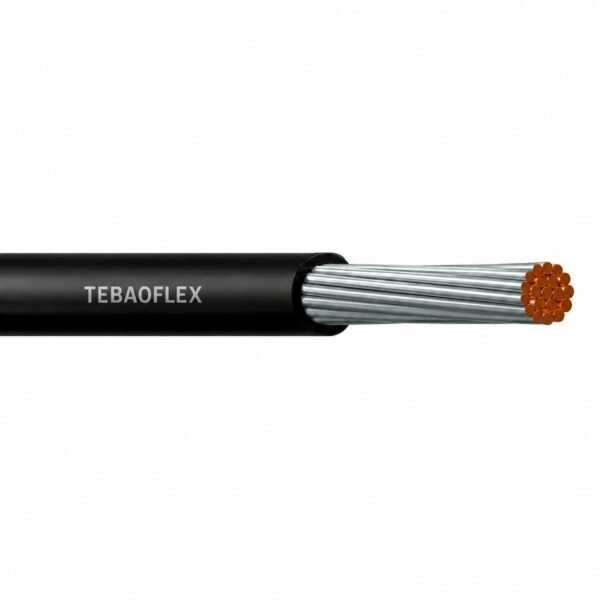
cable de conexión de silicona para todo lo que debe seguir siendo flexible cuando está caliente. TEBAOFLEX fabrica diecisiete estilos UL AWM de silicona con caucho de silicona extruido sobre cobre recocido, clasificados de 105 °C a 250 °C, de 300 V a 1000 V, en tamaños de 30 AWG a 12 AWG y mayores bajo pedido.
- Estilos de 105 °C: UL 3171, 3232, 3243
- Estilos de 150 °C: UL 3099, 3113, 3123, 3132, 3133, 3530
- Estilos de 200 °C: UL 3135, 3139, 3143, 3367, 3512, 3530
- Estilos de 250 °C: UL 3253, 30144, 30145
- Tensión nominal: 300 V, 600 V o 1000 V según el estilo
- Conductor: cobre recocido macizo o trenzado, estañado o desnudo; trenzados flexibles de Clase 5 y Clase 6
- Aislamiento: caucho de silicona extruido, pared nominal de 0,40–0,78 mm según la clase de tensión
- Comportamiento frente al fuego: arde hasta formar ceniza de SiO₂ no conductora en lugar de una pista de carbono; sin halógenos
- Colores: gama estándar de 21 colores más franjas personalizadas bajo pedido
Para una cotización, envíe el estilo UL, la tensión, el tamaño AWG, la clase de trenzado, el color y la longitud por carrete.
Cable de conexión de silicona para hornos, conductores de motores y cableado de aparatos
La silicona es el aislamiento de alta temperatura que se elige cuando el cable aún debe doblarse. Los fluoropolímeros ofrecen mejor resistencia química y paredes más finas, pero se endurecen; un conductor de silicona Clase 6 permanece blando a 200 °C y soporta la curva del instalador incluso en la tercera visita de servicio. También es sin halógenos y arde hasta ceniza de sílice no conductora en lugar de una pista de carbono. TEBAOFLEX fabrica diecisiete estilos UL AWM de 105 °C a 250 °C y de 300 V a 1000 V.
La gama se organiza por dos factores: la pared sigue la tensión, aproximadamente 0.40 mm para 300 V y 0.76–0.78 mm para 600 V; la temperatura sigue el compuesto, no la pared. Por eso UL 3133 a 150 °C y UL 3135 a 200 °C son ambos de 600 V y difieren menos de 0.1 mm en diámetro. Elija primero la clase de temperatura, después la tensión y luego la clase de trenzado.
- Adecuado para: cables de motores y generadores, hornos y secaderos industriales, luminarias e iluminación, aparatos domésticos y comerciales, calentadores, conexiones de transformadores y bobinas, cableado de paneles.
- Confirmar antes de realizar el pedido: estilo UL, tensión, tamaño AWG, clase de trenzado, color y longitud de bobina.
- Elija otra construcción cuando: cuando el cable roza el acero — añada una trenza de fibra de vidrio — o cuando la exposición química o una pared fina importan más que la flexibilidad, siendo PTFE, PFA o FEP la solución.
¿Compara primero los aislamientos? La matriz de selección de conductores para alta temperatura coloca la silicona junto a los fluoropolímeros, y la gama más amplia se encuentra en Cables de alta temperatura.
Para una construcción UL AWM específica, compare UL 3232 · Silicona/Nailon · 105°C · 300 V, UL 3123 · Silicona · 150°C · 600 V, UL 3580 · Silicona · 150°C · 1 kV y UL 3644 · Silicona · 1 kV. Elija la clase de temperatura, la cubierta y el calibre de cada ficha; los cables de silicona no son automáticamente intercambiables.
Cuando un cable de conexión de 105°C dentro de un equipo de refrigeración requiere PVC extruido en lugar de silicona, el cable de PVC UL 1056 ofrece una construcción de un solo conductor de 600 V AC, de 20 AWG a 10 AWG.
Construcción
Un cable de conexión de silicona es unipolar, con conductor de cobre recocido y pared de caucho de silicona extruido. Todo lo que distingue un estilo UL de otro se reduce a tres decisiones: grado del compuesto de silicona, espesor de pared y finura del trenzado.
- Conductor: cobre recocido, macizo o trenzado, estañado o desnudo. El trenzado va desde un solo hilo de 0,255 mm en 30 AWG, pasando por construcciones de 7, 10, 16 y 26 hilos, hasta cordones flexibles de Clase 5 y Clase 6 cuando el conductor debe moverse.
- Aislamiento: goma de silicona extruida, curada por vulcanización de alta temperatura. La pared nominal es sobre 0.40 mm en los estilos 300 V y 0.76–0.78 mm en los estilos 600 V.
- Grado del compuesto: la calificación de temperatura viene de la formulación de silicona, no del espesor. El mismo muro de 0.76 mm aparece en 150 °C y en 200 °C en diferentes compuestos.
- Colores y marcación: a gama estándar 21-color con colores personalizados y rayas a orden, superficie impresa con el estilo, tamaño y calificación.
Por qué silicona y no un fluoropolímero
Tres propiedades mantienen la silicona en producción aunque PTFE y PFA sean superiores sobre el papel. Permanece realmente flexible en caliente, de modo que los cables de motor y los mazos de horno pueden manipularse a temperatura. Es libre de halógenos y, al arder, deja una ceniza de sílice que sigue aislando; por eso un incendio en un mazo no se convierte de inmediato en un fallo de fase a bastidor. También soporta compresión y vibración sin fluencia en frío. Lo que se sacrifica es espesor de pared, resistencia a la abrasión y resistencia química: la silicona se marca con facilidad, por lo que se coloca una trenza de fibra de vidrio en las zonas donde puede rozar.
La clase de trenzado decide la flexibilidad
Dos cables del mismo estilo UL y el mismo AWG pueden comportarse completamente de forma diferente en la mano. En 24 AWG el mismo estilo se construye como hilos 7 de 0.20 mm, 11 de 0.16 mm, 19 de 0.12 mm o 133 de 0.05 mm — área de conductor idéntica, comportamiento de curvas salvajemente diferente y un 0.16 mm diseminado en diámetro acabado. Si el alambre tiene que ser enrutado a mano en un montaje caliente, digamos así en la indagación y citaremos el hilo para que coincida en lugar de la construcción más barata que cumple con el estilo.
El par de 150 °C y 200 °C a 600 V
UL 3133 y UL 3135 son la misma idea a dos grados de temperatura: 600 V, una pared alrededor de 0.76–0.78 mm, cobre estañado, y diámetros que se superponen dentro de un décimo de un milímetro. No puedes distinguirlos con un micrometro. Orden por el marcado, no por la medición.
Aplicaciones
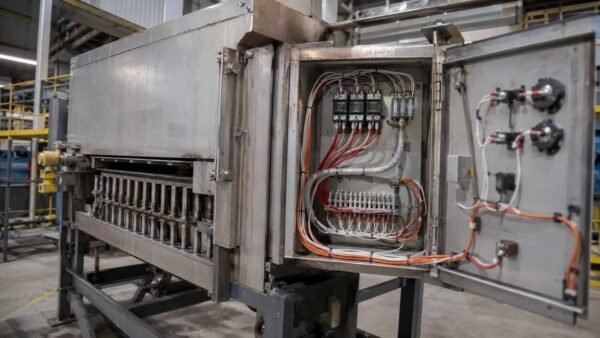
El cable de conexión de silicona se usa donde la temperatura ambiente es alta y el cable aún debe manipularse: dentro de hornos y secaderos, en devanados de motores, alrededor de luminarias y dentro de aparatos. Es cableado interno de equipos, no cable de instalación.
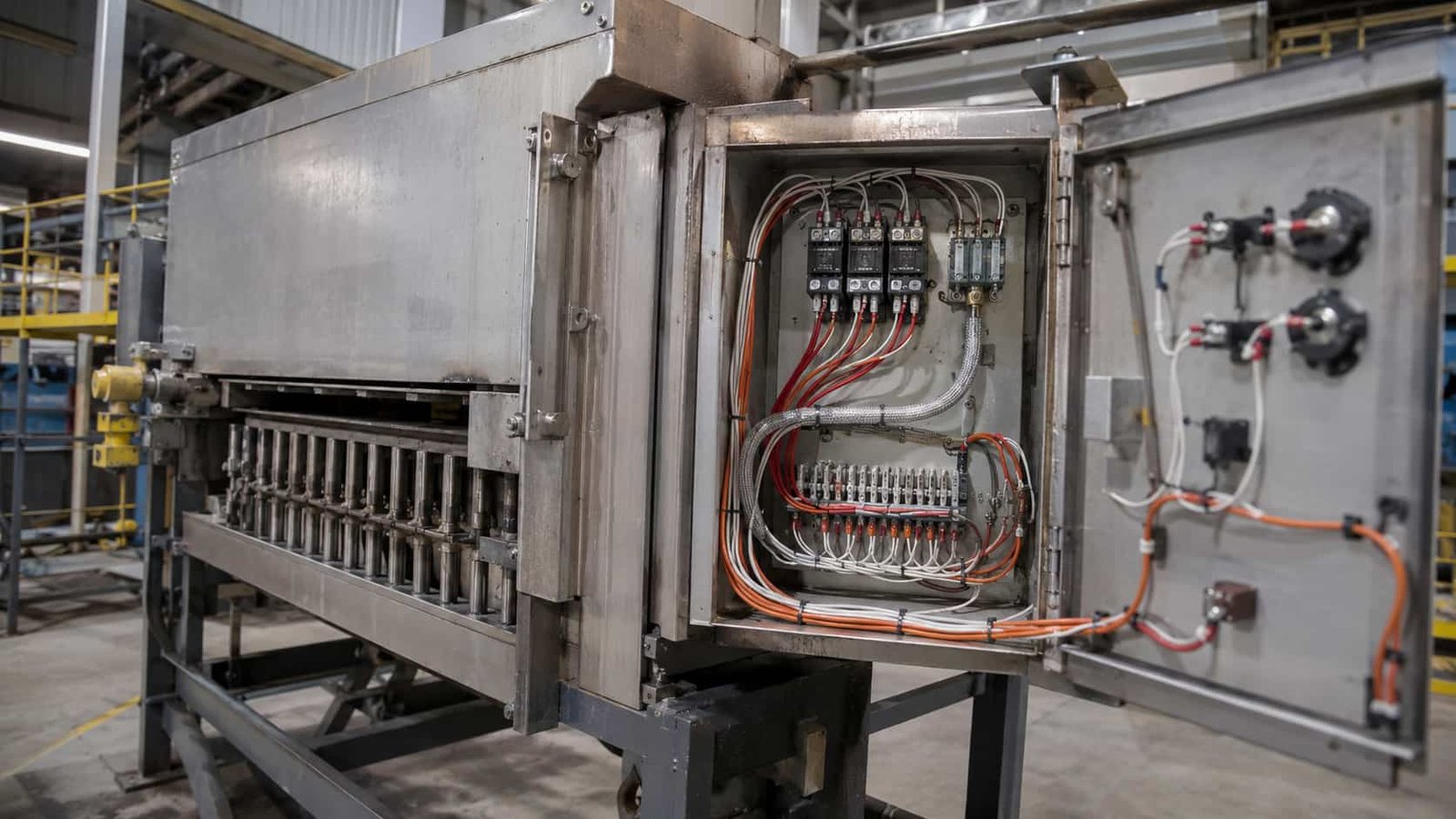
Equipos y servicio para los que está diseñado este conductor
- Cables de motor y generador — calor de viento más reflejo repetido en la salida, la aplicación de silicona más común.
- hornos industriales, secadores y hornos transportadores — el cableado de elementos, los telares del armario de control, las puertas y los sensores.
- Electrodomésticos y comerciales — cocinas, equipos de catering, lavavajillas, esterilizadores.
- Iluminación y luminarias — cableado interno de fijación donde la lámpara corre caliente y el telar se monta a mano.
- Transformadores, bobinas y solenoides - donde la salida debe tolerar la impregnación y el calor.
- Calentadores y conjuntos de calefacción - conexiones de elementos hasta el grado de temperatura del compuesto.
- Cableado de panel y conmutador — cuando se requieren materiales sin halógenos y baja emisión de humos dentro del equipo.
- Sauna, solárium y equipo de calefacción de proceso — alto ambiente con acceso regular al mantenimiento.
Cuándo no conviene usar silicona
- Abrasión contra estructura de acero — la silicona se marca y se corta. Especifique una construcción trenzada con fibra de vidrio sobre el núcleo de silicona o proteja el mazo.
- Productos químicos agresivos, solventes o combustibles — para químicos agresivos, solventes o combustibles suele convenir un fluoropolímero; la silicona puede hincharse.
- Espacio reducido y mazos densos — a 600 V, una pared de silicona suele ser aproximadamente el doble de gruesa que una pared de PTFE. Si el espacio del conector es limitado, evalúe PTFE o PFA.
- Por encima de 250 °C - fuera de la gama de estos compuestos por completo.
- Instalación fija en edificios o enterramiento directo — Material de cableado AWM no lleva tal listado.
Nota sobre la silicona de alta tensión
La silicona también se utiliza como aislamiento en conductores de alta tensión en corriente continua: UL Style 3239 abarca construcciones de aproximadamente 3 kV a 60 kV según el espesor de pared, y UL 10475 amplía este enfoque para calibres de 8 AWG a 2 AWG. Son productos distintos, destinados a equipos de rayos X e imagen, fotomultiplicadores, intensificadores, precipitadores electrostáticos, anuncios e ignición. Esta página cubre conductores internos para aparatos y equipos de 300 V a 1000 V. Para alta tensión, indique por separado la clase en kV.
Referencia cruzada de un conductor existente
En planos mexicanos, este conductor puede aparecer como SRML, SF-2 o simplemente «cable de silicona», acompañado de temperatura y tensión, sin indicar el estilo UL. Para identificarlo antes de cotizar, envíe una foto legible del marcado, diámetro exterior medido, calibre AWG y construcción del conductor. Esta comprobación es especialmente importante entre las versiones de 150 °C y 200 °C a 600 V, que pueden tener dimensiones muy parecidas.
Especificaciones
Dieciocho estilos en cuatro grados de temperatura. Encuentre la temperatura y después la tensión; la pared y el diámetro se derivan de ahí.
Estilos de cable de conexión de silicona de un vistazo
| Grado de temperatura | Estilos UL AWM | Tensión | Pared nominal | Uso típico |
|---|---|---|---|---|
| 105 °C −60 °C a +105 °C | 3171, 3232, 3243 | 300 V / 600 V | 0.40 mm / 0.76 mm | Cableado interno general de aparatos y equipos |
| 150 °C −60 °C a +150 °C | 3099, 3113, 3123, 3132 (300 V), 3133 (600 V), 3530 | 300 V / 600 V | 0.40–0.46 mm / 0.76 mm | Aparatos, luminarias y cableado de paneles |
| 200 °C −60 °C a +200 °C | 3135, 3139, 3143, 3367, 3512, 3530 | 300 V / 600 V | 0,78 mm a 600 V | Conductores de motores, hornos, secaderos y calefactores |
| 250 °C −60 °C a +250 °C | 3253, 30144, 30145 | 300 V – 1000 V | Según la clase de tensión | La parte superior de la gama de silicona |
El estilo 3530 se publica a 150 °C o 200 °C y 600 V, por lo que aparece en ambos grados; especifique la clasificación necesaria.
Dimensiones y datos eléctricos
Diámetro exterior nominal en mm para los tres estilos de volumen, lado a lado. UL 3132 es la construcción de pared fina de 300 V; UL 3133 y UL 3135 son el par de 600 V a 150 °C y 200 °C.
| AWG | Resistencia típica del conductor, Ω/km a 20 °C | UL 3132 150 °C 300 V | UL 3133 150 °C 600 V | UL 3135 200 °C 600 V |
|---|---|---|---|---|
| 30 | 361 | 1.10 | 2.2 | — |
| 28 | 227 | 1.18 | 2.3 | — |
| 26 | 143–150 | 1.28 | 2.4 | 2.05 |
| 24 | 94.2 | 1.41 | 2.5 | 2.15 |
| 22 | 59.4 | 1.70 | 2.7 | 2.32 |
| 20 | 36.7 | 1.85 | 2.9 | 2.51 |
| 18 | 23.2 | 1.97 | 3.1 | 2.74 |
| 16 | 14.6 | 2.30 | 3.4 | 3.06 |
| 14 | 8.96 | — | — | 3.46 |
| 12 | 5.64 | — | — | 3.95 |
La resistencia del conductor depende del trenzado realmente suministrado; trate la columna anterior como el valor de la construcción común en cada tamaño. Los cordones de muchos hilos muy finos presentan valores mayores. La tolerancia del diámetro suele ser de ±0,10 mm. Los tamaños superiores a 12 AWG se fabrican bajo pedido.
Peso del conductor, UL 3133 (150 °C 600 V)
| AWG | Cableado | Ø del conductor, mm | Pared mm | Ø exterior, mm | Peso kg/km |
|---|---|---|---|---|---|
| 30 | 1 / 0.255 | 0.255 | 0.76 | 2.2 | 5 |
| 28 | 1 / 0.321 | 0.321 | 0.76 | 2.3 | 6 |
| 26 | 1 / 0.407 | 0.407 | 0.76 | 2.4 | 7 |
| 24 | 7 / 0.202 | 0.61 | 0.76 | 2.5 | 8 |
| 22 | 7 / 0.255 | 0.77 | 0.76 | 2.7 | 10 |
| 20 | 10 / 0.255 | 0.92 | 0.76 | 2.9 | 12 |
| 18 | 16 / 0.255 | 1.15 | 0.76 | 3.1 | 16 |
| 16 | 26 / 0.255 | 1.47 | 0.76 | 3.4 | 21 |
Otras propiedades
| Conductor | Cobre recocido macizo o trenzado, estañado o desnudo; trenzados flexibles de Clase 5 y Clase 6 disponibles |
|---|---|
| Aislamiento | caucho de silicona extruido, vulcanizado a alta temperatura |
| Temperatura de trabajo | −60 °C a +105, +150, +200 o +250 °C según la clase; algunas construcciones de 150 °C se publican desde −40 °C |
| Comportamiento ante el fuego | Sin halógenos; arde hasta ceniza de SiO₂ no conductora en lugar de una pista de carbono conductora |
| Mecánico | Permanece flexible a la temperatura; buen comportamiento frente a compresión y vibración; baja resistencia a la abrasión — añada una trenza de fibra de vidrio donde el cable pueda rozar |
| Método de prueba | UL 758 |
| Conformidad de sustancias | Conforme a RoHS, sin halógenos |
| Colores | Gama estándar de 21 colores; colores y franjas personalizadas bajo pedido |
| Conductores | Unipolar |
Normas
Normas, métodos de ensayo y referencias de conformidad aplicables al cable de conexión de silicona en estos estilos UL AWM.
| UL AWM | Estilos de material para cableado de aparatos 3171, 3232, 3243, 3099, 3113, 3123, 3132, 3133, 3530, 3135, 3139, 3143, 3367, 3512, 3253, 30144 y 30145 |
|---|---|
| Método de prueba | UL 758 |
| cUL / CSA | cUL AWM I A, FT2 en las construcciones de 300 V |
| Llama | Ensayo de llama horizontal según la aprobación UL; VW-1 disponible en construcciones especificadas |
| Halógeno | Compuesto de silicona sin halógenos |
| Conformidad de sustancias | Conforme a RoHS |
Qué determina un estilo UL AWM y qué no
Un estilo UL AWM define el material de aislamiento, la temperatura y la tensión nominal del material para cableado de aparatos, pero no necesariamente la construcción del conductor. En un cable de silicona, dos opciones del mismo estilo y calibre pueden usar 7 hilos relativamente rígidos o un conductor flexible de clase 6; solo una puede adaptarse al radio y al montaje del equipo. Especifique siempre el cableado o la clase de flexibilidad junto con el estilo UL.
La silicona en un incendio
La razón por la que la silicona sigue utilizándose en el cableado de aparatos y equipos tiene tanto que ver con lo que ocurre al fallar como con el servicio normal. El caucho de silicona no contiene halógenos, por lo que no genera gases ácidos, y al arder se convierte en dióxido de silicio: una ceniza blanca que sigue siendo aislante. Un mazo de silicona que ha pasado por un incendio puede mantener la tensión donde un aislamiento orgánico carbonizado ya habría producido un arco. Es una propiedad del material, no una clasificación, y no sustituye a un cable de integridad de circuito cuando este se especifica.
Certificación TEBAOFLEX
Jiangsu TEBAOFLEX Special Cable Co., Ltd posee el certificado UL UL-US-2449012-0 y el certificado cUL UL-CA-2437036-0, ambos fechados el 27 de diciembre de 2024 conforme al informe E542560-20241225, y el certificado VDE 40060055 fechado el 28 de marzo de 2025. Son certificaciones a nivel de empresa. Envíe el estilo UL, el tamaño y el cableado exactos que desea pedir; confirmaremos el alcance de aprobación aplicable antes de que se comprometa y emitiremos la documentación de ensayo con el envío.
Documentación suministrada con un pedido
- Plano de construcción y datos dimensionales para el estilo, tamaño y trenzado acordados
- Registros de ensayos rutinarios del lote de producción
- Certificado de conformidad que hace referencia a las normas acordadas
- Carrete y lista de empaque con detalles de marcación y color
Para el alcance de una norma específica, consulte directamente al organismo emisor — por ejemplo, la Comisión Electrotécnica Internacional o UL Solutions.
Opciones de cable relacionadas
Compare estas opciones de cable según la combinación de funciones, el movimiento, la carga, la tensión y los requisitos de transmisión.
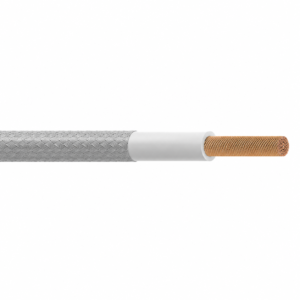
Cable de caucho de silicona de alta temperatura SIAF/GL con trenza de fibra de vidrio
Una opción de cable relacionada para una aplicación o perfil de trabajo diferente.
Ver producto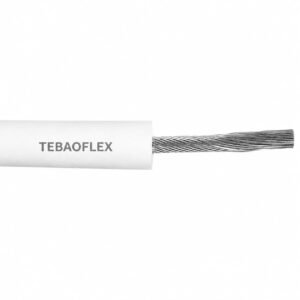
Cable de conexión PTFE hasta 250°C, 150–1000 V, estilos UL AWM
Una opción de cable relacionada para una aplicación o perfil de trabajo diferente.
Ver producto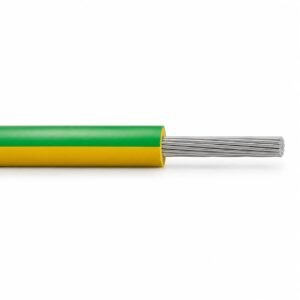
Cable flexible unipolar de silicona SiF 180
Una opción de cable relacionada para una aplicación o perfil de trabajo diferente.
Ver productoSolicite una recomendación y una cotización de cables.
Indique las funciones requeridas, la longitud del cable, las exigencias mecánicas, el entorno, el tipo de terminación y la cantidad. Nuestro equipo revisará la aplicación antes de preparar la cotización.
- Incluya el nombre del producto o SKU, así como la longitud y la cantidad de cable requeridas.
- Adjunte una especificación, un dibujo o una hoja de datos cuando esté disponible.