

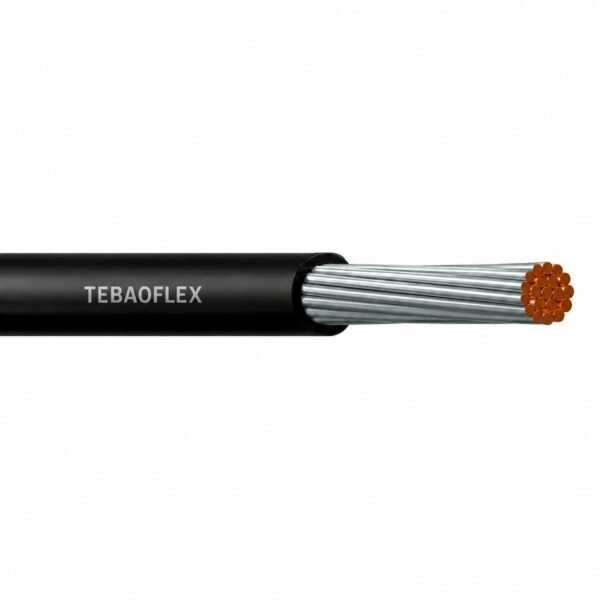
Fio de ligação de silicone 105–250°C, 300–1000 V, estilos UL AWM
fio de ligação de silicone para tudo o que tem de permanecer flexível quando quente. A TEBAOFLEX fabrica dezassete estilos UL AWM de silicone com borracha extrudida sobre cobre recozido, classificados de 105 °C a 250 °C, de 300 V a 1000 V, em tamanhos de 30 AWG a 12 AWG e maiores sob encomenda.
- Estilos de 105 °C: UL 3171, 3232, 3243
- Estilos de 150 °C: UL 3099, 3113, 3123, 3132, 3133, 3530
- Estilos de 200 °C: UL 3135, 3139, 3143, 3367, 3512, 3530
- Estilos de 250 °C: UL 3253, 30144, 30145
- Classificação de tensão: 300 V, 600 V ou 1000 V conforme ao estilo
- Condutor: cobre recozido maciço ou entrançado, estanhado ou nu; entrançamentos flexíveis de Classe 5 e Classe 6
- Isolamento: borracha de silicone extrudida, parede nominal de 0,40–0,78 mm conforme à classe de tensão
- Comportamento ao fogo: arde formando cinza de SiO₂ não condutora, em vez de uma pista de carbono; sem halogéneos
- Cores: gama padrão de 21 cores, com riscas personalizadas sob encomenda
Para uma cotação, envie o estilo UL, a tensão, o tamanho AWG, a classe de entrançamento, a cor e o comprimento por bobina.
Fio de ligação de silicone para fornos, ligações de motores e cablagem de aparelhos
O silicone é o isolamento de alta temperatura escolhido quando o fio ainda tem de dobrar. Os fluoropolímeros oferecem melhor resistência química e paredes mais finas, mas endurecem; um fio de silicone Classe 6 permanece macio a 200 °C e aceita a curvatura dada pelo instalador mesmo na terceira visita. Também é isento de halogéneos e arde até cinza de sílica não condutora, em vez de uma pista de carbono. A TEBAOFLEX fabrica dezassete estilos UL AWM de 105 °C a 250 °C e de 300 V a 1000 V.
A gama organiza-se por dois fatores: a parede segue a tensão, cerca de 0.40 mm para 300 V e 0.76–0.78 mm para 600 V; a temperatura segue o composto, não a parede. Por isso UL 3133 a 150 °C e UL 3135 a 200 °C são ambos de 600 V e diferem menos de 0.1 mm no diâmetro. Escolha primeiro a classe de temperatura, depois a tensão e finalmente a classe de entrançamento.
- Adequado para: ligações de motores e geradores, fornos e secadores industriais, luminárias e iluminação, aparelhos domésticos e comerciais, aquecedores, ligações de transformadores e bobinas, cablagem de painéis.
- Confirme antes de fazer o pedido: estilo UL, tensão, tamanho AWG, classe de entrançamento, cor e comprimento da bobina.
- Escolha outra construção quando: quando o fio roça no aço — acrescente uma trança de fibra de vidro — ou quando a exposição química ou uma parede fina importam mais do que a flexibilidade, sendo PTFE, PFA ou FEP a escolha certa.
Compara primeiro os isolamentos? O matriz de seleção de fios para alta temperatura coloca o silicone ao lado dos fluoropolímeros, e a gama mais ampla encontra-se em Cabos de alta temperatura.
Para uma construção UL AWM específica, compare UL 3232 · Silicone/Nylon · 105°C · 300 V, UL 3123 · Silicone · 150°C · 600 V, UL 3580 · Silicone · 150°C · 1 kV e UL 3644 · Silicone · 1 kV. Escolha a classe de temperatura, a cobertura e a secção em cada ficha; os fios de silicone não são automaticamente intercambiáveis.
Quando um fio de ligação de 105°C no interior de um equipamento de refrigeração exige PVC extrudido em vez de silicone, o fio de PVC UL 1056 oferece uma construção de condutor único de 600 V AC, de 20 AWG a 10 AWG.
Construção
Um fio de ligação de silicone é unipolar, com condutor de cobre recozido e parede de borracha de silicone extrudida. Tudo o que distingue um estilo UL de outro resume-se a três escolhas: grau do composto de silicone, espessura da parede e finura do entrançamento.
- Condutor: cobre recozido, sólido ou encalhado, estanhado ou nu. Os Strandings são executados a partir de um único fio 0.255 mm em 30 AWG através de 7-, 10-, 16- e 26-e construções, e em Classe 5 e Classe 6 cordas flexíveis onde o fio tem que se mover.
- Isolamento: borracha de silicone extrudida, curada por vulcanização de alta temperatura. Parede nominal é sobre 0.40 mm nos estilos 300 V e 0.76–0.78 mm nos estilos 600 V.
- Grau do composto: a classificação de temperatura vem da formulação de silicone, não da espessura. A mesma parede 0.76 mm aparece no 150 °C e no 200 °C em diferentes compostos.
- Cores e marcação: uma gama padrão de 21 cores, com cores personalizadas e listras sob encomenda, com impressão superficial do estilo, tamanho e classificação.
Porque silicone e não um fluoropolímero
Três propriedades mantêm o silicone em produção apesar de PTFE e PFA serem superiores no papel. Mantém-se genuinamente flexível a quente, permitindo manusear cabos de motor e chicotes de forno à temperatura. É isento de halogéneos e, quando arde, deixa cinza de sílica que continua a isolar; por isso, um incêndio num chicote não se transforma de imediato numa falha entre fase e massa. Também suporta compressão e vibração sem deformação permanente a frio. O que se perde é espessura de parede, resistência à abrasão e resistência química: o silicone risca-se facilmente, razão pela qual se aplica uma trança de fibra de vidro onde possa haver contacto.
A classe de entrançamento decide a flexibilidade
Dois fios do mesmo estilo UL e o mesmo AWG podem se comportar completamente diferente na mão. Na 24 AWG, o mesmo estilo é construído como fios 7 de 0.20 mm, 11 de 0.16 mm, 19 de 0.12 mm ou 133 de 0.05 mm — área de condutor idêntica, comportamento de curva muito diferente e um 0.16 mm espalhado em diâmetro acabado. Se o fio tem de ser encaminhado à mão para uma montagem quente, diga-o no inquérito e vamos citar o encadernação para combinar em vez da construção mais barata que atende ao estilo.
O par de 150 °C e 200 °C a 600 V
UL 3133 e UL 3135 são a mesma idéia em dois graus de temperatura: 600 V, uma parede em torno de 0.76–0.78 mm, cobre estanhado, e diâmetros que se sobrepõem dentro de um décimo de um milímetro. Não se pode distingui-los com um micrómetro. Ordem pela marcação, não pela medição.
Aplicações
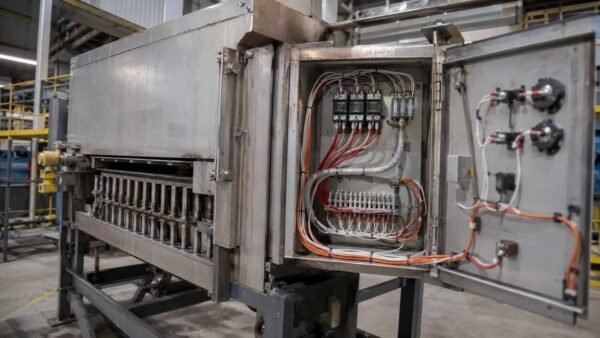
O fio de ligação de silicone é usado onde a temperatura ambiente é elevada e o fio ainda tem de ser manuseado: dentro de fornos e secadores, em enrolamentos de motores, junto de luminárias e em aparelhos. É cablagem interna de equipamento, não cabo de instalação.
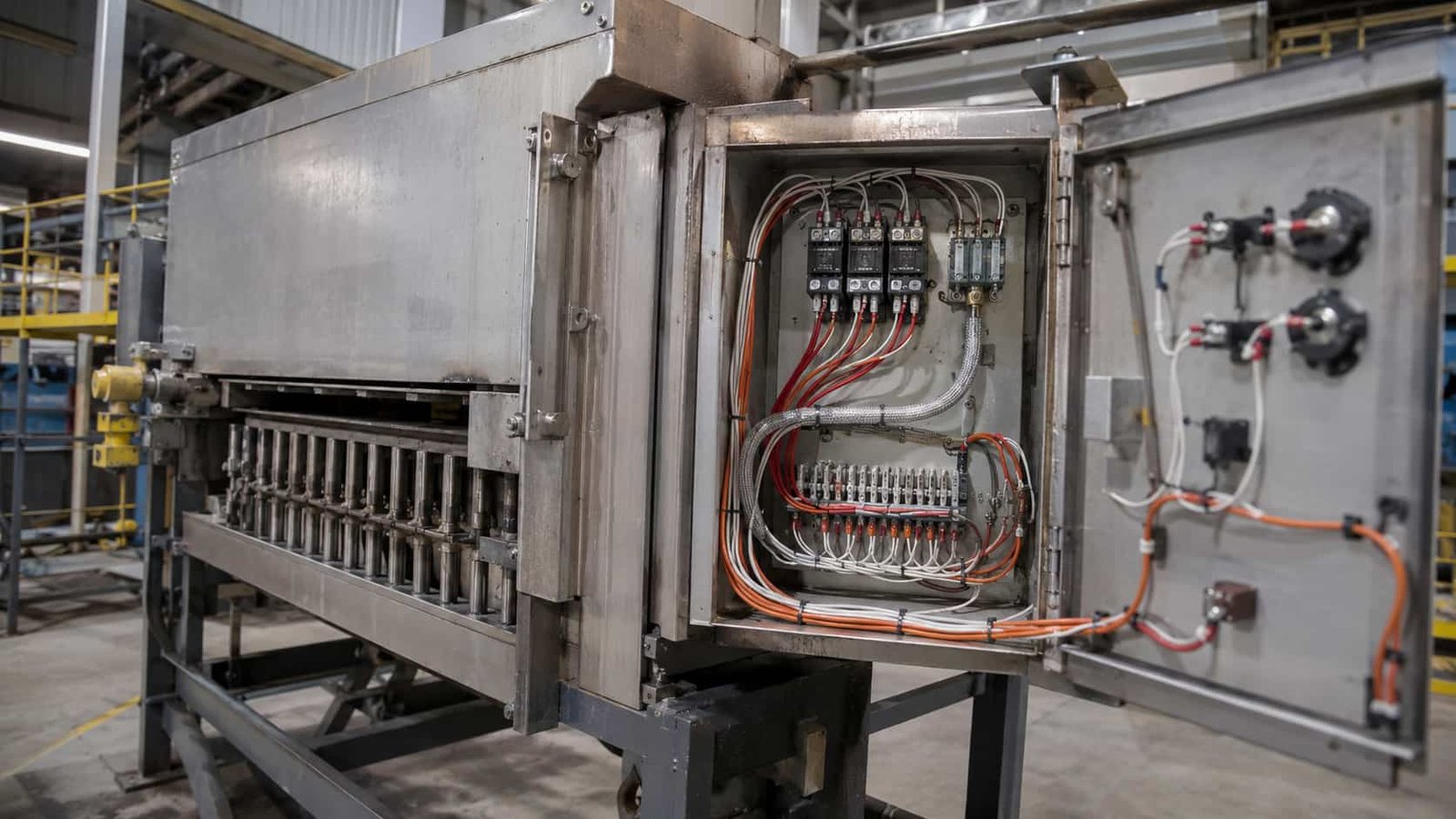
Equipamentos e serviço para os quais este fio foi concebido
- Cabos de motor e gerador — o calor de enrolamento e a flexão repetida na saída, a aplicação mais comum de silicone.
- Fornos industriais, secadores e fornos transportadores — cabos de elementos, teares do gabinete de comando, cabos de portas e sensores.
- Aparelhos domésticos e comerciais — fogões, aparelhos de catering, máquinas de lavar loiça, esterilizadores.
- Iluminação e luminárias — a fiação interna do dispositivo, quando a lâmpada estiver quente e o tear for montado à mão.
- Transformadores, bobinas e cabos de solenóide — quando o chumbo deve tolerar impregnação e calor.
- Aquecedores e conjuntos de aquecimento — ligações de elementos até ao grau de temperatura do composto.
- Fiação do painel e do comutador — no caso de ser especificado um comportamento sem halogéneo e sem fumo.
- Sauna, solário e equipamentos de aquecimento de processos — ambiente elevado com acesso regular à manutenção.
Onde o silicone é a resposta errada
- Abrasão contra estrutura de aço — o silicone risca-se e corta-se. Especifique uma construção com trança de fibra de vidro sobre o núcleo de silicone ou proteja o chicote.
- Produtos químicos, solventes ou combustíveis agressivos — um fluoropolímero é a escolha correcta; Silicone incha.
- Espaço apertado e chicotes densos — na 600 V uma parede de silicone é aproximadamente duas vezes uma parede de PTFE. Se a shell do conector estiver cheia, mova para PTFE ou PFA.
- Acima de 250 °C — fora da gama destes compostos.
- Instalação fixa em edifícios ou enterramento direto — O material de cablagem do aparelho AWM não contém essa lista.
Nota sobre silicone de alta tensão
Silicone também é o isolamento padrão para fio de chumbo DC de alta tensão — UL estilo 3239 cobre construções de aproximadamente 3 kV até 60 kV dependendo da parede, com UL 10475 continuando a mesma idéia em 8 AWG através de 2 AWG. Esses são um produto diferente com um comprador diferente: Equipamento de raios X e imagem, fotomultiplicador e intensificador de imagem suprimentos, precipitadores eletrostáticas, sinais e sistemas de ignição. Os estilos nesta página são a gama de equipamentos e aparelhos 300 V para 1000 V. Se você precisar de uma chumbo de silicone de alta tensão, diga-nos a classe kV e vamos citá-lo separadamente.
Referência cruzada de um fio existente
Fio de chumbo de silicone é frequentemente chamado para fora em um desenho como SRML, SF-2 ou simplesmente "fio de chumbo silicone" com uma temperatura e uma tensão, em vez de pelo estilo UL. (ul) Envie uma fotografia da marcação impressa mais o diâmetro total medido e o tamanho do condutor e encadernação, e nós vamos identificar o estilo de correspondência antes de citar — particularmente útil entre os graus 150 °C e 200 °C 600 V, que medem o mesmo.
Especificações
Dezoito estilos em quatro graus de temperatura. Encontre a temperatura e depois a tensão; a parede e o diâmetro seguem daí.
Estilos de fio de ligação de silicone num relance
| Grau de temperatura | Estilos UL AWM | Tensão | Parede nominal | Utilização típica |
|---|---|---|---|---|
| 105 °C −60 °C a +105 °C | 3171, 3232, 3243 | 300 V / 600 V | 0.40 mm / 0.76 mm | Cablagem interna geral de aparelhos e equipamento |
| 150 °C −60 °C a +150 °C | 3099, 3113, 3123, 3132 (300 V), 3133 (600 V), 3530 | 300 V / 600 V | 0.40–0.46 mm / 0.76 mm | Aparelhos, luminárias e cablagem de painéis |
| 200 °C −60 °C a +200 °C | 3135, 3139, 3143, 3367, 3512, 3530 | 300 V / 600 V | 0,78 mm a 600 V | Ligações de motores, fornos, secadores e aquecedores |
| 250 °C −60 °C a +250 °C | 3253, 30144, 30145 | 300 V – 1000 V | Por classe de tensão | O topo da gama de silicone |
O estilo 3530 é publicado a 150 °C ou 200 °C e 600 V e por isso aparece em ambos os graus; especifique a classificação necessária.
Dimensões e dados elétricos
Diâmetro exterior nominal em mm para os três estilos de volume, lado a lado. UL 3132 é a construção de parede fina de 300 V; UL 3133 e UL 3135 são o par de 600 V a 150 °C e 200 °C.
| AWG | Resistência típica do condutor, Ω/km a 20 °C | UL 3132 150 °C 300 V | UL 3133 150 °C 600 V | UL 3135 200 °C 600 V |
|---|---|---|---|---|
| 30 | 361 | 1.10 | 2.2 | — |
| 28 | 227 | 1.18 | 2.3 | — |
| 26 | 143–150 | 1.28 | 2.4 | 2.05 |
| 24 | 94.2 | 1.41 | 2.5 | 2.15 |
| 22 | 59.4 | 1.70 | 2.7 | 2.32 |
| 20 | 36.7 | 1.85 | 2.9 | 2.51 |
| 18 | 23.2 | 1.97 | 3.1 | 2.74 |
| 16 | 14.6 | 2.30 | 3.4 | 3.06 |
| 14 | 8.96 | — | — | 3.46 |
| 12 | 5.64 | — | — | 3.95 |
A resistência do condutor depende do entrançamento efetivamente fornecido; considere a coluna acima como o valor da construção comum em cada tamanho. Cordões com muitos fios muito finos apresentam valores mais elevados. A tolerância do diâmetro é normalmente de ±0,10 mm. Os tamanhos superiores a 12 AWG são fabricados sob encomenda.
Peso do condutor, UL 3133 (150 °C 600 V)
| AWG | Encordoamento | Ø do condutor, mm | Parede mm | Ø exterior, mm | Peso kg/km |
|---|---|---|---|---|---|
| 30 | 1 / 0.255 | 0.255 | 0.76 | 2.2 | 5 |
| 28 | 1 / 0.321 | 0.321 | 0.76 | 2.3 | 6 |
| 26 | 1 / 0.407 | 0.407 | 0.76 | 2.4 | 7 |
| 24 | 7 / 0.202 | 0.61 | 0.76 | 2.5 | 8 |
| 22 | 7 / 0.255 | 0.77 | 0.76 | 2.7 | 10 |
| 20 | 10 / 0.255 | 0.92 | 0.76 | 2.9 | 12 |
| 18 | 16 / 0.255 | 1.15 | 0.76 | 3.1 | 16 |
| 16 | 26 / 0.255 | 1.47 | 0.76 | 3.4 | 21 |
Outras propriedades
| Condutor | Cobre recozido maciço ou entrançado, estanhado ou nu; entrançamentos flexíveis de Classe 5 e Classe 6 disponíveis |
|---|---|
| Isolamento | borracha de silicone extrudida, vulcanizada a alta temperatura |
| Temperatura de funcionamento | −60 °C a +105, +150, +200 ou +250 °C conforme à classe; algumas construções de 150 °C são publicadas a partir de −40 °C |
| Comportamento ao fogo | Isento de halogéneos; arde até cinza de SiO₂ não condutora em vez de uma pista de carbono condutora |
| Mecânico | Mantém-se flexível à temperatura; bom comportamento à compressão e à vibração; baixa resistência à abrasão — acrescente uma trança de fibra de vidro onde o fio possa roçar |
| Método de teste | UL 758 |
| Conformidade de substâncias | Conforme RoHS, sem halogéneos |
| Cores | Gama padrão de 21 cores; cores e riscas personalizadas sob encomenda |
| Condutores | Unipolar |
Normas
Normas, métodos de ensaio e referências de conformidade aplicáveis ao fio de ligação de silicone nestes estilos UL AWM.
| UL AWM | Estilos de material para cablagem de aparelhos 3171, 3232, 3243, 3099, 3113, 3123, 3132, 3133, 3530, 3135, 3139, 3143, 3367, 3512, 3253, 30144 e 30145 |
|---|---|
| Método de teste | UL 758 |
| cUL / CSA | cUL AWM I A, FT2 nas construções de 300 V |
| Chama | Ensaio de chama horizontal conforme à aprovação UL; VW-1 disponível nas construções especificadas |
| Halogéneo | Composto de silicone sem halogéneos |
| Conformidade de substâncias | Conforme à RoHS |
O que um estilo UL AWM determina e o que não determina
Um estilo UL AWM fixa o material de isolamento, a classificação de temperatura e a classificação de tensão do material para cablagem de aparelhos. Não fixa o entrançamento e, no silicone, essa é a omissão importante: o mesmo estilo e tamanho pode ser fornecido com 7 fios rígidos ou com uma trança de Classe 6, e apenas um deles passará pelo seu conjunto. Especifique a classe de entrançamento juntamente com o estilo.
O silicone num incêndio
A razão pela qual o silicone continua presente na cablagem de aparelhos e equipamentos tem tanto a ver com o que acontece quando falha como com o serviço normal. A borracha de silicone não contém halogéneos, não produz gases ácidos e, ao arder, transforma-se em dióxido de silício: uma cinza branca que continua a isolar. Um chicote de silicone que atravessou um incêndio pode manter a tensão onde um isolamento orgânico carbonizado já teria formado um arco. É uma propriedade do material, não uma classificação, e não substitui um cabo de integridade de circuito quando este é especificado.
Certificação TEBAOFLEX
A Jiangsu TEBAOFLEX Special Cable Co., Ltd possui o certificado UL UL-US-2449012-0 e o certificado cUL UL-CA-2437036-0, ambos datados de 27 de dezembro de 2024 sob o relatório E542560-20241225, e o certificado VDE 40060055 datado de 28 de março de 2025. São certificações ao nível da empresa. Envie o estilo UL, a dimensão e o encordoamento exatos que pretende encomendar; confirmaremos o âmbito de aprovação aplicável antes do compromisso e emitiremos a documentação de ensaio com o envio.
Documentação fornecida com uma encomenda
- Desenho de construção e dados dimensionais para o estilo, tamanho e entrançamento acordados
- Registos de ensaios de rotina do lote de produção
- Certificado de conformidade que referencia as normas acordadas
- Bobina e lista de embalagem com detalhes de marcação e cor
Para o âmbito de uma norma específica, consulte diretamente o organismo emissor — por exemplo, a Comissão Eletrotécnica Internacional ou UL Solutions.
Opções de cabos relacionadas
Compare estas opções de cabos pela combinação de funções, movimento, carga, tensão e requisitos de transmissão.
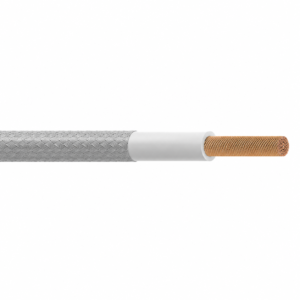
Cabo de borracha de silicone para altas temperaturas SIAF/GL com trança de fibra de vidro
Uma opção de cabo relacionada para uma aplicação ou perfil de serviço diferente.
Ver produto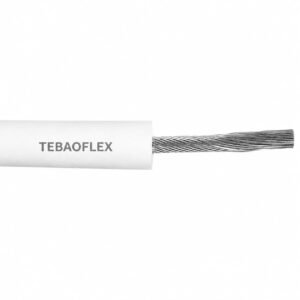
Fio de ligação PTFE até 250°C, 150–1000 V, estilos UL AWM
Uma opção de cabo relacionada para uma aplicação ou perfil de serviço diferente.
Ver produto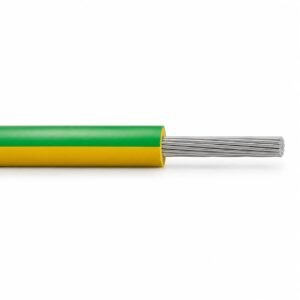
Cabo flexível unipolar de silicone SiF 180
Uma opção de cabo relacionada para uma aplicação ou perfil de serviço diferente.
Ver produtoSolicite uma recomendação e orçamento de cabos.
Indique as funções necessárias, o comprimento do cabo, as exigências mecânicas, o ambiente, o tipo de terminação e a quantidade. A nossa equipa analisará a aplicação antes de preparar o orçamento.
- Inclua o nome do produto ou o código SKU, além do comprimento e da quantidade de cabos necessários.
- Anexe uma especificação, desenho ou ficha técnica, quando disponíveis.