

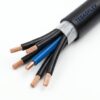
400Hz Feeder Cable | LSOH Static Aviation Power
400Hz Feeder Cable | LSOH Static Aviation Power is a TEBAOFLEX cable for the application and operating conditions identified in the original product record. Designed for long-term static infrastructure, below are the detailed technical parameters of our LSOH feeder cables. For mobile tarmac solutions, please browse our flexible ground power cables . This cable is exclusively designed for static installations under normal mechanical stress. Typical EPC deployments include: (Note: This cable does not meet the requirements for indoor applications according to IEC 60332-3 and EN 50266-2. Send the exact size, length, installation duty and documentation requirements for a technical quotation.
400Hz Feeder Cable | LSOH Static Aviation Power is a TEBAOFLEX cable for the application and operating conditions identified in the original product record. Designed for long-term static infrastructure, below are the detailed technical parameters of our LSOH feeder cables. For mobile tarmac solutions, please browse our flexible ground power cables . This cable is exclusively designed for static installations under normal mechanical stress. Typical EPC deployments include: (Note: This cable does not meet the requirements for indoor applications according to IEC 60332-3 and EN 50266-2. Heavy-Duty Static Power Distribution for Aviation Infrastructure Routing 400Hz power from substations to terminal gates requires cables that combat both electrical skin effect and harsh underground environments. Our LSOH 400Hz feeder cables are engineered for static installations, offering exceptional ageing stability, direct burial capabilities, and natural rodent resistance without the need for bulky armor. The source record places this product in airport ground power cables. Before ordering, confirm the exact product variant, conductor or core arrangement, system rating, route conditions, equipment connection and required documentation against the project specification. The requested 400Hz Feeder Cable | LSOH Static Aviation Power should be evaluated as a complete cable assembly: review its intended equipment, conductor arrangement, installation method, movement duty, environment, terminations, dimensions and required documentation together.
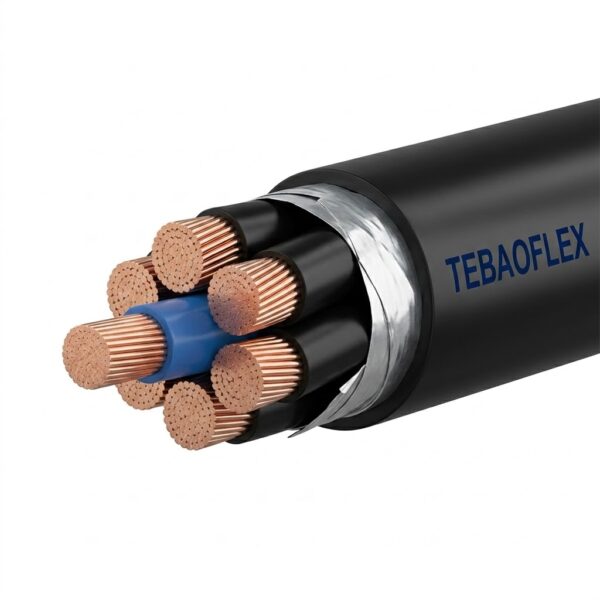
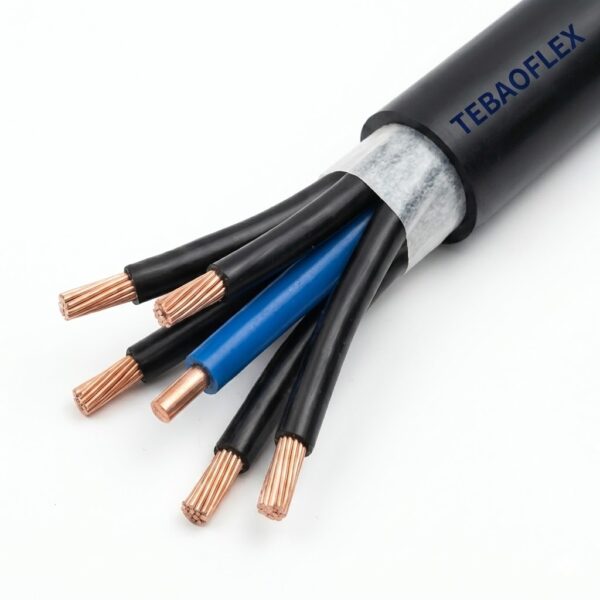
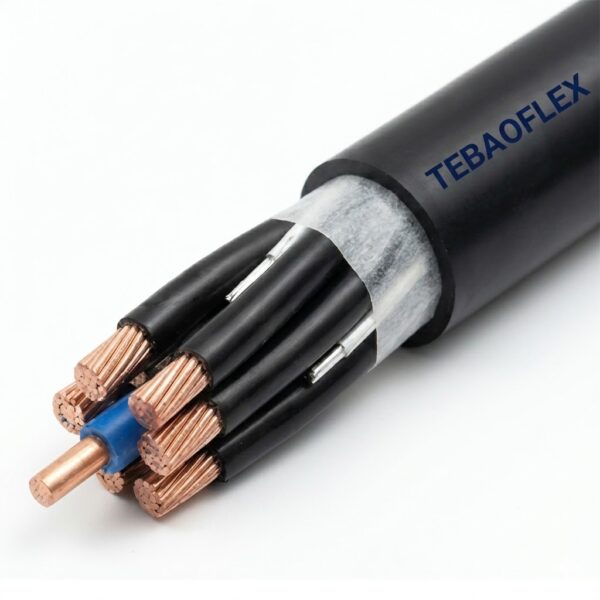
400Hz Feeder Cable | LSOH Static Aviation Power construction
Construction details are retained from the original product record and require project confirmation against the ordered cable schedule.
400Hz Feeder Cable | LSOH Static Aviation Power applications
Primary Application Scenarios
This cable is exclusively designed for static installations under normal mechanical stress. Typical EPC deployments include:
- Underground Infrastructure: Direct laying in the ground, outdoor shafts, and protective routing tubes.
- Cable Trays: Long-distance power routing within airport terminal structures.
- Critical Facilities: Flexible wiring of UPS units, radar substations, and military broadcasting equipment.
(Note: This cable does not meet the requirements for indoor applications according to IEC 60332-3 and EN 50266-2. For specific indoor fire-rated routing, contact The source record.)
Selection checks
Confirm the equipment interface, installation method, route length, movement or flexing duty, environmental exposure, conductor or core requirements and project documentation before final selection.
400Hz Feeder Cable | LSOH Static Aviation Power specifications
The source-listed technical notes are retained below. Confirm the final size, tolerance, installation basis and ordered configuration before release.
Technical Specifications
Designed for long-term static infrastructure, below are the detailed technical parameters of our LSOH feeder cables. For mobile tarmac solutions, please browse our flexible ground power cables.
Source-listed technical tables
The tables below retain the original product data, including units, ranges and ordering examples.
| Specification | Parameter |
|---|---|
| Nominal Voltage (Uo/U) | 115/200V |
| Max. Permissible Voltage | 600/1000V |
| Testing Voltage | 4000 VAC, 50 Hz |
| Power Conductors | Bare fine copper strands (VDE 0295, IEC 60228 Class 5) |
| Phase Insulation | Cross-linked Polyethylene (XLPE) |
| Control Cores | 6x(4x1) mm² Tinned fine copper |
| Outer Sheath | LSOH Polyolefin Copolymer (Black) |
| Operating Temperature | -40°C to +90°C (static application) |
| Special Properties | Skydrol resistant (>1000h/50°C), Rodent & Termite resistant |
400Hz Feeder Cable | LSOH Static Aviation Power standards and compliance
The following standard references are carried over from the original product record. They identify the source basis and do not replace project-specific certification or inspection requirements.
- LSOH Safety Compliance: Unlike traditional PVC cables that release toxic black smoke during a fire, our feeder cables are completely halogen-free and generate very low smoke density. This complies with specified international safety standards, such as IEC 60754 for halogen-free materials, safeguarding personnel in enclosed radar stations and military facilities.
- Power Conductors Bare fine copper strands (VDE 0295, IEC 60228 Class 5)
- (Note: This cable does not meet the requirements for indoor applications according to IEC 60332-3 and EN 50266-2. For specific indoor fire-rated routing, contact The source record.)
Where a project requires a test report, certificate, marking record or inspection release, include that requirement in the quotation request.
Request a cable recommendation and quotation
Send the required services, cable length, mechanical duty, environment, termination and quantity. Our team will review the application before quoting.
- Include the product name or SKU plus the required cable length and quantity.
- Attach a specification, drawing or data sheet when available.