

Fiche de projet · Égypte · Production d'acier
Câble plat pour le cycle de déplacement d'un chariot d'oxycoupage
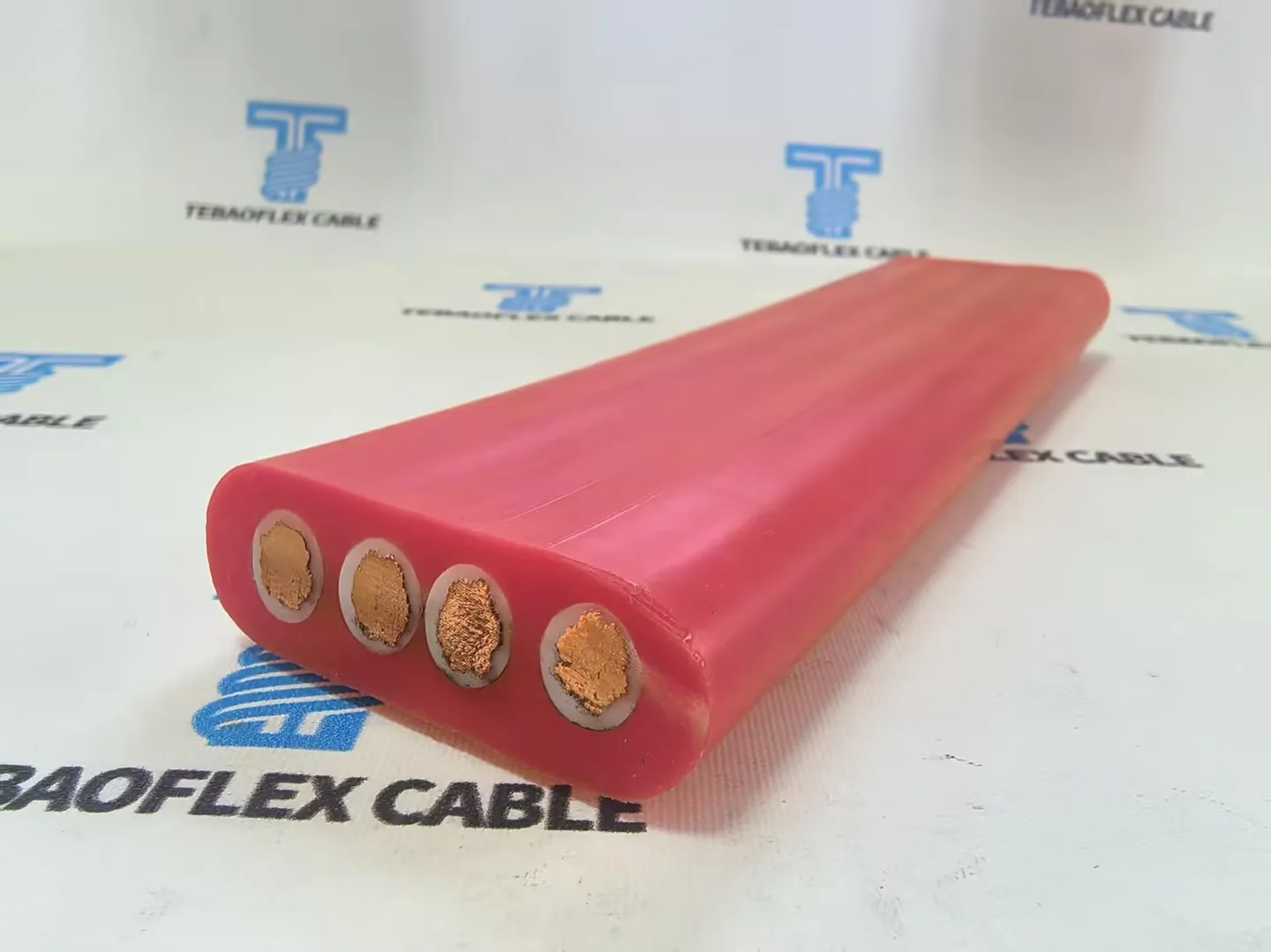
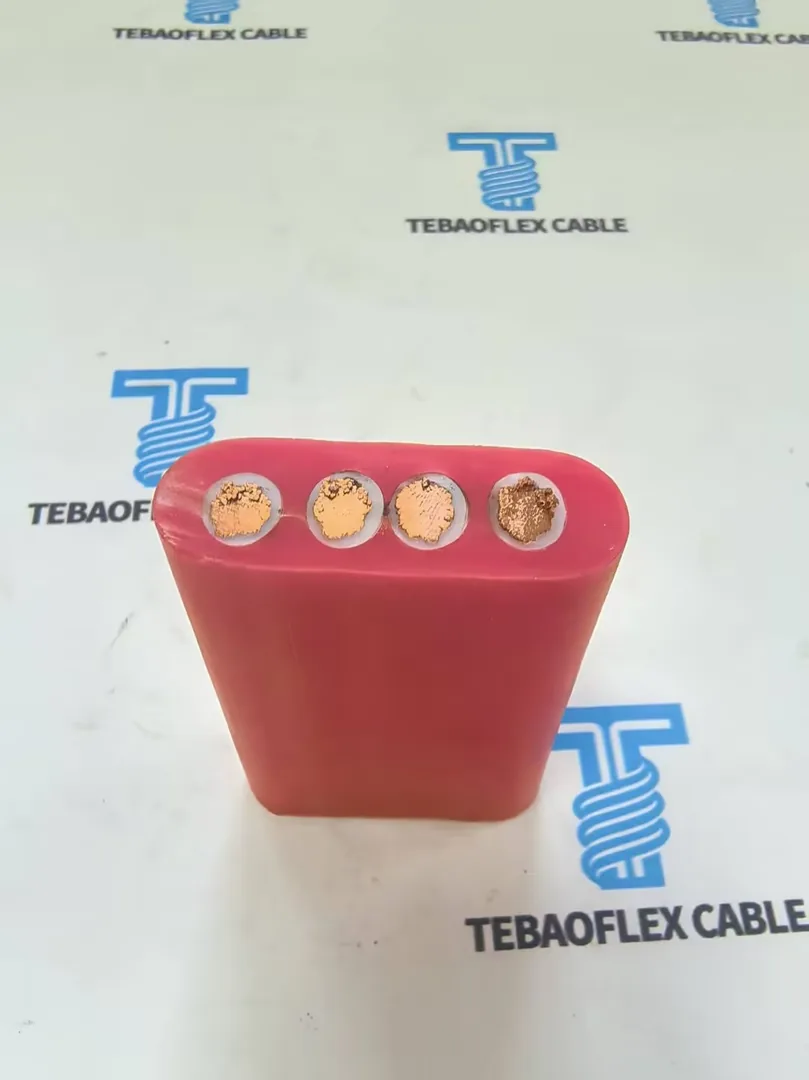
Une application dans une aciérie nécessitait un câble de puissance multiconducteur pour le trajet répétitif d'un chariot d'oxycoupage. TEBAOFLEX a fourni un câble plat à quatre conducteurs pour la voie de câble mobile de la machine.
Fiche du projet
| Pays | Égypte |
|---|---|
| Industrie | Production d'acier |
| Équipement | Chariot d'oxycoupage |
| Mouvement | Déplacement cyclique de la machine |
| Format fourni | Câble plat à quatre conducteurs |
| Construction visible | Quatre conducteurs disposés dans un seul plan plat, gaine rouge |
Pourquoi une construction plate pour un cycle de déplacement
Un chariot de découpe ne se déplace pas une fois pour s'arrêter. Il parcourt le même trajet en continu, de sorte que le câble est plié aux mêmes endroits, dans la même direction, des milliers de fois. Une construction plate répond à ce service d'une manière qu'un câble rond ne peut pas.
Il se plie dans un seul plan. Avec les âmes côte à côte, l'axe neutre de flexion reste prévisible et chaque conducteur subit une contrainte constante à chaque cycle. Dans un câble rond, les âmes sont câblées de manière hélicoïdale, de sorte que la même flexion sollicite différemment les conducteurs le long de la longueur.
Il ne se torsade pas en spirale. La traction répétée le long d'un trajet fixe fait que les câbles ronds se détordent et prennent une déformation en spirale permanente — ce que les ingénieurs portuaires et miniers appellent le « corkscrewing » (effet tire-bouchon). Un profil plat n'a pas de pas de câblage susceptible de s'ouvrir.
Il repose à plat dans un guide ou un chariot de guirlande. Le câble plat s'empile et se déplace sans rouler, ce qui explique pourquoi les constructions plates dominent les systèmes en guirlande et les guides de déplacement de machines.
Il présente une faible hauteur de construction, ce qui aide lorsque le parcours de la machine est un canal peu profond ou un guide étroit.
Ce qu'exige du câble un chariot d'oxycoupage
Les machines de découpe des aciéries combinent deux contraintes gérables individuellement mais difficiles ensemble : mouvement continu et chaleur. Le câble doit rester flexible tout en fonctionnant près de sa limite thermique, ce qui est l'inverse de ce que font la plupart des composés en vieillissant.
Les expositions habituelles sur ce type de parcours sont la chaleur rayonnante de la pièce et de la tête de découpe, les projections de scories et d'étincelles, l'abrasion par la calamine le long du guide, et les huiles de coupe ou liquides de refroidissement. Les composés caoutchouc et PVC standard sont hors de portée au-delà d'environ 90 °C en continu ; le caoutchouc de silicone couvre la plage 180–200 °C, et les fluoropolymères comme le PFA s'étendent jusqu'à environ 250 °C. Le silicone est mécaniquement souple, donc là où des projections ou de l'abrasion sont présentes, il a besoin d'une tresse de verre ou d'un revêtement protecteur.
Lequel de ces facteurs prédomine réellement dépend de la proximité du parcours du câble par rapport à la tête de découpe — un élément à mesurer sur site plutôt qu'à supposer à partir d'une fiche technique.
Ce que nous examinons pour un projet similaire
- Type de machine et longueur de déplacement
- Cycles par équipe ou par jour
- Type de guide — chemin, guirlande, chaîne porte-câbles ou libre
- Rayon de courbure minimal disponible
- Température ambiante sur le parcours du câble
- Distance par rapport à la tête de découpe
- Exposition aux projections et à la calamine
- Présence d'huiles, de liquides de refroidissement ou de produits chimiques de détartrage
- Tension assignée
- Nombre d'âmes et section transversale
- Norme ou approbation requise
- Longueur par tronçon et quantité totale
Constructions connexes
- Câble guirlande plat NGFLGOEU 300/500 V
- Festoonflex PUR-HF pour grues et équipements mobiles
- SiHF-J silicone 180 multiconducteur
- SiHFC silicone blindé 180 °C
- H05GG-F caoutchouc selon EN 50525-2-21
- Intemp 250 BS G210 PFA, 250 °C
Parcourez toute la gamme de câbles haute température et câbles portuaires et de guirlande , ou recherchez une désignation dans le index des désignations de câbles et des normes.
Questions sur cette application
Peut-on utiliser un câble rond à la place d'un câble plat sur le trajet d'une machine de découpe ?
Cela peut être le cas, mais c'est la source de problèmes la plus courante. Les âmes d'un câble rond sont câblées de manière hélicoïdale, de sorte qu'une flexion répétée le long d'un trajet fixe tend à ouvrir le pas de câblage et à produire une déformation en spirale permanente. Sur un parcours guidé ou en guirlande, une construction plate maintient la flexion dans un seul plan et s'empile de manière prévisible. Le câble rond est le meilleur choix lorsque le câble doit également se tordre ou s'enrouler sur un tambour.
Quelle classe de température nécessite le câble d'une machine de découpe en aciérie ?
Cela dépend de la distance entre le parcours du câble et la source radiante, et non de la température du procédé. Le caoutchouc et le PVC standard sont limités à environ 90 °C en continu ; le silicone couvre 180–200 °C ; le PFA atteint environ 250 °C. L'étape pratique consiste à mesurer la température sur le parcours du câble dans les conditions de production, et non à la tête de découpe.
Publiez-vous la spécification complète de ce câble ?
Not on this page. Voltage, cross-section, compound and standard were set for this plant’s conditions, and publishing them as a general recommendation would mislead for a different machine. Send your own duty conditions and we will quote against them.
Discutez d'un câble pour équipement mobile →
Une autre fiche de projet : un câble d'essai haute tension en silicone blindé pour la bobine d'un fourgon d'essai de câbles.