

Fil de câblage silicone 105–250°C, 300–1000 V, styles UL AWM
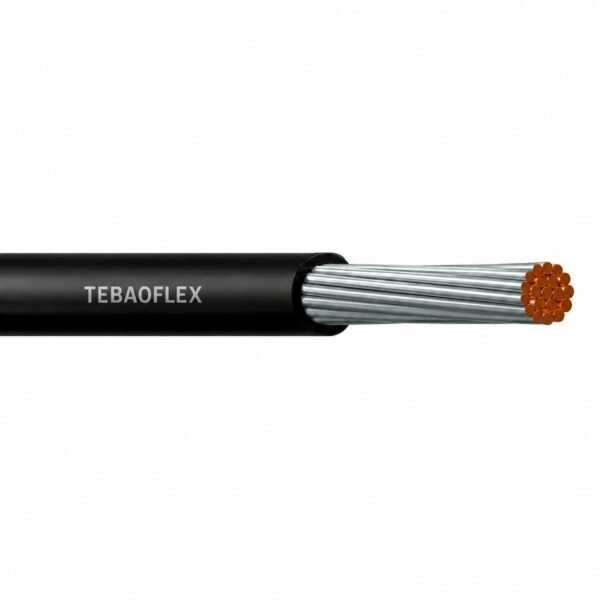
fil de câblage silicone pour tout ce qui doit rester flexible à chaud. TEBAOFLEX fabrique dix-sept styles UL AWM en silicone avec caoutchouc extrudé sur cuivre recuit, classés de 105 °C à 250 °C et de 300 V à 1000 V, dans des tailles de 30 AWG à 12 AWG et plus sur demande.
- Styles 105 °C : UL 3171, 3232, 3243
- Styles 150 °C : UL 3099, 3113, 3123, 3132, 3133, 3530
- Styles 200 °C : UL 3135, 3139, 3143, 3367, 3512, 3530
- Styles 250 °C : UL 3253, 30144, 30145
- Tension nominale : 300 V, 600 V ou 1000 V selon le style
- Conducteur : cuivre recuit massif ou toronné, étamé ou nu; toronnages flexibles de classe 5 et de classe 6
- Isolation : caoutchouc silicone extrudé, paroi nominale de 0,40–0,78 mm selon la classe de tension
- Comportement au feu : brûle en laissant une cendre de SiO₂ non conductrice plutôt qu’une trace carbonée; sans halogène
- Couleurs : gamme standard de 21 couleurs, avec rayures personnalisées sur commande
Pour un devis, envoyez le style UL, la tension, la taille AWG, la classe de toronnage, la couleur et la longueur par touret.
Fil de câblage silicone pour fours, fils de moteurs et câblage d’appareils
Le silicone est l’isolation haute température choisie lorsque le fil doit encore se plier. Les fluoropolymères offrent une meilleure résistance chimique et des parois plus minces, mais ils durcissent; un fil silicone Classe 6 reste souple à 200 °C et accepte le rayon donné par l’installateur, même lors de la troisième intervention. Il est aussi sans halogène et brûle en cendre de silice non conductrice plutôt qu’en trace carbonée. TEBAOFLEX fabrique dix-sept styles UL AWM de 105 °C à 250 °C et de 300 V à 1000 V.
La gamme s’organise selon deux facteurs : la paroi suit la tension, environ 0.40 mm pour 300 V et 0.76–0.78 mm pour 600 V; la température suit le compound, pas la paroi. Ainsi UL 3133 à 150 °C et UL 3135 à 200 °C sont tous deux 600 V et leur diamètre diffère de moins de 0.1 mm. Choisissez d’abord la classe de température, puis la tension et enfin la classe de toronnage.
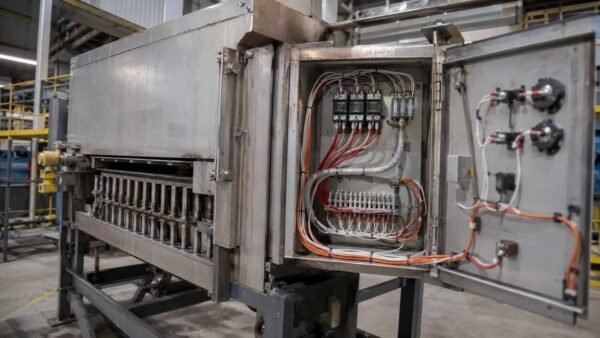
- Convient pour : fils de moteurs et de générateurs, fours et séchoirs industriels, luminaires et éclairage, appareils domestiques et commerciaux, chauffages, fils de transformateurs et de bobines, câblage de panneaux.
- Confirmez avant de commander : style UL, tension, taille AWG, classe de toronnage, couleur et longueur de bobine.
- Choisissez une autre construction lorsque : lorsque le fil frotte sur l’acier — ajoutez une tresse de fibre de verre — ou lorsque l’exposition chimique ou une paroi mince comptent plus que la flexibilité, auquel cas le PTFE, le PFA ou le FEP sont la bonne solution.
Vous comparez d’abord les isolations ? Le matrice de sélection des fils haute température place le silicone à côté des fluoropolymères, et la gamme plus large se trouve sous Câbles haute température.
Pour une construction UL AWM précise, comparez UL 3232 · Silicone/Nylon · 105°C · 300 V, UL 3123 · Silicone · 150°C · 600 V, UL 3580 · Silicone · 150°C · 1 kV et UL 3644 · Silicone · 1 kV. Choisissez la classe de température, le revêtement et le calibre dans chaque fiche; les fils de silicone ne sont pas automatiquement interchangeables.
Lorsqu'un fil 105°C à l'intérieur d'un équipement frigorifique exige du PVC extrudé au lieu du silicone, le fil PVC UL 1056 offre une construction monoconducteur 600 V AC de 20 AWG à 10 AWG.
Construction
Un fil de câblage silicone est unipolaire, avec conducteur en cuivre recuit et paroi en caoutchouc silicone extrudé. Ce qui distingue les styles UL se résume à trois choix : grade du compound silicone, épaisseur de paroi et finesse du toronnage.
- Conducteur : cuivre recuit, solide ou échoué, étamé ou nu. Les cordons passent d'un seul fil 0.255 mm à 30 AWG à 7, 10, 16 et 26 à des câbles flexibles de classe 5 et 6 où le fil doit se déplacer.
- Isolation : caoutchouc de silicone extrudé, durci par vulcanisation à haute température. Le mur nominal parle de 0.40 mm sur les styles 300 V et 0.76–0.78 mm sur les styles 600 V.
- Qualité du composé : l'indice de température provient de la formulation en silicone, et non de l'épaisseur. La même paroi 0.76 mm apparaît à 150 °C et à 200 °C sur différents composés.
- Couleurs et marquage : une gamme standard couleur 21 avec des couleurs personnalisées et des rayures sur commande, surface imprimée avec le style, la taille et la cote.
Pourquoi le silicone plutôt qu’un fluoropolymère
Trois propriétés maintiennent le silicone en production malgré les performances supérieures du PTFE et du PFA sur le papier. Il reste réellement flexible à chaud, ce qui permet de manipuler les fils de moteur et les faisceaux de four à température. Il est sans halogène et, lorsqu’il brûle, laisse une cendre de silice qui reste isolante; un incendie dans un faisceau ne devient donc pas immédiatement un défaut phase-masse. Il supporte aussi la compression et les vibrations sans fluage à froid. En contrepartie, la paroi est plus épaisse et la résistance à l’abrasion et aux produits chimiques est moindre : le silicone se raye facilement, d’où la tresse de fibre de verre aux endroits exposés au frottement.
La classe de toronnage décide de la flexibilité
Deux fils du même style UL et le même AWG peuvent se comporter complètement différemment dans la main. A 24 AWG le même style est construit comme des brins 7 de 0.20 mm, 11 de 0.16 mm, 19 de 0.12 mm ou 133 de 0.05 mm — zone de conducteur identique, comportement de virage sauvagement différent et un 0.16 mm étalé dans le diamètre fini. Si le fil doit être acheminé à la main dans un assemblage chaud, dites-le à l'enquête et nous citerons l'échouement pour correspondre plutôt que la construction la moins chère qui répond au style.
La paire 150 °C et 200 °C 600 V
UL 3133 et UL 3135 sont la même idée à deux niveaux de température: 600 V, une paroi autour de 0.76–0.78 mm, du cuivre étamé et des diamètres qui se chevauchent dans un dixième de millimètre. On ne peut pas les distinguer avec un micromètre. Ordonner par le marquage, pas par la mesure.
Applications
Le fil de câblage silicone s’emploie lorsque l’ambiance est chaude et que le fil doit encore être manipulé : dans les fours et séchoirs, les enroulements de moteurs, les luminaires et les appareils. C’est du câblage interne d’équipement, pas un câble d’installation.
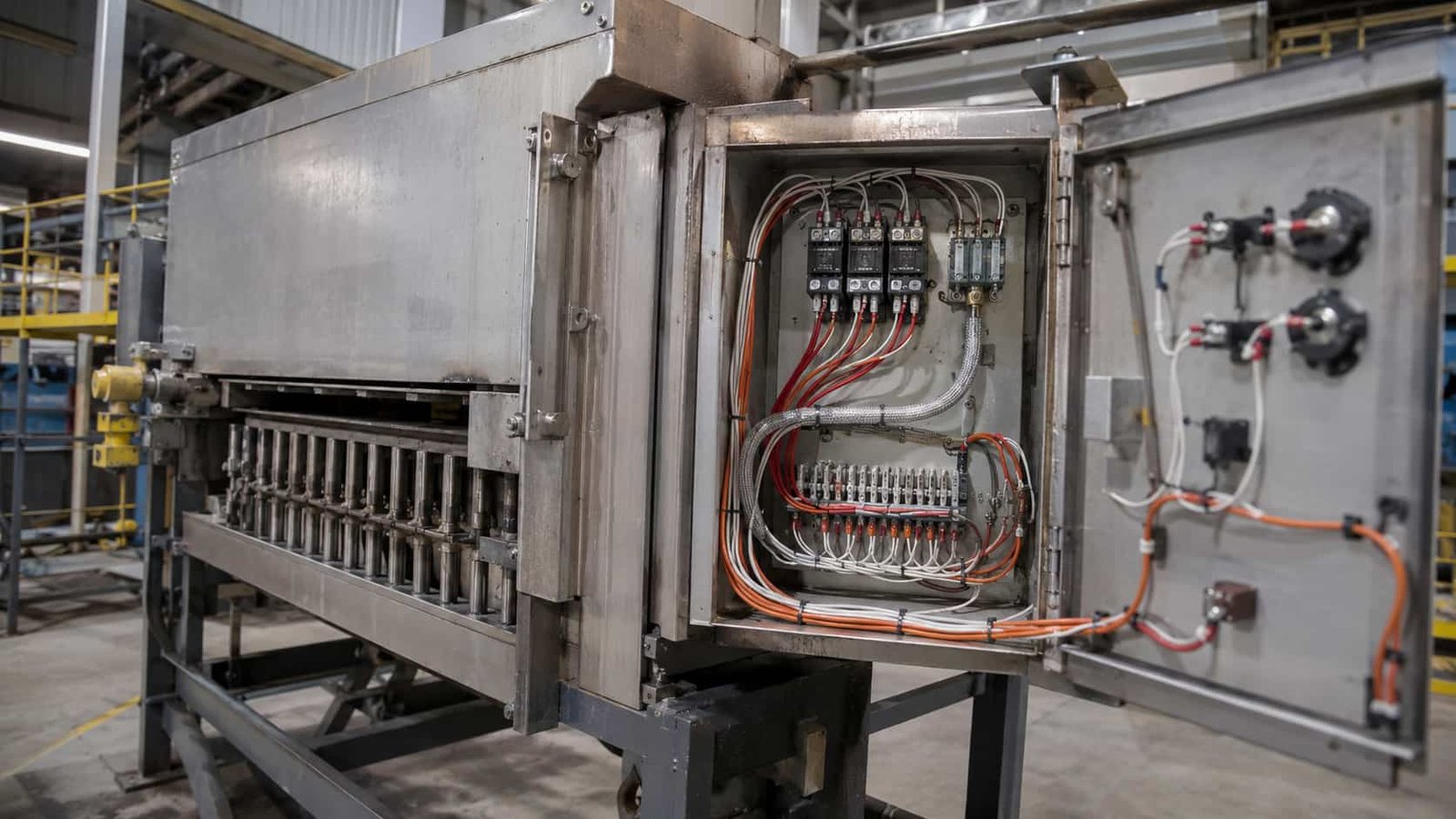
Équipements et service auxquels ce fil est destiné
- Fils de moteur et de générateur — chaleur d'enroulement plus flexion répétée à la sortie, l'application de silicone la plus courante.
- Fours industriels, séchoirs et fours à convoyeurs — le câblage des éléments, les métiers à tisser, les portes et les capteurs.
- Appareils domestiques et commerciaux — cuisinières, équipements de restauration, lave-vaisselle, stérilisateurs.
- Éclairage et luminaires — le câblage intérieur de fixation où la lampe est chaude et où le métier est assemblé à la main.
- Transformateur, bobine et électrovannes — où le plomb doit tolérer l'imprégnation et la chaleur.
- Chauffe- chaleur et chauffage — raccords d'éléments jusqu'à la température du composé.
- Câbles de panneaux et de commutateurs — où le comportement sans halogène et à faible fumée est spécifié.
- Équipement de chauffage au sauna, au solarium et aux procédés — haute ambiance avec accès régulier à l'entretien.
Quand le silicone n’est pas la bonne réponse
- Abrasion contre une structure en acier — le silicone se raye et se coupe. Spécifiez une construction tressée de fibre de verre sur l’âme silicone ou protégez le faisceau.
- Produits chimiques, solvants ou combustibles agressifs — un fluoropolymère est le bon choix; les houles de silicone.
- Espace réduit et faisceaux denses — à 600 V une paroi en silicone est environ deux fois une paroi en PTFE. Si le connecteur est plein, passez à PTFE ou PFA.
- Au-dessus de 250 °C — en dehors de la gamme de ces composés.
- Installation fixe dans le bâtiment ou enfouissement direct — Le matériel de câblage de l'appareil AWM ne comporte aucune mention de ce genre.
Remarque sur le silicone haute tension
Silicone est également l'isolation standard pour le fil de plomb DC haute tension — UL style 3239 couvre les constructions de 3 kV jusqu'à 60 kV en fonction du mur, avec UL 10475 continuant la même idée en 8 AWG à travers 2 AWG. Il s'agit d'un produit différent avec un acheteur différent: Matériel de radiographie et d'imagerie, appareils photomultiplicateurs et d'amplification d'images, précipitateurs électrostatiques, panneaux et systèmes d'allumage. Les styles sur cette page sont la gamme d'appareils et d'équipements 300 V à 1000 V. Si vous avez besoin d'un plomb silicone haute tension, dites-nous la classe kV et nous la citerons séparément.
Référencement d’un fil existant
Le fil de plomb en silicone est souvent appelé sur un dessin comme SRML, SF-2 ou tout simplement le fil de plomb en silicone avec une température et une tension, plutôt que par le style UL. (ul) Envoyer une photographie du marquage imprimé plus le diamètre total mesuré et la taille du conducteur et l'échouement, et nous allons identifier le style de correspondance avant de citer — particulièrement utile entre les qualités 150 °C et 200 °C 600 V, qui mesurent la même.
Caractéristiques techniques
Dix-huit styles répartis sur quatre classes de température. Trouvez la température puis la tension; la paroi et le diamètre en découlent.
Aperçu des styles de fil de câblage silicone
| Classe de température | Styles UL AWM | Tension | Paroi nominale | Utilisation typique |
|---|---|---|---|---|
| 105 °C −60 °C à +105 °C | 3171, 3232, 3243 | 300 V / 600 V | 0.40 mm / 0.76 mm | Câblage interne général d’appareils et équipements |
| 150 °C −60 °C à +150 °C | 3099, 3113, 3123, 3132 (300 V), 3133 (600 V), 3530 | 300 V / 600 V | 0.40–0.46 mm / 0.76 mm | Appareils, luminaires et câblage de panneaux |
| 200 °C −60 °C à +200 °C | 3135, 3139, 3143, 3367, 3512, 3530 | 300 V / 600 V | 0,78 mm à 600 V | Fils de moteurs, fours, séchoirs et chauffages |
| 250 °C −60 °C à +250 °C | 3253, 30144, 30145 | 300 V – 1000 V | Selon la classe de tension | Le sommet de la gamme silicone |
Le style 3530 est publié à 150 °C ou 200 °C et 600 V, il apparaît donc dans les deux classes; précisez la classe requise.
Dimensions et données électriques
Diamètre extérieur nominal en mm pour les trois styles de volume, côte à côte. UL 3132 est la construction 300 V à paroi mince; UL 3133 et UL 3135 sont la paire 600 V à 150 °C et 200 °C.
| AWG | Résistance typique du conducteur, Ω/km à 20 °C | UL 3132 150 °C 300 V | UL 3133 150 °C 600 V | UL 3135 200 °C 600 V |
|---|---|---|---|---|
| 30 | 361 | 1.10 | 2.2 | — |
| 28 | 227 | 1.18 | 2.3 | — |
| 26 | 143–150 | 1.28 | 2.4 | 2.05 |
| 24 | 94.2 | 1.41 | 2.5 | 2.15 |
| 22 | 59.4 | 1.70 | 2.7 | 2.32 |
| 20 | 36.7 | 1.85 | 2.9 | 2.51 |
| 18 | 23.2 | 1.97 | 3.1 | 2.74 |
| 16 | 14.6 | 2.30 | 3.4 | 3.06 |
| 14 | 8.96 | — | — | 3.46 |
| 12 | 5.64 | — | — | 3.95 |
La résistance du conducteur dépend du toronnage réellement fourni; considérez la colonne ci-dessus comme la valeur de la construction courante pour chaque taille. Les toronnages à très nombreux brins fins présentent des valeurs plus élevées. La tolérance de diamètre est généralement de ±0,10 mm. Les tailles supérieures à 12 AWG sont fabriquées sur commande.
Poids du conducteur, UL 3133 (150 °C 600 V)
| AWG | Toronnage | Ø du conducteur, mm | Épaisseur mm | Ø extérieur, mm | Masse kg/km |
|---|---|---|---|---|---|
| 30 | 1 / 0.255 | 0.255 | 0.76 | 2.2 | 5 |
| 28 | 1 / 0.321 | 0.321 | 0.76 | 2.3 | 6 |
| 26 | 1 / 0.407 | 0.407 | 0.76 | 2.4 | 7 |
| 24 | 7 / 0.202 | 0.61 | 0.76 | 2.5 | 8 |
| 22 | 7 / 0.255 | 0.77 | 0.76 | 2.7 | 10 |
| 20 | 10 / 0.255 | 0.92 | 0.76 | 2.9 | 12 |
| 18 | 16 / 0.255 | 1.15 | 0.76 | 3.1 | 16 |
| 16 | 26 / 0.255 | 1.47 | 0.76 | 3.4 | 21 |
Autres propriétés
| Conducteur | Cuivre recuit massif ou toronné, étamé ou nu; toronnages flexibles de classe 5 et de classe 6 disponibles |
|---|---|
| Isolation | caoutchouc silicone extrudé, vulcanisé à haute température |
| Température de service | −60 °C à +105, +150, +200 ou +250 °C selon la classe; certaines constructions 150 °C sont publiées à partir de −40 °C |
| Comportement au feu | Sans halogène; brûle en cendre de SiO₂ non conductrice plutôt qu’en trace carbonée conductrice |
| Mécanique | Reste flexible à température; bon comportement en compression et en vibration; faible résistance à l’abrasion — ajoutez une tresse de fibre de verre là où le fil peut frotter |
| Méthode d'essai | UL 758 |
| Conformité des substances | Conforme RoHS, sans halogène |
| Couleurs | Gamme standard de 21 couleurs; couleurs et rayures personnalisées sur commande |
| Âmes | Unipolaire |
Normes
Normes, méthodes d’essai et références de conformité applicables au fil de câblage silicone dans ces styles UL AWM.
| UL AWM | Styles de matériau de câblage d’appareils 3171, 3232, 3243, 3099, 3113, 3123, 3132, 3133, 3530, 3135, 3139, 3143, 3367, 3512, 3253, 30144 et 30145 |
|---|---|
| Méthode d'essai | UL 758 |
| cUL / CSA | cUL AWM I A, FT2 sur les constructions 300 V |
| Flamme | Essai de flamme horizontale selon l’homologation UL; VW-1 disponible sur les constructions spécifiées |
| Halogène | Composé de silicone sans halogène |
| Conformité des substances | Conforme à RoHS |
Ce qu’un style UL AWM règle et ne règle pas
Un style UL AWM fixe le matériau d’isolation, la température assignée et la tension assignée du matériau de câblage d’appareil. Il ne fixe pas le toronnage et, avec le silicone, c’est l’omission qui compte : un même style et une même taille peuvent être livrés en 7 brins rigides ou en toronnage de classe 6, et un seul passera dans votre ensemble. Précisez la classe de toronnage avec le style.
Le silicone dans un incendie
Si le silicone reste présent dans le câblage des appareils et des équipements, c’est autant pour son comportement en cas de défaillance que pour son fonctionnement normal. Le caoutchouc silicone est sans halogène, ne produit pas de gaz acides et, lorsqu’il brûle, se transforme en dioxyde de silicium : une cendre blanche qui reste isolante. Un faisceau silicone exposé à un incendie peut maintenir la tension là où une isolation organique carbonisée aurait déjà claqué. Il s’agit d’une propriété du matériau, pas d’un classement, et cela ne remplace pas un câble d’intégrité de circuit lorsqu’il est spécifié.
Certification TEBAOFLEX
Jiangsu TEBAOFLEX Special Cable Co., Ltd détient le certificat UL UL-US-2449012-0 et le certificat cUL UL-CA-2437036-0, tous deux datés du 27 décembre 2024 sous le rapport E542560-20241225, ainsi que le certificat VDE 40060055 daté du 28 mars 2025. Ce sont des certifications au niveau de l’entreprise. Envoyez le style UL, la taille et le câblage exacts que vous comptez commander; nous confirmerons le périmètre d’approbation applicable avant votre engagement et fournirons la documentation d’essai avec l’expédition.
Documentation fournie avec une commande
- Plan de construction et données dimensionnelles du style, de la taille et du toronnage convenus
- Enregistrements d’essais de routine du lot de production
- Certificat de conformité faisant référence aux normes convenues
- Touret et liste de colisage avec détails de marquage et de couleur
Pour le champ d’une norme précise, consultez directement l’organisme émetteur — par exemple, le Commission électrotechnique internationale ou UL Solutions.
Options de câbles associées
Comparez ces options de câbles selon les fonctions requises, le mouvement, la charge, la tension et les besoins de transmission.
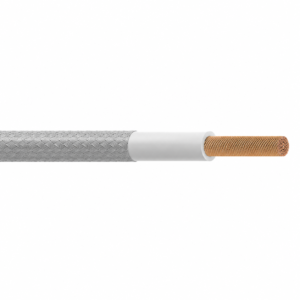
Câble en caoutchouc silicone haute température SIAF/GL avec tresse en fibre de verre
Une autre option de câble pour une application ou des conditions de service différentes.
Voir le produit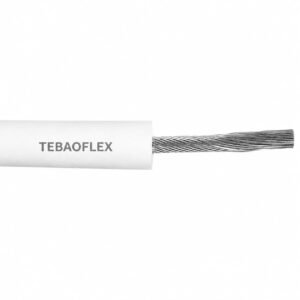
Fil de câblage PTFE jusqu’à 250°C, 150–1000 V, styles UL AWM
Une autre option de câble pour une application ou des conditions de service différentes.
Voir le produit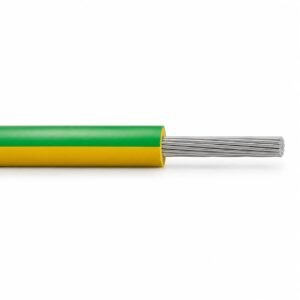
Câble souple unipolaire en silicone SiF 180
Une autre option de câble pour une application ou des conditions de service différentes.
Voir le produitDemandez une recommandation et un devis pour un câble.
Indiquez les fonctions requises, la longueur du câble, les contraintes mécaniques, l’environnement, les terminaisons et la quantité. Notre équipe évaluera l’aptitude à l’application avant d’établir une soumission.
- Veuillez inclure le nom du produit ou son SKU, ainsi que la longueur et la quantité de câble requises.
- Joignez une fiche technique, un dessin ou une fiche de spécifications si disponible.