

Shipboard, offshore and marine-project procurement
Marine Cable Supplier for Shipboard & Offshore Projects
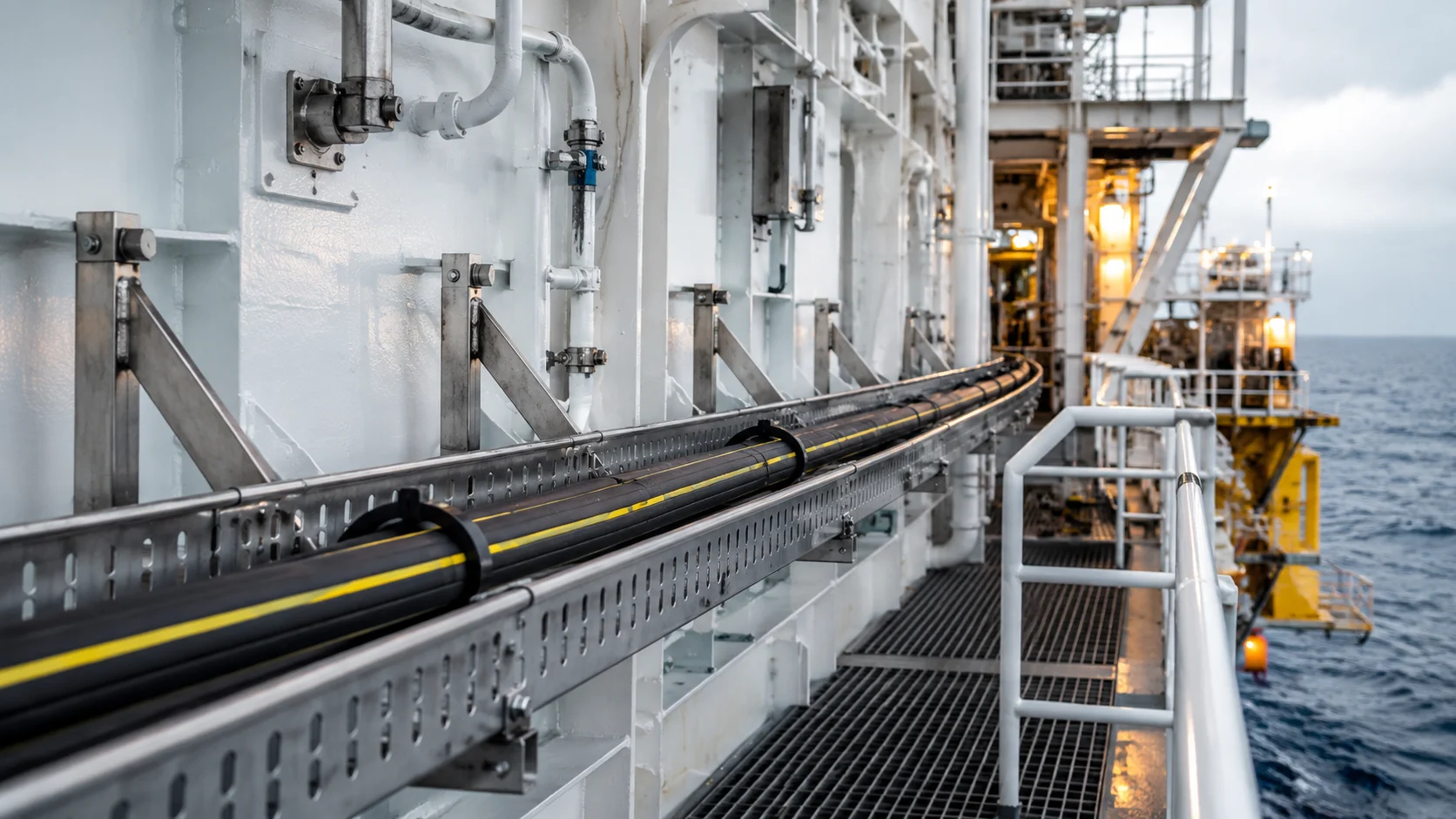
Source a defined cable construction for a vessel, yard, platform or replacement project. TEBAOFLEX helps procurement and engineering teams turn the operating duty, cable schedule and documentation list into a clear RFQ route.
- Power, control, instrumentation and special cable routes
- Project-led review of construction, interfaces and documents
- Custom cable and OEM/ODM discussion where the project requires it
.
Quick answer
What does a marine cable supplier provide?
A marine cable supplier helps a shipyard, EPC, vessel operator or distributor convert an operating requirement into a quoteable cable schedule. For electrical marine work, that means confirming the circuit function, voltage or signal, conductor configuration, screen or armour, installation route, environmental exposure, termination and required documents. The supplier should then route the enquiry to the appropriate shipboard, offshore, subsea or special-cable construction rather than treating every “marine cable” as interchangeable. For a replacement, the existing marking is useful evidence, but the cable’s application, fire strategy, mechanical duty and approval scope still need review. The useful output is a defined construction and documentation route for the stated project—not an unsupported blanket compliance claim.
A marine & offshore cable supplier for project-led purchasing
Marine cable procurement is rarely a matter of choosing a cable by colour or conductor size alone. The vessel area, electrical function, movement, environmental exposure, fire strategy, installation hardware and approval route all affect the construction that should be quoted.
For shipyards, EPCs and vessel operators
Use this route when you are buying for newbuild, refit, repair, a platform module or a defined replacement. Send the cable schedule or the available project information; we will help identify the next product-family or custom-construction discussion.
For distributors and branded programs
TEBAOFLEX can discuss cable marking, drums, packaging and OEM/ODM requirements alongside the technical schedule. The final proposal depends on the confirmed construction, marking requirements and order details.
For existing cable replacement
Share the full marking, photos, cross-section data, installation route and the reason for replacement. A matching designation alone is not enough when the cable’s screen, armour, sheath, fire requirement or documentation scope has changed.
For special and combined systems
Where a route combines power, control, data, coaxial or optical elements with mechanical reinforcement, start with the equipment and termination interface. This is especially important for subsea, towing and other non-standard marine duties.
What to define before comparing marine cables
A quotation can be useful only when the construction and acceptance route are clear enough to compare. The table below separates the main decisions that are often compressed into the phrase “marine cable.”
| Decision area | What to state | Why it matters |
|---|---|---|
| Circuit and equipment | Power, control, instrumentation, communication, earthing, emergency system or combined function | Separates normal system routes from critical, screened or special constructions. |
| Installation route | Ship zone, platform module, machinery space, accommodation, exposed deck, tray, conduit or equipment link | Defines likely salt, UV, water, oil, vibration, abrasion and mechanical-protection considerations. |
| Electrical and mechanical duty | Voltage, current, cores/pairs/triads, conductor size, screen, armour, bend limits, movement and termination | Confirms that the cable and its interfaces are considered as one system. |
| Fire and environmental requirements | Named flame-spread or circuit-integrity requirement, low-smoke/halogen requirement, mud or hydrocarbon exposure and temperature | Prevents a generic “marine grade” description from standing in for the actual project requirement. |
| Approvals and documents | Class, flag, owner, yard, IEC, UL, NEK, BS or other named requirement; test and certificate list | Allows the proposed construction and documentation scope to be checked before production. |
Start with the cable route that fits the duty
These pages are not interchangeable products. They are routes for narrowing a project requirement before a final construction and approval scope are agreed.
Marine and offshore cable families
Browse the product family page for shipboard and offshore power, control and instrumentation routes, then send the project schedule for a focused quotation.
Browse Marine & Offshore CablesRFOU for normal offshore systems
Use the RFOU route when the project calls for a normal offshore power, control or instrumentation construction. Confirm voltage, cores, screen, armour and the stated NEK 606 requirement.
View RFOU Marine Offshore CableBFOU for defined critical circuits
For emergency or fire-critical routes, start with the specified circuit function and named test requirement. Do not substitute a flame-retardant cable for a fire-resistance requirement without engineering and project confirmation.
View BFOU P105 CableUX earth cable for grounding routes
For dedicated earthing and bonding duties, confirm conductor size, installation route, sheath and project documentation requirements.
View UX P108 Earth CableSW4 and shipboard routes
For projects that specify a BS-style marine cable construction, provide the full designation, voltage, armour requirement and required documentation.
View SW4 Marine CableCustom subsea and special marine cable
For underwater, towed, reeled or combined cable systems, review the load case, depth, cable length, power/data elements and connector interface together.
Discuss a Custom Subsea & Marine CableNeed a marine tinned cable supplier?
State “tinned copper conductor” in the cable schedule rather than relying on an informal description. The proposed construction still needs to be reviewed with the required conductor class, insulation, screen, armour, sheath, operating environment and applicable standard.
Provide the conductor material requirement, size, class, current or voltage, cable function and any named standard or approval requirement.
The quotation should identify the agreed cable construction and any applicable documentation. No tinned-conductor, flame, fire, oil, mud or class claim should be assumed beyond the confirmed model and project scope.
Specify the control system correctly
Marine control cables: mechanical motion or electrical control?
In vessel procurement, “marine control cable” can mean two different things. A mechanical push-pull cable transmits operator motion to a throttle, gear-shift, steering or other mechanical control. Electrical control and instrumentation cable carries power or signals between equipment, panels, sensors and actuators.
They have different construction, interfaces and selection criteria. Tell us which system you need so the RFQ is routed correctly from the start.
Standards, certification and approval boundaries
Standards are a project input, not a marketing label. The relevant edition, product construction, tests, documents and approval authority must be stated in the enquiry and confirmed for the ordered cable.
IEC shipboard and offshore references
IEC 60092-350 describes general construction and test methods for power, control and instrumentation cables intended for fixed shipboard and offshore systems. Its scope has exclusions, so special, frequently flexed, subsea and communication routes require their own review.
UL marine shipboard references
UL 1309 covers specified marine-vessel and offshore-facility power, control and signal cable applications. If this standard is required, provide the complete project and authority requirements for model-level confirmation.
Class and certificate verification
Where a project requires DNV approval or a particular certificate, share the required scope and certificate details. The DNV Approval Finder is a public route for checking listed DNV approvals; final acceptance remains with the applicable project and authority process.
Sources and verification for marine cable selection
Each external source below supports a limited point; it does not certify every product or replace project, yard, class or authority approval.
IEC 60092-350: shipboard/offshore cable scope
The IEC publication describes general construction and test methods for defined fixed-system power, control and instrumentation cables. Read the official IEC 60092-350 scope and exclusions before applying it to a special route.
UL 1309: marine shipboard cable
The official UL 1309 listing identifies the standard’s stated vessel and offshore-facility cable scope. Ask for model-specific evidence when a UL requirement is part of an RFQ.
DNV approval verification
Where a purchaser specifies a DNV approval, use the DNV Approval Finder with the certificate information and confirm the exact product and scope through the project process.
TEBAOFLEX technical source basis
Company records supplied by TEBAOFLEX state that the company was founded in 2014 and list special-cable manufacturing, custom/OEM/ODM capability, and UL, cUL and VDE certificate records. These company-level facts do not extend certification or approval to every marine cable construction.
Marine cables manufacturer support for defined requirements
TEBAOFLEX was founded in 2014 and manufactures special cable products. Its technical team can discuss a marine-project construction from the available cable schedule, duty and documentation requirements before an order is confirmed.
Custom construction discussion
For non-standard requirements, the review may cover electrical function, conductor configuration, screens, armour or reinforcement, sheath, marking, drum/packaging and documentation. A technical drawing or data sheet is agreed before production where needed.
Quality and certificate scope
TEBAOFLEX company records list UL, cUL and VDE certificates. Certificate applicability is model- and scope-specific; request the relevant evidence for the cable you intend to buy rather than assuming a company certificate covers every marine construction.
Packing and shipment details belong in the cable schedule
For export projects, drum type, protection, marking and loading constraints should be agreed with the cable construction and quantity. The photos below show TEBAOFLEX cable drums prepared and secured for delivery; they do not represent a claimed project approval or destination.
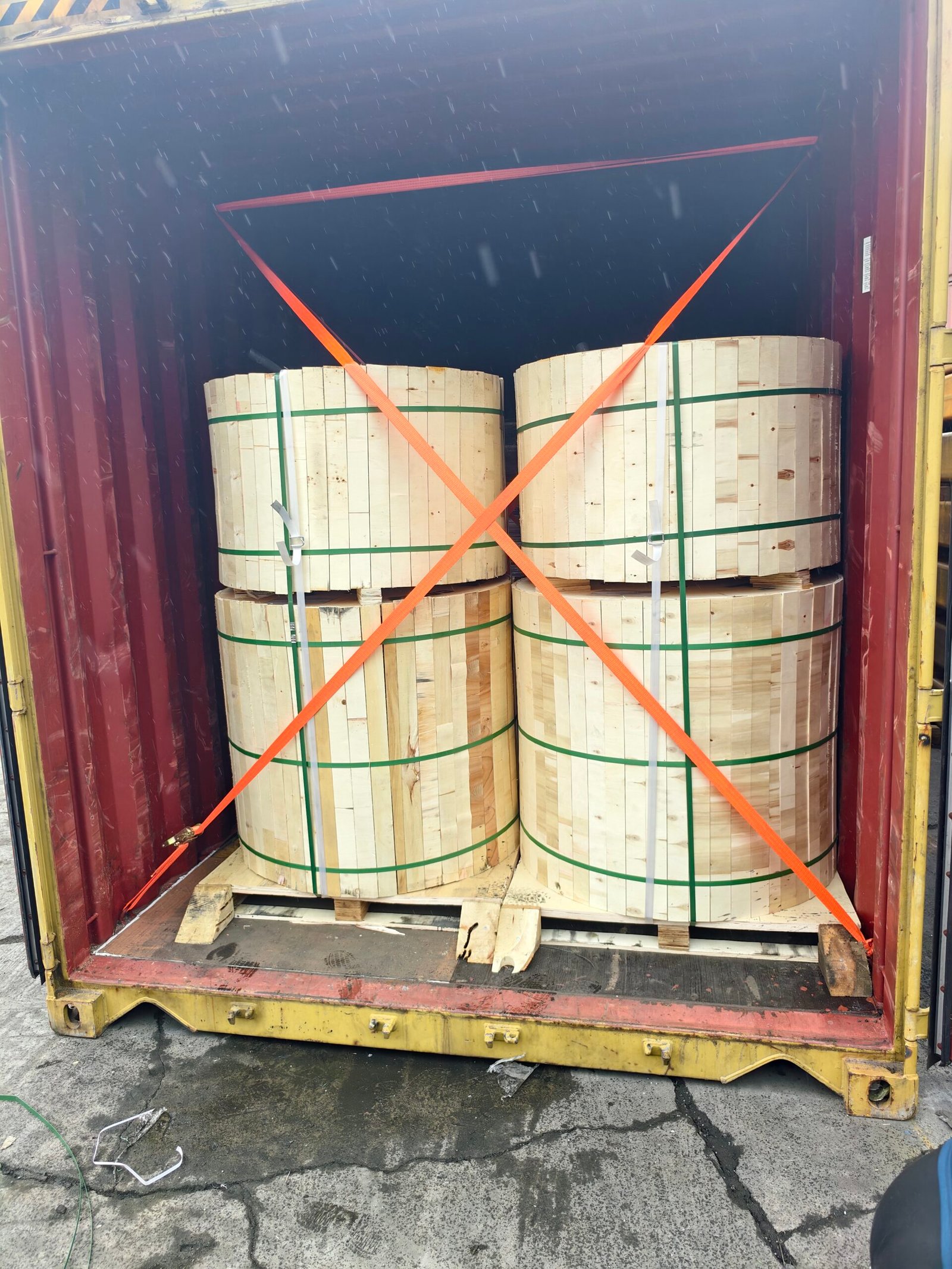
Cable drums are protected and restrained for shipment after packing requirements are confirmed.
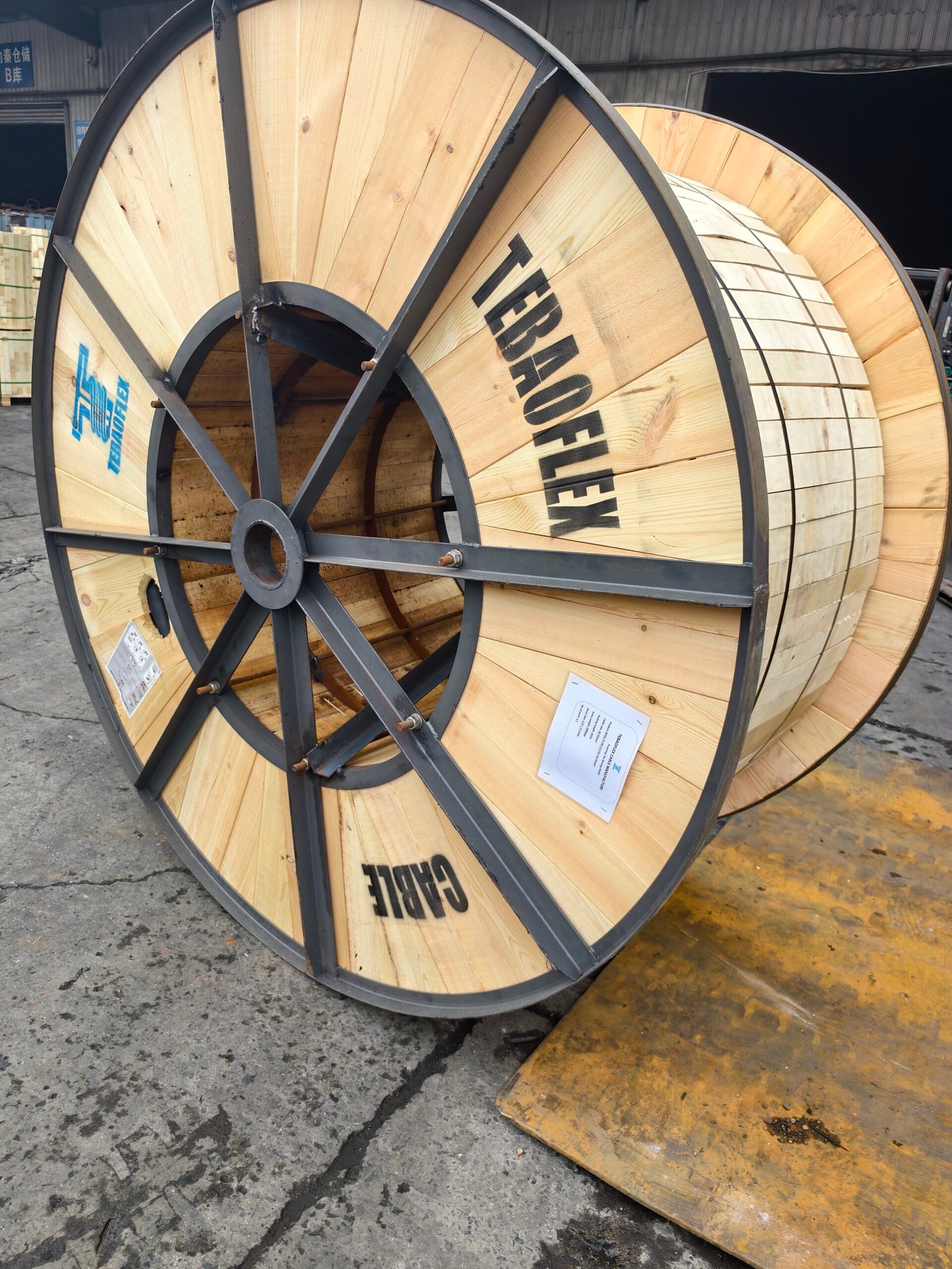
Specify length, drum preference, identification and packing instructions in the RFQ.
From project data to a usable marine cable quotation
The aim is to replace incomplete assumptions with an agreed cable and document schedule.
1. Send available information
Share the cable schedule, data sheet, existing marking, drawings, photos, vessel or platform area, quantity and delivery country.
2. Clarify the duty
Review circuit function, route, exposure, movement, termination, stated standard and certificate expectations.
3. Confirm the construction
Agree the product route or custom construction, dimensions, marking, packing and any required inspection or document list.
4. Proceed with the order schedule
Production and inspection follow the confirmed purchase requirements. Project approval and installation acceptance remain subject to the responsible engineering, yard and authority processes.
Marine cable supplier FAQs
Answers to recurring procurement questions before you send an RFQ.
Can you quote from an existing cable marking?
Yes. Send the complete marking together with photos, cable function, installation route and any project standard. The marking is a starting point; the final comparison must also cover construction and documentation scope.
Do you supply both marine and offshore cable?
We can review shipboard, offshore and special marine requirements through the relevant product-family or custom-cable route. The correct route depends on the electrical function, environment, movement and named standard.
Can you provide cable for a fire-critical system?
For a critical circuit, provide the required circuit function, duration and named fire test or project specification. Fire resistance, flame retardance and low-smoke/halogen requirements are separate characteristics and must not be treated as equivalents.
What documents should be included in a marine cable RFQ?
Include the required standard, class/flag/yard or owner requirements, certificate type, test documents, inspection needs, cable schedule, technical drawings and any marking or packing instructions.
Request a marine cable quotation with the right project inputs
Send what you have now. A cable schedule, data sheet, old marking, drawings and route information are more useful than a generic “marine cable” request.
- Vessel, offshore unit, equipment or project name and installation area
- Circuit function; voltage/current; cores, pairs or triads; conductor size and screen/armour requirement
- Fixed, reeled, towed or other movement duty; route, bend limits and termination/gland details
- Exposure to water, salt, UV, oil, mud, temperature, vibration, abrasion or mechanical risk
- Named IEC, UL, NEK, BS, class, flag, yard or owner requirement and the needed document list
- Required length, quantity, drum/packing, marking, delivery country and target delivery window