

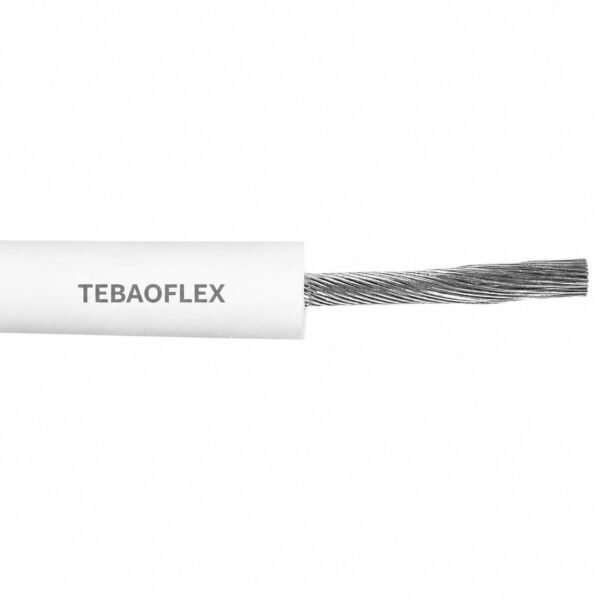

PTFE Hook Up Wire up to 250°C, 150–1000 V UL AWM Styles
PTFE hook up wire for the looms that have to survive heat, solvent and a crowded connector shell at the same time. TEBAOFLEX manufactures eleven UL AWM PTFE styles with extruded polytetrafluoroethylene over plated copper, rated from 80 °C to 250 °C at 150 V to 1000 V, in sizes from 32 AWG to 8 AWG.
- UL AWM styles: 1212, 1213, 1164, 1180, 1198, 1199, 1570, 1584, 1659, 1815, 10393
- Temperature rating: 80 °C to 250 °C by style; PTFE constructions run down to −65 °C
- Voltage rating: 150 V, 300 V, 600 V or 1000 V by style
- Conductor: silver-plated copper to 200 °C, nickel-plated copper for the 250 °C styles; high-strength copper alloy on request
- Insulation: extruded PTFE, nominal wall 0.33–0.76 mm by style and size; mineral-filled PTFE on style 1570
- Thin wall: 0.33 mm on the 300 V styles — roughly a third of what an equivalent silicone wire needs
- Flame and compliance references: UL VW-1, CSA AWM I A/B FT1, UL 758
- Colours: ten standard colours, surface printed as required by UL or CSA
For a quotation, send the UL style, voltage, AWG size, stranding, conductor plating, colour and the length per spool.
PTFE Hook Up Wire for Aerospace, Instrument and High-Heat Equipment Wiring
PTFE is the fluoropolymer you specify when the wire has to be thin, chemically inert and hot all at once. A 300 V PTFE style carries 0.33 mm of wall where an equivalent silicone wire wants nearly a millimetre, which is how a forty-way loom fits a shell that was drawn for twenty-four. TEBAOFLEX builds eleven UL AWM PTFE styles from 80 °C to 250 °C at 150 V through 1000 V, in 32 AWG to 8 AWG.
Two things separate the styles, and neither is obvious from the number. The first is wall: 1164 and 1180 are the 300 V thin-wall pair, 1198 and 1199 are the same materials in a heavy 600 V wall, and 1584 is the only 1000 V style. The second is conductor plating, which is what actually sets the ceiling — silver-plated copper up to 200 °C, nickel-plated copper for every 250 °C style.
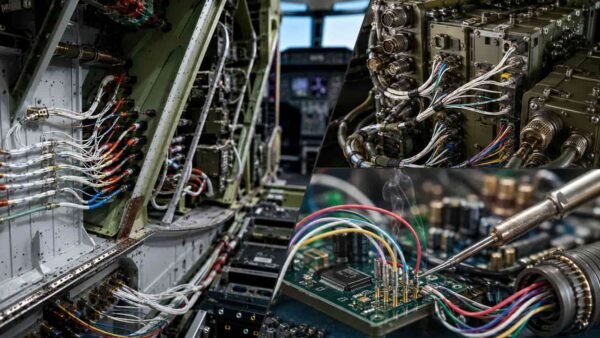
- Suitable for: avionics and airframe looms, military and defence equipment, instrumentation, semiconductor and chemical plant, heaters, ovens and high-temperature sensors.
- Confirm before ordering: UL style, voltage, AWG size, stranding, conductor plating, colour and spool length.
- Choose another construction when: the loom must flex repeatedly — PTFE is stiff and wants a generous bend radius, so silicone is the better answer for movement.
Working out which fluoropolymer you need? The high temperature wire selection matrix compares PTFE against FEP, PFA and silicone, and the range sits under High Temperature Cables.
Small-gauge 600 V harnesses that need an extruded PFA wall rather than PTFE can be checked against the UL 10485 thin PFA wire, rated 250°C with a dimension table running from 30 AWG to 20 AWG.
Construction
Every PTFE hook up wire style here is a single core with two variables: the plating on the copper and the thickness of the extruded PTFE over it. Get those two right and the style number follows automatically.
- Conductor: stranded or solid copper, plated. Silver-plated copper is standard through the 150 °C and 200 °C styles; the 250 °C styles use nickel-plated copper. Nickel-plated high-strength copper alloy is available where the loom takes mechanical load.
- Insulation: extruded PTFE. Nominal wall is 0.33 mm on the 300 V thin-wall styles, 0.51 mm on most 250 °C 600 V constructions, 0.56 mm on the 1000 V style and 0.76 mm on the largest 8–10 AWG sizes.
- Mineral-filled PTFE: style 1570 uses a mineral-filled compound instead of plain PTFE. The filler raises abrasion resistance enough that the wire is used as a direct replacement for asbestos-insulated and glass-braided legacy wiring.
- Colours and identification: ten standard colours, surface printed as required by UL or CSA.
Why the plating decides the temperature, not the polymer
PTFE itself is comfortable well past 250 °C. The conductor is what gives out first. Tin melts at 232 °C, which rules it out entirely above 200 °C. Silver plating carries the 150 °C and 200 °C styles and solders beautifully. Nickel plating is what makes a 250 °C style a 250 °C style — it costs more and it is harder to solder, and that combination is most of the price gap between a 200 °C and a 250 °C wire. If a quotation for 250 °C PTFE looks suspiciously cheap, check what is on the copper.
Thin wall against heavy wall
Styles 1164 and 1180 share one construction at 0.33 mm of wall and a 300 V rating. Styles 1198 and 1199 are the heavy-wall versions of the same two wires at 600 V. Same PTFE, same silver-plated copper, same sizes — the only real difference is how much insulation is on the conductor, which is why buyers so often order the wrong one from a diameter measurement alone.
The 250 °C 600 V group
Styles 1570, 1659 and 10393 all land on 250 °C and 600 V with nickel-plated copper, and at the same 0.51 mm wall they occupy virtually the same dimensional envelope. The compound is the differentiator: 1570 is mineral-filled for abrasion, the other two are standard PTFE. If the wire will be pulled through metalwork or bundled against a sharp edge, that filler is the reason to pay for 1570.
Applications
PTFE hook up wire is internal equipment wiring for places where space, chemistry and temperature all push at once. It is the default fluoropolymer in aerospace and defence looms, and it earns its place anywhere a thinner wall means a smaller connector, a lighter harness or a bundle that actually fits the duct.
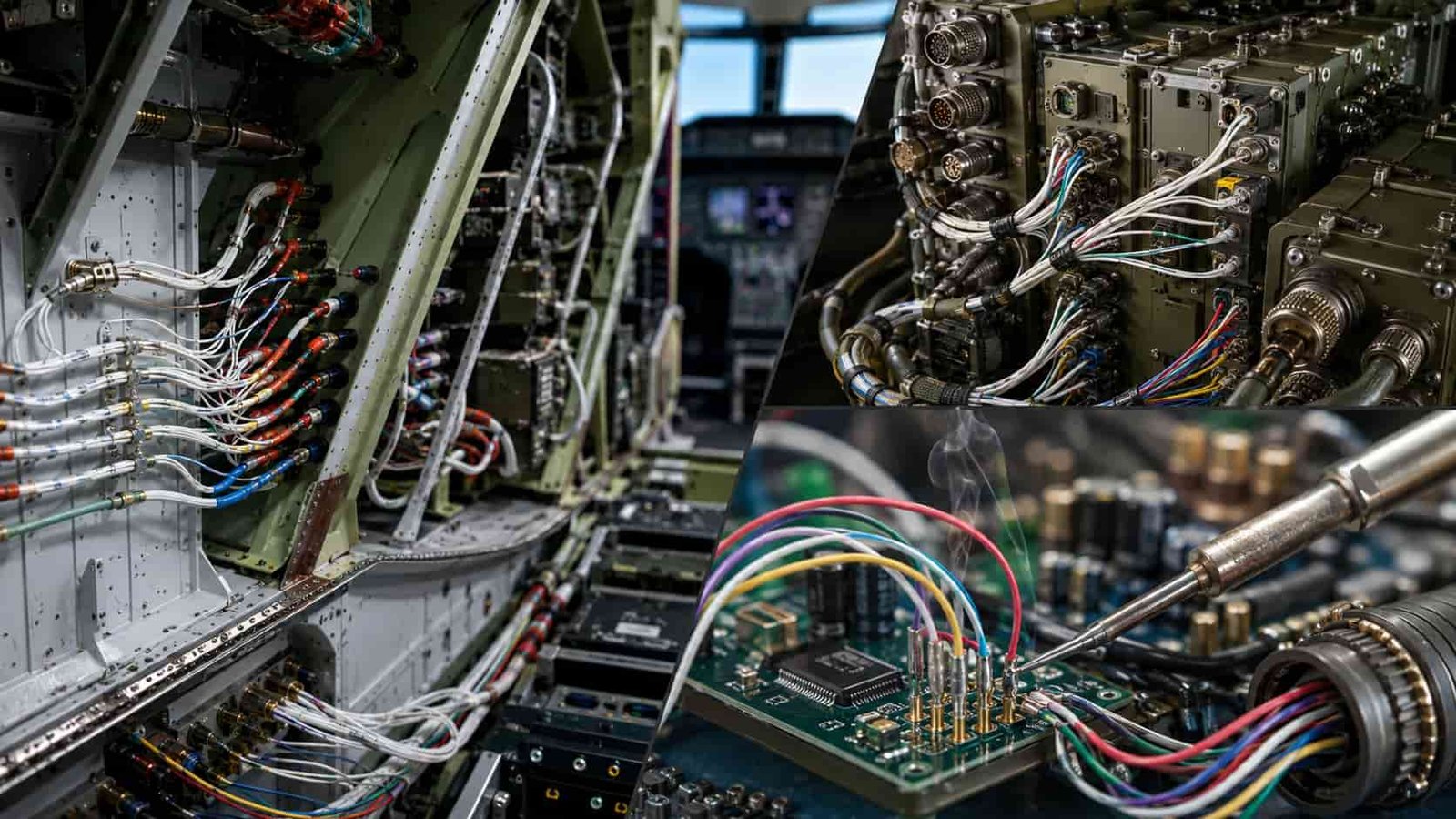
Equipment and duty this wire is built for
- Avionics and airframe wiring — where weight and bundle diameter are design constraints and the wire has to shrug off hydraulic fluid and de-icing chemicals.
- Military and defence equipment — circular-connector harnesses, ruggedised enclosures, ground support equipment.
- Instrumentation and test equipment — stable dielectric behaviour and a low, predictable capacitance per metre.
- Semiconductor and chemical process plant — solvent, acid and process-vapour exposure that would swell or attack other insulations.
- Heaters, ovens and furnace controls — element leads and internal wiring at 200 °C to 250 °C.
- High-temperature sensors and thermocouples — short leads where the insulation sits directly in the heat.
- Board-level assembly — PTFE does not shrink back from a soldering iron the way thermoplastic insulations do, which is why it survives rework.
- Legacy replacement — mineral-filled style 1570 is specified to replace asbestos-insulated and glass-braided wiring in older equipment.
Where PTFE is the wrong answer
- Repeated flexing, reeling or torsion — PTFE is stiff and takes a set. Use a Class 5 or Class 6 silicone construction for anything that moves in service.
- Tight bend radius — plan on roughly six times the outside diameter as a minimum. If your routing cannot give that, the wire is wrong for the harness.
- Cost-driven general wiring — if the duty tops out at 200 °C and there is no chemical exposure, FEP does the same job for less.
- Fixed building installation or direct burial — AWM appliance wiring material is not an installation cable and carries no such listing.
- Heavy abrasion without protection — standard PTFE cuts through. Specify mineral-filled 1570, or protect the bundle.
Cross-referencing an existing wire
North American harness drawings often call PTFE hook up wire by a trade designation such as Type E or Type EE, or by a MIL-W-16878 reference, rather than by the UL AWM style number. If the wire you are replacing is marked that way, send a photograph of the printed marking plus the measured outside diameter and conductor size, and we will identify the matching UL style before quoting.
Specifications
Eleven styles, one material family. Pick the row by the temperature and voltage you need, then check the finished diameter in the dimension tables below.
PTFE hook up wire styles at a glance
| UL AWM style | Temperature | Voltage | Nominal wall | Conductor plating | Size range | Notes |
|---|---|---|---|---|---|---|
| UL 1212 | 80 °C | 150 V | Thin wall | Bare, tin, nickel or silver | 36–10 AWG | Published as one family with 1213 |
| UL 1213 | 105 °C | 600 V | 0.25–0.38 mm | Silver-plated | 36–10 AWG | Also built to MIL-W-16878/4 at 200 °C |
| UL 1164 | 150 °C | 300 V | 0.33 mm | Silver-plated | 32–10 AWG | Thin-wall 300 V pair with 1180 |
| UL 1180 | 200 °C | 300 V | 0.33 mm | Silver-plated | 32–10 AWG | UL permits 600 V for electronic use only |
| UL 1198 | 150 °C | 600 V | Heavy wall | Silver-plated | 28–8 AWG | −60 °C to +150 °C; heavy-wall version of 1164 |
| UL 1199 | 200 °C | 600 V | Heavy wall | Silver-plated | 28–8 AWG | −60 °C to +200 °C; VW-1, CSA FT1 |
| UL 1815 | 250 °C | 300 V | 0.33 mm | Nickel-plated | 24–10 AWG | Thin-wall 250 °C option |
| UL 1570 | 250 °C | 600 V | 0.51 mm (12–28 AWG), 0.76 mm (8–10 AWG) | Nickel-plated | 28–8 AWG | Mineral-filled PTFE; asbestos and glass-braid replacement; UL permits 2,500 V peak for electronic use only |
| UL 1659 | 250 °C | 600 V | 0.51 mm | Nickel-plated | 24–10 AWG | Standard PTFE; also supplied multicore |
| UL 10393 | 250 °C | 600 V | 0.51 mm | Nickel-plated | On request | Standard PTFE |
| UL 1584 | 250 °C | 1000 V | 0.56 mm | Bare, tin, nickel or silver | 32–10 AWG | −65 °C to +250 °C; 3,000 V test voltage; the only 1000 V PTFE style |
Dimensions and Electrical Data
300 V thin-wall styles — UL 1164 (150 °C) and UL 1180 (200 °C)
Silver-plated copper, 0.33 mm nominal PTFE wall. The two styles share one construction; only the temperature rating differs.
| AWG | Stranding | Conductor Ø mm | Overall Ø mm | Weight kg/km | Max resistance Ω/km @20 °C |
|---|---|---|---|---|---|
| 10 | 37 | 2.87 | 3.71 | 58.5 | 3.90 |
| 12 | 19 | 2.24 | 3.18 | 39.1 | 5.94 |
| 14 | 19 | 1.78 | 2.67 | 25.4 | 9.41 |
| 16 | 19 | 1.42 | 2.29 | 17.3 | 14.8 |
| 18 | 19/30 | 1.19 | 2.01 | 13.1 | 19.0 |
| 20 | 19/32 | 0.965 | 1.73 | 9.06 | 29.1 |
| 22 | 19/34 | 0.762 | 1.52 | 6.46 | 48.5 |
| 24 | 19/36 | 0.610 | 1.35 | 4.66 | 77.4 |
| 26 | 19/38 | 0.483 | 1.22 | 3.57 | 122 |
| 28 | 19/40 | 0.381 | 1.14 | 2.84 | 207 |
Solid and 7-strand constructions are available in the same sizes; ask if your drawing calls one out.
250 °C 600 V styles — UL 1570 (mineral-filled) and UL 1659
Nickel-plated copper, 0.51 mm nominal wall (0.76 mm at 8 and 10 AWG on style 1570). At a common wall the two styles occupy the same dimensional envelope; the insulation compound is what differs.
| AWG | Stranding | Conductor Ø mm | Overall Ø mm | Weight kg/km | Max resistance Ω/km @20 °C |
|---|---|---|---|---|---|
| 8 | 133 | 4.14 | 5.84 | 107 | 2.28 |
| 10 | 37 | 2.74 | 4.42 | 63.0 | 4.03 |
| 12 | 19 | 2.13 | 3.30 | 39.3 | 6.20 |
| 14 | 19 | 1.70 | 2.84 | 26.5 | 9.84 |
| 16 | 19 | 1.35 | 2.51 | 19.0 | 15.6 |
| 18 | 19/30 | 1.19 | 2.36 | 16.0 | 20.0 |
| 20 | 19/32 | 0.965 | 2.11 | 11.7 | 31.8 |
| 22 | 19/34 | 0.762 | 1.88 | 8.66 | 51.5 |
| 24 | 19/36 | 0.610 | 1.73 | 6.76 | 82.7 |
Style 1659 is supplied from 24 AWG to 10 AWG; style 1570 extends to 8 AWG. Style 1815 uses the same nickel-plated conductors at the thinner 0.33 mm wall for 300 V duty, and style 1584 uses a 0.56 mm wall for 1000 V — dimensions for those two on request.
All values are nominal and subject to normal manufacturing tolerance. Nominal diameters vary slightly between producers, so treat these as a planning envelope rather than a drawing dimension, and confirm the final size before ordering.
Other properties
| Conductor | Stranded or solid copper; silver-plated to 200 °C, nickel-plated for 250 °C styles; nickel-plated high-strength copper alloy on request |
|---|---|
| Insulation | Extruded PTFE; mineral-filled PTFE on style 1570 |
| Working temperature | 80 °C to 250 °C by style; PTFE constructions are specified down to −65 °C |
| Minimum bending radius | 6 × outside diameter |
| Test voltage | 3,000 V on the 1000 V style |
| Chemical resistance | Excellent against chemicals, oil and fuel; excellent ozone, UV and humidity behaviour; low coefficient of friction |
| Colours | Ten standard colours, surface printed as required by UL or CSA |
| Cores | Single core; style 1659 also supplied multicore |
Standards
Standards, test methods and compliance references that apply to PTFE hook up wire in these UL AWM styles.
| UL AWM | Appliance Wiring Material styles 1212, 1213, 1164, 1180, 1198, 1199, 1570, 1584, 1659, 1815 and 10393, evaluated under UL 758 |
|---|---|
| CSA | CSA AWM I A/B, FT1 |
| Flame tests | UL VW-1 vertical flame test; FT1 flame rating as per UL approval |
| Military reference | Style 1213 constructions are also built to MIL-W-16878/4 |
| Identification | Surface printed as required by UL or CSA |
Reading a UL AWM style correctly
A UL AWM style number fixes the insulation material, the temperature rating and the voltage rating for appliance wiring material. Three things it does not do: it is not an installation-cable listing, it does not authorise use in fixed building wiring, and it does not state the conductor plating that your temperature rating actually depends on. On PTFE that last point matters more than on any other material, because the polymer will outlast the plating every time.
Voltage ratings with an asterisk
Two styles carry a higher permitted voltage for electronic use only: UL allows 600 V on the 300 V style 1180 family, and 2,500 V peak on style 1570, in both cases restricted to electronic applications. Those are conditional permissions inside the UL scope, not a general uprating — if your drawing needs the higher figure, say so at enquiry and we will confirm it against the approval that applies to your order.
TEBAOFLEX certification
Jiangsu TEBAOFLEX Special Cable Co., Ltd holds UL certificate UL-US-2449012-0 and cUL certificate UL-CA-2437036-0, both dated 27 December 2024 under report E542560-20241225, and VDE certificate 40060055 dated 28 March 2025. These are company-level certifications. Send the exact UL style and size you intend to order and we will confirm the approval scope that applies to it before you commit, and issue the test documentation with the shipment.
Documentation supplied with an order
- Construction drawing and dimensional data for the agreed style and size
- Routine test records for the production batch
- Certificate of conformity referencing the agreed standards
- Spool and packing list with marking details
For the scope of a specific standard, consult the issuing body directly — for example the International Electrotechnical Commission or UL Solutions.
Related cable options
Compare these cable options by service combination, movement, load, voltage and transmission requirement.
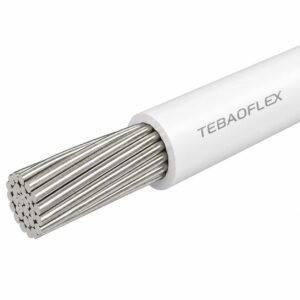
FEP Hook Up Wire 150–200°C, 300/600 V UL AWM Styles
A related cable option for a different application or duty profile.
View product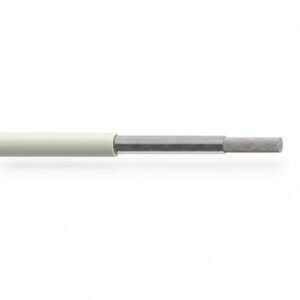
Intemp 250 BS G210 High Temperature PFA Equipment Wire
A related cable option for a different application or duty profile.
View product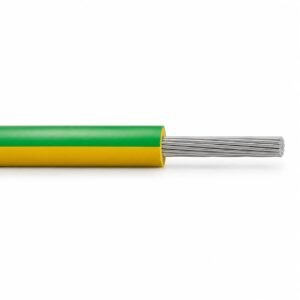
SiF Silicone 180 Single Core Flexible Cable
A related cable option for a different application or duty profile.
View productRequest a cable recommendation and quotation
Send the required services, cable length, mechanical duty, environment, termination and quantity. Our team will review the application before quoting.
- Include the product name or SKU plus the required cable length and quantity.
- Attach a specification, drawing or data sheet when available.