

Underground face drilling and development headings
Type G-GC Cable Solution for Underground Drill Jumbos
Specify the underground drill jumbo cable around the machine circuit, ground-check system, cable reel or trailing route, and the damage mechanisms in the heading. For a 2 kV portable supply, Type G-GC can be the right route when the system requires grounding conductors and a dedicated ground-check conductor.
- 2 kV portable mining power route
- Grounding and ground-check continuity
- Reel, trailing and relocation inputs
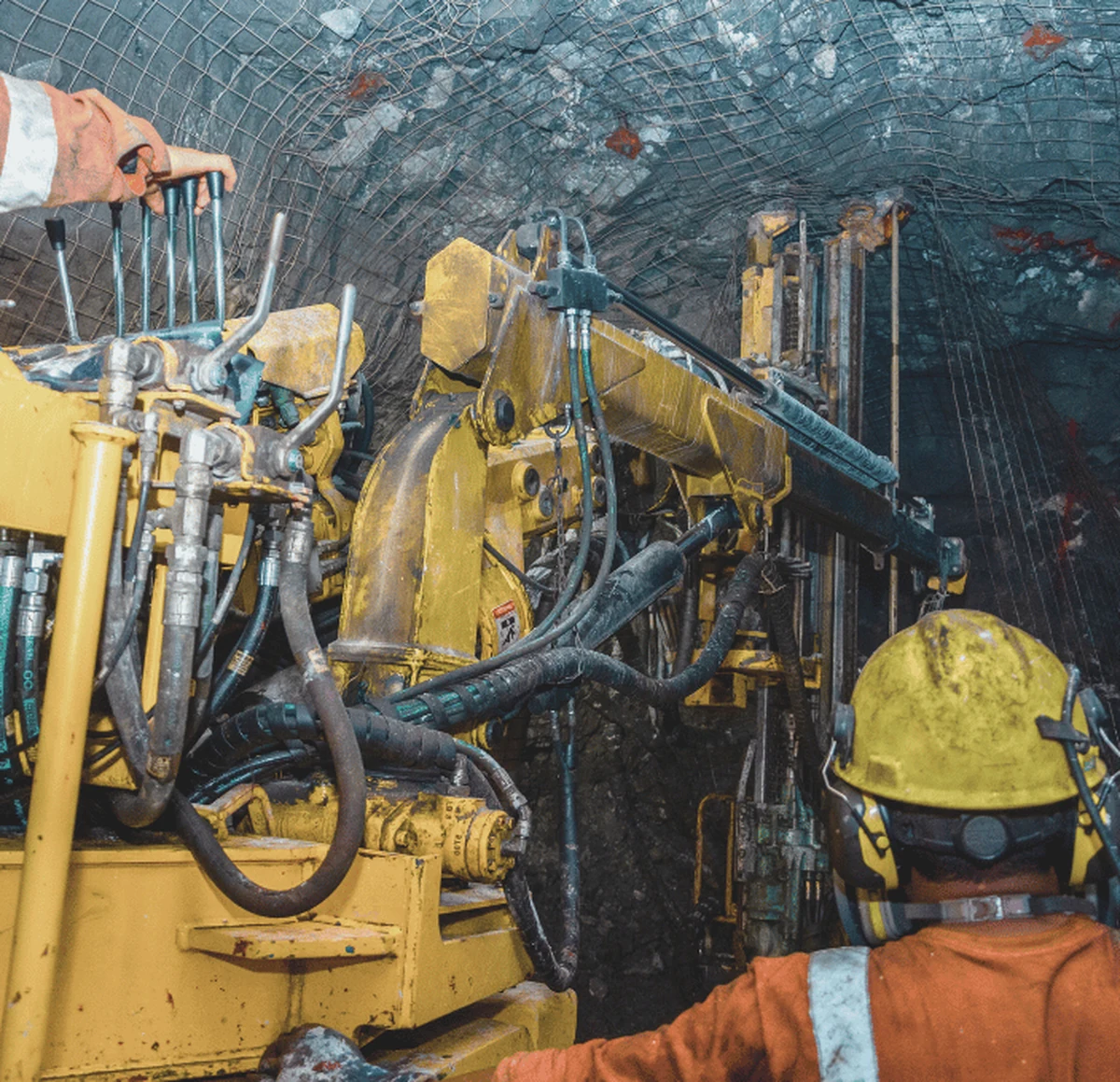
Start with the drill jumbo duty, not the cable name alone
An underground drill jumbo alternates between travel, setup and electrically powered drilling. The supply cable can be reeled, paid out, dragged, redirected and exposed to rock, water, oils, vibration and tight routing. A useful review therefore combines the electrical system with the mechanical route.
Who this solution fits
Mine operators, equipment distributors, EPC teams and mining suppliers sourcing a portable power cable for an underground face drill, development jumbo or similar mobile drilling rig.
What to send first
Machine model, nameplate voltage and current, existing cable marking, conductor size, ground-check arrangement, cable length, reel data, route photos and the required mine or project documents.
What the review produces
A proposed cable route, construction schedule, dimensional data, marking and packing plan, document list and quotation boundary for buyer approval before production.
A Venezuela project pattern: 2 kV Type G-GC for a drill jumbo
An anonymized Latin American mining-supply project requested a 2 kV Type G-GC cable in a 3 × 2 AWG phase-conductor configuration for an underground drill jumbo. The enquiry combined a demanding application with a long import route and a buyer who needed to compare European or North American supply against a factory-direct alternative.
The cable had to support a compact underground drilling machine, where repeated relocation, abrasion, impact, vibration and constrained routing can damage a construction that is correct only on voltage and conductor size.
The requested route used flexible tinned-copper conductors, an EPR or EPDM insulation system, insulated grounding and ground-check conductors, fillers and binder, plus a reinforced heavy-duty outer jacket. Exact materials, dimensions and marking belong in the approved order drawing.
The project team planned around an approximately 60-day ocean transport leg. The practical response was to confirm technical data early, reserve production inputs after commercial approval and avoid losing time to incomplete markings, drum or document requirements.
For cross-border orders, the paying entity, invoice entity, consignee, destination, bank-compliance information and shipping documents should be aligned before the production release. Payment routing is a commercial and compliance check, not a cable-performance claim.
Resolve the failure modes that stop drilling
The most expensive cable is not necessarily the one with the highest purchase price. It is the one that does not match the protection scheme or is repeatedly damaged by the actual route. These are the questions to close before comparing offers.
Confirm how the machine and mine monitor grounding continuity, including the ground-check conductor, coupler pins and trip circuit. Type G-GC is selected for a ground-check route; it should not be assumed from the equipment name alone.
Map rock contact, vehicle crossings, sharp edges, hose and cable interaction, drum pressure and storage practice. Jacket material and reinforcement must be reviewed with guarding and route management.
Repeated bending, reverse bending, pull tension, torsion and undersized sheaves can fatigue conductors or the ground-check core. Provide minimum bend geometry and movement frequency rather than relying on the word “flexible.”
Confirm required working length, spare turns, drum core and flange dimensions, winding layers, entry direction and termination allowance. A cable that cannot fit the reel is not a field-ready substitute.
Conductor size must be checked against load current, starting duty, route length, voltage drop, ambient and installation conditions. A prior 3 × 2 AWG project is an example, not a universal drill-jumbo size.
Compare the construction schedule, applicable standard, exact approvals or markings, test plan, dimensions, cable weight and interfaces. A general factory certificate does not prove that every quoted cable carries the same approval scope.
Choose Type G-GC, SHD-GC or Type W by protection scheme
These cable names solve different system requirements. Use the table as a routing aid, then validate the construction against the equipment manual, mine electrical design and project specification.
| Cable route | Consider it when | Confirm before RFQ | Next step |
|---|---|---|---|
| Type G-GC, 2 kV | The portable three-phase circuit requires grounding conductors and a dedicated ground-check conductor, without an individually shielded phase construction. | Voltage, phase size, ground and ground-check sizes, monitoring circuit, coupler, movement, jacket, reinforcement, length and approvals. | Review the Type G-GC product route |
| SHD-GC | The specified voltage or protection arrangement requires individually shielded phase conductors together with grounding and ground-check functions. | System voltage, shield design, grounding, terminations, couplers, monitoring, bend and mechanical duty. | Review the SHD-GC product route |
| Type W | The portable power circuit does not require the Type G-GC ground-check arrangement and the project accepts the Type W construction. | Voltage, conductor count, grounding, movement, environment, termination and applicable approvals. | Review the Type W product route |
| European mining family | The equipment, OEM document or project specification names a DIN/VDE or other European mining-cable construction. | Exact designation, voltage, pilot or monitoring cores, screens, reel duty, dimensions and documentation. | Browse mining cable families |
Compare SHD-GC, Type G-GC and Type W in more detail, or return to the broader mining and tunneling cable solution when the machine route is not yet fixed.
Review the complete cable schedule before approving an equivalent
A recent 2 kV drill-jumbo enquiry used the following structure as a starting point. The final conductor sizes, materials, colour coding, dimensions, temperature range, standards and marking must be confirmed in the quotation and order drawing.
Power conductors
Flexible tinned-copper phase conductors with a rubber insulation system selected for the rated voltage and project temperature requirement.
Grounding system
Insulated grounding conductors plus a separately identified ground-check conductor matched to the monitoring and coupler arrangement.
Cable assembly
Fillers and binder maintain geometry while the reinforcement and jacket provide the mechanical protection specified for the route.
Outer jacket
A heavy-duty mine-cable jacket is reviewed for abrasion, impact, oil, water, flame and temperature conditions. Compound and colour are order-specific.
Reinforcement
Braid or other reinforcing elements should be defined by material and construction, not by a generic strength claim. Their role must match tension and handling conditions.
Marking and drum
Confirm product designation, voltage, conductor size, length marks, approval marks where applicable, manufacturing reference, drum size, protection and shipping labels.
Standards and safety boundary
The project specification decides which standards and approvals apply. For US portable power cable, UL lists UL 1650 as the inspection standard for the portable power cable category. US underground coal-mine rules also contain specific ground-conductor and ground-continuity provisions. These references do not automatically apply to every mine or country, and an approval must be verified for the exact quoted construction.
Build the delivery plan into the technical order
For import-dependent mining projects, the schedule is not only factory production time. Technical confirmation, commercial review, payment clearance, inspection, drum preparation, export documents and ocean transport can each control the equipment-ready date.
Freeze the technical inputs
Resolve the machine data, cable marking, reel, length, construction, standards and required documents before the order enters production.
Align commercial parties
Confirm buyer, payer, invoice party, consignee, destination, incoterm and bank-compliance information. Escalate any restricted-party or destination question to the responsible compliance professionals.
Confirm inspection and release
Agree the inspection plan, report format, witnessing requirement, packing and document approval points before dispatch.
Protect the transport window
Plan the drum and documents around the ocean leg, inland delivery, mine receiving constraints and the date the drill jumbo must be available.
Ask for evidence tied to the quoted cable
Do not use a general statement about country of origin or brand reputation as the acceptance test. The useful evidence is the approved construction, traceable order documents and the inspection results defined for the exact cable.
Before production
Review the datasheet or drawing, conductor schedule, insulation and jacket system, overall diameter and weight, colour code, marking, drum and document list.
During inspection
Use the agreed inspection plan for dimensional, electrical and physical checks. State the methods and acceptance criteria instead of asking for a generic “full test.”
Before shipment
Check the release documents, length and drum identification, packing protection, photos and shipping marks against the purchase order.
Questions buyers ask before a drill-jumbo cable RFQ
These answers narrow the route but do not replace the equipment manual, mine electrical design or project specification.
Is Type G-GC always the right cable for an underground drill jumbo?
No. It is a strong candidate when a portable circuit up to the stated voltage class requires grounding conductors and a ground-check conductor. If the system requires individually shielded phase conductors, another route such as SHD-GC may be appropriate. Follow the equipment and mine electrical requirements.
Can I order the same 3 × 2 AWG construction used in the Venezuela project?
Only after checking your machine load, cable length, voltage drop, starting duty, ground and ground-check arrangement, reel fit and project requirements. The 3 × 2 AWG configuration is a case example, not a default size for every drill jumbo.
What most often shortens drill-jumbo cable life?
Common contributors include tight bends, reverse bending, excessive tension, poor reel geometry, torsion, rock abrasion, crushing, vehicle traffic, damaged couplers and unsuitable route protection. Actual service life depends on the complete system and operating practice, so a fixed-year promise is not credible without defined conditions and evidence.
What should I provide if the old cable marking is unreadable?
Send the machine model and nameplate, photos of both terminations, coupler pinout, cable cross section, outside diameter, reel dimensions, working length, voltage and current, protection scheme, route photos and any OEM or mine specification.
How should we compare a factory-direct offer with a European or North American brand?
Compare the exact construction, approval scope, dimensions, weight, electrical data, movement and jacket requirements, inspection plan, documentation, lead-time basis, logistics, commercial terms and replacement strategy. Do not compare only price or an unsupported service-life estimate.
Send the data needed for a useful underground drill jumbo cable review
Include what is available now. Equipment manuals, old cable markings, cross-section photos, reel drawings and project specifications can be attached through the enquiry form.
- Mine type, country and underground drill jumbo make and model
- System voltage, frequency, machine current or power, starting duty and cable length
- Phase conductor size and count, grounding conductors and ground-check conductor
- Coupler, plug, gland, termination and ground-monitoring circuit details
- Reeling, trailing or occasional-relocation duty and movement frequency
- Drum core and flange diameter, layers, entry direction, speed and tension
- Minimum bend radius, route constraints, abrasion, crushing, impact and vehicle crossings
- Water, oil, mud, chemicals, flame, temperature and mine-environment requirements
- Required standard, approval or marking, test reports and witness inspection
- Length, quantity, drum, destination, required-on-site date and shipping documents