

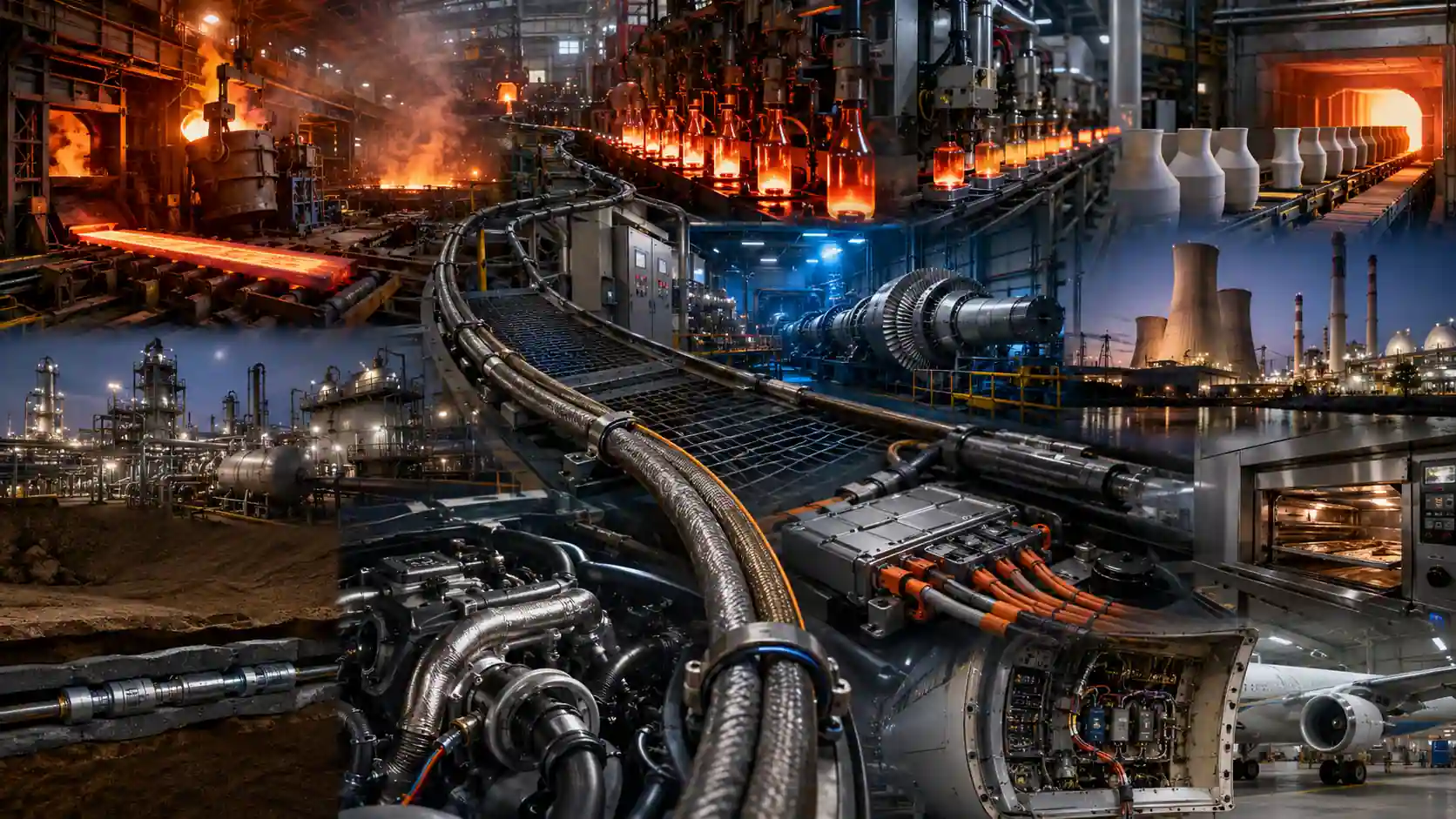
Fabricant de fils et câbles haute température
TEBAOFLEX est un fabricant de câbles haute température qui réalise des conducteurs en silicone, PTFE, FEP, PFA, XLPE et tressés fibre de verre, de 105°C jusqu’au fil d’allumage 538°C, pour des tensions de 150 V à 60 kV. Un fil de câblage PVC ordinaire dans une zone de four durcit, devient cassant puis se transforme en panne. Choisissez l’isolation selon la température réellement subie, pas celle affichée sur la couverture de la fiche technique.
- Usine depuis 2014
- Certifié UL · cUL · VDE
- Plus de 50 types UL AWM
- MOQ 50 m
- 2014En production depuis
- 20 000+ m²Surface de l’usine
- 150 000 kmCapacité annuelle
- 20+Pays desservis
- 30+Ingénieurs R et D
MOQ 50 m · échantillons gratuits (transport à votre charge) · marquage OEM/ODM sur câble et tambour · délai de 10–30 jours · garantie de 6 mois à 1 an · assistance d’ingénieurs 24/7
Qu’est-ce qu’un câble haute température ?
Un fil haute température est un conducteur dont l'isolant conserve ses propriétés électriques et mécaniques au-delà de 90°C en continu. En pratique, le marché commence à 105°C et va jusqu'à 250°C pour le fil de câblage, les constructions en fibre de verre et mica atteignant 538°C. C'est le matériau d'isolation, et non le cuivre, qui fixe le plafond. Le revêtement de ce cuivre en fixe un second, et le cuivre étamé l'atteint autour de 150°C quel que soit le matériau extrudé par-dessus — ce que garantit réellement une classification d'isolant de 200°C.
Le mode de défaillance est déterminant. Le PVC ne fond pas à 120°C : il devient cassant. Six mois plus tard, une flexion du faisceau lors de la maintenance fait s’écailler l’isolation et provoque un défaut phase-châssis inexplicable. Le silicone, les fluoropolymères et les polyoléfines réticulées sont utilisés au-dessus de 90°C parce qu’ils vieillissent progressivement au lieu de se transformer en coque.
Trois chiffres déterminent la spécification : température continue du conducteur, tension assignée, et ce contre quoi le câble frotte. Si ces trois paramètres sont justes, le reste relève simplement du stock.
Matrice matériau × température × tension
Toute la sélection tient sur un seul écran. Repérez la température réellement atteinte par le conducteur, lisez jusqu’à la tension requise et la famille d’isolation est déterminée. Le reste du tableau apporte les détails.
| Isolation | Température continue | Tension | Types UL AWM courants | Applications courantes |
|---|---|---|---|---|
| XLPE / XLPO polyoléfine réticulée | 90–150°C | 300–600 V | 3320, 3385, 3287, 3266, 3173, 3271, 3321 | Câblage de panneaux et d’appareillage sans halogène, liaisons moteur et transformateur, chaînes photovoltaïques et stockage sur batterie |
| EVA éthylène-acétate de vinyle | −40 à +110°C | 450/750 V | EN 50525 H07G-U / -R / -K | Câblage européen de bâtiments et de panneaux sans halogène lorsque la faible fumée prime sur la chaleur |
| FEP éthylène-propylène fluoré | 150–200°C | 300–600 V | 1330, 1331, 1332, 1333, 1901 | Électronique à faible rayon, capteurs, bobines et éclairage : paroi mince, chimie propre et dénudage facile |
| Caoutchouc silicone | 105–250°C | 300–1000 V | 3171, 3232, 3243 / 3099, 3113, 3123, 3132, 3133, 3530 / 3135, 3139, 3143, 3367, 3512 / 3253, 30144, 30145 | Tout ce qui doit rester flexible à chaud : sorties moteur, faisceaux de fours et d’éclairage, intérieurs d’appareils. Constructions plus robustes, sans halogène et 1 500 V CC : HRD, FRNC et ECSC-HRD |
| Silicone + tresse en fibre de verre | 200°C | 300–600 V | 3122, 3513 | Chaleur et abrasion : tabliers de fours, zones de fours industriels et tout endroit où le faisceau frotte l’acier |
| PTFE polytétrafluoroéthylène | 80–250°C | 150–1000 V | 1212, 1213, 1164, 1198, 1180, 1199, 1584, 1815, 1570, 1659, 10393 | Produits chimiques agressifs et paroi mince lorsque l’espace et le poids sont critiques ; faisceaux aéronautiques et d’instrumentation |
| PFA perfluoroalcoxy | 150–250°C | 150–1000 V | 1858, 1859, 1860, 1709, 1710, 1726, 1727, 10362, 10371 | Chauffages électriques, thermocouples, allumeurs gaz et équipements médicaux et semi-conducteurs |
| XLFE fluoroélastomère réticulé par irradiation | 200°C, durée assignée 3 000 h | 1000 VAC / 1500 VDC | ISO 19642-5 (non blindé), ISO 19642-9 (blindé) | Faisceau haute tension pour véhicules électriques et batteries, 3,0–150 mm² et jusqu’à 250 mm² |
| Silicone, grade haute tension | 150–200°C | 3 kV – 60 kV | 3239, 10475 | Alimentations CC haute tension, équipements de radiographie et d’imagerie, bancs d’essai et circuits d’allumage |
| Allumeur silicone / fibre de verre | jusqu’à 538°C au conducteur | 10 kV – 25 kV DC | constructions d’allumage industrielles | Allumeurs de torchères, allumage de brûleurs et de fours, démarrage de turbines à gaz |
| Câble chauffant silicone | 200°C | 300 V | 3590 | Éléments chauffants : résistance fabriquée sur commande, pas un conducteur de puissance |
| TGGT Fil de raccordement PTFE / verre | 250°C | 300 – 600 V | 5256, 5251 | Fours, séchoirs, tunnels de polymérisation et fils de lampes — chauds, humides et chimiquement agressifs en même temps |
| MGT fil de raccordement mica / verre | 450°C UL; 538°C usine | 300 – 600 V | 5107, 5128 | Au-dessus du plafond des fluoropolymères — fours de cuisson, aciéries et verreries, colliers chauffants et fils d'éléments |
Les températures sont les valeurs continues du conducteur issues des données publiées des types UL AWM et des fiches fabricant de chaque construction. Indiquez le numéro de type et nous confirmerons la portée exacte de l’homologation dans notre dossier UL avant la commande.
Fils de câblage haute température par famille d’isolation
Cinq familles couvrent presque toutes les demandes que nous recevons. La différence tient moins à la température maximale qu’à la façon dont chaque câble réagit lorsqu’il est plié, frotté ou exposé à un liquide.
Lorsque le câble doit lui-même empêcher le gel ou maintenir la température le long d’une conduite, d’une cuve, d’un toit ou d’une gouttière, commencez par le guide de sélection des câbles chauffants autorégulants. La puissance, la tension d’alimentation, la température d’exposition et la conception du circuit déterminent ensuite la construction; un fil passif pour équipement à haute température exige une spécification distincte.
Pour les conduites et cuves qui nécessitent une protection antigel ou un maintien en température de procédé dans une limite de 65°C sous tension, le point de départ peut être le câble chauffant autorégulant 230 V pour conduites et ses cinq choix de puissance de 10 à 40 W/m à 10°C.
Caoutchouc silicone — 105°C à 250°C
Le flexible. Les toronnages classe 5 et 6 restent souples à température élevée, raison pour laquelle les sorties moteur et les faisceaux de four sont presque toujours en silicone. Il se raye facilement : ajoutez une tresse fibre de verre partout où il peut frotter. À la combustion, il laisse une cendre de SiO₂ non conductrice plutôt qu’une piste de carbone. Voir les types et diamètres des fils de câblage silicone.
PTFE — jusqu’à 250°C
Paroi mince, inertie chimique et excellente rigidité diélectrique. Là où un câble silicone demande 0,8 mm d’isolation, le PTFE se contente de 0,33 mm : un faisceau de 40 voies entre ainsi dans un boîtier prévu pour 24. Plus rigide que le silicone, il faut respecter le rayon de courbure. Voir les types et dimensions des fils PTFE.
PFA — 150°C à 250°C
Cousin du PTFE transformable par fusion, avec la même résistance chimique et une paroi plus lisse et régulière. Il se dénude et se coupe proprement, ce qui compte lorsqu’on termine des centaines de fils de chauffage ou de thermocouples. Le cuivre nickelé est standard au-dessus de 200°C. Voir les types et diamètres des fils PFA.
FEP — 150°C à 200°C
Le fluoropolymère polyvalent. Moins résistant à la chaleur que le PTFE ou le PFA, mais moins cher, plus souple et disponible dans toutes les couleurs : il domine le câblage d’instrumentation, de capteurs et d’éclairage. Des grades transparents existent lorsque le conducteur doit rester visible. Voir la gamme et dimensions des fils FEP.
XLPE / XLPO — 90°C à 150°C
La polyoléfine réticulée offre peu de fumée et l’absence d’halogènes, avec une réelle robustesse mécanique et une paroi mince. Les grades 125°C (3266, 3173, 3271) constituent le choix habituel pour l’appareillage et les bobinages moteur et les chaînes photovoltaïques ou de stockage d’énergie.
Tresse en fibre de verre — 200°C et plus
Âme silicone recouverte d’une tresse fibre de verre, d’AWG 20 à 400 MCM. La tresse prend l’abrasion à la place du silicone. C’est la solution des tabliers et passerelles de fours, là où un fil silicone nu ne tiendrait qu’un arrêt. Voir la gamme de câble silicone tressé fibre de verre jusqu’au 4/0.
Pour un fil silicone à tresse de fibre de verre spécifié à 150°C, un fil de moteur recouvert de polyaramide à 200°C ou un câble multiconducteur mica/verre à 450°C, comparez les constructions à tresse de verre et à revêtement polyaramide selon le calibre exact, le nombre de conducteurs, la tension et le revêtement.
Fabricant de câbles UL AWM : index des types
Pour le câblage d’un appareil qui exige un style UL précis, commencez par UL 1056 · PVC · 105°C · 600 V, UL 3123 · Silicone · 150°C · 600 V, UL 10485 · PFA · 250°C · 600 V ou UL 5359 · Mica + Fibre de verre · 600 V. UL 3232 · Silicone/Nylon · 105°C · 300 V constitue une autre option de 105°C/300 V. Chaque fiche indique le conducteur, le revêtement et les dimensions associés au numéro de style.
Un numéro de type UL AWM fixe l’isolation, la température et la tension en un seul code ; demander un type est donc plus rapide et plus sûr que de décrire une construction en toutes lettres. Voici nos constructions, regroupées pour trouver la vôtre en un coup d’œil.
| type UL AWM | Isolation | Température | Tension | Notes |
|---|---|---|---|---|
| 1212 / 1213 | PTFE | 80°C / 105°C | 150 V / 600 V | Une famille de fiches techniques, AWG 36–10 |
| 1164 / 1180 | PTFE | 150°C / 200°C | 300 V | Paire à paroi mince 300 V, cuivre argenté |
| 1198 / 1199 | PTFE | 150°C / 200°C | 600 V | Versions à paroi épaisse de 1164 / 1180 |
| 1584 | PTFE | 250°C | 1000 V | −65°C à +250°C, AWG 32–10, essai 3000 V |
| 1815 / 1570 / 1659 / 10393 | PTFE | 250°C | 300 V / 600 V | 1570 est un PTFE chargé de minéraux sur cuivre nickelé ; 1659 existe aussi en multiconducteur |
| 1333 / 1331 | FEP | 150°C | 300 V / 600 V | −80°C à +150°C, cuivre étamé |
| 1332 / 1330 / 1901 | FEP | 200°C | 300 V / 600 V | Les types FEP les plus courants pour l’instrumentation et l’éclairage |
| 1858 / 1859 | PFA | 150°C | 300 V / 600 V | Conducteur nickelé, étamé ou cuivre nu |
| 1860 / 1709 / 1710 | PFA | 200°C | 150 V / 300 V / 600 V | Publié comme une famille avec 1726 / 1727 / 10362 |
| 1726 / 1727 / 10362 | PFA | 250°C | 300 V / 600 V | Chauffages, thermocouples et allumeurs gaz |
| 10371 | PFA | 250°C | 1000 V | La tension la plus élevée de la gamme PFA |
| 3171 / 3232 / 3243 | Silicone | 105°C | 300 V / 600 V | −60°C à +105°C |
| 3099 / 3113 / 3123 / 3132 / 3133 / 3530 | Silicone | 150°C | 300 V / 600 V | 3530 est publié pour 150°C ou 200°C, 600 V |
| 3135 / 3139 / 3143 / 3367 / 3512 | Silicone | 200°C | 300 V / 600 V | −60°C à +200°C ; le groupe de référence pour les sorties moteur |
| 3253 / 30144 / 30145 | Silicone | 250°C | 300 V – 1000 V | Le haut de la gamme silicone |
| 3122 / 3513 | Silicone + tresse en fibre de verre | 200°C | 300 V / 600 V | 3513 va d’AWG 20 à 400 MCM (0,5–240 mm²), essai 6000 V |
| 3239 | Silicone, grade haute tension | 150–200°C | 3 / 6 / 10 / 20 / 30 / 40 / 50 / 60 kV | AWG 28–16 ; la paroi passe de 0,50 mm à 3,11 mm entre 3 kV et 60 kV |
| 3320 / 3385 / 3287 | XLPE | 90°C / 105°C | 300 V / 600 V | Grades réticulés d’entrée de gamme |
| 3266 / 3173 / 3271 | XLPE / XLPO | 125°C | 300 V / 600 V | Sans halogène et retardant de flamme ; 3173 est également spécifié pour le photovoltaïque et le stockage d’énergie |
| 3321 | XLPE | 150°C | 600 V (750 VDC) | Le grade le plus chaud de polyoléfine réticulée |
| 3590 | Câble chauffant silicone | 200°C | 300 V | Alliage résistif sur âme en fibre de verre, 0,5–12 000 Ω sur commande |
Sources : données publiées des types UL AWM et fiches fabricant. Nous détenons le certificat UL UL-US-2449012-0 et le certificat cUL UL-CA-2437036-0 (rapport E542560-20241225). Envoyez le numéro de type et nous confirmerons la portée de l’homologation applicable à votre commande.
Fil 200c ou fil 250c : lequel vous faut-il vraiment ?
Si le conducteur atteint 180°C, un câble 200°C laisse presque aucune marge et un câble 250°C coûte sensiblement plus. Mesurez le point chaud réel, ajoutez environ 20°C de marge et choisissez la classe juste au-dessus de cette valeur, pas celle que vous aviez prévu d’acheter.
| Facteur de décision | Classe 200°C | Classe 250°C |
|---|---|---|
| Matériaux courants | Silicone, FEP, PFA, PTFE, XLFE | PTFE, PFA, silicone (famille 3253) |
| Types courants | 1180, 1199, 1330, 1332, 1901, 1710, 3135, 3512, 3122, 3513, 3239 | 1570, 1584, 1659, 1815, 10393, 1727, 10362, 10371, 3253 |
| Placage du conducteur | Le cuivre étamé suffit généralement | Cuivre nickelé — l’étain fond à 232°C |
| Flexibilité | Les grades silicone restent très souples à chaud | Le PTFE et le PFA sont plus rigides ; prévoyez le rayon de courbure |
| Coût relatif | Référence | Plus élevé ; le placage représente une grande partie de l’écart |
| À choisir lorsque | Point chaud jusqu’à environ 175°C et flexion mécanique plus importante que les derniers 50°C | Point chaud supérieur à 200°C, ou câble placé dans un chauffage, un four ou un ensemble d’allumage |
Le placage piège souvent les utilisateurs. Une isolation 250°C sur cuivre étamé n’est pas un câble 250°C : l’étain fond à 232°C et vous avez construit une panne parfaitement isolée. Au-dessus de 200°C, le conducteur est nickelé ; une grande partie de l’écart de prix vient de là, pas du polymère.
Au-delà de 10 kV : câbles haute tension et d’allumage
Au-delà de 10 kV, le problème de conception change. L’épaisseur d’isolation n’est plus un détail et constitue une grande partie du diamètre extérieur ; dans les circuits d’allumage, le conducteur peut atteindre des températures qui détruiraient tout polymère ordinaire.
Silicone UL 3239 montre clairement le problème de paroi : sur le même conducteur AWG 20, l’isolation passe de 0,50 mm à 3,11 mm entre 3 kV et 60 kV, et le diamètre extérieur de 1,91 mm à 7,20 mm. Le cuivre n’a pas changé. Si un câble 60 kV ne rentre pas dans votre presse-étoupe, voilà pourquoi.
L’épaisseur de paroi n’est que le premier niveau. Au-dessus d’environ 10 kV, la construction change : tresse, écran, puis une construction MT complète à sept couches ; nous détaillons toute l’échelle dans notre page des câbles silicone haute tension.
Les allumeurs de torchères et de brûleurs vont encore plus loin. Ces constructions sont données pour 25 kV DC / 17 kV AC, et la version à gaine fibre de verre accepte 538°C (1 000°F) au conducteur, soit environ le double du fil de câblage le plus chaud présenté ici. La version à gaine fluoropolymère abaisse cette limite à 250°C, en échange d’une meilleure résistance aux coupures et à l’abrasion à l’air libre.
Silicone 3 kV à 60 kV (UL 3239)
Alimentations CC haute tension, équipements de radiographie et d’imagerie, bancs d’essai et circuits d’allumage. AWG 28 à 16, 200°C, paroi choisie selon la classe de tension.
Câble d’allumage 10 kV
Isolation silicone avec tresse et gaine fibre de verre, pour l’allumage des moteurs, brûleurs et fours. La construction standard 7–10 kV est notre Câble d’allumage silicone 7–10 kV. Pour les allumeurs de torchère à 25 kV DC, voir câble d’allumage de torchère. Voir aussi : Fil d’allumage 10 kV, types 3304 et 3573 et le Version ECS-HT VDE 1.8/3.0 kV.
Fil d’allumage 25 kV pour torchère
25 kV DC / 17 kV AC avec gaine fibre de verre ou fluoropolymère, jusqu’à 538°C au conducteur, pour pointes de torchère, allumeurs de brûleur et démarrage de turbine.
Câbles haute température que nous fabriquons aujourd’hui
Tous les produits ci-dessous sont en production et disposent d’une fiche publiée. Si votre besoin est un type UL AWM qui n’a pas encore sa page, envoyez le numéro : nous le fabriquons et pouvons établir le devis à partir de la matrice ci-dessus.
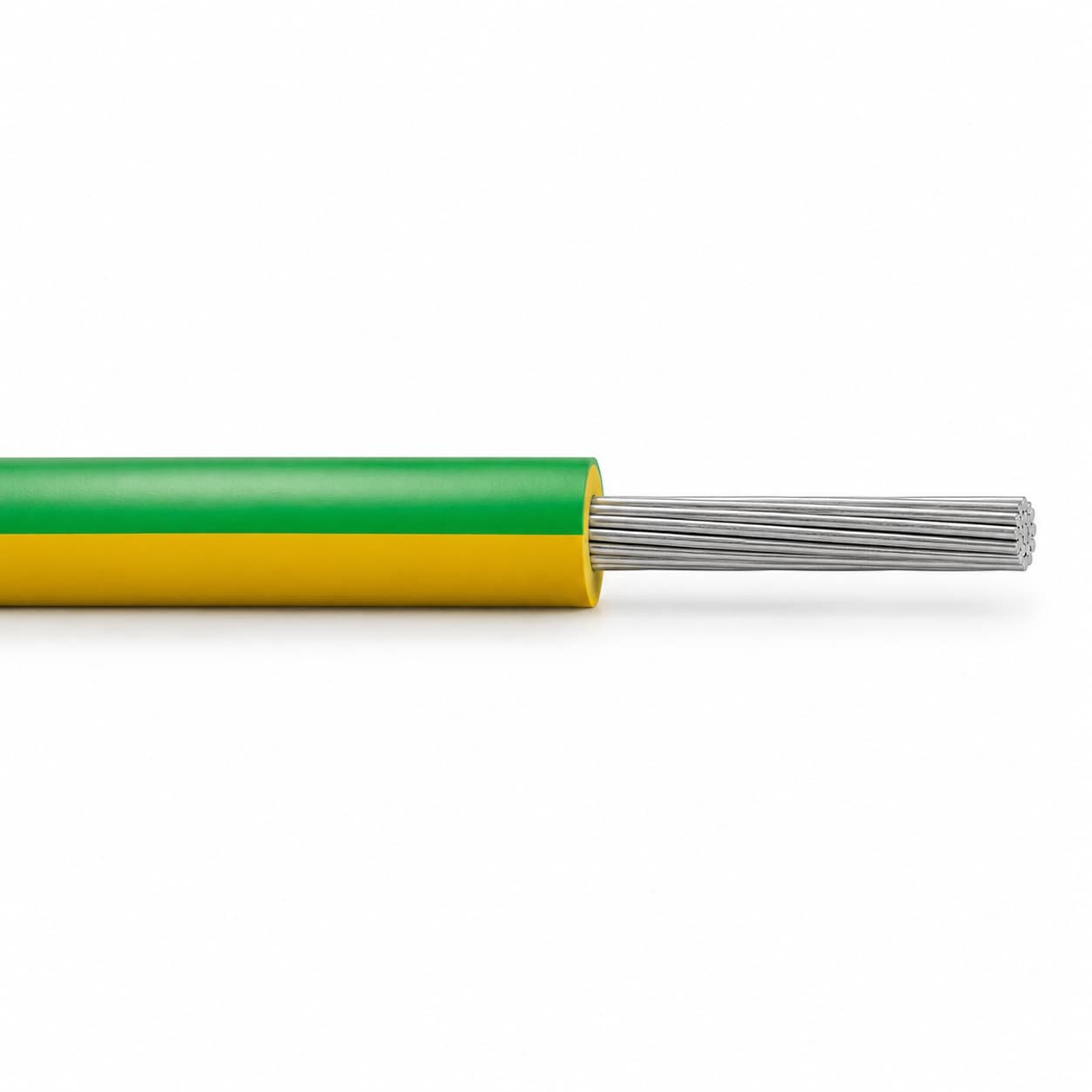
SiF Silicone 180 monoconducteur
- Cuivre étamé souple de classe 5
- −60°C à +180°C, silicone
- Sans halogène, cendre de SiO₂ après combustion
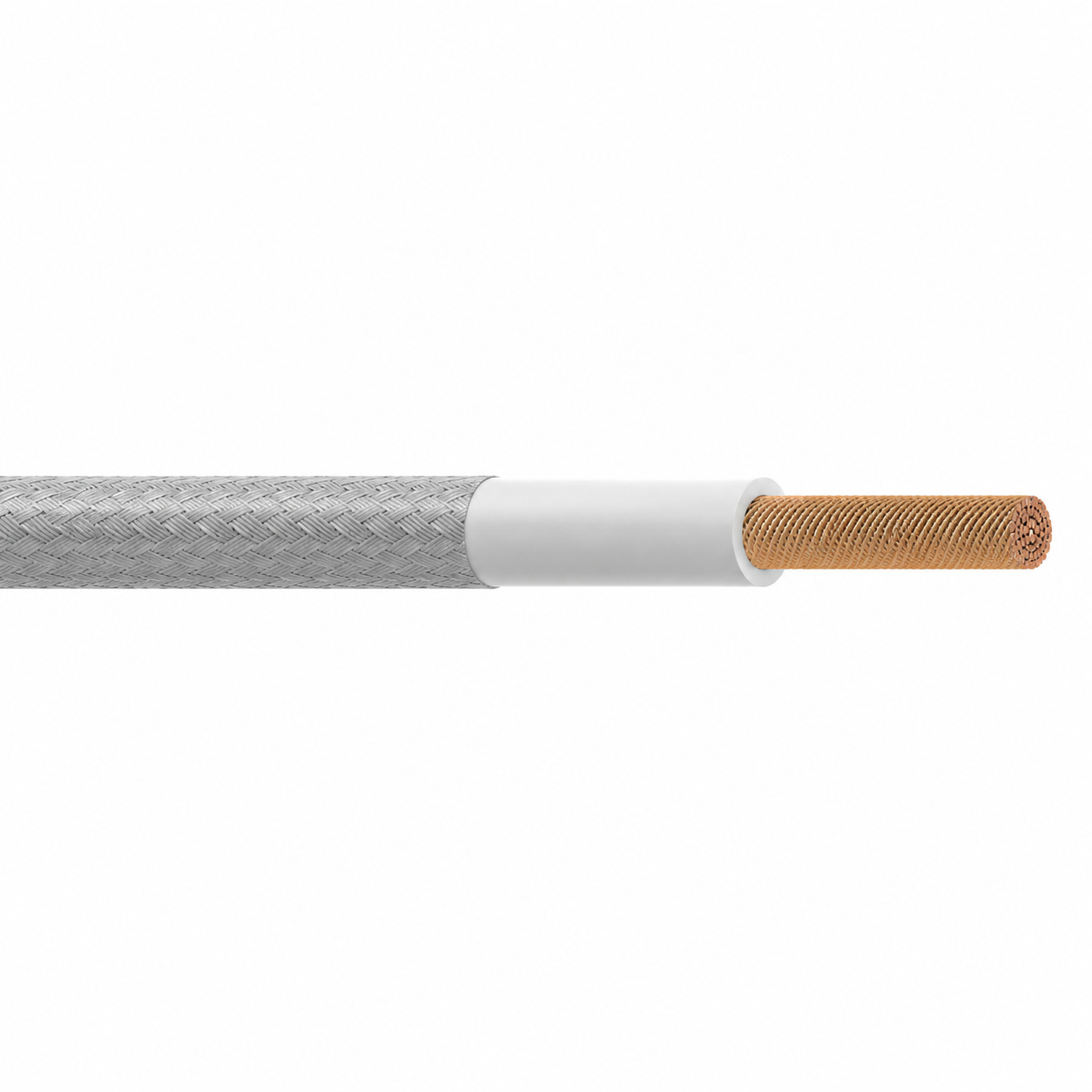
Silicone SIAF/GL tressé fibre de verre
- Âme silicone, tresse en fibre de verre
- Protection contre l’abrasion à chaud
- Câblage de panneaux, fours et luminaires
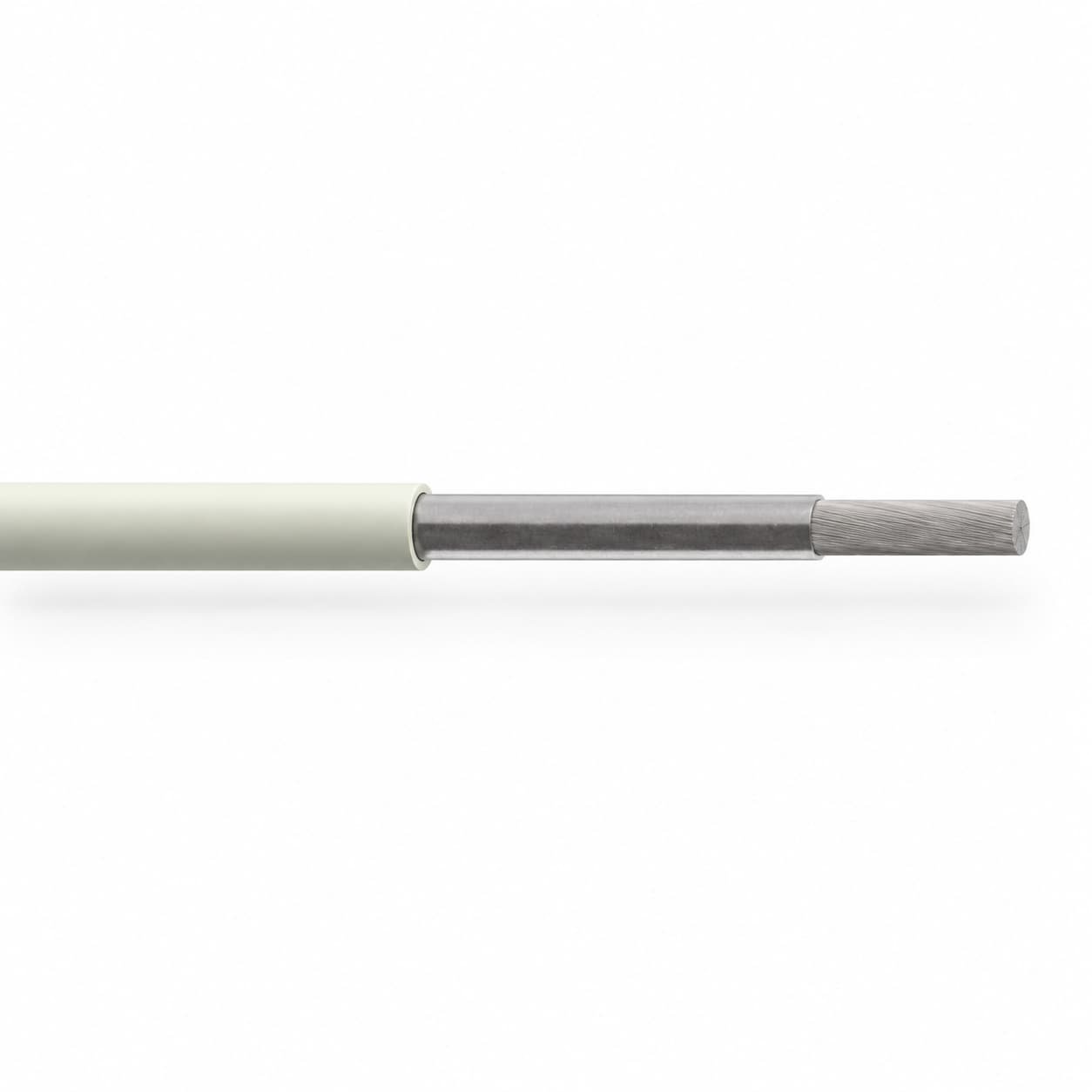
Fil d’équipement PFA Intemp 250 BS G210
- PFA sur cuivre nickelé
- Lignée aéronautique britannique BS G210
- Faisceaux d’instrumentation et d’équipement
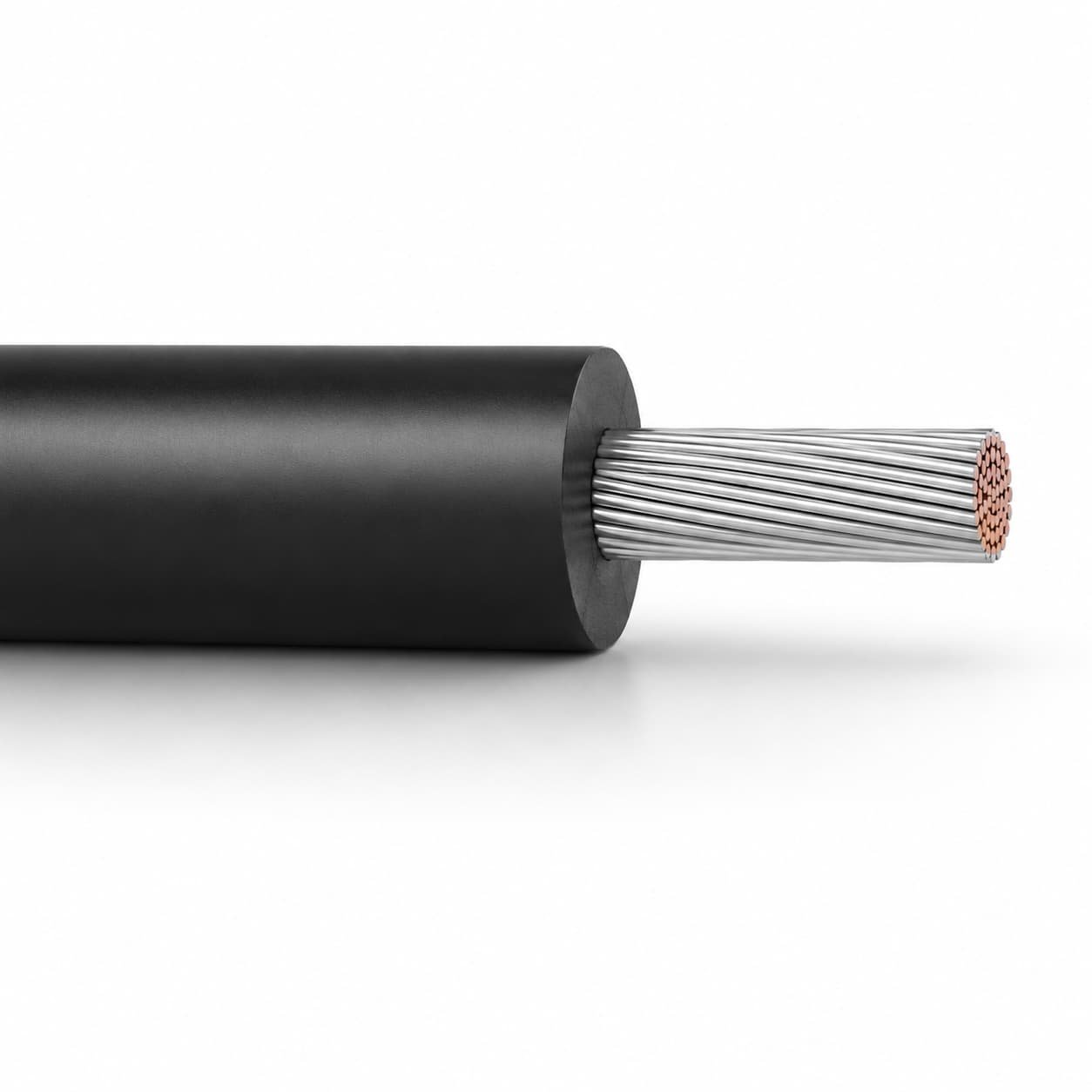
Câble caoutchouc silicone sans tresse, 5 kV
- Monoconducteur, sans tresse
- 200°C en continu
- Liaisons de transformateur et d’allumage
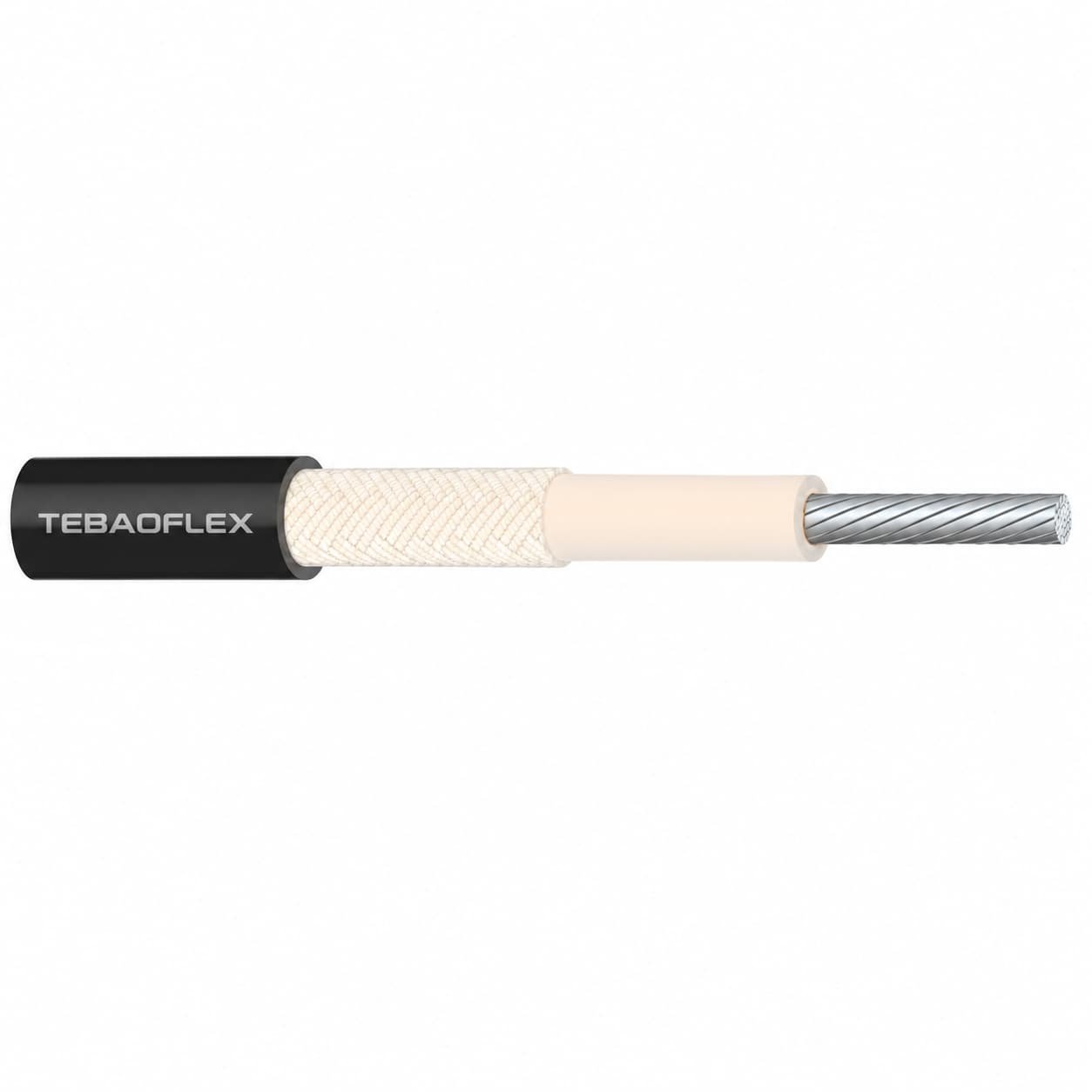
Fil d’allumage types 3304 et 3573
- Isolation en caoutchouc silicone 10 kV
- Tresse et gaine fibre de verre
- Allumage de brûleurs et moteurs
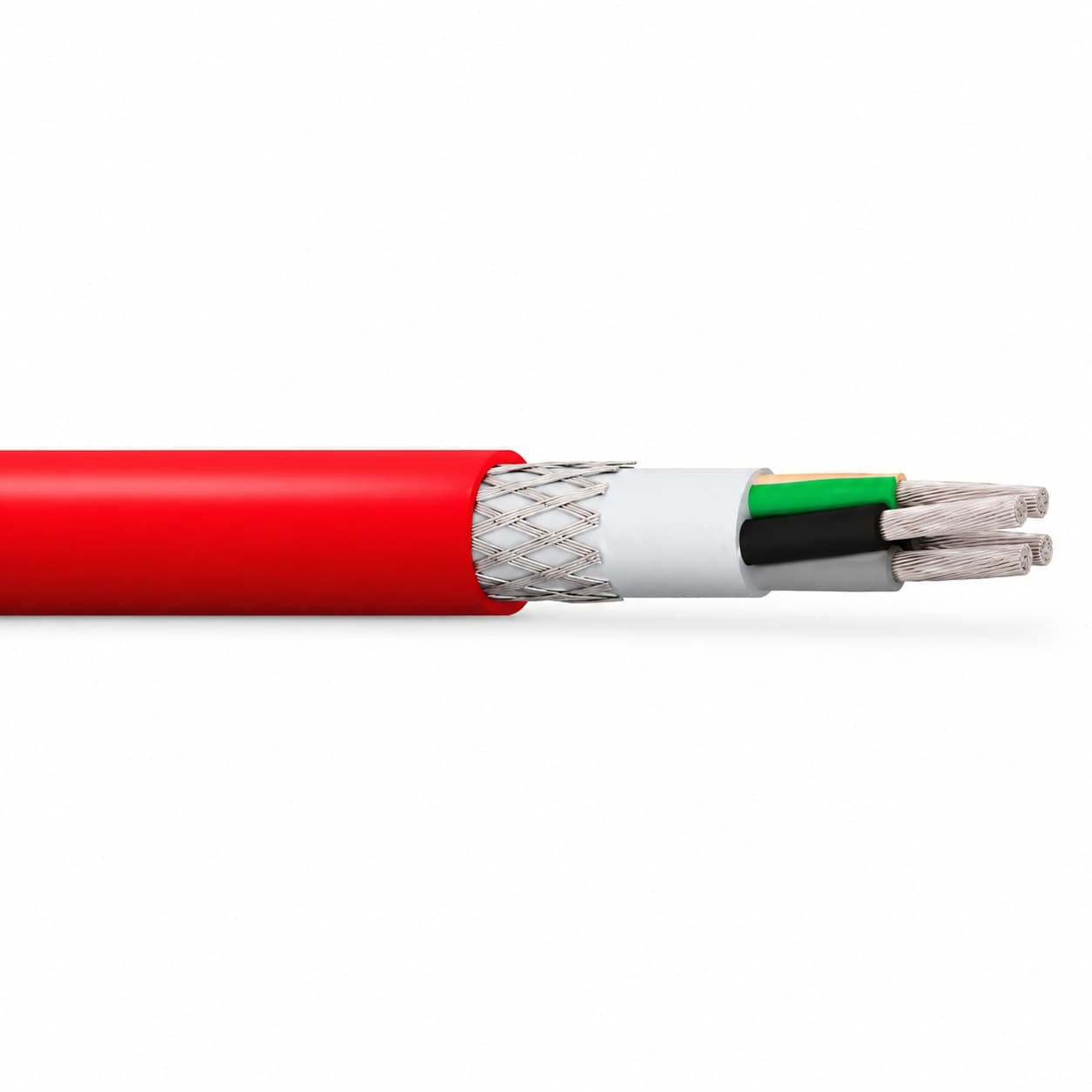
Silicone blindé SiHFC 180
- Multiconducteur avec écran en tresse de cuivre
- 180°C en continu
- Entraînements, capteurs et boucles de commande chaudes
Désignations européennes : mêmes matériaux, autre vocabulaire
Tout ce qui précède est formulé avec des numéros de type UL AWM, car c’est ainsi que l’Amérique du Nord achète les câbles haute température. L’Europe achète les mêmes matériaux par désignation de type — VDE, EN 50525, BS — et un acheteur qui demande SiHF demande un produit que nous fabriquons aussi. Cet index recense les désignations les plus demandées.
| Désignation | Ce que c’est | Où il s’installe |
|---|---|---|
| SiF | Silicone monoconducteur, souple classe 5, cuivre étamé, −60 °C à +180 °C, sans halogène | Le standard européen du câblage monoconducteur chaud |
| SIA / SIAF | Silicone isolé à âme massive (SIA) ou toronnée (SIAF) | Câblage fixe haute température |
| H03S-K | Silicone monoconducteur sans gaine, 300/300 V, essai 2 kV | Fours, cuisinières électriques et intérieurs d’appareils |
| SiHF-J | Câble souple multiconducteur en silicone, 300/500 V | Raccordement d’appareils sans contrainte mécanique |
| SiHF-P | Câble silicone multiconducteur avec tresse en fil d’acier galvanisé, 300/500 V | Le même câble dans les zones où il sera piétiné |
| SiFCuSi | Blindé silicone, 300/500 V | Câblage chaud nécessitant aussi une compatibilité électromagnétique |
| SIAF-GL | Silicone recouvert d’une tresse en fibre de verre | Là où le câble frotte, et l’équivalent VDE de notre construction UL 3122 / 3513 |
| 2GTL | Sortie moteur silicone monoconducteur sans halogène, 1.1/1.9 kV jusqu’à 13 kV | Transformateurs, générateurs et bobinages moteur : le seul câble moyenne tension de cette liste |
| H05GG-F | Caoutchouc flexible selon EN 50525, 300/500 V | Usage courant : appareils, cuisines et outils portatifs |
| H07G-U / -R / -K | EVA Isolé, 450/750 V, classe 1 massif, classe 2 toronné et classe 5 souple | Câblage fixe interne protégé |
| Câble tri-rated H05V2-K / H07V2-K | Résistant à la chaleur et retardant de flamme PVC selon BS 6231 type CK | Appareillage, commande, relais et panneaux d’instrumentation |
Deux d’entre eux méritent d’être signalés. 2GTL est le seul élément moyenne tension de la liste : pour un transformateur ou un bobinage de générateur au-dessus de 1 kV, c’est celui à examiner, et aucun type UL précédent ne couvre ce niveau. Et le câble tri-rated est en PVC, pas un élastomère ; il figure ici parce qu’il concurrence la même position de câblage de panneau, pas parce qu’il soit un câble haute température au sens du reste de la page.
Vous travaillez selon une spécification européenne sans savoir quelle désignation correspond au type UL proposé ? Envoyez les deux et nous les mettrons en correspondance : elles ne sont souvent pas équivalentes, la différence portant généralement sur la classe de température ou du conducteur plutôt que sur le matériau.
Toute la gamme figure dans notre catalogue de câbles industriels.
De l’application à la recommandation
Les acheteurs arrivent rarement avec un numéro de type. Ils arrivent avec une machine. Ce tableau relie les applications que nous chiffrons le plus souvent à la construction qui les supporte.
| Application | Ce qui détruit un câble ordinaire | Construction recommandée |
|---|---|---|
| Câblage dans les zones de fours | Chaleur rayonnante et abrasion contre la structure acier | Silicone tressé fibre de verre, UL 3122 ou 3513, 200°C |
| Liaisons de moteurs et générateurs | Chaleur du bobinage et flexions répétées à la sortie | Silicone classe 5 ou 6, UL 3135 / 3512, ou SiF 180 |
| Faisceaux de fours et séchoirs industriels | Maintien à 150–200°C et cycles thermiques | Silicone 200°C, ou FEP 1330 / 1901 si l’espace impose une paroi mince |
| Liaisons de chauffages électriques et thermocouples | Température du conducteur supérieure à 200°C : l’étain fond | PFA 1727 / 10362 sur cuivre nickelé, 250°C |
| Usines de semi-conducteurs et chimiques | Attaque des solvants et acides, limites de dégazage | PTFE 1199 / 1584, ou PFA 10371 à 1000 V |
| Appareillage et panneaux de commande | Limites d’halogènes et de fumée, échauffement du panneau | XLPE / XLPO 3266 ou 3173, 125°C sans halogène |
| Chaînes photovoltaïques et stockage d’énergie sur batterie | UV, contrainte de tension CC et longue durée de vie | XLPO UL 3173, ou XLFE ISO 19642 pour 1500 VDC |
| Faisceau haute tension pour véhicules électriques et batteries | 1000 VAC / 1500 VDC dans un compartiment moteur chaud | XLFE ISO 19642-5 non blindé ou -9 blindé, 3–150 mm² |
| Allumeurs de torchères et de brûleurs | Impulsions 25 kV avec conducteur jusqu’à 538°C | Fil d’allumage à gaine fibre de verre, 25 kV DC / 17 kV AC |
| Éléments chauffants et surfaces chaudes | Le fil est l’élément, pas l’alimentation | Câble chauffant silicone UL 3590, résistance fabriquée sur commande |
Comment spécifier un câble haute température en cinq lignes
Envoyez-nous ces cinq éléments et nous pourrons chiffrer sans aucun courriel de relance. S’il en manque un, le devis prend trois jours de plus que nécessaire.
1. Le vrai point chaud
Ce n’est ni l’ambiante ni la classe de l’armoire. C’est la température atteinte par le conducteur à cet endroit de la machine, à pleine charge, en été. Si vous ne l’avez pas mesurée, dites-le et nous appliquerons une marge.
2. Tension et tension d’essai
Tension de service assignée et éventuelle tension d’essai de type imposée. Dans les grades haute tension, la tension d’essai détermine souvent la paroi davantage que la tension de service.
3. Régime de flexion
Faisceau fixe, flexions occasionnelles de maintenance ou mouvement continu ? Le choix entre toronnage classe 5 ou 6 et entre silicone ou PTFE dépend de cette réponse.
4. Exposition mécanique et chimique
Abrasion contre l’acier, huile, solvant, liquide de refroidissement, projections de soudage, UV. Cela détermine l’ajout d’une tresse fibre de verre ou d’une gaine fluoropolymère sur l’isolation.
5. Homologations à fournir
Numéro de type UL AWM, cUL, VDE, CE avec RoHS et REACH, ou spécification client. Indiquez la cible et nous confirmerons la portée avant votre engagement.
Et une ligne bonus
Longueur et emballage. Le MOQ est de 50 m ; les tambours peuvent être en acier, acier-bois, bois ou plastique export, et nous pouvons imprimer votre marque sur le câble et le tambour.
Normes, certification et essais
Nous sommes une usine, pas un négociant : les données d’essai proviennent de nos propres bancs. Huit stations de haute précision couvrent le processus, du cuivre et du compound entrants au tambour fini, et chaque lot est contrôlé avant expédition.
UL et cUL
Certificat UL UL-US-2449012-0 et certificat cUL UL-CA-2437036-0, tous deux datés du 27 décembre 2024, rapport E542560-20241225.
VDE
Certificat VDE 40060055 du 28 mars 2025. Les constructions européennes portent le marquage CE et sont conformes à RoHS et REACH.
La confiance n’est pas une méthode d’essai. Demandez le rapport du type acheté : nous l’enverrons avec le devis, pas après la commande.
Pourquoi acheter vos câbles haute température chez TEBAOFLEX
Nous extrudons nous-mêmes
Douze lignes automatisées couvrent le mélange du caoutchouc, l’extrusion, le tressage d’écran, le câblage et l’emballage sur un même site. Rien n’est sous-traité puis ré-étiqueté.
Nous testons chaque lot
Huit bancs d’essai et un contrôle qualité complet, de la matière entrante au câble fini, avec plus de 30 ingénieurs responsables des spécifications.
Nous le fabriquons selon votre type
Plus de 50 constructions UL AWM et des conceptions VDE, EN et BS. Marquage OEM/ODM sur câble et tambour, et constructions personnalisées sur demande.
Nous expédions d’abord en petite quantité
MOQ 50 m et échantillons gratuits pour valider le câble avant de lancer une série. Délai de 10 à 30 jours, confirmé avant la commande.
Demandez un devis de câble haute température
Envoyez le numéro de type, ou indiquez simplement la machine et le point chaud. Nos ingénieurs répondront avec une construction, une fiche et un prix ; si le type demandé ne convient pas, nous vous le dirons.
WhatsApp : +86 156 3992 7303
E-mail : sales@tebaoflexcablegroup.com
MOQ 50 m · échantillons gratuits · OEM/ODM · délai de 10–30 jours · assistance d’ingénieurs 24/7
FAQ sur les câbles haute température
Quel est le câble haute température disponible le plus performant ?
Pour les fils de câblage, 250°C est le plafond pratique avec PTFE, PFA ou la famille silicone 3253. Au-delà, on passe à la fibre de verre et au mica : le fil d’allumage à gaine fibre de verre est donné pour 538°C (1 000°F) au conducteur, mais reste un produit spécialisé, pas un conducteur de puissance général.
Le silicone ou le PTFE est-il préférable pour un câble haute température ?
Le silicone si la flexibilité et les flexions répétées sont prioritaires ; le PTFE si vous avez besoin d’une paroi mince, d’inertie chimique ou d’un connecteur encombré. Les deux atteignent 250°C dans leurs grades supérieurs. Le silicone se raye facilement et demande souvent une tresse fibre de verre ; le PTFE est plus rigide et exige un rayon supérieur.
Que signifie UL AWM sur un câble ?
AWM signifie Appliance Wiring Material (matériau de câblage d’appareils). Un numéro de type UL AWM définit une construction reconnue : il fixe le matériau d’isolation, la température assignée et la tension assignée. Citer UL 3135 renseigne le fabricant bien plus vite et précisément que de décrire un fil silicone en une phrase.
Quelle est la différence entre UL 3132, 3133 et 3135 ?
Les trois sont isolés au silicone. UL 3132 est 150°C à 300 V, UL 3133 150°C à 600 V et UL 3135 200°C à 600 V. L’épaisseur de paroi et le composé évoluent avec la classe ; le conducteur peut rester identique.
Puis-je utiliser du cuivre étamé dans un câble 250c ?
Non. L’étain fond à 232°C : une isolation 250°C sur cuivre étamé défaillira au conducteur avant le polymère. Les câbles au-dessus de 200°C utilisent du cuivre nickelé, et ce placage explique une grande partie de l’écart de prix entre les classes 200°C et 250°C.
Quel câble haute température utiliser pour des éléments chauffants ?
Deux réponses. Pour alimenter un élément chauffant, utilisez PFA UL 1727 ou 10362 à 250°C sur cuivre nickelé. Pour que le fil soit l’élément chauffant, utilisez un fil résistif tel que UL 3590 : alliage résistif sur âme fibre de verre, isolation silicone, résistance de 0,5 à 12 000 ohms.
Fournissez-vous des câbles haute température en AWG ou en mm² ?
Les deux. Les types UL AWM sont exprimés en AWG, généralement d’AWG 36 à AWG 10, et le silicone tressé fibre de verre va jusqu’à 400 MCM. Les constructions européennes et IEC sont en mm², de 0,5 mm² à 240 mm² et au-delà sur demande.
Quelle tension un câble haute température peut-il supporter ?
Le fil silicone UL 3239 existe en classes de 3 kV à 60 kV DC à 200°C, avec une paroi passant de 0,50 mm à 3,11 mm. Les constructions d’allumage vont jusqu’à 25 kV DC / 17 kV AC. Les types de câblage standard s’arrêtent à 600 V ou 1000 V.
Quel est votre minimum de commande pour un câble haute température ?
50 mètres. Nous préférons que vous validiez une courte longueur sur la machine réelle avant de vous engager sur un tambour. Les échantillons sont gratuits, vous ne payez que le transport ; le délai de production est de 10 à 30 jours, confirmé avant la commande.
Pouvez-vous fabriquer selon ma propre spécification ?
Oui. Les réalisations OEM et ODM sont courantes : votre construction, vos couleurs et votre marque imprimée sur le câble et le tambour. Envoyez un plan ou la fiche d’un concurrent ; notre équipe d’ingénierie proposera une construction et un plan d’échantillonnage.
Solutions câbles associées
- Parcourir le catalogue industriel complet TEBAOFLEX
- Spécifications du câble silicone monoconducteur SiF 180
- Câble silicone SIAF/GL avec tresse fibre de verre
- Fil d’équipement PFA Intemp 250 BS G210 à 250°C
- Toutes les solutions câbles TEBAOFLEX par secteur
- Constructions de câbles silicone haute tension, 1,8 kV à 125 kV DC
- Étude de projet : câble d’essai HV silicone blindé pour un véhicule d’essais de câbles