

Fiberglass Braided Silicone Wire 200°C, 300/600 V UL AWM
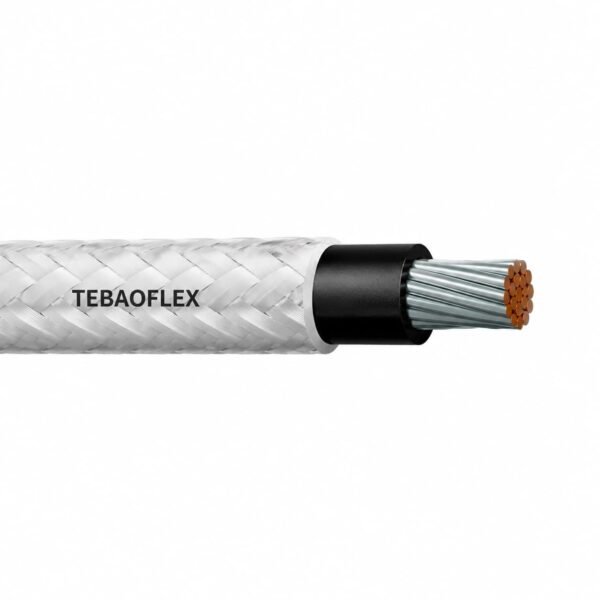
Fiberglass braided silicone wire for the places where heat and abrasion arrive together. A silicone core keeps the flexibility; a coated glass-fibre braid over it takes the rubbing that would otherwise cut straight through. TEBAOFLEX builds UL AWM styles 3122 and 3513 at 200 °C, 300 V and 600 V, from 24 AWG up to 4/0.
- UL AWM styles: UL 3122 (300 V) and UL 3513 (600 V)
- Temperature rating: −60 °C to +200 °C
- Conductor: annealed tinned copper, solid or stranded
- Insulation: silicone rubber, nominal wall 0.40–2.03 mm by voltage and size
- Braid: coated fibre-glass braid over the silicone
- Size range: 24–16 AWG on style 3122; 20 AWG to 4/0 on style 3513
- Resistance: halogen free, flame retardant, oil resistant; resists ozone, chemicals and fuel
- Test method: UL 758
For a quotation, send the UL style, voltage, AWG size, stranding, colour and the length per reel.
Fiberglass Braided Silicone Wire for Furnace, Dryer and Motor Lead Duty
Bare silicone wire has one weakness, and a furnace deck finds it inside a shutdown: it scuffs. Drag a silicone lead across a steel edge a few dozen times and the wall is gone. Putting a coated glass-fibre braid over the silicone fixes that without giving up the flexibility, which is why braided silicone is the standard construction for oven, dryer and motor-lead wiring rather than a niche option. TEBAOFLEX builds it to UL AWM 3122 and 3513 at 200 °C.
The two styles are not the same product at two voltages. UL 3122 is a 300 V control-and-signal wire that stops at 16 AWG. UL 3513 is a 600 V construction that runs all the way to 4/0 — 18.6 mm across and over a tonne per kilometre — so it carries real power to element banks and motor terminals, not just signals. Choose by the size you need first; the voltage follows.
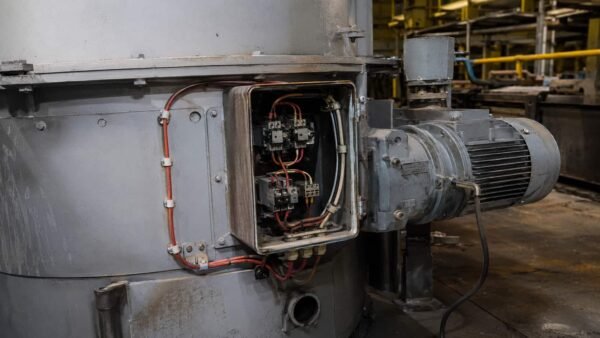
- Suitable for: industrial ovens, dryers and furnaces, motor and generator leads, heating element banks, appliance internal wiring, terminal boxes on hot equipment.
- Confirm before ordering: UL style, voltage, AWG size, stranding, colour and reel length.
- Choose another construction when: chemical attack or a thin wall matters more than abrasion — PTFE, PFA or FEP are the answer — or when nothing rubs, where plain silicone costs less.
Working out which insulation you need? The high temperature wire selection matrix compares braided silicone against the alternatives, and the wider range sits under High Temperature Cables.
For a specific covered UL style, compare the 12 AWG reference construction of UL 3074, 200°C/600 V with UL 3645, 1 kV glass-covered silicone wire. Their voltage classes, size schedules and finished diameters differ; specify the braid and terminal entry before ordering.
For 150°C SFF-2 / SRML single-core leads, 200°C UL 3410 large polyaramid-covered motor leads, or multicore mica/glass designs, use the covered high-temperature wire selector. Match the covering material and core arrangement before comparing diameters.
Construction
Three layers, and each one is doing a job the other two cannot. Read them from the copper outwards and the whole product makes sense.
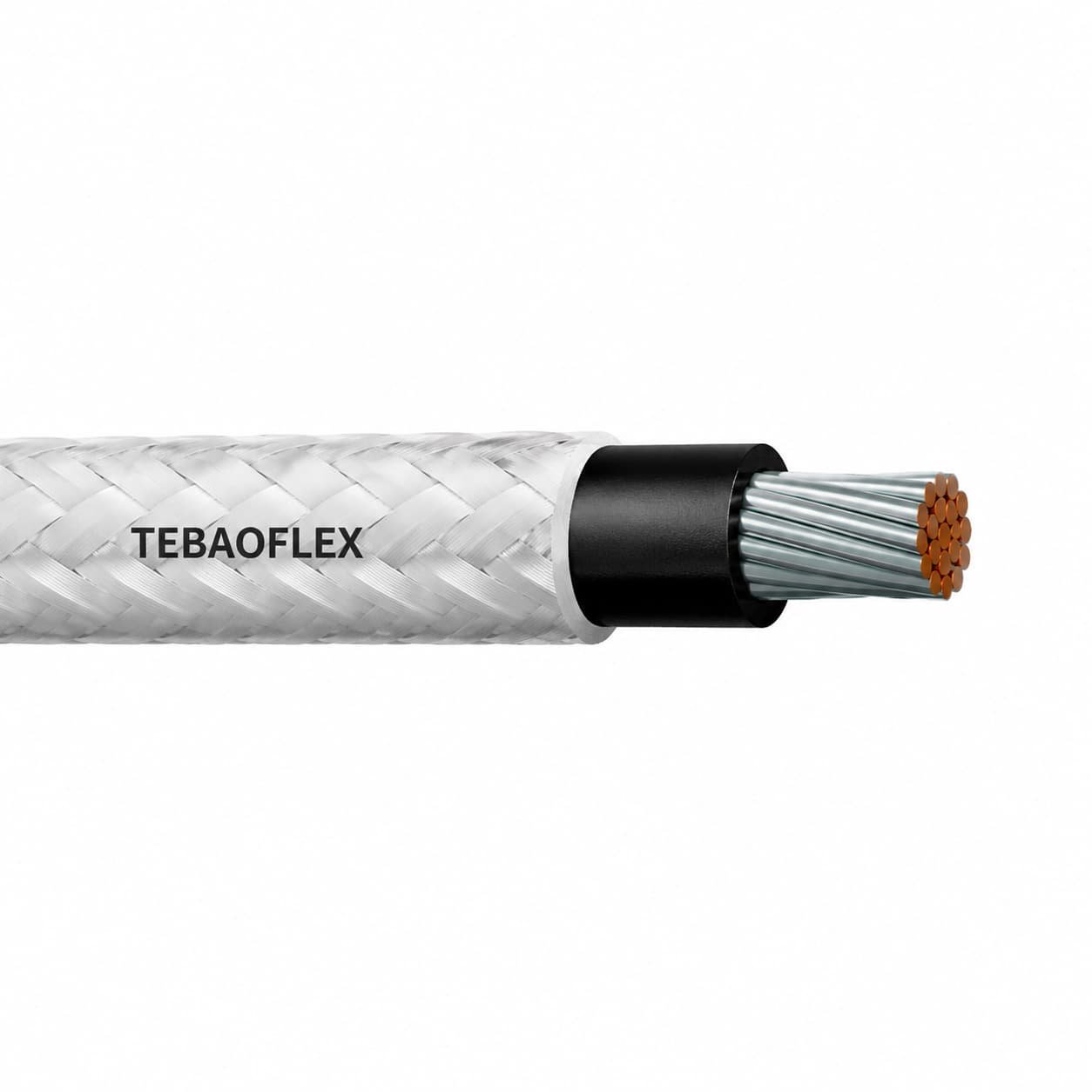
- Conductor: annealed tinned copper, solid or stranded. Strandings run from a single 0.814 mm wire at 20 AWG through 16, 26, 41, 65 and 104 strands of 0.255 mm as the size climbs, up to 259 strands of 0.723 mm at 4/0.
- Insulation: silicone rubber, nominal wall 0.40 mm on the 300 V style and 0.76 mm at 600 V, thickening to 1.14, 1.52 and 2.03 mm as the conductor grows.
- Braid: a coated glass-fibre braid laid over the cured silicone. The coating stops the braid fraying when it is cut and stops individual filaments lifting under repeated contact.
What the braid actually does
The braid is not insulation and it is not a screen. It is a wear layer. Silicone rubber is soft by design — that softness is why it stays flexible at 200 °C — and softness and abrasion resistance are opposites. The glass braid gives the wire a hard, heat-stable outer surface so it can be pulled through metalwork, bundled against a sharp edge or laid on a furnace deck without the silicone being shaved away. It also raises the surface temperature the wire can touch without deforming.
Where the wall thickness goes
On style 3513 the silicone wall steps up four times across the range: 0.76 mm from 20 AWG to 12 AWG, 1.14 mm at 10 and 8 AWG, 1.52 mm from 6 AWG to 2 AWG, and 2.03 mm from 1 AWG to 4/0. That is why the finished diameter climbs faster than the copper does — a 4/0 lead finishes at 18.6 mm and 1,115 kg per kilometre. Plan the gland and the bend radius from the finished figure, not from the conductor size.
Braided silicone against a plain silicone wire
Same silicone, same temperature rating, same flexibility in the hand. The braid adds diameter and cost and buys abrasion resistance. If the loom is captive inside a cabinet and nothing moves against it, a plain silicone wire is the cheaper right answer. If the wire leaves the cabinet, touches structure, or gets handled during maintenance, the braid pays for itself the first time somebody drags it.
Applications
Braided silicone earns its place wherever a hot wire also has to survive contact — with steel structure, with a gland edge, with a maintenance engineer's hands. It is internal equipment wiring, not an installation cable.
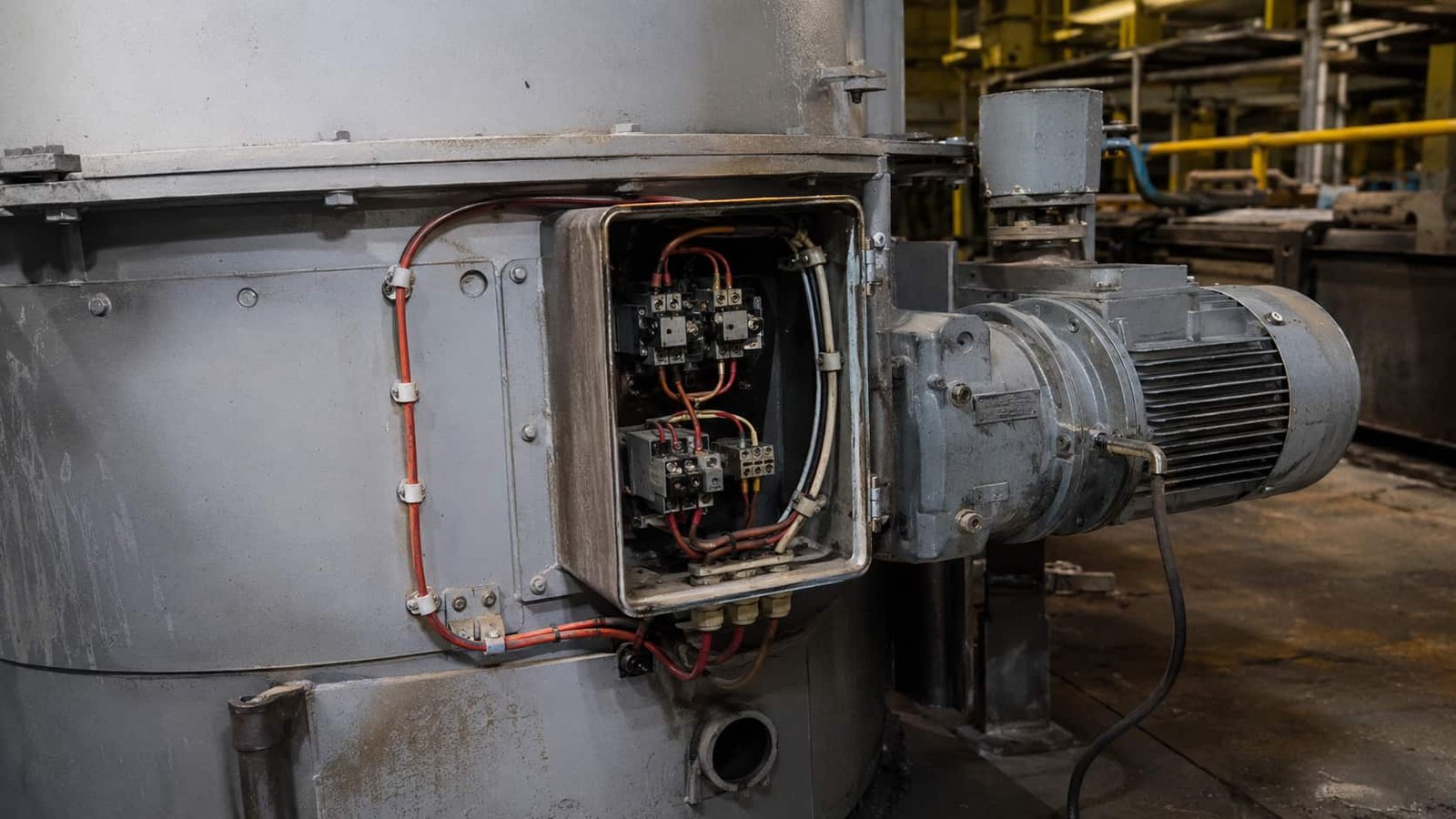
Equipment and duty this wire is built for
- Industrial ovens, dryers and furnaces — element bank wiring, door and deck runs, terminal boxes mounted on the hot shell.
- Electric clothes dryers and commercial laundry — the published application for style 3513, where heat, lint and vibration all act at once.
- Motor and generator leads — especially where the lead-out leaves the frame and can chafe on the terminal box.
- Heating element banks — 3513 in the larger sizes carries real current to element terminals, not just control signals.
- Appliance internal wiring — cookers, catering equipment, sterilisers.
- Instrument and control wiring in hot areas — style 3122 at 300 V for the signal side.
- Terminal boxes and glands on hot equipment — where the wire passes through a metal edge under thermal cycling.
Where braided silicone is the wrong answer
- Solvents, acids or aggressive process chemistry — silicone swells and the braid wicks. Use PTFE, PFA or FEP.
- Tight, dense looms — the braid adds diameter on top of an already thick silicone wall. Where space is the constraint, a fluoropolymer wire is a fraction of the size.
- Above 200 °C — outside the rating of these two styles.
- Continuous reeling or festoon travel — this is a lead wire, not a reeling cable. Repeated flexing under tension will fatigue the braid.
- Nothing rubs — if the wire is captive and static, plain silicone does the same electrical job for less money and less diameter.
- Fixed building installation or direct burial — AWM appliance wiring material carries no such listing.
Cross-referencing an existing wire
Braided silicone lead wire turns up on drawings as SRML, SEW-2 or simply “silicone with glass braid”, and the European equivalent is the SIAF/GL family — see our SIAF/GL silicone cable with fiberglass braid for the VDE version at 180 °C. If you are replacing an existing lead, send a photograph of the printed marking together with the measured overall diameter and the conductor size, and we will identify whether you need the 300 V or the 600 V style before quoting.
Specifications
Two styles, one construction. Style 3122 covers the small sizes at 300 V; style 3513 covers the whole range to 4/0 at 600 V.
Fiberglass braided silicone wire styles at a glance
| UL AWM style | Temperature | Voltage | Silicone wall | Size range | Typical use |
|---|---|---|---|---|---|
| UL 3122 | 200 °C | 300 V | 0.40–0.46 mm (min 0.33 mm) | 24 AWG – 16 AWG | Control and instrument wiring in hot areas |
| UL 3513 | 200 °C | 600 V | 0.76 / 1.14 / 1.52 / 2.03 mm by size | 20 AWG – 4/0 | Element banks, motor leads, dryer and oven power wiring |
Dimensions and Electrical Data
UL 3513 — 200 °C, 600 V
Annealed tinned copper with a silicone wall and a coated glass-fibre braid. Diameters are over the finished braid.
| AWG | Stranding No./mm | Silicone wall mm | Overall Ø mm | Max cond. resistance Ω/km @20 °C | Weight kg/km |
|---|---|---|---|---|---|
| 20 | 1 / 0.814 | 0.76 | 3.3 | Confirm | 15 |
| 18 | 16 / 0.255 | 0.76 | 3.6 | Confirm | 19 |
| 16 | 26 / 0.255 | 0.76 | 3.9 | Confirm | 25 |
| 14 | 41 / 0.255 | 0.76 | 4.3 | Confirm | 34 |
| 12 | 65 / 0.255 | 0.76 | 4.8 | 5.82 | 47 |
| 10 | 104 / 0.255 | 1.14 | 6.2 | 3.66 | 77 |
| 8 | 168 / 0.255 | 1.14 | 7.0 | 2.35 | 111 |
| 6 | 266 / 0.255 | 1.52 | 8.9 | 1.48 | 179 |
| 4 | 133 / 0.455 | 1.52 | 10.2 | 0.918 | 261 |
| 2 | 259 / 0.405 | 1.52 | 11.7 | 0.580 | 378 |
| 1 | 259 / 0.455 | 2.03 | 13.6 | 0.460 | 491 |
| 1/0 | 259 / 0.511 | 2.03 | 14.7 | 0.357 | 600 |
| 2/0 | 259 / 0.573 | 2.03 | 15.8 | 0.284 | 734 |
| 3/0 | 259 / 0.644 | 2.03 | 17.1 | 0.224 | 904 |
| 4/0 | 259 / 0.723 | 2.03 | 18.6 | 0.179 | 1115 |
Cells marked “Confirm”: the reference data we hold gives resistance figures for 20 through 14 AWG that do not agree with the conductor cross-section stated on the same row, so we will not publish them. Ask for those sizes and the verified figure comes with the quotation. Every other column on those rows — stranding, wall, diameter and weight — is internally consistent and stands.
UL 3122 — 200 °C, 300 V
Several strandings are available in each size. Overall diameter is over the braid and varies with the stranding chosen.
| AWG | Stranding options No./mm | Cond. Ø mm | Silicone wall mm | Overall Ø mm | Cond. resistance Ω/km |
|---|---|---|---|---|---|
| 16 | 7/0.49, 19/0.30, 50/0.18 | 1.50–1.51 | 0.40 | 2.60 ±0.15 | 14.60 |
| 18 | 7/0.39, 34/0.18, 30/0.18 | 1.05–1.21 | 0.40 | 2.25–2.31 | 23.20 |
| 18 solid | 1/1.02 | 1.02 | 0.40 | 2.15 | 22.2 |
| 20 | 7/0.30, 20/0.18 | 0.92 | 0.46 | 2.15 | 36.70 |
| 20 solid | 1/0.813 | 0.813 | 0.46 | 2.05 | 36.70 |
| 22 | 12/0.18, 7/0.254 | 0.72–0.77 | 0.46 | 1.95–2.00 | 59.40 |
| 24 | 11/0.16, 7/0.20 | 0.61 | 0.40 | 1.70 | 94.20 |
All values are nominal and subject to normal manufacturing tolerance. Diameter tolerance is typically ±0.10 mm, widening to ±0.15 mm on the larger sizes. Confirm the final size before ordering.
Other properties
| Conductor | Annealed tinned copper, solid or stranded |
|---|---|
| Insulation | Silicone rubber, high-temperature vulcanised |
| Braid | Coated glass-fibre braid over the silicone |
| Working temperature | −60 °C to +200 °C |
| Resistance | Halogen free, flame retardant, oil resistant; resists ozone, chemicals and fuel; low-temperature resistant |
| Test method | UL 758 |
| Colours | Standard colour range; custom colours and striping to order |
| Cores | Single core |
Standards
Standards, test methods and compliance references that apply to fiberglass braided silicone wire in these UL AWM styles.
| UL AWM | Appliance Wiring Material styles 3122 (300 V) and 3513 (600 V), 200 °C |
|---|---|
| Test method | UL 758 |
| Flame | Flame retardant construction; VW-1 available on specified builds |
| Halogen | Halogen-free silicone compound |
| Fluid resistance | Oil resistant; resistant to ozone, chemicals and fuel |
| Low temperature | Rated to −60 °C |
Reading the braid correctly on a specification
The glass braid is a mechanical layer, not an electrical one. It does not contribute to the voltage rating, it is not a screen, and it does not make the wire a fire-survival cable. The rating comes from the silicone wall underneath — which is why UL 3122 at the same 200 °C is 300 V on a 0.40 mm wall while UL 3513 is 600 V on 0.76 mm. If a drawing calls for a braided wire at a particular voltage, the number to check is the silicone thickness, not the presence of the braid.
Where the braid changes handling, not rating
Two practical consequences worth writing into an assembly instruction. The braid must be cut cleanly and sealed or clamped at terminations, or it will fray and wick. And because the braid sits proud of the silicone, glands and grommets should be sized on the finished outside diameter from the table above — sizing on the conductor or on an equivalent unbraided wire is the most common cause of a lead that will not pass through its own entry.
TEBAOFLEX certification
Jiangsu TEBAOFLEX Special Cable Co., Ltd holds UL certificate UL-US-2449012-0 and cUL certificate UL-CA-2437036-0, both dated 27 December 2024 under report E542560-20241225, and VDE certificate 40060055 dated 28 March 2025. These are company-level certifications. Send the exact UL style, size and stranding you intend to order and we will confirm the approval scope that applies to it before you commit, and issue the test documentation with the shipment.
Documentation supplied with an order
- Construction drawing and dimensional data over the braid for the agreed style and size
- Routine test records for the production batch
- Certificate of conformity referencing the agreed standards
- Reel and packing list with marking and colour details
For the scope of a specific standard, consult the issuing body directly — for example the International Electrotechnical Commission or UL Solutions.
Related cable options
Compare these cable options by service combination, movement, load, voltage and transmission requirement.
Silicone Hook Up Wire 105–250°C, 300–1000 V UL AWM Styles
A related cable option for a different application or duty profile.
View product
High Temperature Silicone Rubber SIAF/GL Cable with Fiberglass Braid
A related cable option for a different application or duty profile.
View product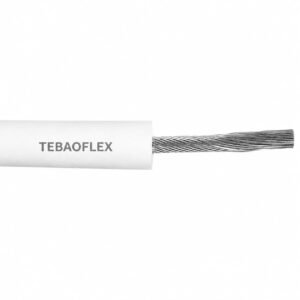
PTFE Hook Up Wire up to 250°C, 150–1000 V UL AWM Styles
A related cable option for a different application or duty profile.
View productRequest a cable recommendation and quotation
Send the required services, cable length, mechanical duty, environment, termination and quantity. Our team will review the application before quoting.
- Include the product name or SKU plus the required cable length and quantity.
- Attach a specification, drawing or data sheet when available.