

High Temperature Wireline Cable
149 · 260 · 288 · 315 °C insulation classes · PP, ETFE, FEP/ETFE, PFA and a 315 °C-class polymer · 4.70–9.65 mm · 1,000–1,500 V DC · capacitance 128–223 pF/m · galvanised or alloy armour.
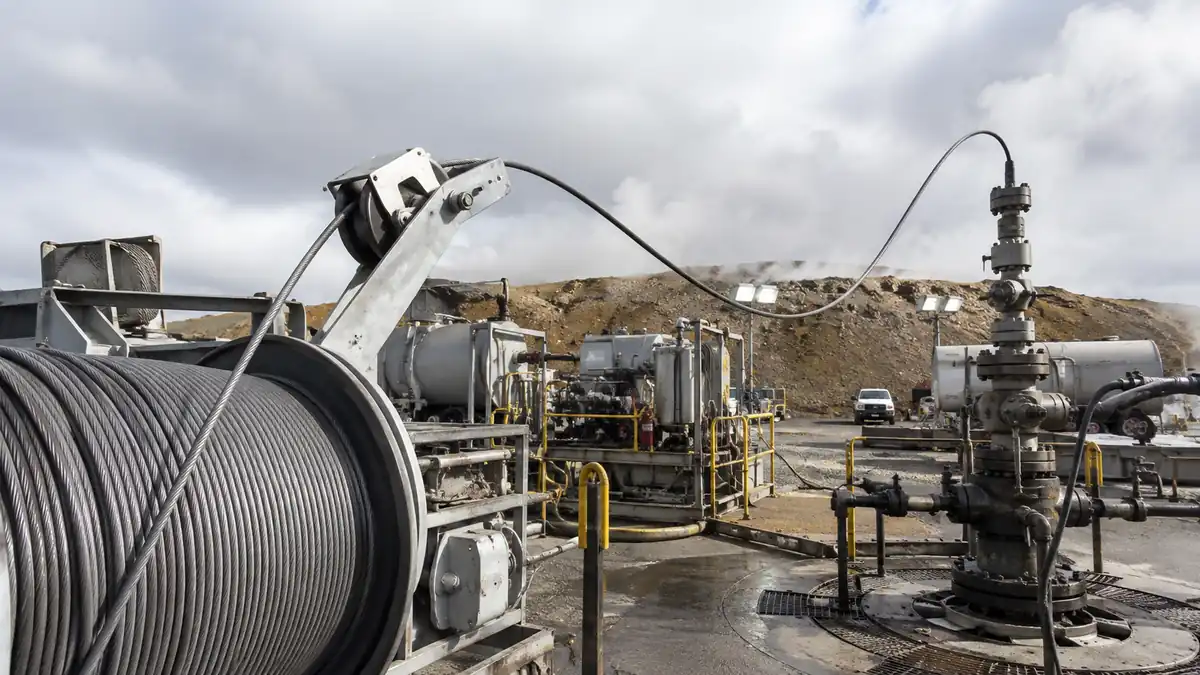
On a high temperature wireline cable the insulation is the only part that cares about heat. The copper is fine, the steel armour is fine, and the cable’s temperature rating is simply the rating of the polymer wall between the conductor and the armour. That makes the selection unusually clean: pick the material, and you have picked the temperature.
Five materials cover 149 °C to 315 °C. Polypropylene at 149 °C for shallow, cool holes. ETFE and a dual-layer FEP/ETFE at 260 °C. PFA above that. And a 315 °C-class polymer at the top, for geothermal, steam-injection and the deepest HPHT wells.
Temperature is not the only axis, and treating it as one is how people end up with a cable that survives the well but cannot talk to the surface. Insulation also sets capacitance between conductor and armour, and capacitance is what kills telemetry on a long run. Across the range on this page capacitance varies from 128 to 223 pF/m — a 74 % spread — and the hardest material is also the worst dielectric. So the honest rule is: ETFE where crush and ridging are the enemy, FEP/ETFE dual layer for horizontal and extended-reach wells, PFA for long vertical runs where the dielectric has to be right.
Every insulation is available across all six diameters, 3/16″ to 3/8″, on galvanised or alloy armour for sour wells. Temperature and corrosion are independent choices — a hot sour well needs both, and one does not substitute for the other.
It belongs to two families at once — the downhole end of our oil and gas cable range, and the hot end of everything we build in fluoropolymer. Send the bottom-hole temperature, the run length, the well profile and whether it is sour, and we will come back with a material rather than a catalogue.
Construction
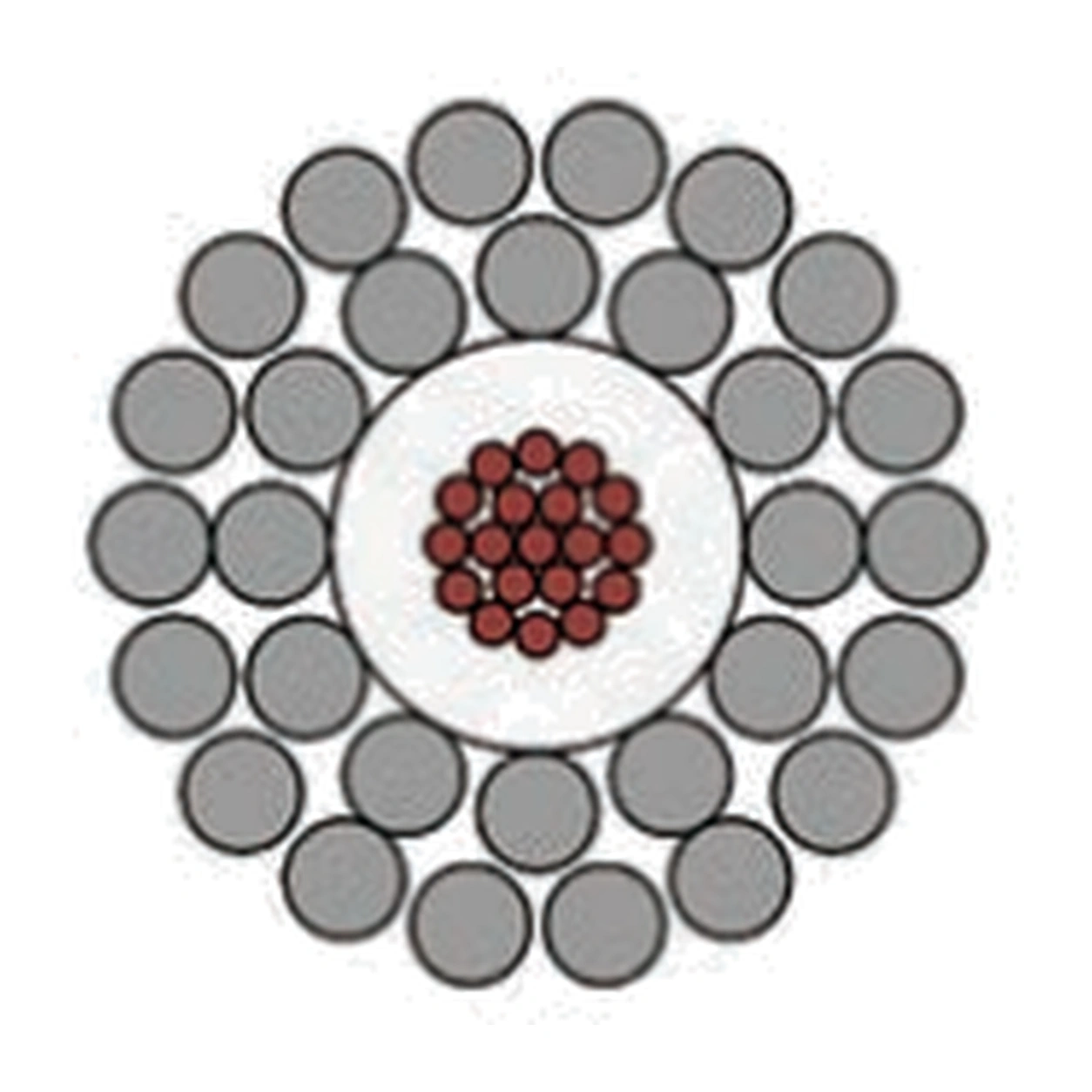
Only one layer sets the temperature
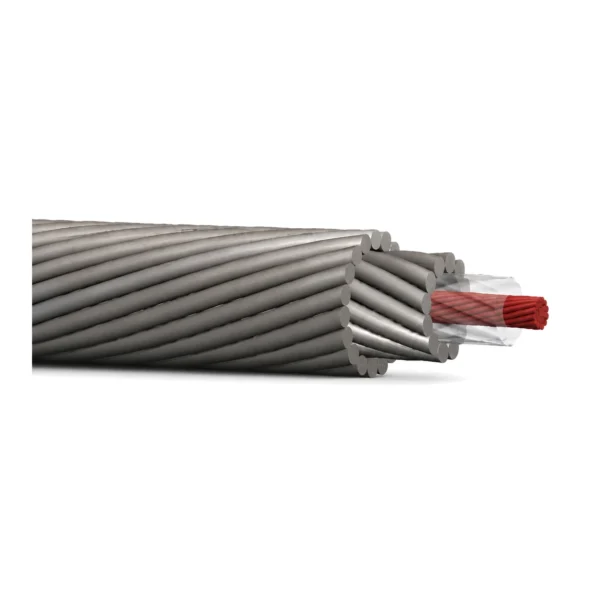
A wireline cable is copper, polymer and steel. Copper anneals but does not fail at these temperatures; steel armour is unaffected. The insulation is the temperature rating. Change nothing else and a 149 °C cable becomes a 315 °C cable.
The five insulations
| Insulation | Max continuous | Dielectric | Hardness | Chosen for |
|---|---|---|---|---|
| Polypropylene | 149 °C (300 °F) | Good | Moderate | Cost, on shallow cool holes |
| ETFE | 260 °C (500 °F) | Poorest of the fluoropolymers | Highest | Resisting crush and ridging from the armour |
| FEP / ETFE dual layer | 260 °C (500 °F) | Good — FEP does the dielectric work | High — ETFE skin faces the armour | Horizontal and extended-reach wells |
| PFA | 260–288 °C (500–550 °F) | Best | Moderate | Long vertical runs |
| 315 °C-class polymer | 315 °C (600 °F) | As PFA | Moderate | Geothermal, steam, deepest HPHT |
Why a dual-layer wall exists at all
FEP is a better dielectric than ETFE but softer; ETFE is harder but a worse dielectric. The dual-layer wall puts FEP where the electric field is and ETFE where the armour is, so the cable gets the dielectric of one and the crush resistance of the other. That is why it is the default for horizontal wells, where the armour presses into the insulation on the low side of the hole for the whole lateral.
A note on where 288 °C comes from
Published PFA ratings for wireline service are not unanimous. The build data behind this page rates PFA at 288 °C (550 °F); at least one independent insulation-selection bulletin from another wireline cable maker rates PFA at 260 °C (500 °F). The difference is real and it comes down to wall thickness, exposure time and how much the manufacturer is willing to underwrite. We quote PFA at 260 °C for continuous service as standard and will confirm 288 °C against your specific run profile rather than against a catalogue line. If your well is genuinely between 260 and 288 °C, that conversation is worth having before the order and not after the run.
Applications
| Well type | Typical bottom-hole | Insulation | Why |
|---|---|---|---|
| Shallow cased-hole logging | < 149 °C | Polypropylene | No reason to pay for fluoropolymer |
| Conventional deep wells | 150–260 °C | FEP/ETFE dual layer | The general-purpose choice |
| Horizontal and extended reach | Any | FEP/ETFE dual layer | Armour crush on the low side of the lateral |
| Long vertical HPHT | 200–260 °C | PFA | Lowest capacitance — telemetry survives the length |
| Deep HPHT | 260–288 °C | PFA, confirmed per run | Above the fluoropolymer comfort zone |
| Geothermal and steam injection | up to 315 °C | 315 °C-class polymer | Nothing below it survives |
| Hot sour wells | Any, with H2S | FEP/ETFE + alloy armour | Two independent problems, two independent choices |
What this page is not
It is not high temperature wire in the hook-up and appliance sense — that is a separate family of extruded wire for equipment wiring, and it lives elsewhere on this site. And a greaseless jacketed wireline cable caps out at 190 °C no matter which insulation is inside it, because the jacket is then the limiting layer.
Specifications
Capacitance by size and insulation
Capacitance between conductor and armour, in pF/m. Lower is better for telemetry, and it is the number that decides a long run.
| Size | Polypropylene 149 °C | ETFE 260 °C | FEP/ETFE 260 °C | PFA 288 °C | 315 °C class |
|---|---|---|---|---|---|
| 3/16″ | 151 | 174 | — | 146 | 146 |
| 7/32″ | 193 | 223 | 200 | 190 | 190 |
| 1/4″ | 164 | 184 | 167 | 156 | 156 |
| 9/32″ | 187 | 209 | 180 | 177 | 177 |
| 5/16″ | 151 | — | 159 | 148 | 148 |
| 3/8″ | 128 | — | 128 | — | — |
Two things fall out of that table. ETFE is the worst dielectric in every size where it is offered — 17 % to 19 % more capacitance than PFA in the same cable. And bigger cables have lower capacitance, because the insulation wall is thicker relative to the conductor. A 3/8″ at 128 pF/m carries a cleaner signal over 7,000 m than a 7/32″ at 223 pF/m does over 3,000 m.
Temperature classes
| Class | °C | °F | Available on |
|---|---|---|---|
| Polypropylene | 149 | 300 | All six sizes |
| ETFE | 260 | 500 | 3/16″, 7/32″, 1/4″, 9/32″ |
| FEP/ETFE dual layer | 260 | 500 | 7/32″, 1/4″, 9/32″, 5/16″, 3/8″ |
| PFA | 260–288 | 500–550 | 3/16″, 7/32″, 1/4″, 9/32″, 5/16″ |
| 315 °C-class polymer | 315 | 600 | 3/16″, 7/32″, 1/4″, 9/32″, 5/16″ |
What insulation does not change
| Property | Effect of insulation choice |
|---|---|
| Outside diameter | None — identical across all five materials in a given size |
| Breaking strength and working load | None — set by the armour |
| Minimum sheave diameter | None |
| Weight | Within 4 % — the heaviest option adds about 7 kg/km on a 1/4″ |
| Conductor and armour resistance | None |
| Capacitance | Up to 22 % — the one that matters |
Which is the useful conclusion: choosing insulation is a temperature and telemetry decision only. It costs you nothing mechanically, so there is no reason to under-specify temperature to save weight or strength. There isn't any to save.
Full mechanical and electrical data for all six diameters is on the monoconductor wireline cable page.
Standards and selection notes
How the temperature rating should be read
These are continuous-service ratings for the insulation, not survival ratings for a single trip. A cable will come back from a short excursion above its class; what it will not do is come back from a hundred of them. Rate against the bottom-hole static temperature plus whatever the circulating conditions add, not against the average.
Standards
| Standard | Relevance |
|---|---|
| IEC 60228 | Copper conductor resistance class |
| ASTM D1457 / D3159 / D3307 | Material specifications for PTFE, ETFE and PFA resins respectively |
| NACE MR0175 / ISO 15156 | Applies to the armour, not the insulation, when the hot well is also sour |
| API RP 9B (analogous) | Sheave ratios and inspection practice |
Frequently asked
What is the maximum temperature for a wireline cable?
315 °C (600 °F) with a top-class polymer insulation. Above that the limit stops being the cable and starts being the tools, the head and the fluid. If you are asking about 350 °C-plus geothermal, that is a different conversation and it involves mineral-insulated construction, not extruded polymer.
Should I just buy the highest temperature rating available?
No. The 315 °C option costs more and buys nothing in a 180 °C well. Because insulation choice does not change strength, weight or diameter, over-specifying is pure cost with no offsetting benefit — it is not like over-specifying armour, where you at least get strength.
PFA or dual-layer FEP/ETFE at the same 260 °C?
PFA for long vertical runs, because its lower capacitance protects the telemetry. Dual-layer FEP/ETFE for horizontal and extended-reach wells, because the ETFE skin takes the armour crush along the lateral. Same temperature, different failure modes.
Why is a jacketed greaseless cable only 190 °C when its insulation is 260 °C?
Because the jacket is the limiting layer, not the insulation. That is covered on the greaseless jacketed wireline cable page.
Can I have high temperature and sour service together?
Yes, and you should treat them as two separate specifications: insulation handles the heat, armour alloy handles the H2S. Neither compensates for the other. Send the fluid analysis with the temperature.
Related cable options
Compare these cable options by service combination, movement, load, voltage and transmission requirement.
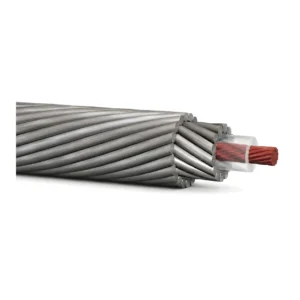
Monoconductor Wireline Logging Cable
A related cable option for a different application or duty profile.
View product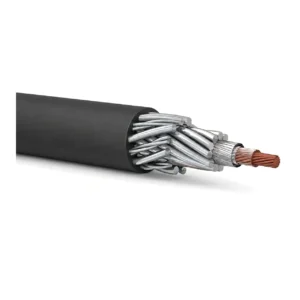
Greaseless Jacketed Wireline Cable
A related cable option for a different application or duty profile.
View product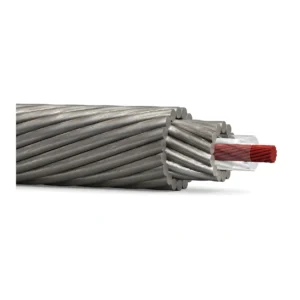
Sour Service Wireline Cable
A related cable option for a different application or duty profile.
View productRequest a cable recommendation and quotation
Send the required services, cable length, mechanical duty, environment, termination and quantity. Our team will review the application before quoting.
- Include the product name or SKU plus the required cable length and quantity.
- Attach a specification, drawing or data sheet when available.