

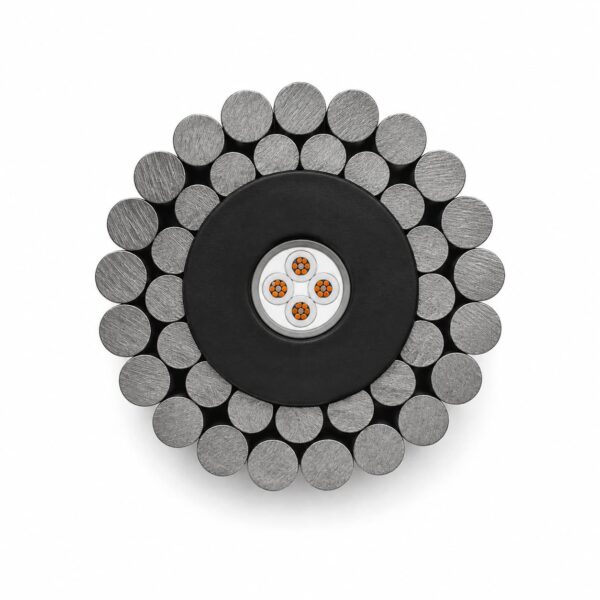
Subsea Armoured Fiber Optic Cable
Subsea Armoured Fiber Optic Cable brings 1 selectable construction options together for underwater monitoring, sensing and high-bandwidth data-system engineers. Compare the complete signal, electrical and mechanical requirement before choosing a configuration.
- Selection focus: select a load-bearing optical cable for underwater data links that do not require copper power conductors
- Available configurations: 1
- Mechanical inputs: cable length, working load, drum, sheave, routing and deployment cycle
- Quotation inputs: services, environment, termination, quantity and required inspection documents
Subsea Armoured Fiber Optic Cable selection overview
The Subsea Armoured Fiber Optic Cable gives underwater monitoring, sensing and high-bandwidth data-system engineers one clear route for comparing 1 available constructions. It is designed to select a load-bearing optical cable for underwater data links that do not require copper power conductors. Keeping the options in one product group makes it easier to compare signal architecture, conductor or fibre content, armour, diameter, mechanical load and bend geometry without switching between separate product pages.
Selection starts with the equipment interface: define voltage and current, signal type and frequency, coaxial impedance and allowable attenuation, or fibre type, count and wavelength as applicable. Then define whether the cable will be static, suspended, reeled, towed or repeatedly deployed. Cable length, working load, breaking-load criterion, drum and sheave dimensions, temperature, water environment, abrasion, buoyancy and the connector or moulded termination must be reviewed as one system.
- Compare: construction, transmission values, outside diameter, load and bend data shown for each option.
- Confirm: the complete service combination and the operating values that apply at the required cable length.
- Specify: inspection stages, test methods, acceptance values, marking and documentation in the quotation.
Use the related subsea and marine cable selection page for the wider application route, or send your equipment and deployment requirements for an engineering review.
Subsea Armoured Fiber Optic Cable construction options
Compare the complete layer sequence for each option. Conductor or fibre elements, insulation, screening, fillers, bedding, strength members, armour and outer sheath are selected together to suit the transmission and deployment duty.| Configuration | Construction |
|---|---|
| Four-fiber single-mode armoured optical configuration | 4 × 9/125 single-mode fibers; UV-resistant HDPE sheath; preformed galvanized steel armour |
Construction selection
Armour material and lay, sheath material, waterblocking, screening and fibre protection are matched to corrosion exposure, abrasion, repeated bending, handling load and termination design. The armour anchoring and connector or moulded transition are reviewed with the cable because they control how load and water sealing are transferred into the equipment.Applications for Subsea Armoured Fiber Optic Cable
This product group supports underwater monitoring, sensing and high-bandwidth data-system engineers where transmission performance and mechanical deployment duty must be selected together.- Pure optical underwater data links for sensing, monitoring and high-bandwidth communication without copper power conductors.
- Suspended or winch-handled optical routes where fiber attenuation, working load, bend radius and termination are specified together.
- Choose a hybrid power-fiber construction when the same cable must also deliver electrical power or control circuits.
Information needed for selection
Provide the equipment, cable length, service voltages or signals, load criterion, winch and sheave dimensions, deployment method, water environment, temperature, buoyancy target, connector or moulding interface and required inspection documents.Subsea Armoured Fiber Optic Cable specifications
Use the stated values to compare complete configuration options. Empty properties are omitted instead of being estimated, and each numerical value stays with the construction under which it is listed.Four-fiber single-mode armoured optical configuration
| Construction | 4 × 9/125 single-mode fibers; UV-resistant HDPE sheath; preformed galvanized steel armour |
|---|---|
| Optical attenuation | < 1.0 dB/km @ 1310 nm; < 1.0 dB/km @ 1550 nm |
| Outside diameter | 8.00 mm |
| Breaking load | 4800 kg |
| Working load | 1200 kg |
| Static bend radius | 120 mm |
| Dynamic bend radius | 200 mm |
| Temperature | -30 to +80°C |
Using the values
Breaking load is not the normal operating load. Bend values must match drums, sheaves, guides and connector exits. A voltage entry that includes a duration is a dielectric test value rather than a continuous rated voltage. Confirm the applicable operating and acceptance values in the quotation.Standards and test references
The applicable references are selected for the confirmed cable construction and project duty. They provide a framework for engineering and inspection rather than a one-size-fits-all cable designation.- IEC 60794-1-2:2021: General guidance for optical-fibre cable tests, including cables that combine optical fibres and electrical conductors.
- IEC 60794-1-21 / IEC 60794-1-22: Mechanical and environmental test-method families for optical and hybrid optical cables.
- IEC 60793-2-50 and ITU-T G.652: Single-mode optical-fibre characteristics when G.652-type fibre is specified.
- Project test plan: Defines optical wavelengths, attenuation method, tensile load, bending, temperature, water exposure, electrical checks and termination acceptance.
Related cable options
Compare these cable options by service combination, movement, load, voltage and transmission requirement.
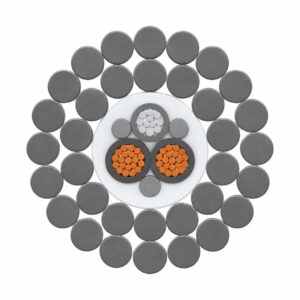
Compact Hybrid Fiber Optic Power Cable
A related cable option for a different application or duty profile.
View product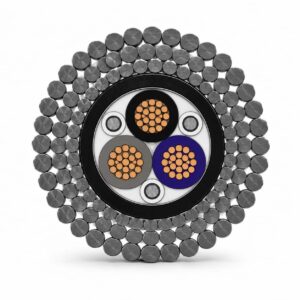
Deepwater High-Load Hybrid Fiber Optic Cable
A related cable option for a different application or duty profile.
View productRequest a cable recommendation and quotation
Send the required services, cable length, mechanical duty, environment, termination and quantity. Our team will review the application before quoting.
- Include the product name or SKU plus the required cable length and quantity.
- Attach a specification, drawing or data sheet when available.