

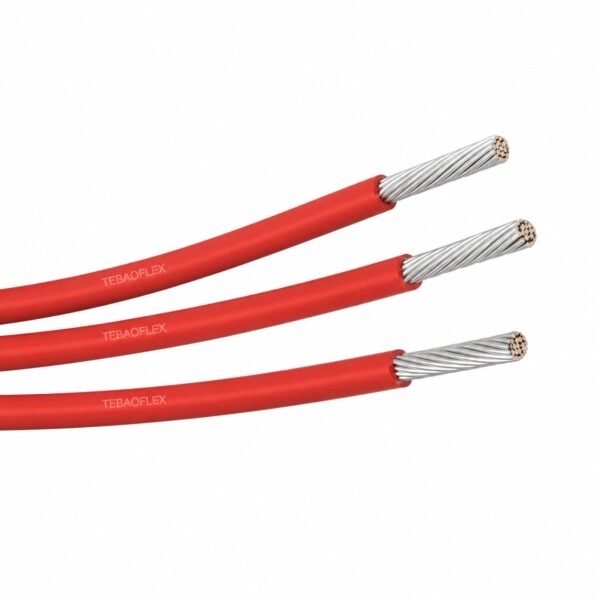

PFA Hook Up Wire 150–250°C, 150–1000 V UL AWM Styles
PFA hook up wire for heaters, thermocouples and process equipment that runs hot, wet and chemically hostile. TEBAOFLEX manufactures nine UL AWM PFA styles with extruded perfluoroalkoxy over plated copper, rated 150 °C to 250 °C at 150 V to 1000 V, in sizes from 30 AWG to 8 AWG.
- UL AWM styles: 1858, 1859, 1860, 1709, 1710, 1726, 1727, 10362, 10371
- Temperature rating: 150 °C, 200 °C or 250 °C by style
- Voltage rating: 150 V, 300 V, 600 V or 1000 V by style
- Conductor: solid or stranded copper — bare, tinned, silver-plated or nickel-plated; nickel plating for the 250 °C styles
- Insulation: extruded PFA, nominal wall 0.25–0.76 mm by style and size
- Thin-wall 600 V: style 10362 holds 600 V at 0.30 mm — thinner than the 300 V styles
- Resistance: excellent against acids, alkalis, oils, moisture and fungus; low coefficient of friction
- Flame and compliance references: UL VW-1, cUL FT1/FT2, UL 758, RoHS and REACH
For a quotation, send the UL style, voltage, AWG size, stranding, conductor plating, colour and the length per coil.
PFA Hook Up Wire for Heaters, Thermocouples and Process Equipment
PFA is the fluoropolymer that behaves like PTFE and processes like a thermoplastic. It carries the same 250 °C ceiling and the same indifference to acids, alkalis and solvents, but it is melt-extruded, so the wall comes out uniform and it strips and cuts cleanly. On a line terminating several hundred heater leads a day, that difference is measured in labour hours. TEBAOFLEX builds nine UL AWM PFA styles from 150 °C to 250 °C at 150 V through 1000 V, in 30 AWG to 8 AWG.
Choose by wall, then check the plating. The 300 V styles run a 0.33 mm wall and the 600 V styles 0.51 mm — with one useful exception: style 10362 holds 600 V at 0.30 mm, which makes it thinner than the 300 V styles and the one to ask about when the loom will not fit. Above 200 °C the conductor must be nickel-plated, whatever the style number says.
- Suitable for: electric heater and element leads, thermocouple and sensor wiring, gas igniters, furnace and oven controls, semiconductor and chemical process equipment, medical devices.
- Confirm before ordering: UL style, voltage, AWG size, stranding, conductor plating, colour and coil length.
- Choose another construction when: the wire has to flex continuously, where silicone stays softer, or when 200 °C is enough and FEP will do the job for less.
Comparing fluoropolymers first? The high temperature wire selection matrix puts PFA next to PTFE, FEP and silicone, and the wider range sits under High Temperature Cables.
For a named 250°C PFA style, compare UL 1933 thin-wall 300 V wire with UL 10485 thin 600 V wire and UL 10503 600 V equipment wire. Check AWG, insulation wall, finished diameter and conductor construction; a shared material and temperature do not make the styles interchangeable.
Cross-reference: RTD-cable enquiries that name Chem-Gard 200 part 40551 or 40552 are reviewed on the Chem-Gard 200 RTD 40551 / 40552 reference page, where the original three- and four-conductor constructions are listed.
Construction
PFA hook up wire is a single core with two design variables: what the copper is plated with, and how thick the extruded PFA over it is. Between them they set the temperature rating, the voltage rating and the finished diameter — which is to say, the style number.
- Conductor: solid or stranded copper. Bare, tinned, silver-plated or nickel-plated depending on the temperature class. Stranding runs from a single 0.254 mm wire at 30 AWG through 7- and 19-strand constructions to 37 strands at 10 AWG and 133 strands at 8 AWG.
- Conductor plating above 200 °C: nickel-plated copper is what makes a 250 °C PFA style hold 250 °C. Tin melts at 232 °C and is out of the question; silver plating covers the 150 °C and 200 °C classes.
- Insulation: extruded PFA. Nominal wall runs 0.25 mm on the 150 V style, 0.30 mm on the thin-wall 600 V style, 0.33 mm on the 300 V styles, 0.51 mm on the standard 600 V and 1000 V styles, and 0.76 mm at 8 AWG.
- Colours and marking: full colour range with custom colours and striping to order; surface printed with the style, rating and approvals as required.
Why PFA and not PTFE
PFA and PTFE share a temperature ceiling and a chemical resistance profile, so the choice between them is a manufacturing question rather than a performance one. PTFE is paste-extruded and sintered; PFA is melt-extruded like an ordinary thermoplastic. The practical consequences all land on the assembly bench: the PFA wall is more uniform, the surface is smoother, and it strips and cuts without the fibrous drag that slows a high-volume termination line. Where a harness shop is terminating hundreds of leads a shift, that is the whole argument.
The thin-wall 600 V exception
Read the wall column in the tables below and one row looks wrong. Style 10362 is rated 600 V at a 0.30 mm nominal wall, while the 300 V styles 1709, 1726 and 1858 use 0.33 mm. It is not a misprint: 10362 is the deliberately slim 600 V construction, and at 20 AWG it comes out at 1.54 mm against 1.96 mm for the standard 600 V style 1727. If a bundle will not fit its duct or a connector shell is full, that 0.4 mm per core is usually where the space comes from.
Wall thickness by voltage class
The pattern across the range is simple once you see it: 0.25 mm for 150 V, 0.30 mm for thin-wall 600 V, 0.33 mm for 300 V, and 0.51 mm for standard 600 V and for 1000 V. Temperature does not change the wall — styles 1709 and 1726 are the same 0.33 mm construction at 200 °C and 250 °C respectively, and 1710 and 1727 are the same 0.51 mm pairing. What changes with temperature is the plating.
Applications
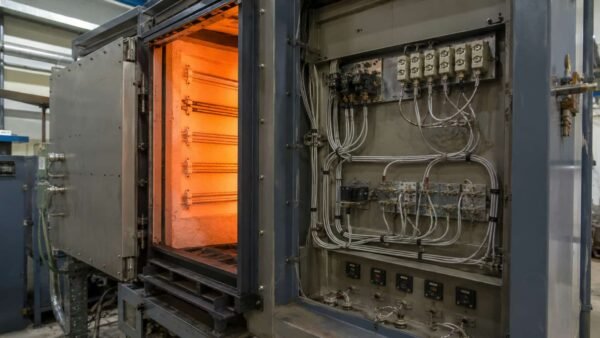
PFA hook up wire lives inside equipment where heat and chemistry arrive together. Its home ground is the heated appliance and the process plant: element leads that sit beside the heat source, thermocouple runs that must not drift, and control wiring that has to survive whatever the process gives off.
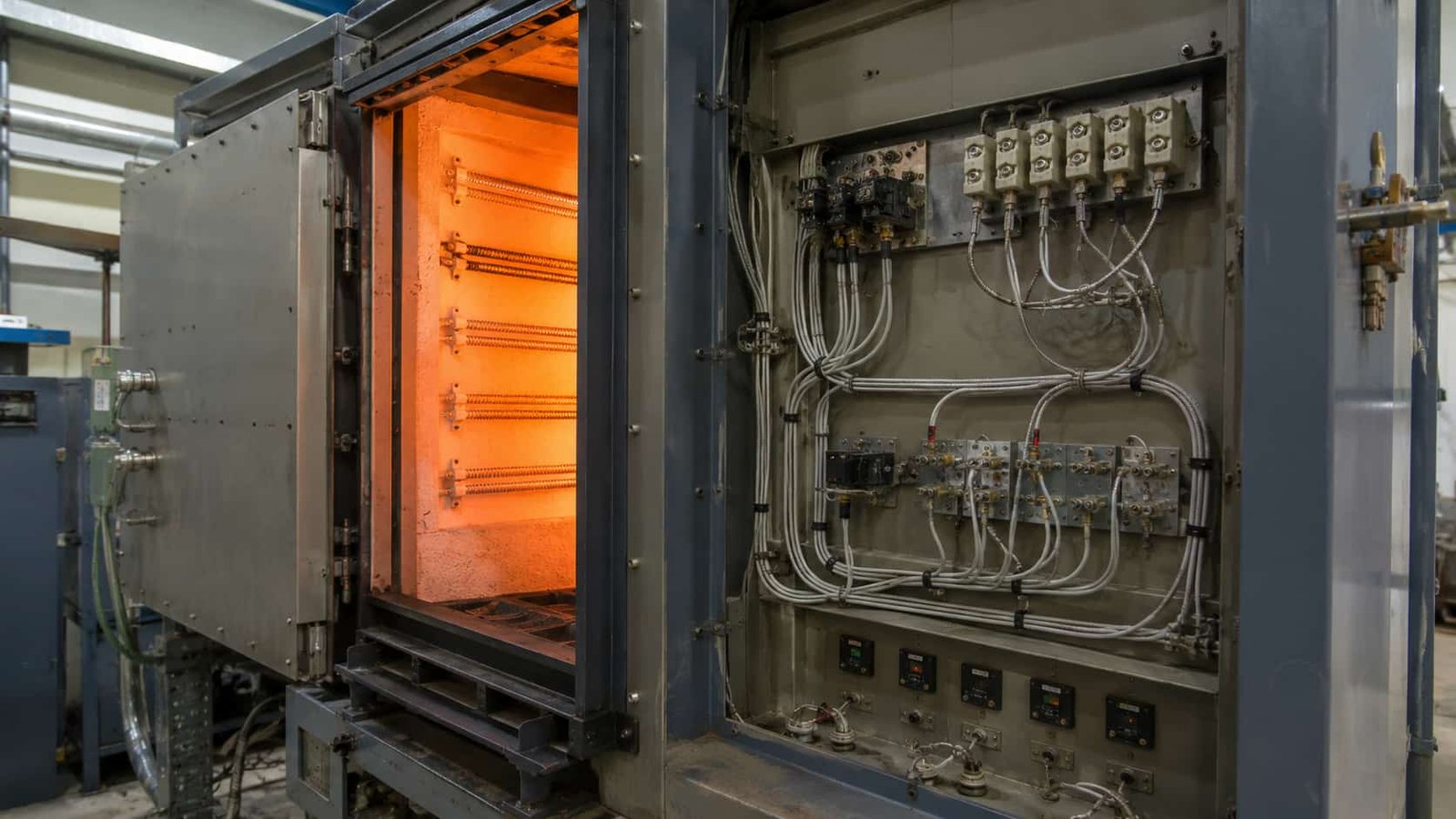
Equipment and duty this wire is built for
- Electric heaters and heating elements — element leads and internal connections that sit in the radiant field.
- Furnace, kiln and oven controls — panel wiring to contactors, ceramic terminal blocks and temperature controllers.
- Thermocouple and sensor leads — stable insulation with a predictable dielectric, which matters when the signal is millivolts.
- Gas igniters and burner controls — short leads exposed to heat cycling and combustion by-products.
- Semiconductor and chemical process equipment — acids, alkalis, solvents and process vapours that attack lesser insulations.
- Medical equipment — sterilisation cycles, cleaning chemicals and repeated thermal cycling.
- Instrumentation and analytical equipment — where outgassing and contamination are design constraints.
- General appliance and electronic internal wiring — anywhere the ambient beats what PVC or cross-linked wire will take.
Where PFA is the wrong answer
- Continuous flexing, reeling or torsion — PFA is a thermoplastic and takes a set. Use a Class 5 or Class 6 silicone construction for anything that moves in service.
- Duty that never passes 200 °C with no chemical exposure — FEP does the same job at lower cost. Paying for PFA headroom you will not use is just money.
- Heavy abrasion — a thin fluoropolymer wall will cut through against steel edges. Protect the bundle or move to a braided construction.
- Fixed building installation or direct burial — AWM appliance wiring material carries no such listing and is not an installation cable.
- Very tight bend radius in a stiff loom — PFA is more flexible than PTFE but it is still a fluoropolymer; give it room.
Cross-referencing an existing wire
PFA lead wire on an older drawing is often called out by a supplier type code, by a temperature and voltage pair, or simply as “Teflon wire” — a name that covers PTFE, FEP and PFA and tells you almost nothing. Send a photograph of the printed sheath marking together with the measured overall diameter and the conductor size, and we will identify which UL style actually matches before quoting.
Specifications
Nine UL AWM styles, one material. Pick the row by temperature and voltage, then read the nominal diameter straight off the dimension table.
PFA hook up wire styles at a glance
| UL AWM style | Temperature | Voltage | Nominal wall | Conductor plating | Size range | Notes |
|---|---|---|---|---|---|---|
| UL 1860 | 200 °C | 150 V | 0.25 mm | Bare, tinned or plated | 30–16 AWG | Thinnest wall in the range; cUL AWM I A FT2 |
| UL 1858 | 150 °C | 300 V | 0.33 mm | Bare, tinned or plated | 30–10 AWG | VW-1 |
| UL 1859 | 150 °C | 600 V | 0.51 mm | Bare, tinned or plated | On request | 600 V version of 1858 |
| UL 1709 | 200 °C | 300 V | 0.33 mm | Bare, tinned or plated | 30–14 AWG | Same construction as 1726, lower temperature class |
| UL 1710 | 200 °C | 600 V | 0.51 mm | Bare, tinned or plated | 30–14 AWG | Same construction as 1727 |
| UL 1726 | 250 °C | 300 V | 0.33 mm | Nickel-plated | 30–14 AWG | 250 °C version of 1709 |
| UL 1727 | 250 °C | 600 V | 0.51 mm | Nickel-plated | 30–14 AWG | The volume 250 °C 600 V style |
| UL 10362 | 250 °C | 600 V | 0.30 mm (0.76 mm at 8 AWG) | Nickel-plated | 30–8 AWG | Thin-wall 600 V — slimmer than the 300 V styles |
| UL 10371 | 250 °C | 1000 V | 0.51 mm | Nickel-plated | 30–10 AWG | Highest voltage in the PFA range |
Dimensions and Electrical Data
Nominal overall diameter in mm for every style side by side, with the conductor resistance for the size. This is the table to use when the question is whether the loom will physically fit.
| AWG | Cond. Ω/km @20 °C | 1860 150 V | 1858 300 V | 1709 / 1726 300 V | 10362 600 V thin | 1710 / 1727 600 V | 10371 1000 V |
|---|---|---|---|---|---|---|---|
| 30 | 361 | 0.76 | 0.92 | 0.96 | 0.90 | 1.32 | 1.28 |
| 28 | 227 | 0.82 | 0.98 | 1.03 | 0.97 | 1.39 | 1.34 |
| 26 | 150 | 0.98 | 1.15 | 1.12 | 1.06 | 1.48 | 1.50 |
| 24 | 94.2 | 1.11 | 1.25 | 1.26 | 1.20 | 1.62 | 1.60 |
| 22 | 59.4 | 1.26 | 1.40 | 1.41 | 1.35 | 1.77 | 1.75 |
| 20 | 36.7 | 1.45 | 1.62 | 1.60 | 1.54 | 1.96 | 1.95 |
| 18 | 23.2 | 1.68 | 1.85 | 1.84 | 1.78 | 2.20 | 2.20 |
| 16 | 14.6 | 2.00 | 2.15 | 2.14 | 2.08 | 2.50 | 2.50 |
| 14 | 8.96 | — | 2.55 | 2.53 | 2.47 | 2.89 | 2.90 |
| 12 | 5.64 | — | 3.28 | — | 3.22 | — | 3.64 |
| 10 | 3.54 | — | 3.60 | — | 3.54 | — | 3.96 |
| 8 | 2.23 | — | — | — | 5.34 | — | — |
Read the 20 AWG row across and the point of the range is visible in one line: 1.45 mm at 150 V, 1.60 mm at 300 V, 1.54 mm at 600 V on the thin-wall style, 1.96 mm at 600 V standard and 1.95 mm at 1000 V. Style 10362 buys you 600 V in less space than the 300 V styles occupy.
Diameter tolerance is typically ±0.10 mm up to 14 AWG and ±0.15 mm above it. All values are nominal and vary slightly between producers — some build style 10362 at a 0.25 mm wall in the smaller sizes, which comes out thinner again. Treat this table as a planning envelope, not a drawing dimension, and confirm the final size before ordering. Style 1859 dimensions are supplied on request.
Other properties
| Conductor | Solid or stranded copper; bare, tinned, silver-plated or nickel-plated. Nickel plating for the 250 °C styles |
|---|---|
| Insulation | Extruded PFA (perfluoroalkoxy) |
| Working temperature | 150 °C, 200 °C or 250 °C by style |
| Chemical resistance | Excellent against acids, alkalis, oils, moisture and fungus; excellent radiation resistance; low coefficient of friction |
| Processing | Uniform wall for clean stripping and cutting; good resistance to twisting and cracking |
| Substance compliance | RoHS and REACH compliant |
| Colours | Full colour range; custom colours and striping to order |
| Cores | Single core |
Standards
Standards, test methods and compliance references that apply to PFA hook up wire in these UL AWM styles.
| UL AWM | Appliance Wiring Material styles 1858, 1859, 1860, 1709, 1710, 1726, 1727, 10362 and 10371, evaluated under UL 758 |
|---|---|
| cUL / CSA | cUL AWM I A/B; FT1 on the 300 V and 600 V styles, FT2 on style 1860 |
| Flame test | UL VW-1 vertical flame test |
| Substance compliance | RoHS and REACH compliant, low-halogen construction |
| Marking | Surface printed with the AWM style, size, temperature, voltage, flame rating and material as required by UL |
What the style number does and does not settle
A UL AWM style fixes the insulation material, the temperature rating and the voltage rating for appliance wiring material. It is not an installation-cable listing and does not authorise fixed building wiring. And on PFA in particular it does not state the conductor plating, which is the thing your 250 °C rating actually depends on — the polymer will outlast tin plating by a wide margin, so the plating has to be specified separately.
Reading a UL file number on someone else’s wire
PFA lead wire carries a surface print that includes an E-number: the UL file of the company that holds the approval. That file belongs to whoever made the wire, not to the style. If you are cross-referencing a sample and want to know whether we can supply an equivalent, send us the style, size and rating rather than the file number, and we will confirm what we can build and under which approval.
TEBAOFLEX certification
Jiangsu TEBAOFLEX Special Cable Co., Ltd holds UL certificate UL-US-2449012-0 and cUL certificate UL-CA-2437036-0, both dated 27 December 2024 under report E542560-20241225, and VDE certificate 40060055 dated 28 March 2025. These are company-level certifications. Send the exact UL style and size you intend to order and we will confirm the approval scope that applies to it before you commit, and issue the test documentation with the shipment.
Documentation supplied with an order
- Construction drawing and dimensional data for the agreed style and size
- Routine test records for the production batch
- Certificate of conformity referencing the agreed standards
- Coil and packing list with marking details
For the scope of a specific standard, consult the issuing body directly — for example the International Electrotechnical Commission or UL Solutions.
Related cable options
Compare these cable options by service combination, movement, load, voltage and transmission requirement.
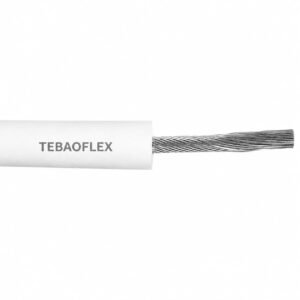
PTFE Hook Up Wire up to 250°C, 150–1000 V UL AWM Styles
A related cable option for a different application or duty profile.
View product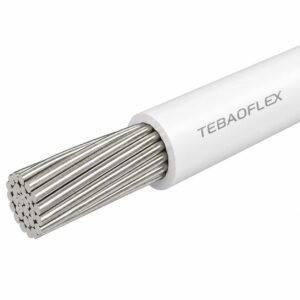
FEP Hook Up Wire 150–200°C, 300/600 V UL AWM Styles
A related cable option for a different application or duty profile.
View product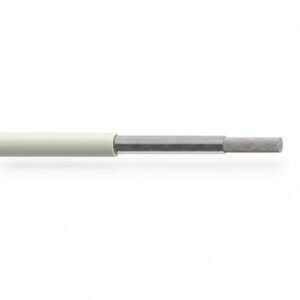
Intemp 250 BS G210 High Temperature PFA Equipment Wire
A related cable option for a different application or duty profile.
View productRequest a cable recommendation and quotation
Send the required services, cable length, mechanical duty, environment, termination and quantity. Our team will review the application before quoting.
- Include the product name or SKU plus the required cable length and quantity.
- Attach a specification, drawing or data sheet when available.