

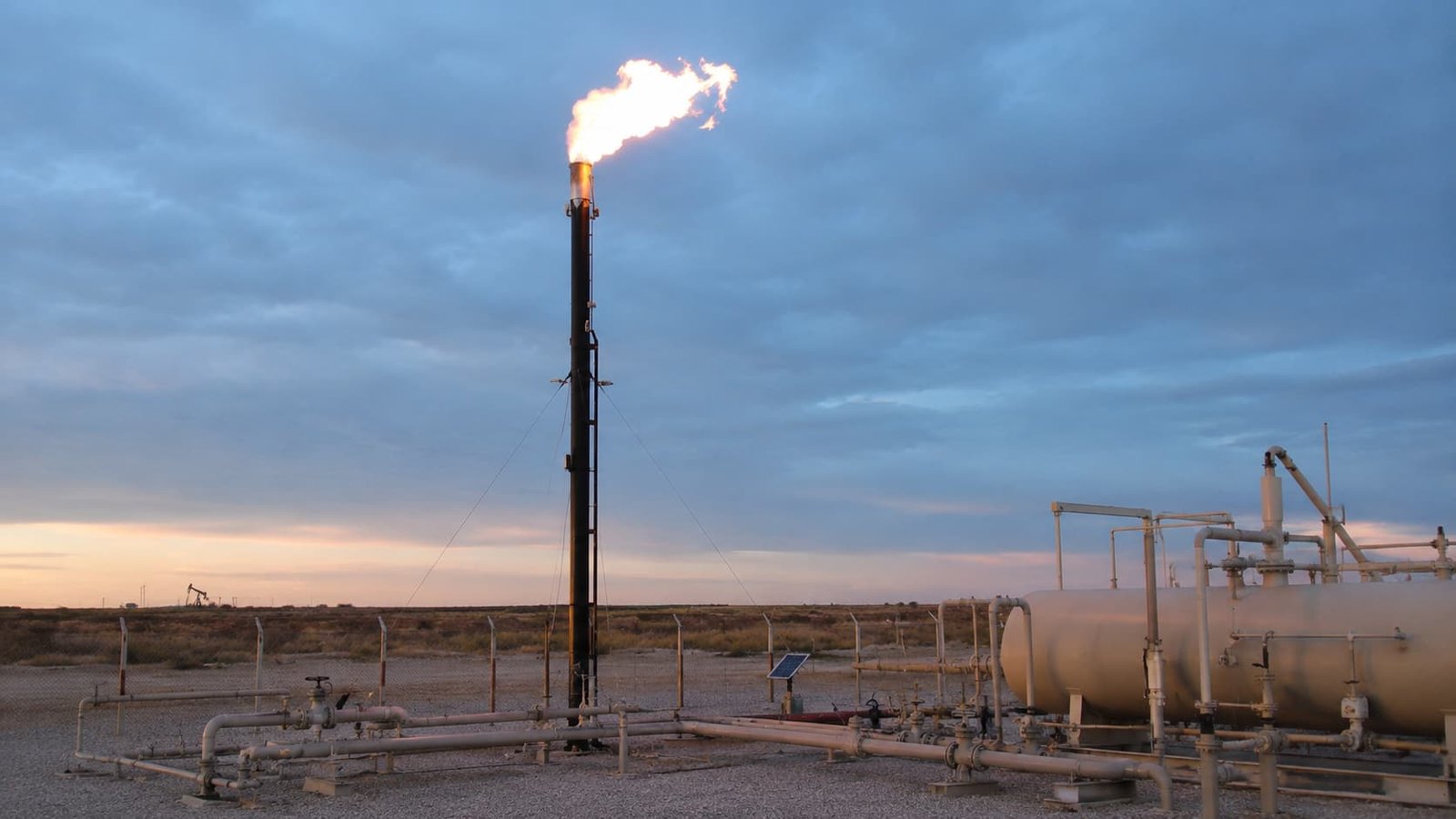
Screened silicone cable · Silicone ignition cable · 200 °C HV wire
High Voltage Silicone Cable Manufacturer: 1.8 kV to 125 kV DC
A high voltage silicone cable is not one product, it is a ladder of constructions. At the bottom sits a 1.8/3.0 kV ignition wire with nothing but an extruded silicone wall. At the top sits a fully screened 8.7/15 kV AC cable that holds 125 kV DC on a test van reel. We build every rung of that ladder on our own lines, and this page exists to work out which rung your job is actually on.
- 300 V to 125 kV DC
- −60 °C to +200 °C
- Screened & unscreened
- MOQ 50 m
- MOQ 50 m
- Free samples
- OEM / ODM
- 10–30 day lead time
- 24/7 engineer support
- Exported to 20+ countries
What makes a silicone cable a high voltage cable?
Three things, in this order: insulation wall thickness, the absence of voids and air gaps in that wall, and screening. Silicone compound gives you roughly 20 kV/mm of dielectric strength and a −60 °C to +200 °C service range, but voltage class is set by how much of it sits between the copper and the outside world, and by what smooths the field at each end of the wall.
That is the whole physics of it, and it explains something buyers find counter-intuitive: a 40 kV silicone lead wire and a 3 kV silicone lead wire can carry identical current on identical copper. The copper is chosen by amps. The wall is chosen by volts. A 22 AWG conductor with a 40 kV wall is mostly insulation with a thread of metal down the middle, and it is meant to be.
The second factor is the one that separates a real high voltage cable from a thick-walled one. Air trapped between the stranded conductor and the insulation ionises long before the silicone does. Every one of those voids is a corona site, and corona erodes insulation from the inside until the wall fails at a voltage it was rated to hold. Wire with a consistent, void-free insulation system has a higher corona inception voltage and a higher extinction voltage — which is why serious HV constructions co-extrude a semi-conductive layer directly onto the conductor, so there is no air left to ionise.
The construction ladder: 300 V to 125 kV DC
Every high voltage silicone cable is one of five constructions. Each rung adds a layer, adds cost, and solves a problem the rung below cannot. Find the lowest rung that covers your duty — buying two rungs higher than you need is a common and expensive mistake.
Plain extruded silicone wire
Conductor plus a silicone wall, nothing else. Cheap, extremely flexible, and correct up to roughly 3 kV where nothing rubs it. Above that the wall alone starts losing to corona.
Thick-wall high voltage lead wire
The same idea with the wall grown to suit the kV class — 3 kV to 60 kV in UL 3239 and UL 10475. The workhorse of X-ray, imaging and electrostatic equipment.
Braided or fibreglass-jacketed HV wire
Rung 2 plus mechanical protection. Silicone’s tear and abrasion resistance is its weak point; a fibreglass braid or textile jacket fixes it without touching the electrical design.
Screened silicone cable
A semi-conductive layer under a tinned copper braid. The braid gives the field a defined boundary and gives you a return path and EMI shielding — essential wherever the cable carries a measurement, not just power.
Fully screened MV construction
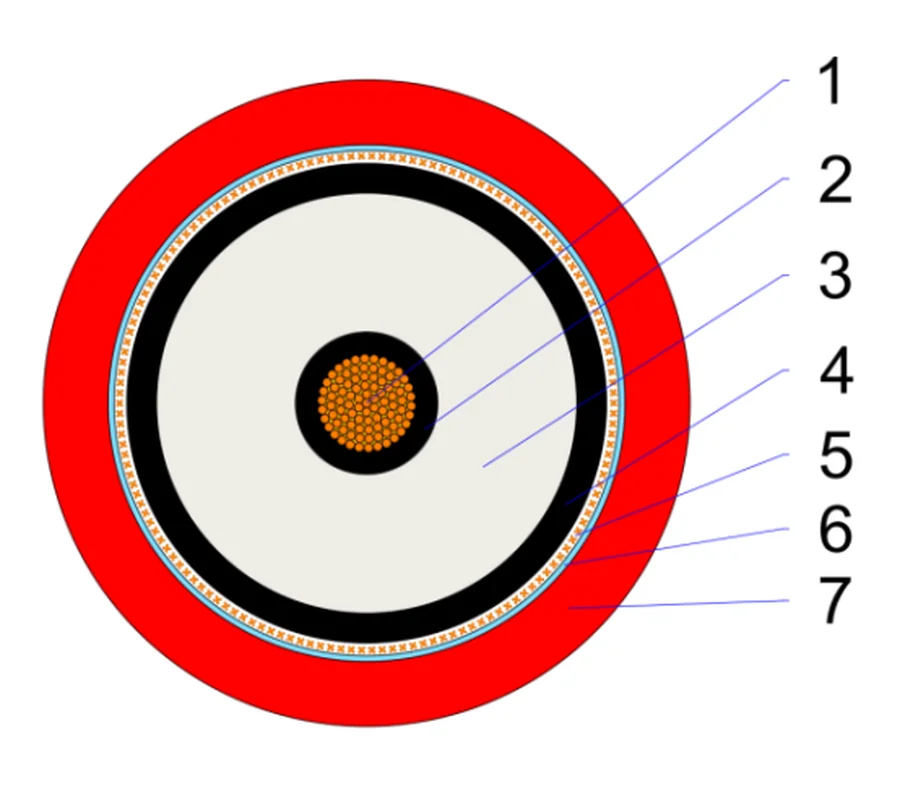
Semi-conductive conductor screen, silicone insulation, semi-conductive insulation screen, braid, tape, sheath. Seven layers, a declared partial discharge limit, and 125 kV DC short-term capability.
Multicore silicone (SiHF)
Several insulated cores in a silicone sheath, 300/500 V. Excellent hot flexible cable, but it is a low voltage product; do not let the word “silicone” convince you otherwise.
| Voltage class | Construction that fits | Screening | Typical equipment |
|---|---|---|---|
| 300/500 V | Multicore silicone, or screened single core | Optional braid for signal integrity | Ovens, furnaces, hot control cabinets, sensor runs |
| 1.8/3.0 kV | Plain extruded silicone wall | None | Burner ignition, VDE-referenced igniter runs |
| 5–10 kV | Thick-wall wire, braidless or braided | None, or fibreglass braid for mechanics | Gas burners, boiler ignition, transformer leads |
| 10–25 kV | Heavy-wall lead wire, 250 °C compound | None | Flare stacks, incinerator igniters, pilots |
| 25–60 kV | UL 3239 / UL 10475 heavy-wall lead wire | None; corona managed by wall and smooth extrusion | X-ray, imaging, electrostatic precipitators, HV supplies |
| 8.7/15 kV AC, 125 kV DC short-term | Seven-layer screened MV measurement cable | Double semi-conductive screen plus tinned copper braid | Cable test vans, HV laboratories, withstand and PD testing |
The bottom row is a construction we built for a cable test van in Lithuania, and the whole negotiation turned on partial discharge and a 230 mm reel drum — the numbers are in that project record.
High voltage silicone cables we build today
Real constructions from our own lines, not a stock catalogue. Every one of these is made to order, and the voltage class on the print is the one we routine-test to.
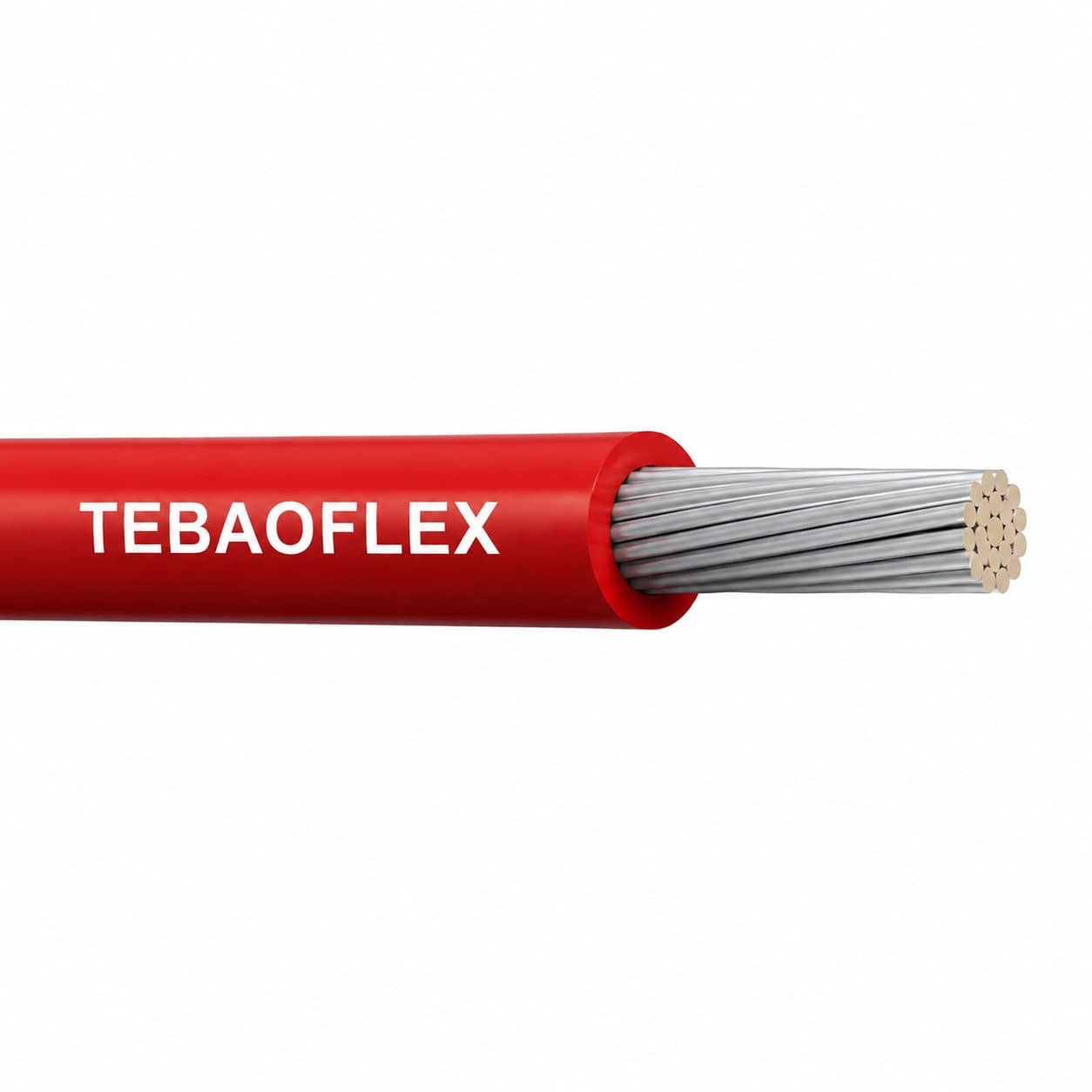
High Voltage Silicone Wire 3–60 kV
- UL 3239 and UL 10475
- 150–200 °C, 28 AWG to 2 AWG
- Tinned copper, heavy wall by kV class
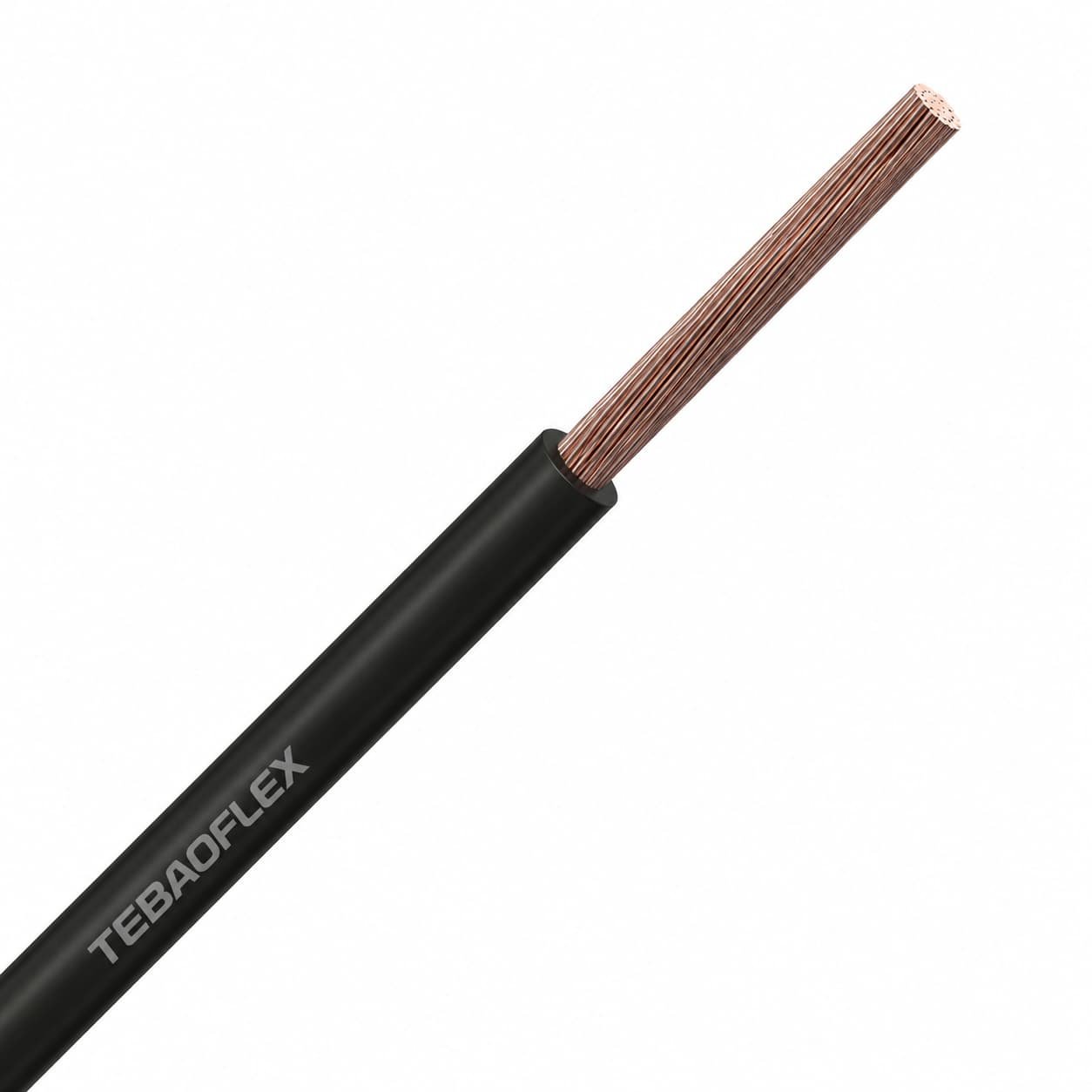
Flare Stack Ignition Cable 25 kV DC
- 25 kV DC / 10 kV AC
- 250 °C continuous
- Unscreened single core, made to run length
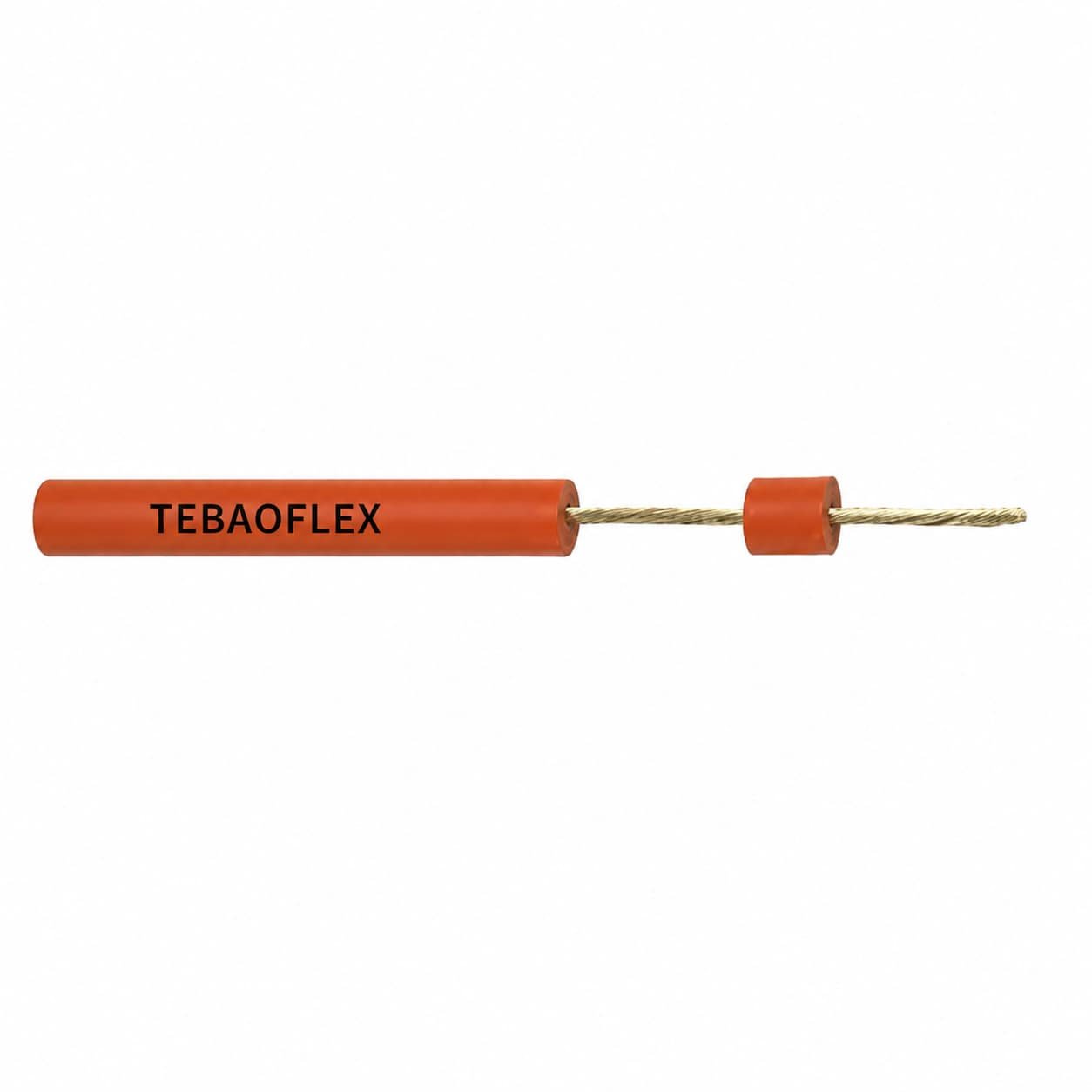
7/10 kV Silicone Ignition Cable
- 7 kV working, 10 kV class
- Burner and boiler ignition duty
- Flexible enough for tight ignition boxes
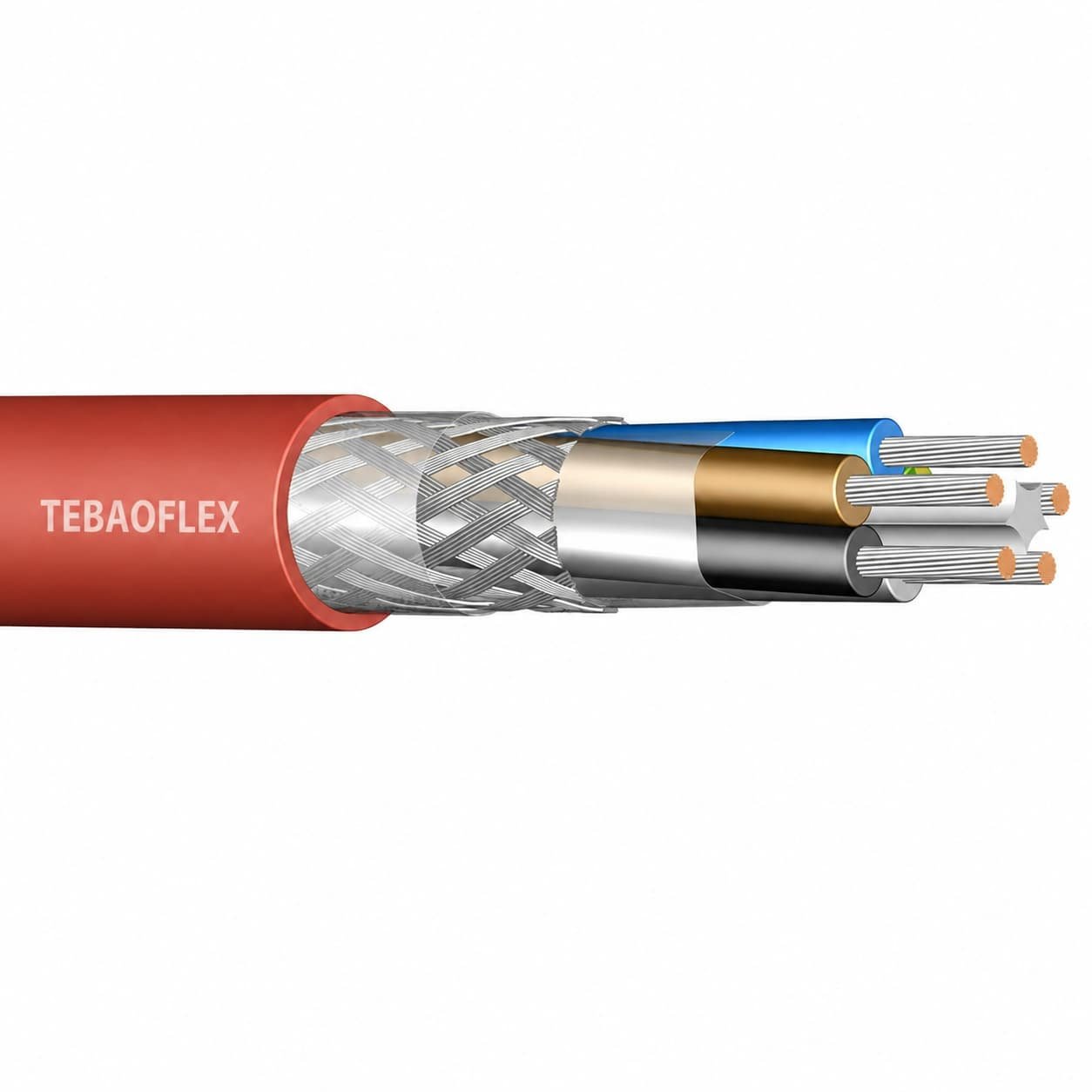
SiFCuSi Screened Silicone Cable
- 300/500 V, tinned copper braid
- Screening for signal integrity in hot plant
- The entry point to screened constructions
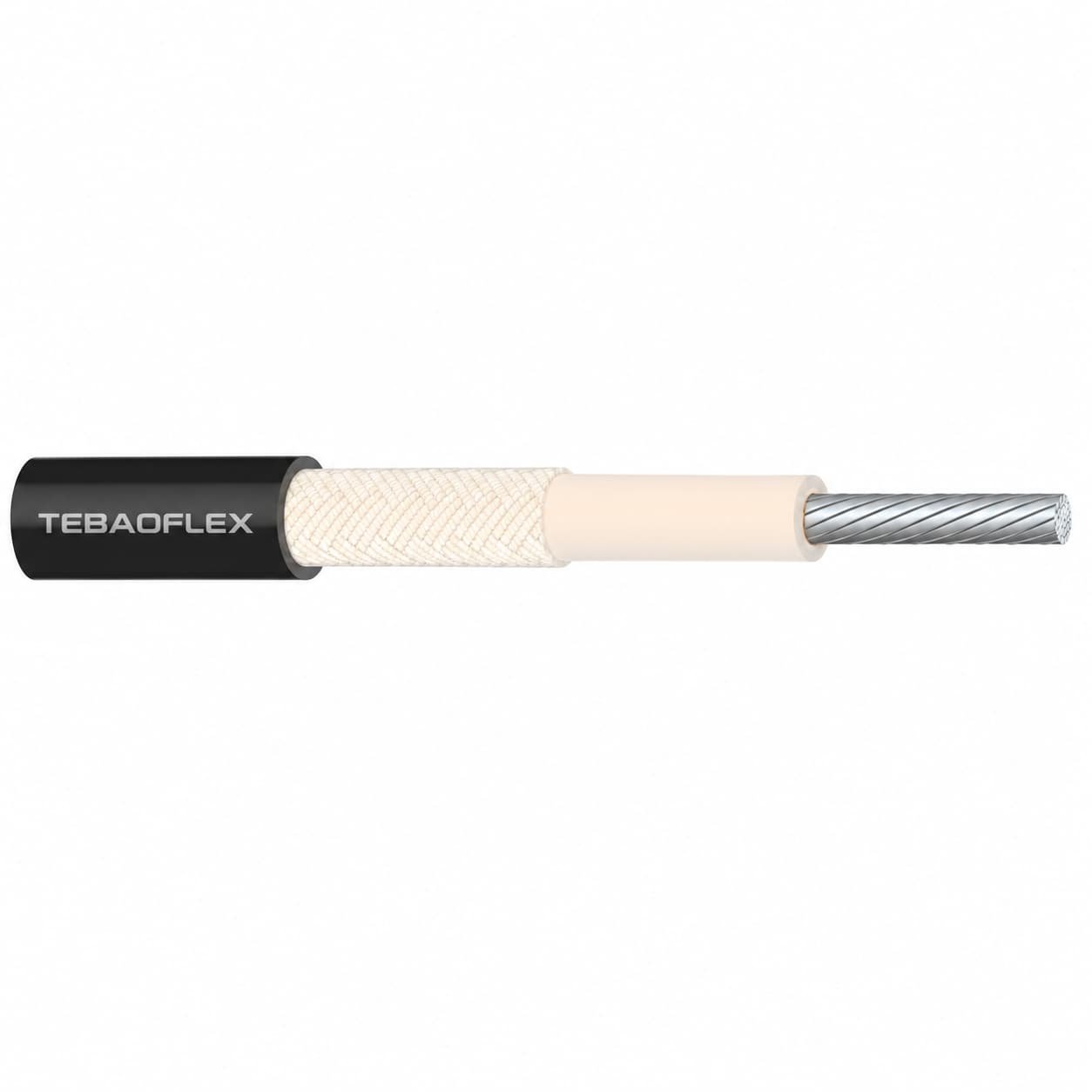
Style 3304 & 3573 10 kV Ignition Wire
- 10 kV class, UL AWM styles
- Braided variants for mechanical duty
- Burner and appliance ignition
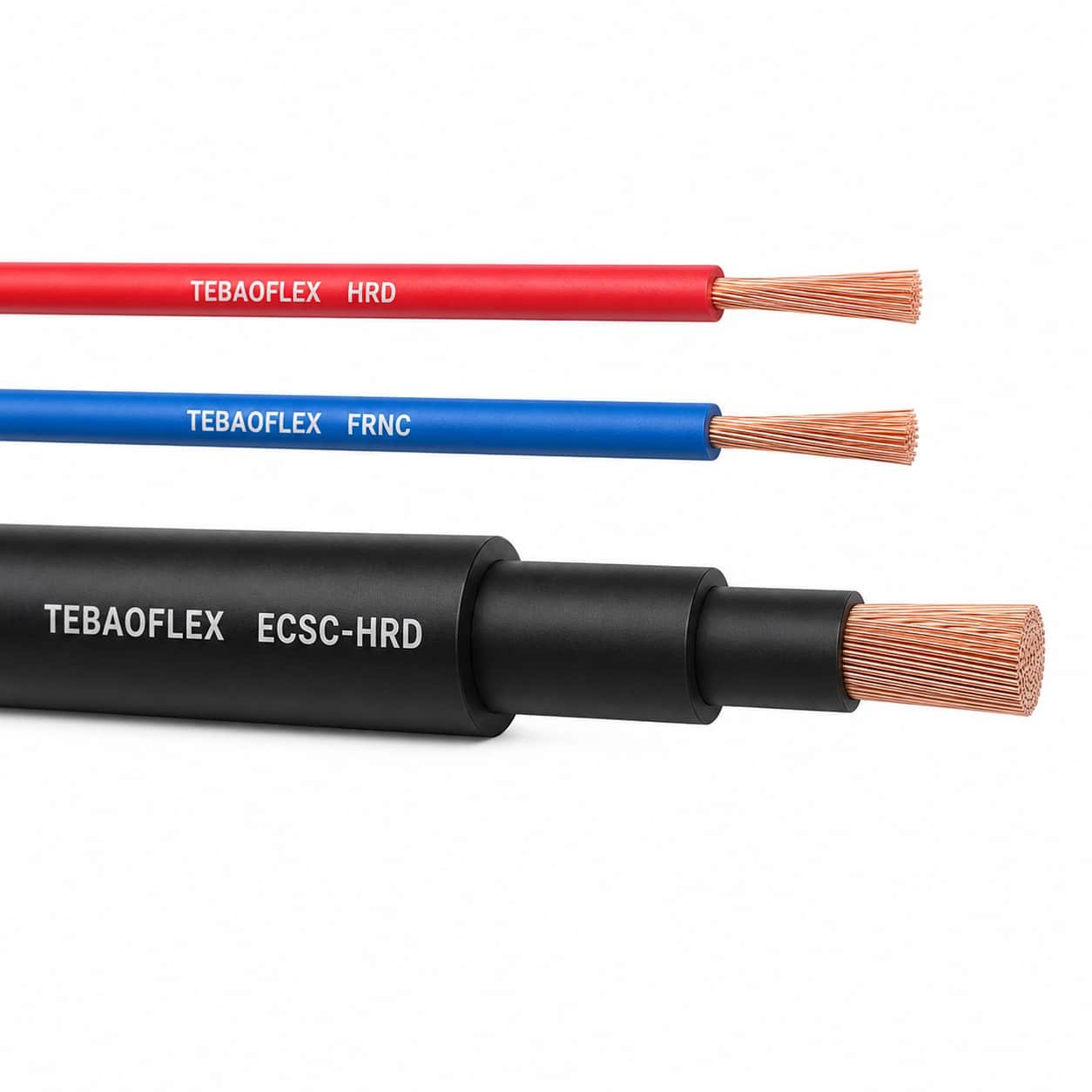
High Strength Silicone Cable, 1500 V DC
- HRD mechanical grade, FRNC fire grade
- 180 °C, 1,500 V DC
- Where standard silicone is too soft
Silicone, PTFE or EPR: which insulation for high voltage?
Pick silicone when the cable is handled, bent, or lives across a wide temperature range. Pick a fluoropolymer when the wall has to be thin or the temperature exceeds 200 °C. Pick EPR or XLPE when the cable is installed once and left alone. The failure mode you are avoiding decides it, not the datasheet header.
| Property | Silicone rubber | FEP | PTFE | EPR / XLPE |
|---|---|---|---|---|
| Continuous temperature | −60 to +180/200 °C, specials to 250 °C | Up to 200 °C | Up to 260 °C | 90–120 °C |
| Flexibility, hot and cold | Outstanding; stays limp near −60 °C | Moderate | Moderate, stiffer at cold | Poor once thick |
| Wall for a given kV | Thick | Thinner | Thinnest; highest withstand per mil | Thick |
| Abrasion and cut-through | Weak — needs a braid or a special-grade compound | Good | Good | Good |
| Ozone, UV and weather | Excellent, inherent to the Si–O backbone | Excellent | Excellent | Good with additives |
| Behaviour in fire | Burns to an insulating silica ash that can keep the circuit alive | Melts; evolves fluorinated gas | Melts; evolves fluorinated gas | Chars |
| Repeated flexing life | Excellent | Fair | Fair | Poor |
| Relative material cost | Medium–high | High | Highest | Low |
Two rows deserve a comment. The fire row is why silicone shows up in circuit-integrity applications at all: the compound does not simply vanish, it converts to silica, and a wrap of ash is still an insulator for the minutes that matter. The abrasion row is why so many silicone cables come back damaged — the material is soft, and nobody told the installer.
Where a high voltage silicone cable is the wrong answer
We would rather lose the order than ship a cable that fails in six months. Silicone has three honest weaknesses, and each one has a threshold past which you should buy something else — or buy silicone with a fix already built into it.
It is dragged over sharp edges
Silicone’s abrasion resistance is fair at best, and standard grades are recommended for static installation. If the cable rubs steel or gravel daily, you need a fibreglass braid, a textile jacket, or a special-grade compound specified for the duty — not a standard silicone sheath with hope on top.
It is clamped, tied or crushed
Soft insulation takes a compression set. A cable tie pulled hard on a 40 kV lead thins the wall exactly where the field is highest. Use saddles, not zip ties, or move to a fluoropolymer that will not deform.
The wall has to be thin
Silicone needs more millimetres per kilovolt than FEP or PTFE. If your connector cavity or bend radius cannot take the finished diameter, silicone is out on geometry alone. That is an honest no, and we will say it.
It runs above 200 °C continuously
Standard silicone tops out around 180–200 °C, with special grades reaching 250 °C. Past that you are in PTFE, mica or ceramic-fibre territory, and no amount of compound tuning changes it.
Nobody defined the test voltage
Working voltage, routine test voltage and type test voltage are three different numbers, and only one goes on the print. If a specification names only “40 kV” we will ask which one it is before quoting, every time.
The cable carries a measurement
An unscreened lead near a switching supply will happily pick up noise and hand it to your instrument. If the cable is part of a measurement chain, it needs a screen — that is rung 4, not rung 2.
Heater, oven and process-equipment leads that run past the silicone ceiling at 600 V can move to the UL 5359 mica-insulated wire, which places mica tape under a treated fibreglass braid.
Application to recommendation
For a protected burner ignition assembly, compare UL 3257 silicone ignition wire, 10 kV AC / 25 kV DC with the ignition constructions below. UL 1813 FEP wire, 200°C/3 kV is a different high-voltage internal equipment route, not a substitute for a 10 kV ignition circuit. Check waveform, thermal exposure and termination spacing.
If your equipment is on this list, start from the row rather than from a catalogue page. Every recommendation below is a construction we have actually built.
| Equipment / duty | What the cable is up against | What we would build |
|---|---|---|
| Gas burner and boiler ignition | 7–10 kV pulses, heat soak from the burner head, tight ignition boxes | Unscreened silicone ignition cable, 7/10 kV, flexible grade |
| Flare stack and incinerator igniters | 25 kV DC, 250 °C at the tip, long vertical runs, weather | Heavy-wall 250 °C silicone igniter cable, made to run length |
| X-ray, imaging and HV power supplies | Up to 60 kV DC, tight routing, corona risk in the wall | UL 3239 / UL 10475 lead wire, wall sized to the kV class |
| Electrostatic precipitators | Sustained DC, dust, thermal cycling | Heavy-wall HV silicone lead wire, tinned copper conductor |
| Furnaces, ovens, hot control cabinets | 180–200 °C ambient, low voltage, constant handling | Multicore SiHF or silicone hook-up wire, 300/500 V |
| Motor terminal boxes and hot machine leads | Vibration, mechanical abuse, 1,500 V DC | HRD high-strength or FRNC fire-grade silicone single core |
| Instrument and sensor runs in hot plant | Noise pickup, heat, frequent movement | SiFCuSi screened silicone cable, 300/500 V |
| Cable test vans and HV laboratories | 125 kV DC short-term, a declared PD limit, daily reeling | Seven-layer screened MV construction, special-grade sheath |
How to specify a high voltage silicone cable in five lines
Send us these five and we can draw a construction the same day. Leave any of them out and the quotation becomes a guess dressed as a price.
1. Voltage, and which voltage
Continuous working voltage, AC or DC, plus any short-term or test level the cable must survive. Say if a routine test voltage has to be printed on the jacket.
2. Current or conductor size
Amps, or the cross-section you already use. Remember the copper follows the current and the wall follows the volts — they are independent decisions.
3. Temperature at the cable, not in the room
Continuous ambient plus any hot spot. A 200 °C burner head three centimetres from the lead is the number that matters, not the 40 °C plant floor.
4. What touches it and how often it moves
Static, occasional handling, or reeled daily. Name the surface it rubs. This decides braid, jacket and compound grade — the three things that make silicone survive.
5. Maximum finished diameter
Connector cavity, gland size, bend radius, drum barrel. If the geometry cannot take the wall your voltage needs, we all want to know that on day one.
Optional but useful
Screening requirement, partial discharge limit, colour and print, approval regime (UL, VDE, CE), drum length, and any legacy type code you are replacing.
Standards, certification and what we test
We are a certified factory, not a trading desk with a logo. These are our own certificates, with numbers you can check, and the tests every high voltage silicone cable leaves here having passed.
| Certification | Certificate number | Date | Report |
|---|---|---|---|
| UL | UL-US-2449012-0 | 27 Dec 2024 | E542560-20241225 |
| cUL | UL-CA-2437036-0 | 27 Dec 2024 | E542560-20241225 |
| VDE | 40060055 | 28 Mar 2025 | 5031703-5150-0004 |
Cables built for European projects carry CE with RoHS and REACH declarations. Design and test references are drawn from the IEC and VDE frameworks — EN 50525-2-41 for silicone rubber flexible cables, and IEC partial discharge practice where a screened construction carries a declared PD limit. Referencing a standard is not the same as holding a certificate, and we keep the two apart on every datasheet.
On the floor, every drum gets a spark test and an insulation resistance check. High voltage constructions add an AC withstand test at the routine level, and screened MV cables add a partial discharge measurement at a stated voltage. Test reports ship with the order. “Trust us” is not a test method.
Why buy high voltage silicone cable from TEBAOFLEX
We mix our own compound
Rubber mixing, extrusion, braided shielding, cabling and packaging all run on our own 12 lines. When a job needs a special-grade silicone for tear or abrasion, we formulate it rather than buy whatever the market has that week.
We build one rung, not one catalogue
Our engineers pick the lowest construction that covers your duty. If a 10 kV unscreened wire does the job, we will not sell you a screened MV cable to feel thorough.
Small orders are welcome
MOQ is 50 m. A prototype run, a replacement length for one machine, or a single drum for a test van are all normal here — and samples are free, you cover the freight.
We test what we print
8 high-precision test rigs, full-process QC from incoming compound to finished drum. The voltage on the jacket is the voltage we routine-tested to, not an aspiration.
30+ engineers, 20+ patents
A core R&D team of more than 30 senior engineers, ten with over fifteen years in cable, and more than twenty patented technologies behind the special constructions.
OEM and ODM as standard
Your brand and details printed on the cable and the drums, your construction, your documentation pack. Exported to more than 20 countries with our own import and export licence.
Send your duty, get a construction back
Tell us the voltage, the current, the temperature at the cable and what it rubs against. An engineer replies with a construction drawing and a price — not a catalogue link.
Lead time is normally 10–30 days and confirmed before you order. Payment by T/T, L/C, D/P, Western Union, MoneyGram, PayPal or Alibaba Trade Assurance, with a 30% deposit. Warranty runs 6 months to 1 year depending on construction and duty, and technical support is free for life.
High voltage silicone cable FAQ
What voltage can a high voltage silicone cable actually reach?
Standard silicone lead wire runs from about 3 kV to 60 kV depending on wall thickness. Above that, voltage class comes from construction rather than wall alone: our seven-layer screened MV cable is rated 8.7/15 kV AC continuously and holds 125 kV DC short-term, type-tested at 160 kV DC.
Why is a 40 kV silicone wire so much fatter than a 5 kV one with the same copper?
Because the conductor is sized by current and the insulation wall by voltage, and they are independent. Raising the kV class grows the wall, not the copper. A 22 AWG 40 kV lead is mostly insulation, which is exactly what holding 40 kV without corona requires.
What is a screened silicone cable and when do I need one?
A screened silicone cable adds a semi-conductive layer and a tinned copper braid over the insulation. You need one when the cable carries a measurement, when EMI must be contained, or above roughly 10 kV where the field needs a defined outer boundary to keep partial discharge under control.
Is silicone or PTFE better for high voltage wire?
Silicone wins on flexibility, cold performance, ozone resistance and fire behaviour. PTFE wins on maximum temperature, wall thinness and abrasion. Choose silicone when the cable is handled or bent; choose PTFE when the wall must be thin or the temperature exceeds 200 °C continuously.
Does silicone survive being dragged around a plant?
Standard silicone does not — its abrasion and tear resistance are its weakest properties, and standard grades suit static installation. Where the cable is dragged or reeled we specify a special-grade compound, a fibreglass braid or a textile jacket. That is a specification decision, not an upsell.
What temperature range can you supply?
Our silicone constructions run from −60 °C to +180 or +200 °C depending on compound, with special grades reaching 250 °C for igniter and flare-stack duty. Silicone stays genuinely flexible at the cold end, which most high-temperature materials do not.
Can you match an obsolete or competitor type code?
Yes. Send the old type code with whatever electrical and dimensional data survives, and we rebuild the construction from the duty rather than the label. Legacy codes from merged or discontinued ranges are common in test and ignition equipment, and they are reproducible.
What is the minimum order and how long does it take?
Minimum order is 50 m and normal lead time is 10–30 days, confirmed before you place the order. Price scales with quantity because a special construction has fixed set-up cost, so a longer run is meaningfully cheaper per metre.
Do you provide samples and test reports?
Yes. Samples are free and you cover the freight, which lets you check flexibility, wall, finish and diameter against your own hardware before committing. Routine test reports — withstand, insulation resistance, and partial discharge on screened constructions — ship with the order.
Related reading and constructions
- How we build high temperature wire, by insulation family
- UL 3239 and UL 10475 wall thickness by voltage class
- Project record: a 125 kV DC screened silicone cable for a test van
- ECS-HT VDE ignition wire, 1.8/3.0 kV silicone
- Braidless silicone rubber cable, 5 kV at 200 °C
- All TEBAOFLEX cable solutions by industry
Put your duty in front of an engineer WhatsApp +86 156 3992 7303