

Silicone Rubber Heating Wire UL 3590, 200°C 300V
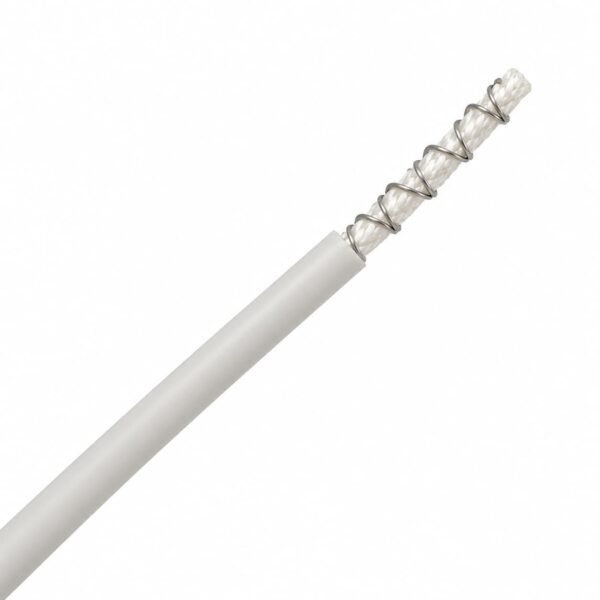
Heating element wire, not hook-up wire. Resistance alloy filament spirally wound on a glass fibre core, silicone insulated. UL 3590, made to your resistance.
- Style: UL AWM 3590, UL Subject 758
- Rating: 200 °C, 300 V, horizontal flame
- Element: copper-nickel or nickel-chromium alloy filament, from 0.0381 mm (0.0015 in)
- Core: glass fibre, up to 1.30 mm
- Insulation: silicone rubber, 0.38 mm average minimum
- Overall diameter: 2.00 ± 0.10 mm
- Resistance: made to order, 0.5 to 12,000 Ω, tolerance ±7 %
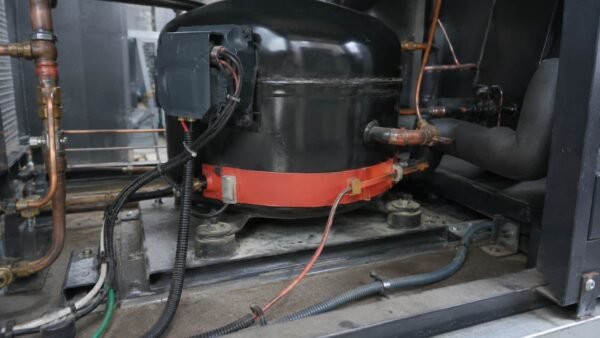
- Use: heaters, crankcase heaters, defrost refrigeration, blankets and heated carpets — not for repeated flexing
Send the working voltage, target wattage and finished element length for a quotation.
UL 3590 is not a wire that carries power somewhere. It is a wire that turns power into heat where it lies. That single difference changes how it is built, how it is specified and how it is bought, and it is why this product sits on its own page rather than among our silicone hook-up wires and the rest of the high temperature wire range.
The construction is unusual and deliberate: a fine resistance alloy filament — copper-nickel or nickel-chromium — is spirally wound around a glass fibre core, then insulated in silicone rubber. The core carries the mechanical tension so the filament only has to carry current; the spiral means a metre of finished wire contains several metres of alloy, which is how a 2 mm cable can be made to almost any resistance you ask for. Rated 200 °C, 300 V, horizontal flame.
Because resistance is the product, this is made to order rather than stocked. TEBAOFLEX builds it across a very wide resistance range, held to ±7 %, in the colour you specify.
UL’s own use designation for the style is broader than most suppliers admit: internal wiring for heaters, crankcase heaters and defrost refrigeration, in positions not subjected to repeated flexing. Electric blankets and heated carpets are the volume application; compressor crankcase heaters and evaporator defrost elements are the ones that keep OEMs on the phone in October.
Keeping a drainage path open from a roof edge through the gutter and downspout is a different job from appliance heating: the self-regulating roof and gutter heating cable has a conductive core that adjusts local heat generation as conditions change.
If what you actually need is a wire to deliver current at 200 °C rather than dissipate it, you want silicone hook-up wire or fiberglass braided silicone wire from our high temperature cable range instead.
For distributed pipe, tank, roof or gutter freeze protection, compare self-regulating heat-trace cable configurations. Their output changes with local temperature; this UL 3590 resistance wire is selected to a specified resistance and element length.
Lead connections inside refrigerating equipment that call for 600 V PVC insulation at 105°C are a separate job, handled by the UL 1056 PVC appliance wire with its stranded copper conductor and thick PVC wall.
Send the working voltage, the target wattage and the finished element length. Those three numbers fix the resistance, and the resistance is what we build.
Three parts, and the order they go together in is the whole product: a glass fibre core, a resistance alloy filament wound in a spiral around it, and a silicone rubber wall over the top. Nothing here is a conductor in the ordinary sense.
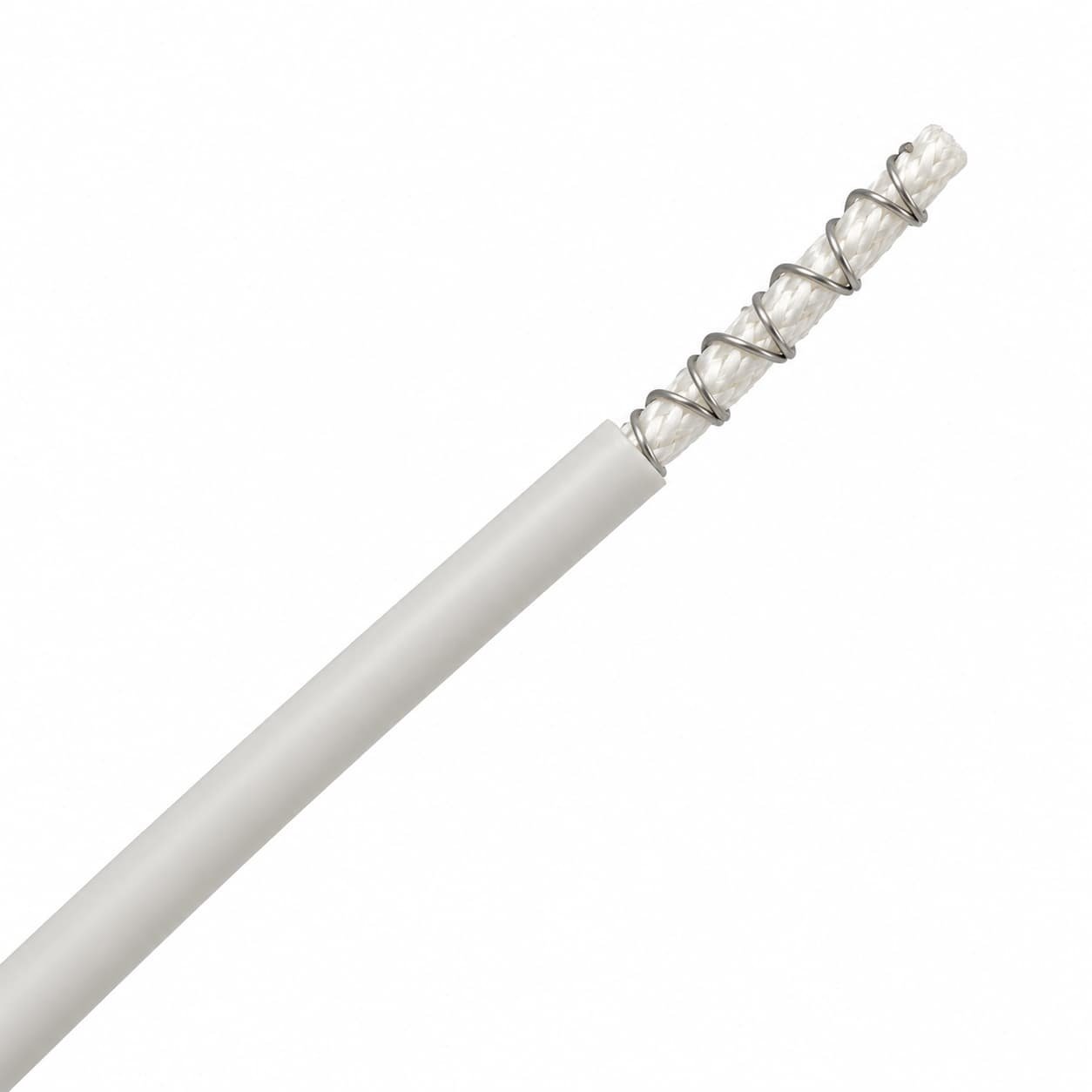
- Core: a glass fibre core, up to 1.30 mm. It carries no current at all. Its job is to take the tension, hold the spiral geometry, and survive 200 °C without shrinking — because if the core moves, the resistance moves with it.
- Heating element: a resistance alloy filament in copper-nickel or nickel-chromium, from 0.0381 mm (0.0015 in) upwards, wound helically over the core. This is the part that gets hot.
- Insulation: silicone rubber, minimum 0.38 mm average and 0.33 mm at any point, to a finished 2.00 ± 0.10 mm. Silicone is chosen because it stays elastic at 200 °C and, unlike a thermoplastic, does not creep away from a hot spot.
Why the element is wound, not drawn straight
Run a straight filament down the middle and one metre of cable contains one metre of alloy. Wind it in a tight helix and one metre of cable can contain ten. The spiral pitch is a resistance control that costs nothing in diameter, and it is the reason a 2 mm cable can be built anywhere from a fraction of an ohm to several thousand. It also matters mechanically: a helix stretches and relaxes as the wire is bent, where a straight filament that fine would simply break.
The three levers that set your resistance
Resistance per metre is not a grade you pick off a shelf; it is the output of three decisions we make together:
- Alloy. Nickel-chromium has roughly sixty times the resistivity of copper and a low temperature coefficient, so it holds its resistance as it heats. Copper-nickel sits lower and suits low-resistance, higher-current elements.
- Filament diameter. Halve the diameter and you quadruple the resistance per unit length. This is the coarse adjustment.
- Spiral pitch. Tighten the helix and you fit more alloy into the same metre. This is the fine adjustment, and it is what lets us hit a target rather than land near it.
Which is why the enquiry we can quote from is “230 V, 60 W, 3.2 m finished”, not “what gauge do you have”.
What the silicone is doing, and what it is not
The silicone is insulation and mechanical protection. It is not a thermal barrier — the whole point is that heat gets out of it and into whatever the wire is heating. It withstands 2,000 V AC for one minute and holds a minimum insulation resistance of 15 MΩ·km, which is what stops an element buried in a blanket or a heater assembly from becoming a shock hazard when the fabric is compressed.
A glass fibre braid jacket is available instead
Where the element sits against metal, an abrasive surface or a sharper edge than silicone alone will tolerate, the same core-and-filament construction can be finished with a glass fibre braid. It costs a little diameter and buys abrasion resistance and a higher surface temperature tolerance.
UL fixes what this style may be used for, and the wording is worth reading before you specify it: internal wiring for use in heaters, crankcase and defrost refrigeration, where not subjected to repeated flexing. Two useful facts hide in that sentence — the market is wider than electric blankets, and the wire is not built to be flexed for a living.
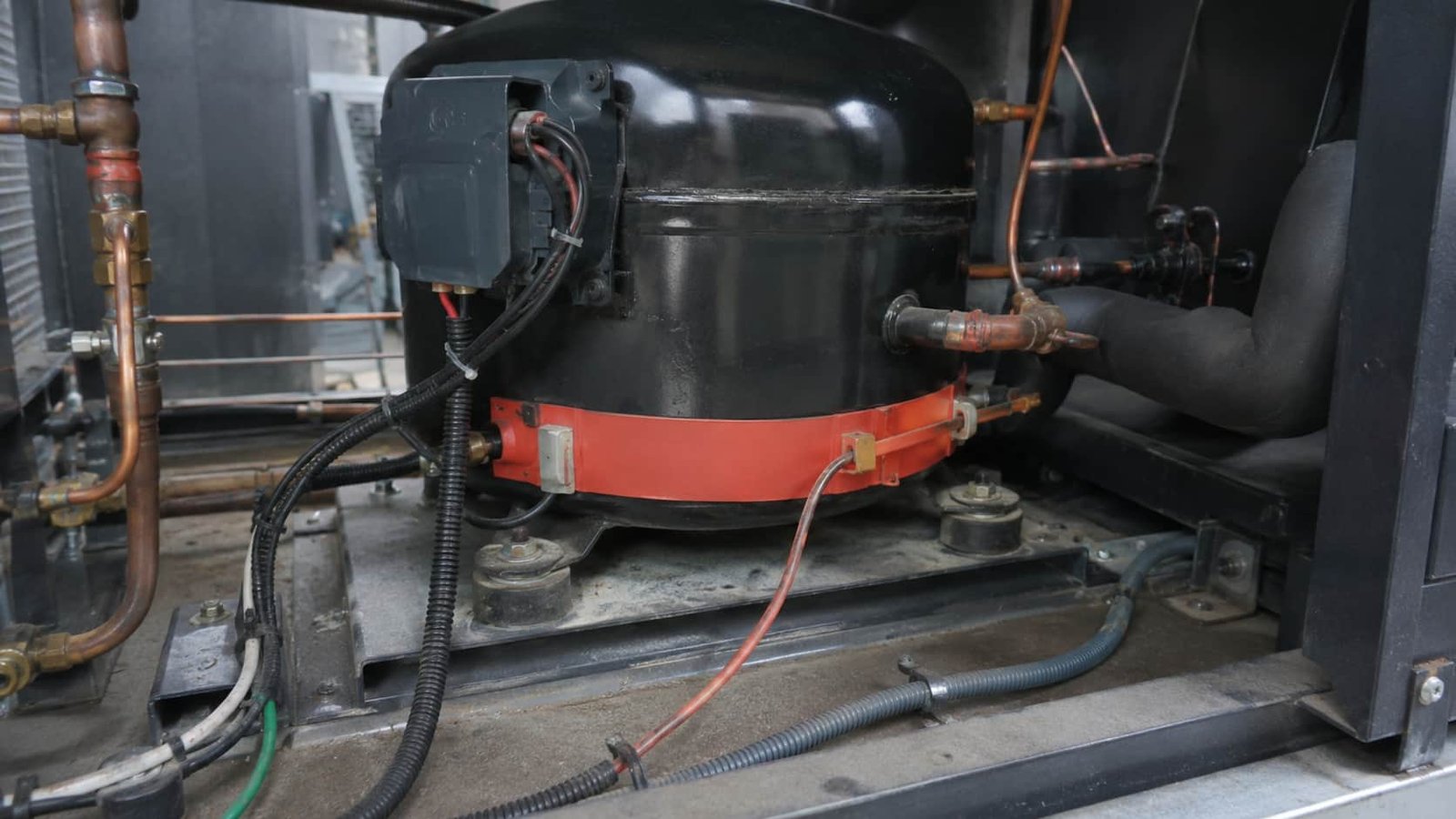
Where it is used
- Electric blankets, heated throws and heated carpets — the volume application, and the one that sets the price expectation.
- Compressor crankcase heaters — wrapped or banded around the crankcase to keep refrigerant out of the oil at start-up. Low wattage, permanently energised, and a warranty claim when it fails.
- Defrost heating in refrigeration — evaporator coil, drain pan and drain line elements in commercial cabinets, freezers and display cases.
- Heater internal wiring — the element side of small appliance and equipment heaters.
- Warming plates, incubators and lab equipment — anywhere a controlled, low watt-density surface is wanted rather than a hot spot.
- Mirror, seat and panel de-misting — where the element is laminated or bonded and never moves again.
How to specify it — the only three numbers that matter
Every other cable on this site is specified by conductor size. This one is specified by resistance, and resistance falls out of arithmetic you already have:
| Input | Symbol | What it decides |
|---|---|---|
| Working voltage | V | With the target power, fixes the total element resistance: R = V² / P |
| Target power | P (watts) | The heat the element must deliver |
| Finished element length | L (metres) | Divides R into the resistance per metre we build to, and sets the watt density |
A 230 V, 60 W element needs 882 Ω. Spread over 3.2 m of finished wire that is about 276 Ω/m. Send those three numbers and there is nothing left to guess.
Two things follow that catch people out. Power is inversely proportional to resistance, so the ±7 % resistance tolerance shows up as roughly ±7 % on watts — design your thermostat band with that in mind. And you cannot cut a heating element to length on site the way you would trim a hook-up wire: shortening it lowers the resistance and raises the power, and a blanket element cut 20 % short runs 25 % hot.
Watt density is the specification behind the specification
Two elements can have identical total wattage and behave completely differently. What the user feels — and what scorches fabric — is watts per metre. If the assembly allows it, more length at lower watts per metre is almost always the safer design: gentler surface temperature, longer element life, more forgiving of a fold or a fallen cushion blocking the heat path. Tell us the area to be heated as well as the wattage and we will say whether the length you have chosen is comfortable.
What this wire is not for
- Not a hook-up wire. It is deliberately resistive. Using it to carry power to something will make the wire hot and starve the load. For 200 °C wiring use silicone hook-up wire or fiberglass braided silicone wire.
- Not for repeated flexing. UL’s designation says so explicitly. A fine alloy filament on a glass core work-hardens and breaks; specify a flexing-rated element if the assembly folds in service every day.
- Not self-regulating. Resistance is fixed by construction, so power does not fall as the surroundings warm. The control loop is your thermostat, and this wire needs one.
- Not industrial pipe trace heating. Process pipe and vessel tracing is a different product class with its own standards and, in hazardous areas, its own certification. This is internal wiring for equipment.
- Not for hazardous areas as supplied. An AWM style is not an Ex approval.
- Not rated above 300 V. The style stops there; series-connecting elements to reach a higher supply voltage does not raise the insulation rating.
Where the job is process pipe and tank tracing rather than an equipment element, the 230 V self-regulating pipe and tank heat trace cable covers freeze protection and process temperature maintenance, with output selected from a heat-loss calculation.
Ratings
| Property | Value |
|---|---|
| UL AWM style | 3590 (UL Subject 758) |
| Rated temperature | 200 °C |
| Rated voltage | 300 V |
| Flame test | Horizontal flame |
| Dielectric strength | 2,000 V AC for 1 minute |
| Minimum insulation resistance | 15 MΩ·km |
| Resistance tolerance | ±7 % |
| Flexing | Not for positions subject to repeated flexing |
Construction and dimensions
| Element | Material | Dimension |
|---|---|---|
| Core | Glass fibre — carries no current | Up to 1.30 mm (0.051 in) |
| Heating element | Copper-nickel or nickel-chromium resistance alloy, spirally wound | Filament from 0.0381 mm (0.0015 in) |
| Insulation | Silicone rubber | 0.38 mm average minimum; 0.33 mm minimum at any point |
| Jacket option | Glass fibre braid over the silicone | Adds diameter; on request |
| Overall diameter | — | 2.00 ± 0.10 mm |
Resistance — the made-to-order parameter
| Parameter | Range | Notes |
|---|---|---|
| Resistance | 0.5 to 12,000 Ω | Built to your figure. State the value and the basis — per metre or per finished element — because both are ordered. |
| Tolerance | ±7 % | Appears as roughly ±7 % on delivered watts |
| Alloy | CuNi or NiCr | Selected to suit the resistance target, not chosen separately |
| Colour | To your specification | Silicone is pigmented at compounding |
| Length | Made to order | Supplied cut to the finished element length — do not trim on site |
Worked example
| Requirement | Figure |
|---|---|
| Working voltage | 230 V |
| Target power | 60 W |
| Total resistance needed (V² / P) | 882 Ω |
| Finished element length | 3.2 m |
| Resistance we build to | 276 Ω/m |
| Watt density | 18.8 W/m |
Reading the example. The only free choice in it is the length. Doubling the length to 6.4 m halves the watt density to 9.4 W/m for the same 60 W — a gentler, safer element — and changes what we build to 138 Ω/m. That trade, length against watt density, is the entire design conversation for a heating element, and it is worth having before the tooling for your assembly is fixed.
What UL 3590 actually is
| Reference | What it fixes | What it means for you |
|---|---|---|
| UL AWM Style 3590 | 200 °C, 300 V, horizontal flame. Resistance CuNi or NiCr filament from 0.0015 in, spirally wound over a glass fibre core up to 0.051 in. Silicone rubber insulation, 15 mils minimum average and 13 mils minimum at any point. | The style fixes the construction and the ratings. It does not fix the resistance — that is the part you specify. |
| UL Subject 758 | The Appliance Wiring Material standard the style sits under | AWM is a component recognition, not a stand-alone approval. Your finished heater is approved as an appliance, with this wire as a recognised component inside it. |
| Use designation | “Internal wiring for use in heaters, crankcase and defrost refrigeration where not subjected to repeated flexing” | This is the sentence that decides whether you may use it. Read the last clause twice. |
| Routine tests | Dielectric 2,000 V AC for 1 minute; insulation resistance; resistance value against your specified figure | Records ship with the order |
“Is it UL approved?” — the honest answer
A UL AWM style is recognised component status for a wire used inside a piece of equipment. It is not a listing for the finished heater and it is not an installation approval. When your certification body assesses your blanket, your crankcase heater or your defrost element, they will want to see that the internal wiring is a recognised AWM style suited to the temperature, the voltage and the use — and 3590 is exactly that. What they will not accept is an AWM style used outside its designated use, which is why the flexing clause matters more than it looks.
Note also that a UL file number belongs to the company that holds the certificate. A file number on somebody else’s datasheet does not transfer to a wire you buy from a third party, and any supplier quoting one that is not their own should be asked to explain it.
What the style number does not tell you
Two reels both marked UL 3590 can be completely different products. The style is silent on the alloy, on the filament diameter, on the spiral pitch and therefore on the resistance — which is the only property most buyers of this wire actually care about. It is also silent on how tightly the resistance is held down the length of a reel. When you compare quotations, compare the resistance figure, the tolerance and whether the tolerance is per metre or across the finished element. Price per metre is close to meaningless on a made-to-resistance product.
What we need from you to quote
- Working voltage and target wattage
- Finished element length, or the area to be heated if the length is still open
- Resistance target if you already have one — and whether it is per metre or per element
- Silicone only, or glass fibre braid over the silicone
- Colour, put-up and annual volume
- The certification body assessing your finished product, if you know it
TEBAOFLEX certification
Jiangsu TEBAOFLEX Special Cable Co., Ltd holds UL certificate UL-US-2449012-0 and cUL certificate UL-CA-2437036-0, both dated 27 December 2024 under report E542560-20241225, and VDE certificate 40060055 dated 28 March 2025. These are company-level certifications. Send the resistance, rating and volume you intend to order and we will confirm the approval scope that applies to it before you commit.
Documentation supplied with an order
- Construction drawing with the agreed alloy, filament, core and finished diameter
- Resistance test record for the production batch against your specified figure and tolerance
- Dielectric and insulation resistance test records
- Certificate of conformity referencing UL 3590 and the agreed resistance
- Reel and packing list with marking and length detail
For the scope of a specific AWM style, consult the issuing body directly — UL Solutions.
Related cable options
Compare these cable options by service combination, movement, load, voltage and transmission requirement.
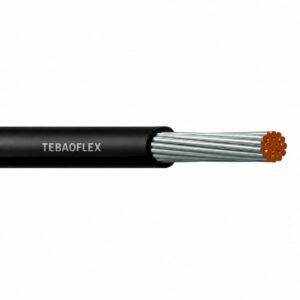
Silicone Hook Up Wire 105–250°C, 300–1000 V UL AWM Styles
A related cable option for a different application or duty profile.
View product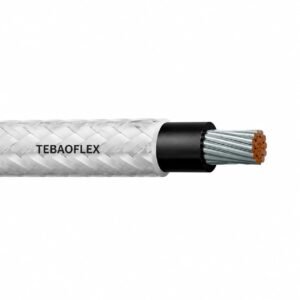
Fiberglass Braided Silicone Wire 200°C, 300/600 V UL AWM
A related cable option for a different application or duty profile.
View product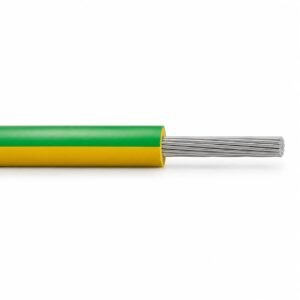
SiF Silicone 180 Single Core Flexible Cable
A related cable option for a different application or duty profile.
View productRequest a cable recommendation and quotation
Send the required services, cable length, mechanical duty, environment, termination and quantity. Our team will review the application before quoting.
- Include the product name or SKU plus the required cable length and quantity.
- Attach a specification, drawing or data sheet when available.