

Project record · Singapore · Data center power connection
(N)TMCGCW11Y 12/20 kV Flexible Medium Voltage Cable for a Data Center — Singapore
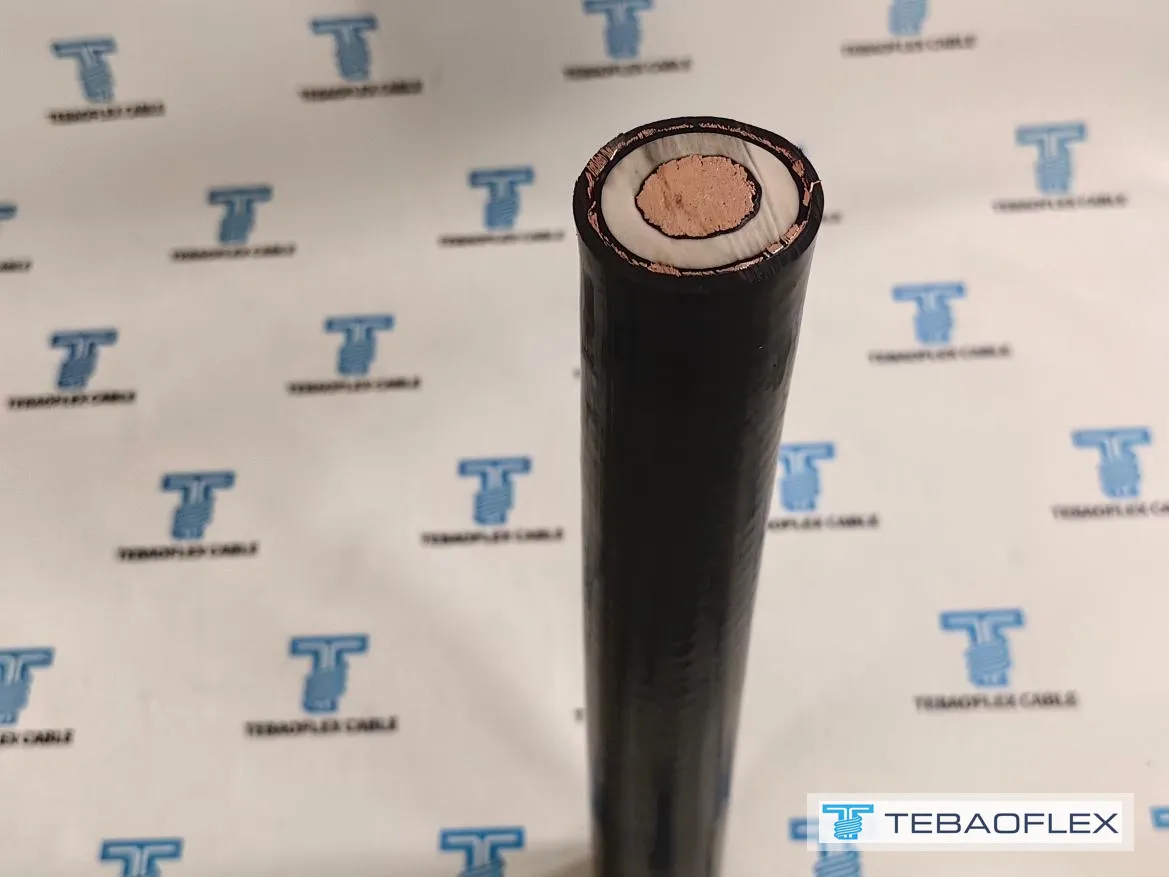
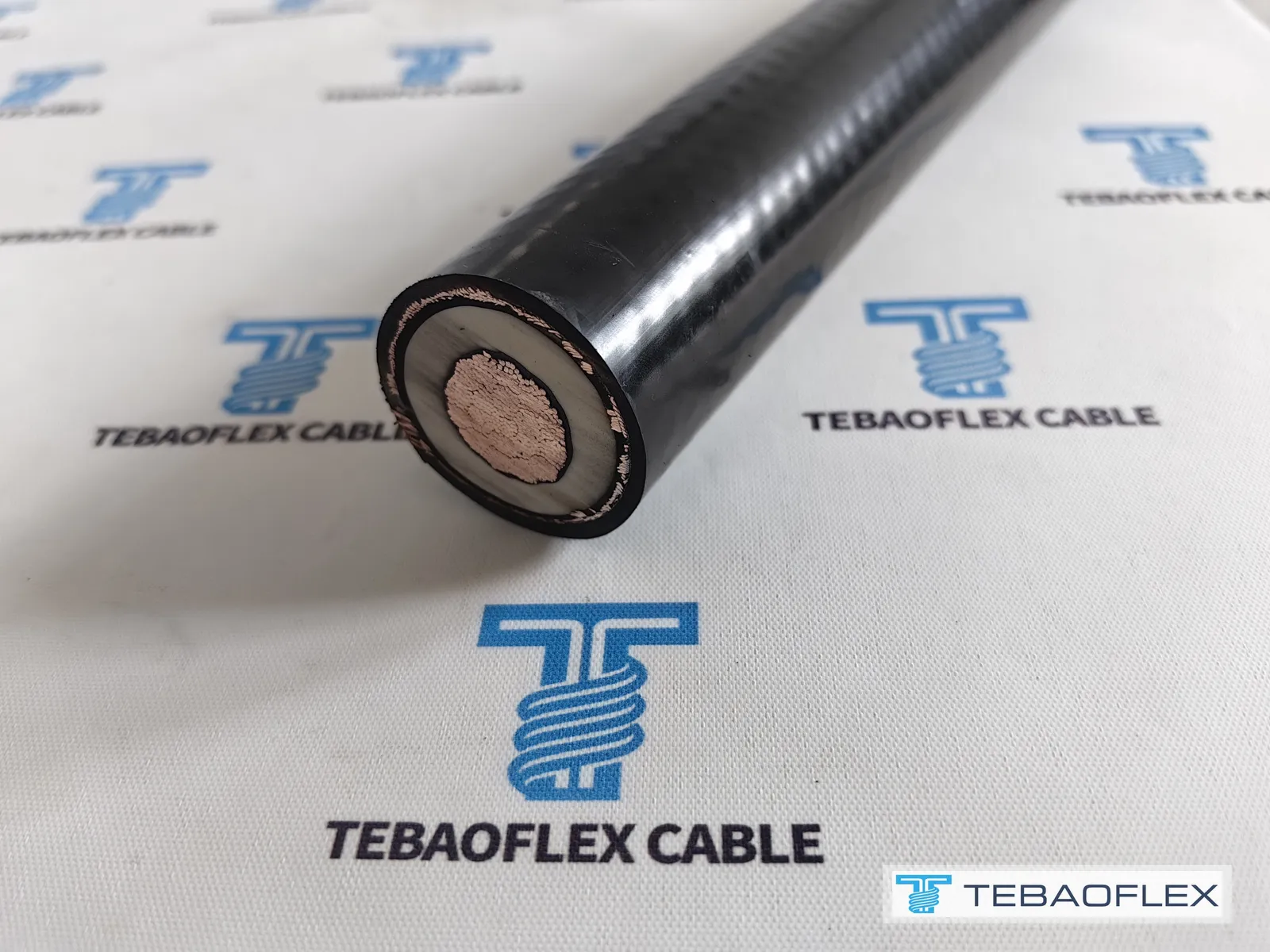
A cable trading company supplying a data center in Singapore needed a data center power cable that most buyers would not think of first: a flexible, screened, single-core 12/20 kV cable, originally designed for crane energy chains and shore power. The specification was (N)TMCGCW11Y 1×120/16, based on DIN VDE 0250-813, with a black PUR sheath. The previous source was European and slow. TEBAOFLEX built the cable with a braided tinned-copper concentric conductor instead of the spiral version shown in the buyer’s reference datasheet. Four caliper readings on the finished cable came in between 34.38 mm and 34.96 mm, inside the 32–35 mm reference window. The drums left Shekou on 26 August 2026.
Project record
| Location | Singapore — power connection inside a data centre |
|---|---|
| Buyer | A cable trading company (name not published) |
| End use | Medium voltage power connection in a data center |
| Previous source | European manufacturer; long lead time |
| Cable supplied | (N)TMCGCW11Y 1×120/16 mm², 12/20 (24) kV, black |
| Construction basis | DIN VDE 0250-813 |
| Conductor | Electrolytic tinned copper, Class 5 (DIN VDE 0295 / IEC 60228) |
| Insulation | EPR type EP-90 (3GI3) to DIN VDE 0207, with semi-conductive layers |
| Concentric conductor | Tinned annealed copper wires, braided, 16 mm², approx. 85% coverage |
| Outer sheath | Polyether-based PUR (TPU) to EN 50363-10-2, halogen-free, black |
| Measured overall diameter | 34.38 / 34.75 / 34.83 / 34.96 mm (reference window 32–35 mm) |
| Packing | Neutral wooden drums, no manufacturer stencil, as requested |
| Shipped | Departed Shekou 26 August 2026; ETA Singapore 30 August 2026 |
Why a data center would use a flexible medium voltage cable
Most medium voltage cable in a data center is fixed distribution cable: XLPE, armoured or not, pulled once into a tray or duct and never moved again. That works for long straight runs. It works much less well for the last few metres, where the cable has to turn tightly into a switchgear panel, a transformer terminal box or a connection point with almost no room to bend.
That last stretch is where a flexible medium voltage cable earns its price:
- Tight turns in small rooms. A Class 5 finely stranded conductor and EPR insulation take a smaller bend radius than a solid-construction XLPE cable of the same rating, so the cable can be dressed into a cabinet instead of being forced into it.
- Many bends along one route. A data center power route is rarely straight. Every change of direction is a bend the cable has to survive during pulling and dressing.
- Installation speed. A flexible single core is easier to handle, cut and terminate in a crowded electrical room than a stiff cable of the same size.
- A sheath that tolerates the building. The PUR sheath is halogen-free and flame-retardant, and it resists abrasion and oil. Those properties matter in a building full of expensive equipment and people.
None of this makes (N)TMCGCW11Y a replacement for the main distribution cable. It is a connection cable, and that is how it was used here.
“Is this cable OK for a data center?”
The buyer asked two questions before anything else. First: what is (N)TMCGCW11Y actually used for? They planned to offer the cable more widely in Singapore and needed to explain it to their own customers. Second: is it suitable for a power connection in a data center?
Our answer to the first question is the standard application field of the type. (N)TMCGCW11Y cable is a flexible single-core medium voltage cable for short connections: mobile transformer substations to overhead lines, railway vehicles, switching stations and control panels, and connections inside switchgear or transformer houses where a small bending radius is required. It also runs in onshore power supply, in energy chains, on reeling operations and on port and intermodal cranes.
1. The technical data met the buyer’s PDF specification. Voltage class, conductor size, concentric conductor and sheath all matched.
2. A data center needs some flexibility, so choose the braided screen. The type is defined in DIN VDE 0250-813 as a highly flexible, screened, single-core medium voltage cable. A tinned copper wire braid keeps that flexibility when the cable is bent many times during routing.
3. Why it suits the site. For data center power connections, this cable copes well with numerous bends during routing. The braided shield gives softness and flexibility for site installation without giving up screen coverage.
Reading the designation: (N)TMCGCW11Y 1×120/16 12/20 (24) kV
The full type code is defined in DIN VDE 0250-813, and the standard is the reference for every letter. For ordering, the parts an installer checks first are these:
| Part of the designation | Meaning |
|---|---|
| (N) | Type built to a German national (DIN VDE) standard |
| M | Medium voltage cable |
| 11Y | Outer sheath of polyurethane (PUR) |
| 1×120 | One power conductor of 120 mm² |
| /16 | Concentric protective conductor of 16 mm² |
| 12/20 (24) kV | U0/U = 12/20 kV; highest voltage for equipment Um = 24 kV |
The buyer’s question about the “16” matters more than it looks. The 16 mm² is the protective conductor that carries fault current to earth, and the reference datasheet also asks for about 85% coverage. Those two numbers together decide how the concentric layer has to be built, which leads to the one real design choice in this order.
Braided or spiral concentric conductor: the decision behind this order
A concentric conductor can be made in two ways:
- Spiral (helical): tinned copper wires laid side by side in a helix around the insulation screen. The buyer’s reference datasheet showed this version.
- Braided: tinned copper wires woven into a braid, like a sleeve.
DIN VDE 0250-813 allows both. Clause 4.8 lets the concentric protective conductor be made as a spiral layer or as a braid, and sets a minimum individual wire diameter of 0.3 mm for the braided or spiral construction. It also allows a conductive, non-metallic layer under the concentric conductor and a tape or thread binder over it. Both options can therefore comply with the type designation. The choice is about how the cable will be used.
We did not pick for the buyer. We photographed both constructions on real samples and sent them side by side:
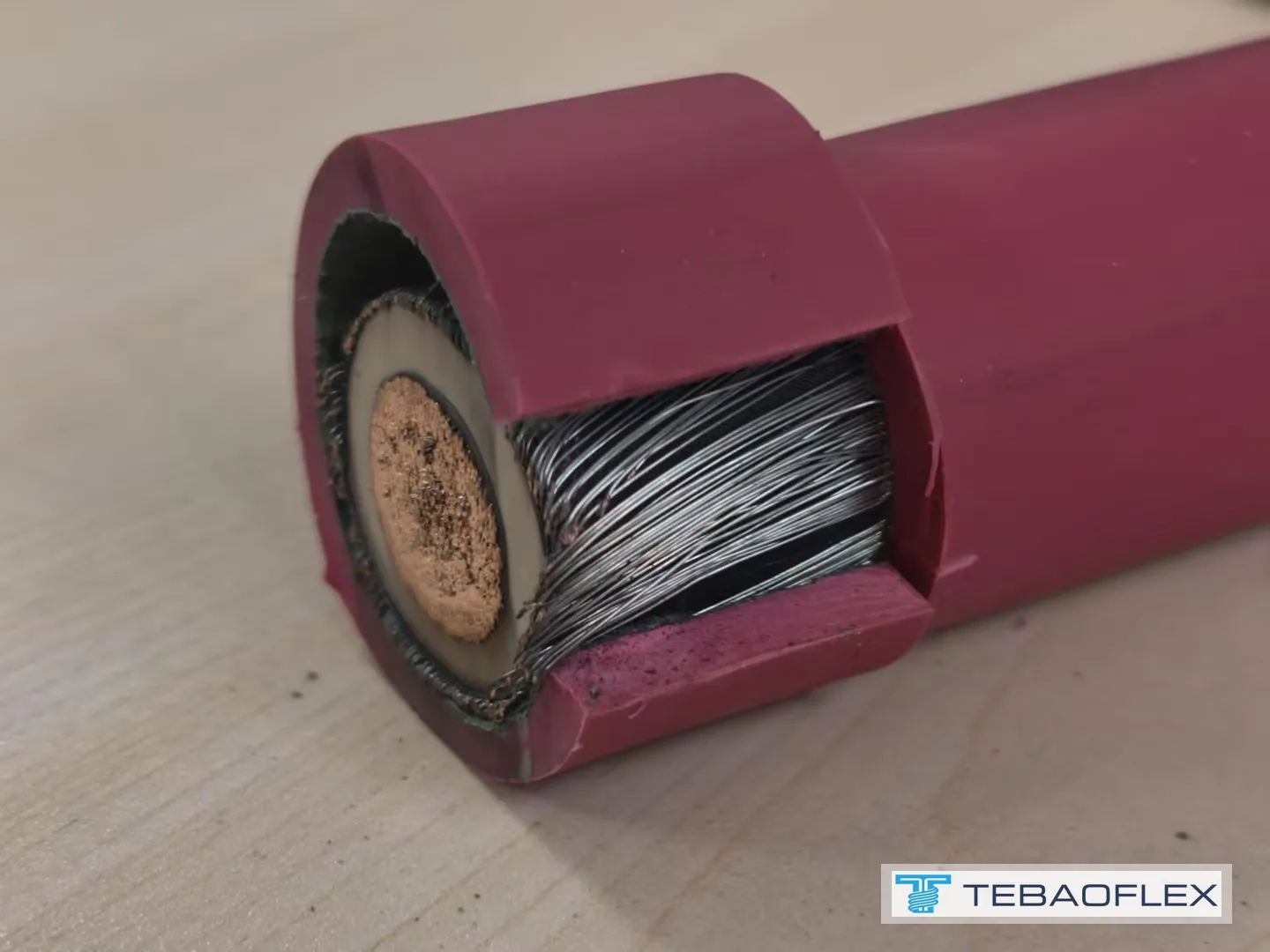
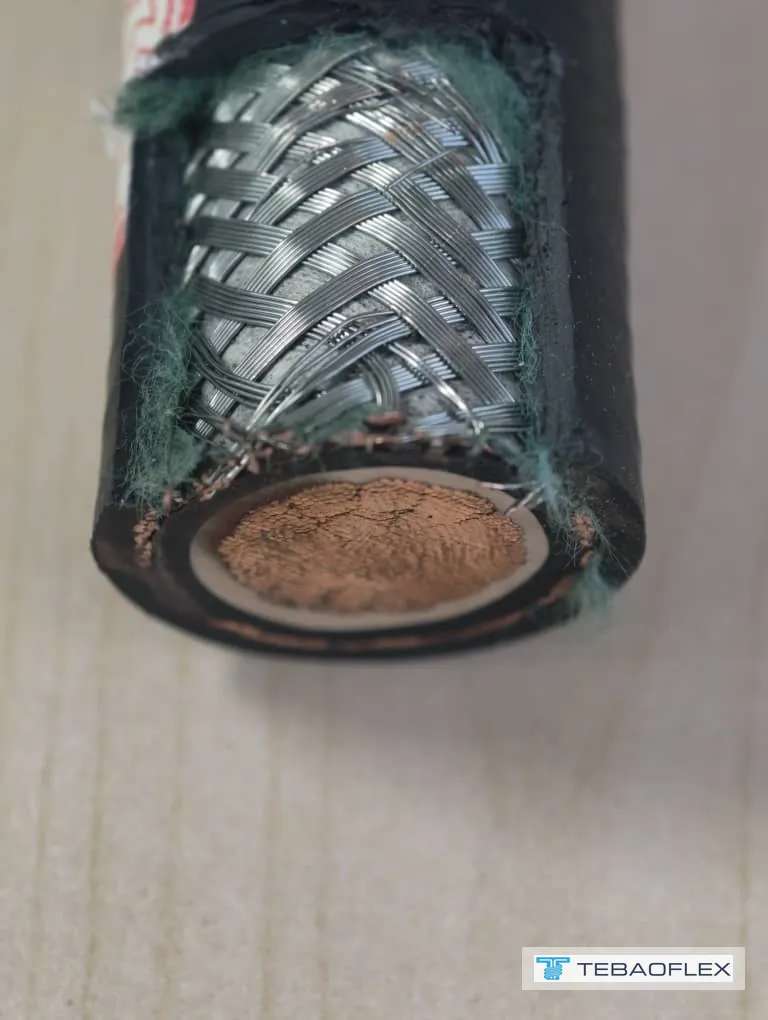
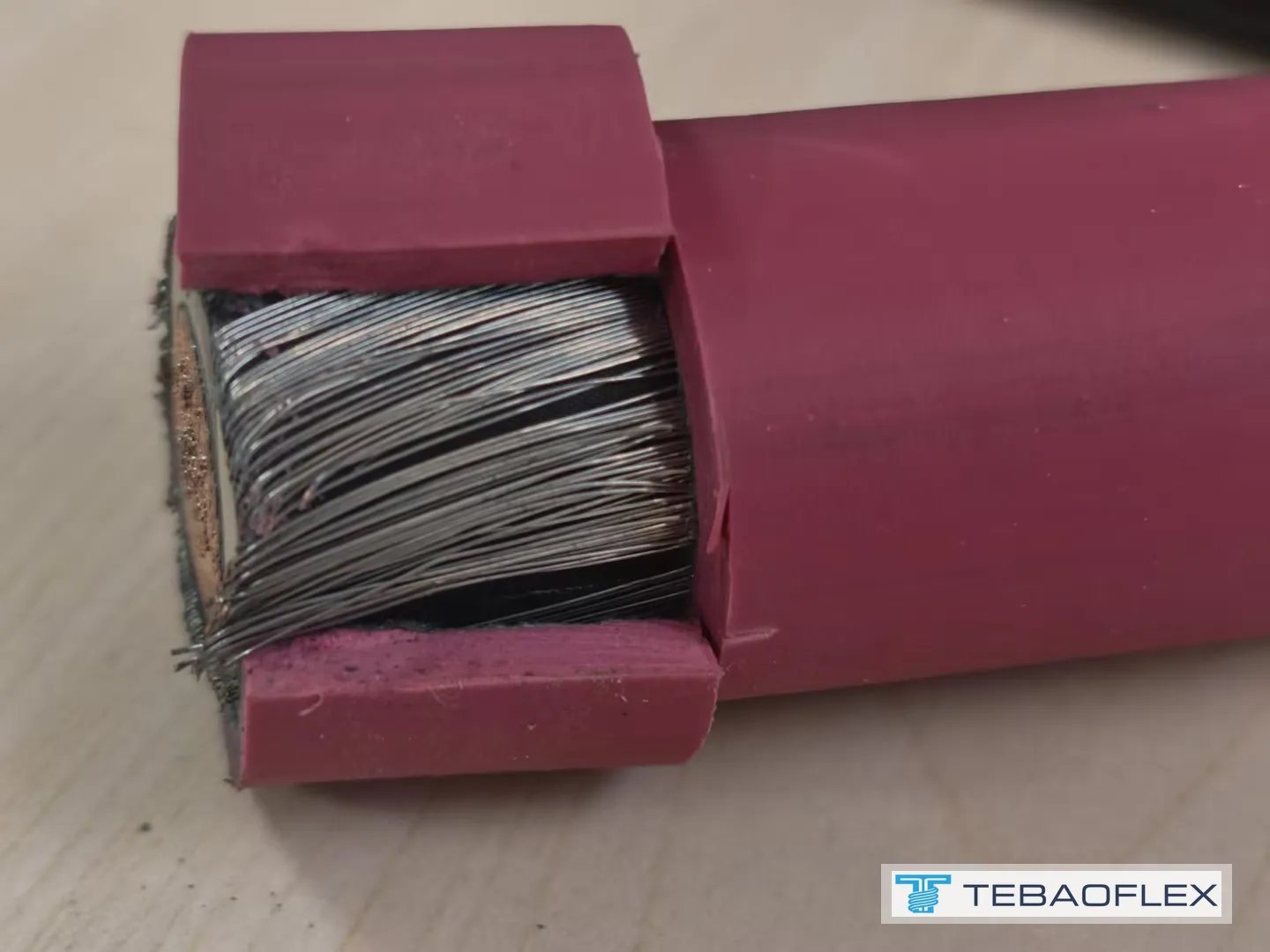
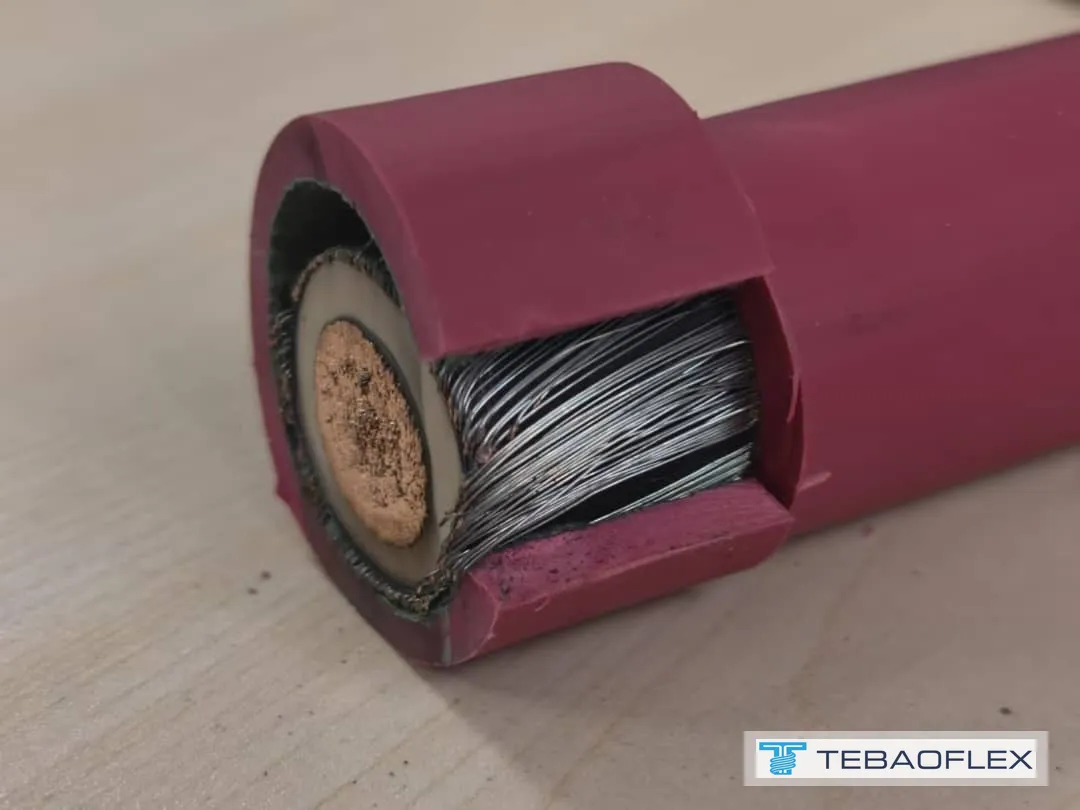
| Spiral (helical) | Braided | |
|---|---|---|
| How the wires sit | Parallel, in one direction | Interlaced, in two directions |
| Behaviour under repeated bending | Wires can spread apart or “bird-cage” at tight bends | Wires hold each other in place |
| Coverage stability | Coverage can open up on the outside of a bend | Coverage stays more uniform when bent |
| Overall diameter | Slightly smaller | Slightly larger |
| Termination | Wires gather easily into a pigtail | The braid has to be combed out before forming the earth tail |
| Typical fit | Mostly fixed links, fast termination | Routes with many bends, handling during installation |
Our recommendation was the braid. With 16 mm² and about 85% coverage required, and a route with many bends, a braided tinned copper conductor keeps its geometry better. The buyer agreed, and the order was built braided.
The trade-off is diameter. A braid is a little thicker than a spiral layer with the same copper, and that shows up in the measurement results below.
Does the cable fully comply with the type designation?
The buyer’s customer asked this directly, and asked for evidence on the braid in particular. Two things answer it.
The construction follows DIN VDE 0250-813 and its referenced material standards. Clause 4.8, described above, covers the braided concentric conductor.
| Topic | Reference used |
|---|---|
| Cable type | DIN VDE 0250-813 |
| Conductor | DIN VDE 0295 / IEC 60228, Class 5, tinned |
| EPR insulation | DIN VDE 0207 (3GI3) |
| Concentric protective conductor | DIN VDE 0250-813 clause 4.8; DIN VDE 0250-1 |
| PUR sheath material | EN 50363-10-2 |
| Flame propagation, single cable | EN / IEC 60332-1-2 |
| Oil resistance | EN / IEC 60811-404 |
The cable carries its identity on the sheath. The inkjet print on the delivered cable reads (N)TMCGCW11Y 1x120/16mm² DIN VDE 0250-813 2026. The type, size, standard and year of manufacture are legible along the whole length.
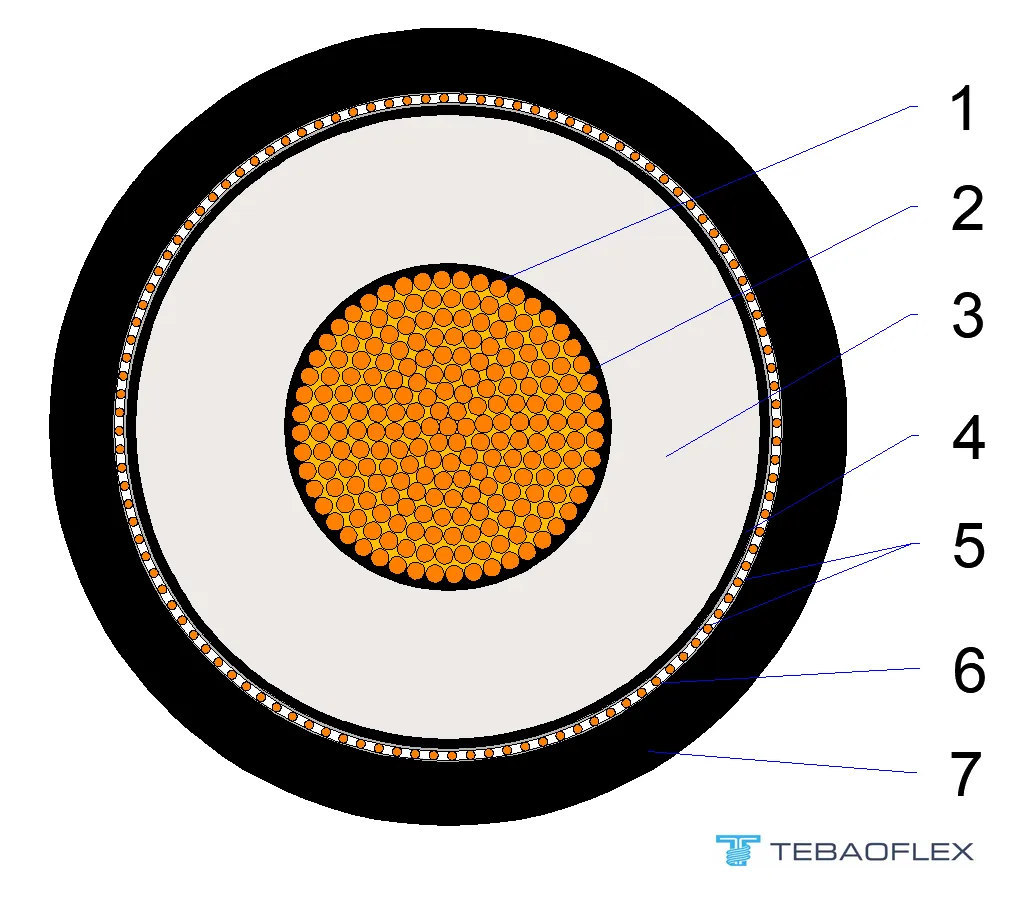
Construction, layer by layer
| # | Element | Material | Function in a data center connection |
|---|---|---|---|
| 1 | Conductor | Electrolytic tinned copper, Class 5 finely stranded | Flexibility for tight turns; tinning resists corrosion at the termination |
| 2 | Conductor screen | Semi-conductive tape plus thermosetting compound | Smooths the stranded surface so the insulation sees an even field |
| 3 | Insulation | EPR type EP-90 (3GI3) to DIN VDE 0207 | Holds 12/20 kV while staying flexible; rated 90 °C |
| 4 | Insulation (build-up to wall thickness) | EPR type EP-90 (3GI3) | Completes the insulation wall for the 12/20 (24) kV class |
| 5 | Insulation screen | Semi-conductive tape | Gives the concentric conductor a smooth, continuous interface |
| 6 | Concentric conductor | Tinned annealed copper wires, braided, 16 mm², approx. 85% coverage | Protective earth and electrical screen; the braid keeps coverage when bent |
| 7 | Outer sheath | Polyether-based PUR (TPU) to EN 50363-10-2, black, inkjet marking | Halogen-free, flame-retardant, oil-resistant; indoor and outdoor use; ozone, UV and moisture resistant |
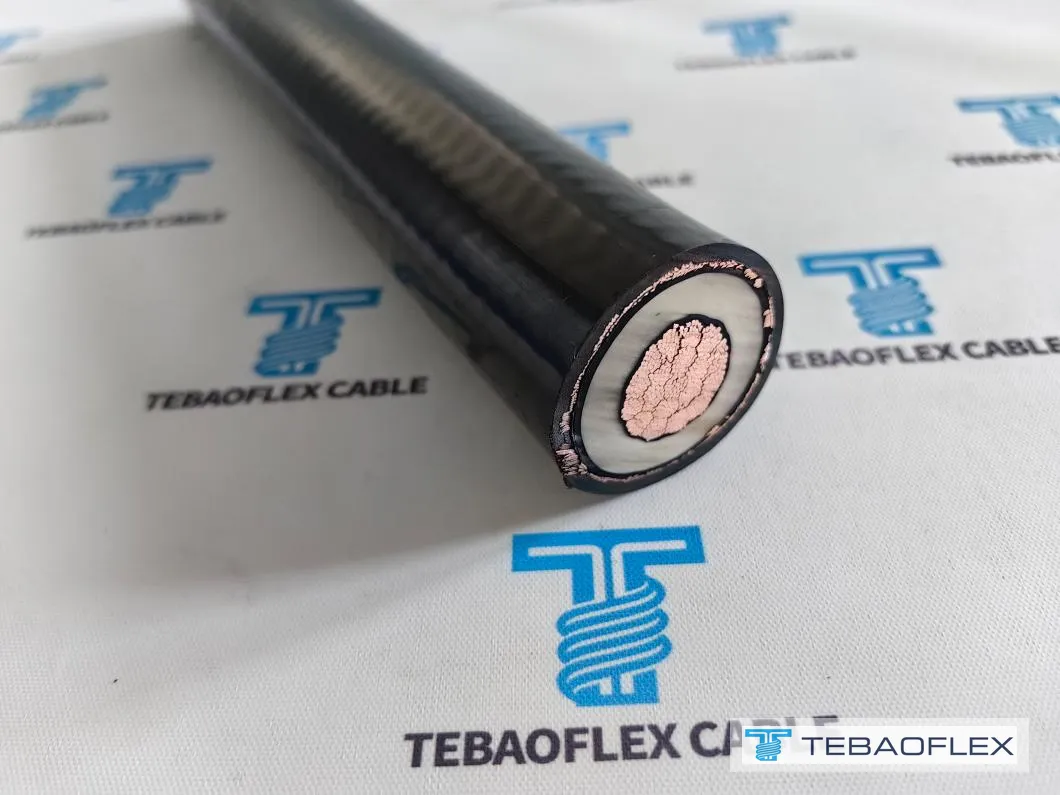
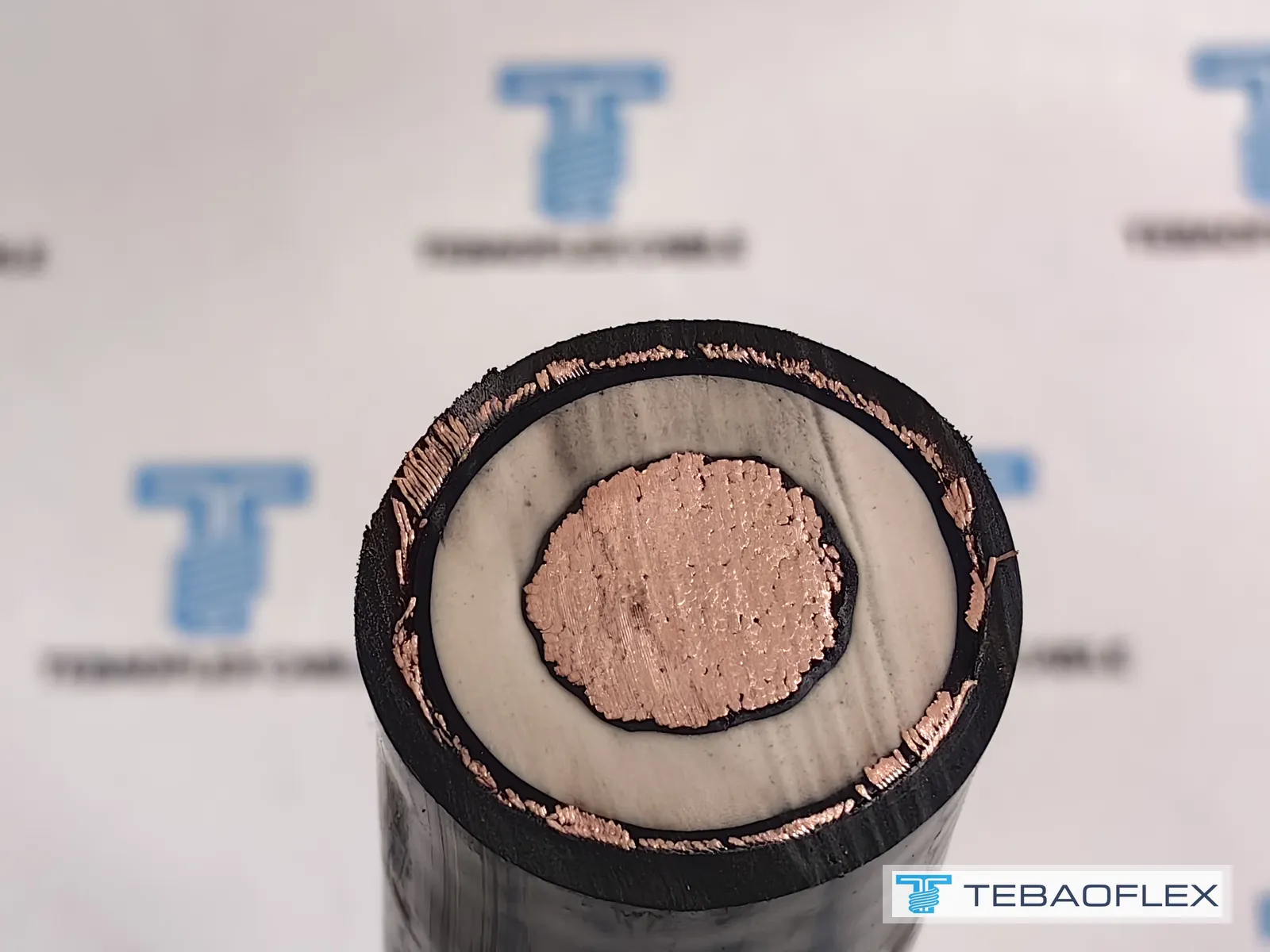
Measured, not declared: overall diameter
The buyer asked how we make sure the finished cable really has the right diameter. We measured it on the finished cable and sent the photographs. The reference window for 1×120/16 at 12/20 kV is 32–35 mm.
| Reading | Measured overall diameter | Inside 32–35 mm? | Margin to upper limit |
|---|---|---|---|
| 1 | 34.83 mm | Yes | 0.17 mm |
| 2 | 34.38 mm | Yes | 0.62 mm |
| 3 | 34.96 mm | Yes | 0.04 mm |
| 4 | 34.75 mm | Yes | 0.25 mm |
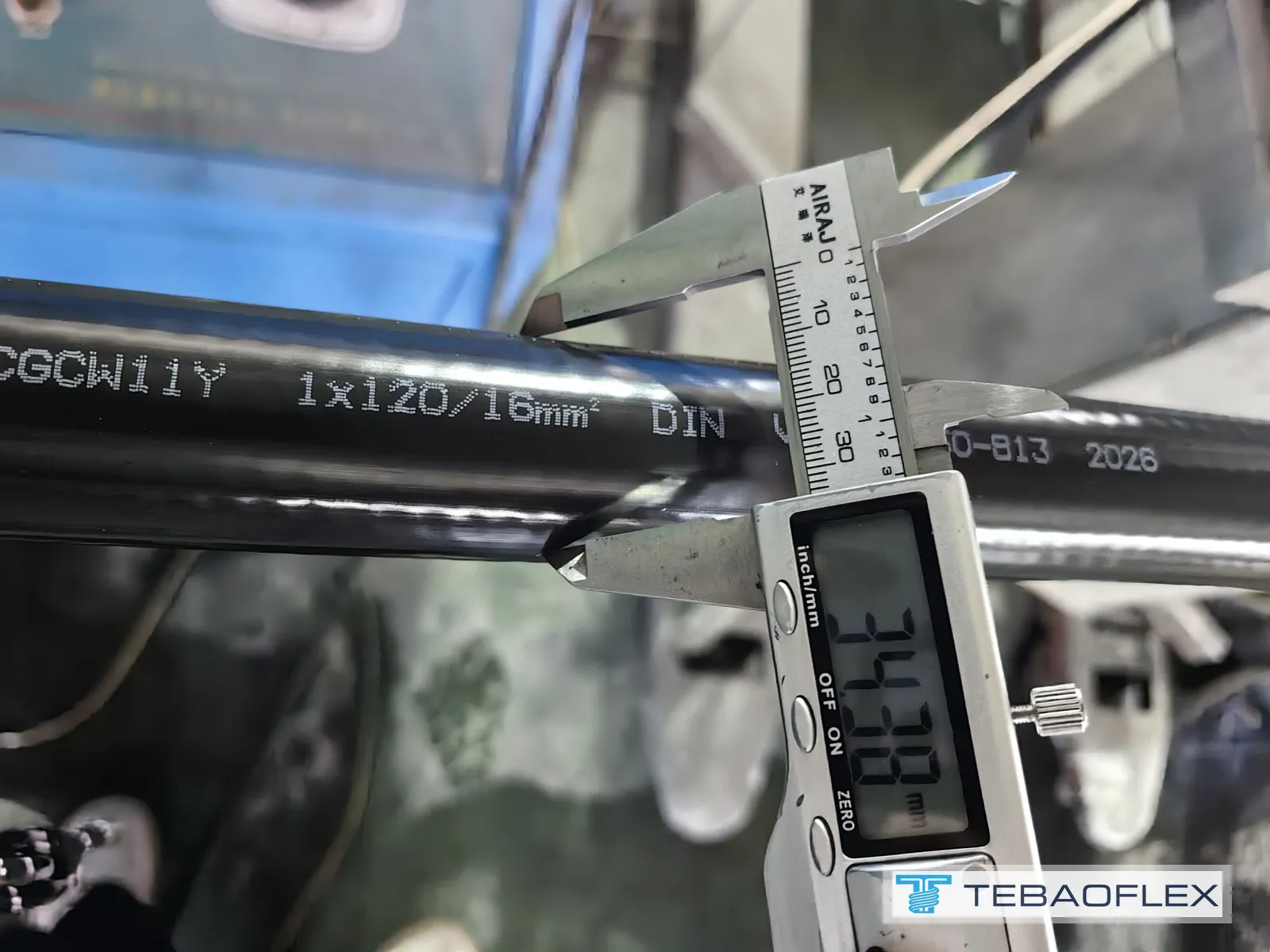
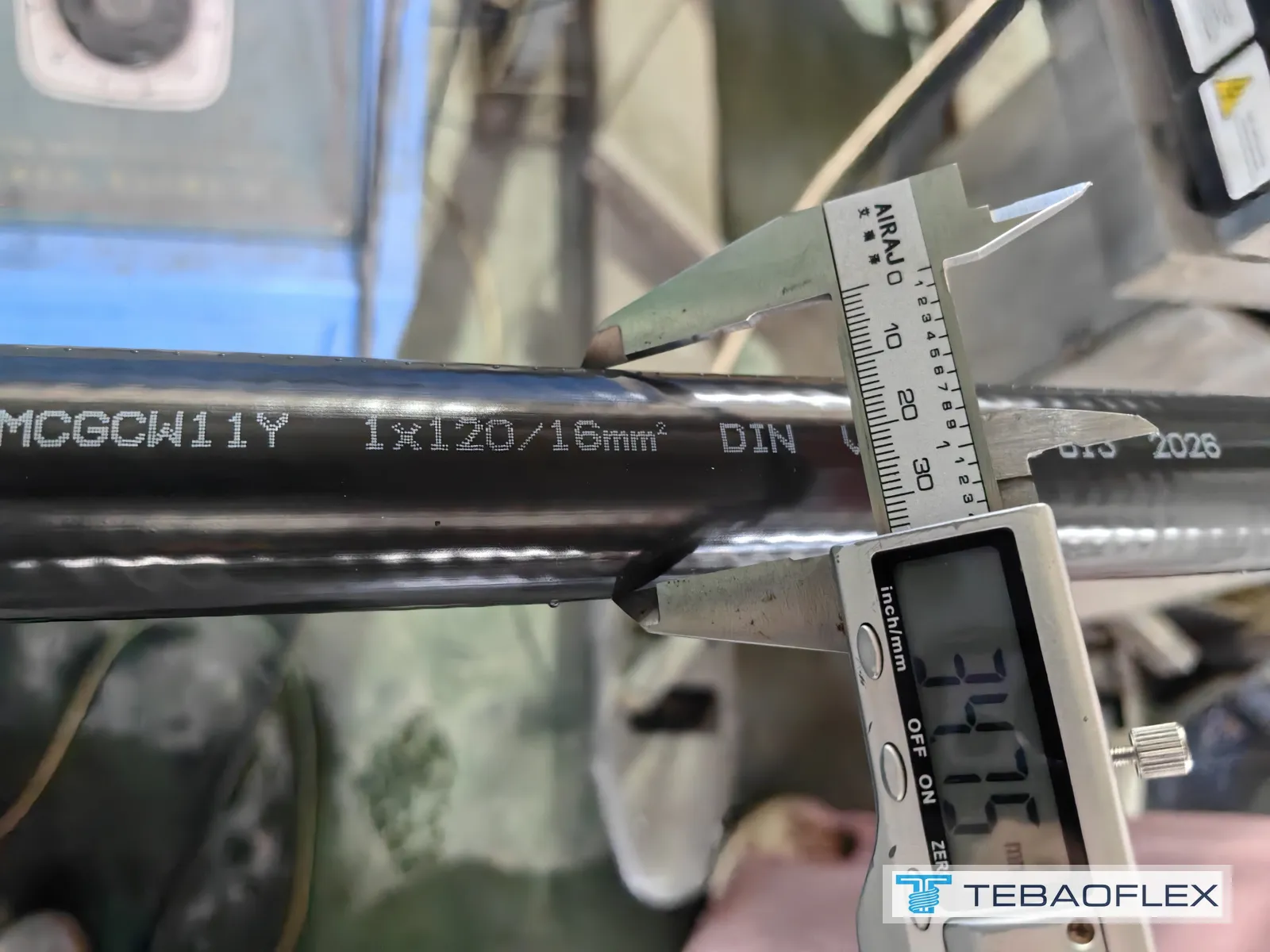
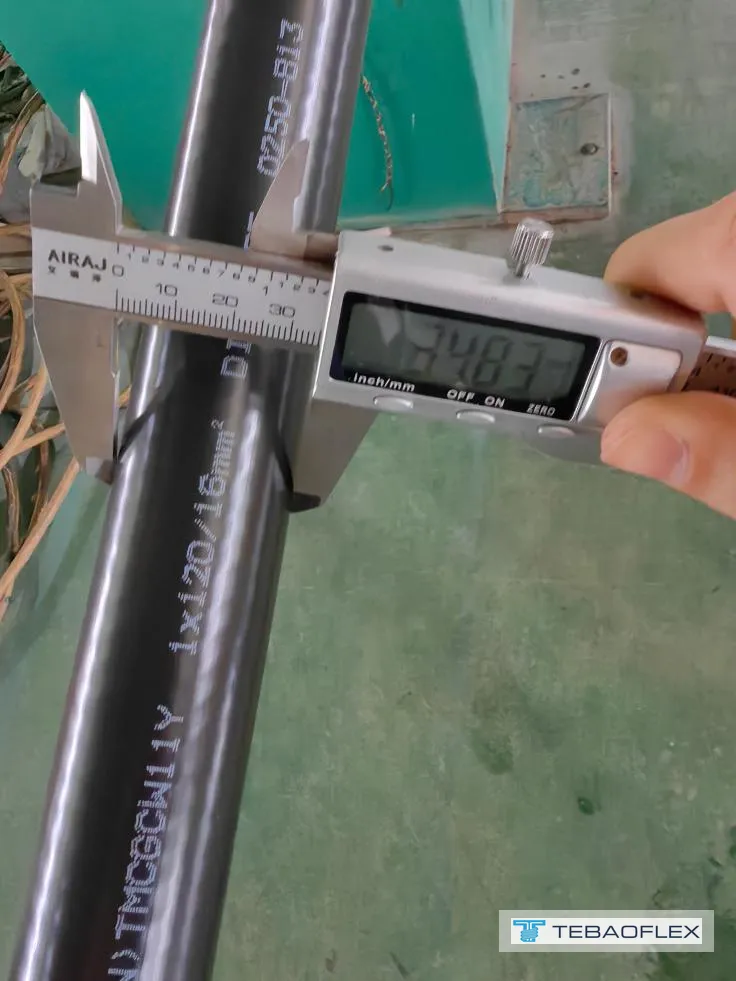
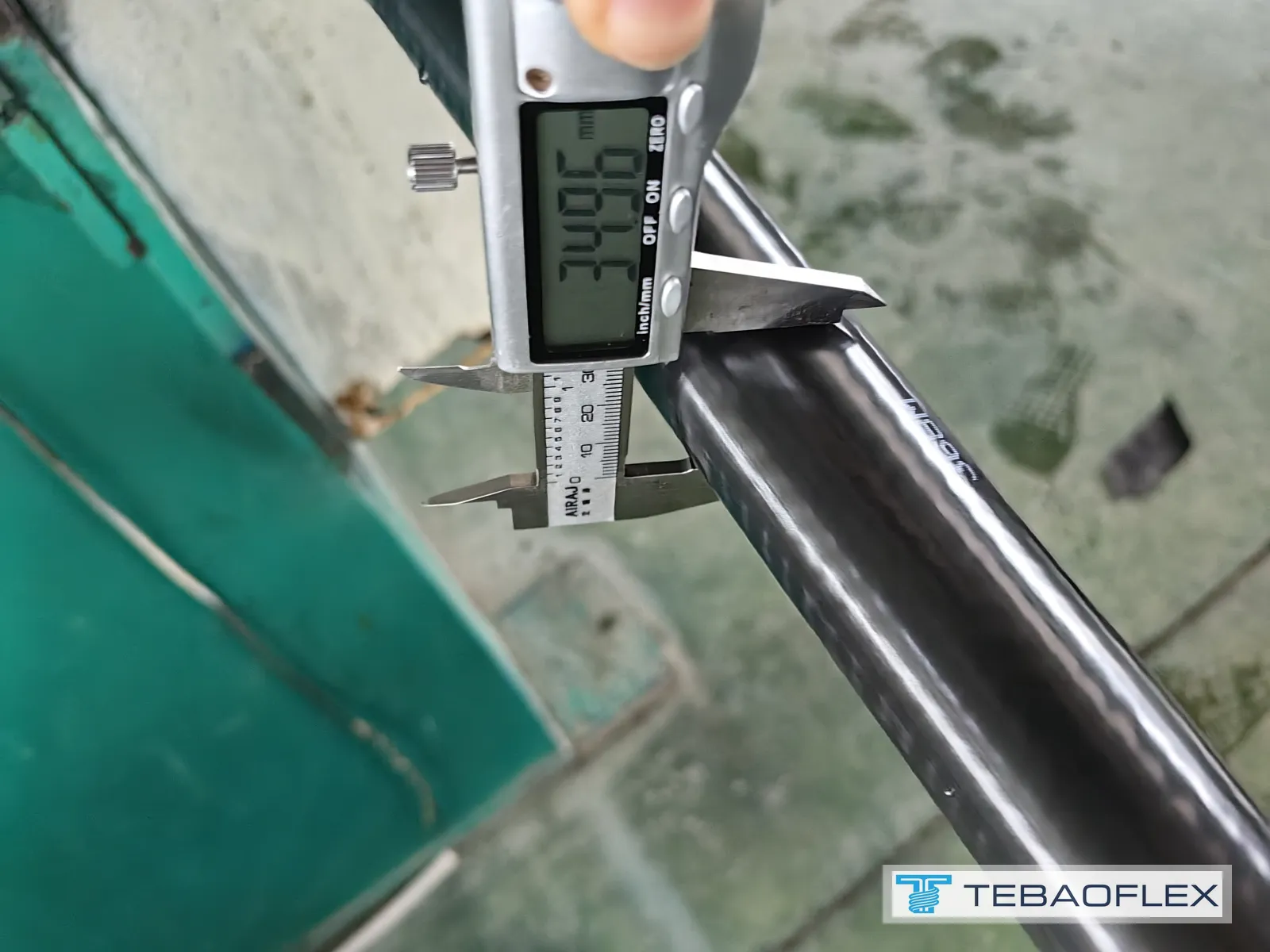
All four readings are inside the window, and all four sit in its upper third. That is the braid showing up in the numbers: woven wires take slightly more room than a spiral layer with the same copper. The margin at the top is small, and we would rather show that honestly than quote a nominal figure. If a gland or cable cleat is sized close to 35 mm, check it against these measured values before installation.
Electrical and mechanical data, 12/20 kV 1×120/16
| Parameter | Value |
|---|---|
| Rated voltage U0/U | 12/20 kV |
| Highest voltage for equipment Um | 24 kV |
| AC test voltage (DIN VDE 0250-813 reference) | 29 kV |
| Max. conductor resistance at 20 °C | 0.164 Ω/km |
| Current reference (published conditions) | 383 A |
| Calculated weight | approx. 2,060 kg/km |
| Max. conductor temperature | 90 °C |
| Max. short-circuit temperature | 200 °C |
| Temperature range, fixed installation | −50 °C to +90 °C |
| Temperature range, flexible operation | −40 °C to +90 °C |
| Min. bend radius, fixed installation | 6 × D (≈ 210 mm at 34.96 mm) |
| Min. bend radius, free moving | 8 × D (≈ 280 mm at 34.96 mm) |
| Max. tensile load | 15 N/mm² per conductor |
The current reference assumes the published reference conditions. In a data center electrical room, apply the derating for grouping and ambient temperature required by the project method before sizing the circuit.
Neutral packing, container loading and shipment
A cable trader supplying its own customer usually does not want another manufacturer’s name on the drum. The buyer asked for exactly that: no brand name or logo stencilled on the wooden drums. The cable was wound onto plain wooden drums, and the traceability sits on the cable sheath itself.
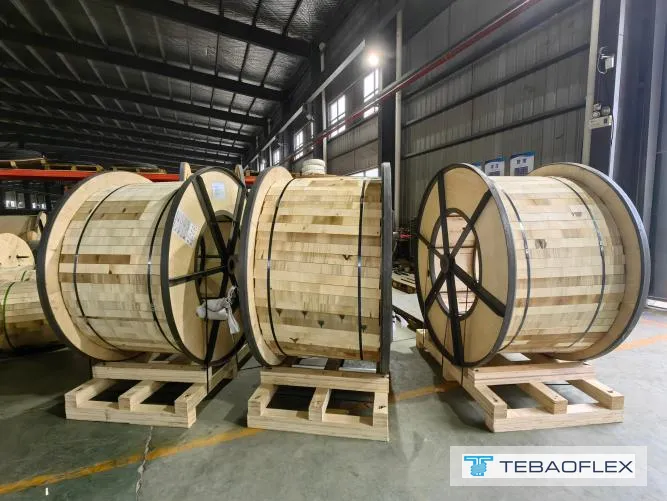
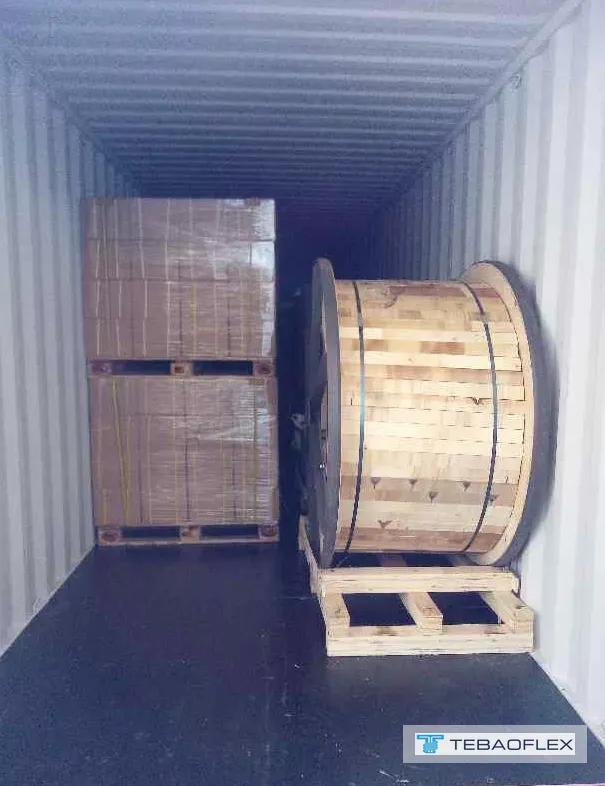
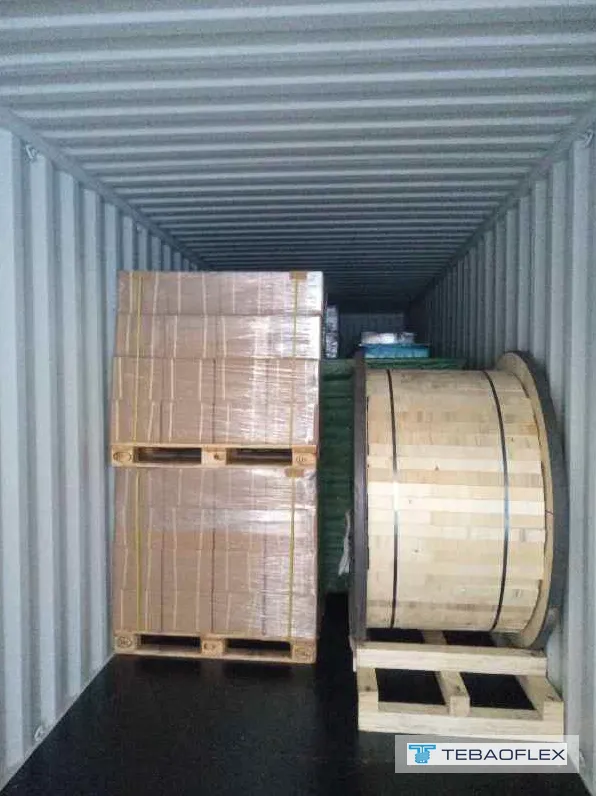
The buyer then asked for photos of the packed drums inside the container and of the finished loading, followed by the vessel’s location. We sent all three.
| Step | Date |
|---|---|
| Departed Shekou, Shenzhen | 26 August 2026 |
| Estimated arrival, Singapore | 30 August 2026 |
Four days from Shekou to Singapore. For a buyer used to waiting on a European supply chain, the transit time is part of the argument.
Why the order came to a Chinese factory
The buyer was frank about how their customer buys: every supplier is met separately, prices are negotiated down, and the lowest offer wins. So the order had to be won on price without losing anything on the specification.
Few factories build this type. In China, very few cable factories can produce a flexible 12/20 kV EPR cable with a concentric conductor and a PUR sheath to DIN VDE 0250-813. The realistic alternatives are European and American brands. Buyers who search for equivalents of branded products such as Cordaflex (SMK) are looking at the same construction class. TEBAOFLEX builds to the (N)TMCGCW11Y designation and the construction confirmed for the order, and is not affiliated with the owners of those brand names.
European prices and lead times. The European options the buyer had been quoted were roughly double our price, with long lead times.
Specialization. TEBAOFLEX is TOP 3 in China for this type of cable. Our factory is built around mining and reeling cables, with rubber mixing, extrusion, braiding and cabling in-house on 12 production lines.
Evidence instead of promises. Photos of both screen options, the standard clause, the sheath print, the diameter readings, the packed drums and the vessel position. The buyer could check each claim.
What we review for a data center MV connection cable
- Rated voltage U0/U and Um of the system
- Conductor and protective-conductor size (e.g. 120/16)
- Required screen coverage; braided or spiral
- Maximum overall diameter for glands, cleats and terminations
- Route length per circuit and number of circuits
- Tightest bend and space at the termination
- Grouping, ambient temperature and derating method
- Fault level and bonding arrangement
- Fire, halogen-free and oil requirements of the building
- Sheath colour and print text
- Drum marking: neutral or branded
- Certificate, test report and documentation needs
The two items that change a quotation most are the screen construction (braided or spiral) and the maximum overall diameter.
Related constructions
- (N)TMCGCW11Y cable: 3.6/6 to 18/30 kV screened flexible MV cable
- NTMCGCWÖU single-core MV cable, 3.6/6 to 18/30 kV
- (N)TMCWOEU flexible switchgear cable
- (N)TSCGEW11Y 6/10 kV shore power reeling cable
- Crane cable manufacturer: reeling, festoon and port cables
- Cables for port container cranes
- Case: 8.7/15 kV reeling cable with 24 fibers for a ship unloader in Vietnam
Questions on this application
What is (N)TMCGCW11Y cable?
A flexible, screened, single-core medium voltage cable based on DIN VDE 0250-813. It has a tinned Class 5 copper conductor, EPR insulation with semi-conductive layers, a concentric tinned copper protective conductor and a PUR outer sheath. It is made for short connections that need a small bending radius: switchgear, transformer houses, mobile substations, energy chains, shore power and cranes.
Can (N)TMCGCW11Y be used as a data center power cable?
Yes, for medium voltage connections where the route has many bends or the termination space is tight. In this Singapore project it was specified as 1×120/16, 12/20 (24) kV with a braided concentric conductor. It is a connection cable, not a replacement for fixed main distribution cable.
What does 120/16 mean in a cable designation?
120 is the cross-section of the power conductor in mm². 16 is the cross-section of the concentric protective conductor in mm², which carries fault current to earth and also acts as the electrical screen.
Braided or spiral concentric conductor: which is better for an MV cable?
DIN VDE 0250-813 allows both. A spiral layer is slightly smaller and quicker to terminate. A braid holds its coverage better when the cable is bent repeatedly. For a data center route with many bends and a required coverage of about 85%, we recommended the braid, and the buyer chose it.
What is the bending radius of (N)TMCGCW11Y?
At least 6 × the overall diameter for fixed installation and 8 × for free movement. For the 34.96 mm cable measured on this order, that is about 210 mm fixed and 280 mm moving.
Is a PUR cable sheath halogen-free?
The polyether-based PUR sheath used here, to EN 50363-10-2, is halogen-free and flame-retardant to EN 60332-1-2, and oil-resistant to EN 60811-404. Halogen-free performance depends on the compound, so it should be confirmed on the datasheet of the cable actually ordered.
How close to the specified diameter can the cable be built?
On this order, four caliper readings on the finished cable measured 34.38–34.96 mm against a 32–35 mm window. The braided screen puts the cable in the upper part of the window, so check glands and cleats against measured values.
Can the drums be supplied without the manufacturer's brand?
Yes. For this order the buyer asked for no brand name or logo on the wooden drums, and the cable shipped on neutral drums. Cable print text and drum marking can be agreed per order.