


Legacy mining cable identification
BS 6708:1998 was withdrawn by the British Standards Institution on 22 May 2026. The designation still appears on cable sheaths, mine asset registers, tender documents and replacement enquiries, but it should now be treated as a legacy identification reference. A buyer cannot safely move from “BS 6708 cable” to a new product until the original type number, voltage, core arrangement and operating duty are known.
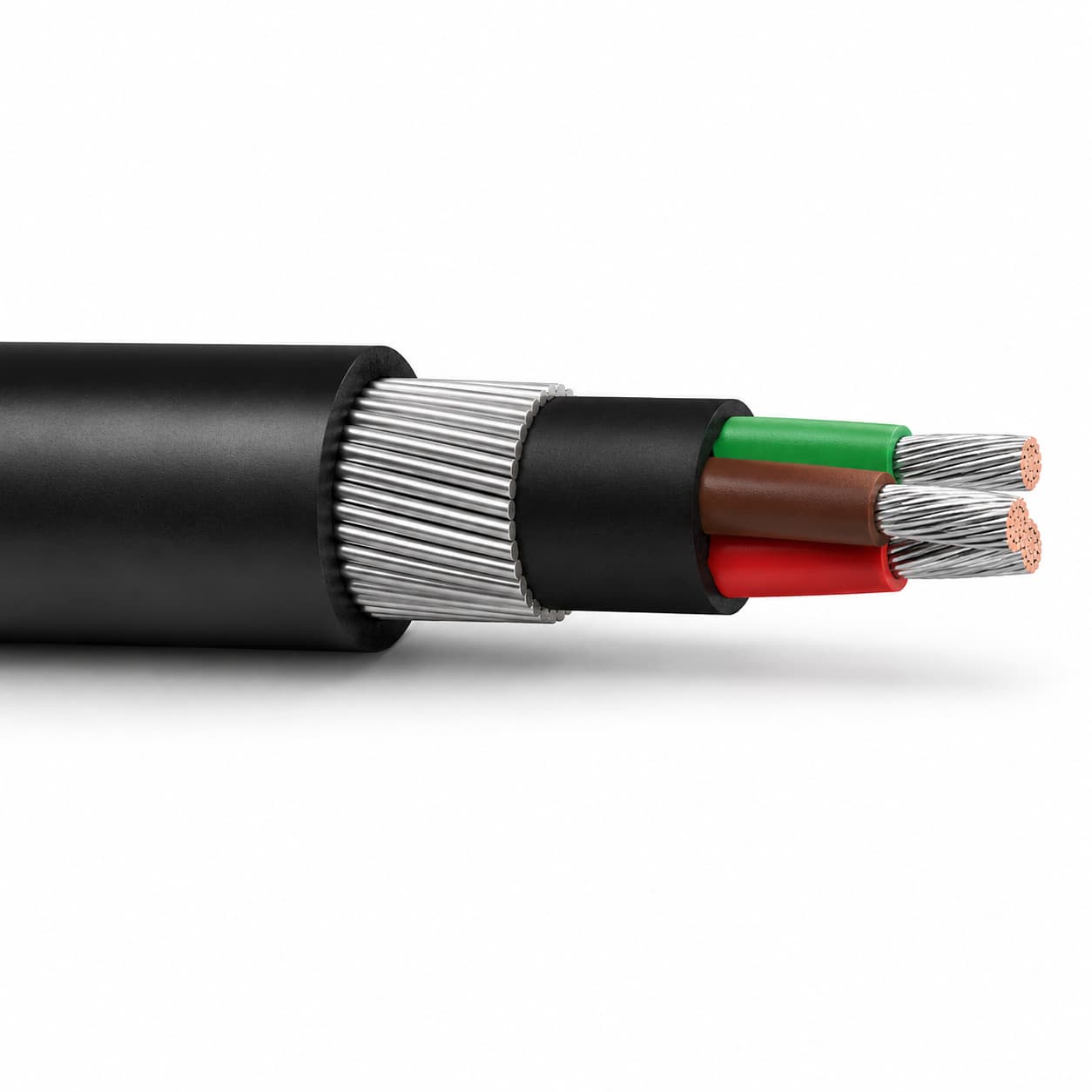
BS 6708:1998 is a legacy identification reference, not an automatic approval route for a new cable.
Why equivalence must be reviewed
What BS 6708 covered
The official BSI record for BS 6708:1998 describes requirements and dimensions for flexible cables used in mines and quarries. It grouped materially different constructions: non-armoured screened trailing cables, pliable-wire-armoured cables, auxiliary multicore cables, flat catenary cables and medium-voltage quarry cables. The standard addressed construction, identification, testing, current ratings and screen short-circuit capability; it was never one universal cable design.
That distinction matters. A single purchasable “BS 6708 product” suggests one specification, while the reference actually contains many cable types and duties.
Legacy cable-type groups
| Legacy types | Rated voltage | Original duty described by BSI |
|---|---|---|
| 7, 7M, 7S, 11, 14, 16 | 640/1100V | Individually metallic-screened cables for coalface cutters and similar machines. |
| FS4 | 640/1100V | Flat-form cable for overhead catenary systems and similar applications. |
| 20, 21 | 640/1100V | Pliable-wire-armoured cables with unscreened cores. |
| 62, 63, 64, 70, 71 | 640/1100V | Armoured screened or unscreened constructions for remote control, coalface lighting and related routes. |
| 201, 211 | 640/1100V | Pliable-wire-armoured cables with individually screened cores. |
| 43, 44 | 600/1000V | Non-armoured drilling-machine cables using non-metallic or metallic core screens. |
| 506, 512, 518, 524 | 320/550V | Armoured auxiliary cables with up to 24 screened cores for machine-section interconnections. |
| 307, 307M, 307S | 1900/3300V | Non-armoured screened cables for coalface cutters and similar machines. |
| 321, 331 | 1900/3300V | Armoured quarry trailing or mine-roadway extension cables. |
| 621, 630, 631 | 3800/6600V | Armoured quarry trailing and roadway-extension cables. |
| 730 | 3800/6600V | Non-armoured screened trailing cable for large quarry machines. |
| 830 | 6350/11000V | Non-armoured screened trailing cable for large quarry machines. |
This summary is for type identification only. It does not reproduce the controlled standard and does not supply construction dimensions, ampacity or test values for an order.
Why there is no automatic one-to-one replacement
Withdrawal does not, by itself, identify a successor cable for every BS 6708 type. The replacement path depends on the mine jurisdiction, client specification, equipment protection scheme and how the cable moves. Two cables with the same nominal voltage can differ in individual core screens, armour, earth and pilot conductors, monitoring circuits, control cores, sheath compounds, bend limits and termination hardware.
- Do not select by voltage alone. A 640/1100V cutter cable, a lighting cable and a remote-control cable are not interchangeable.
- Do not infer armour from a product photo. Confirm the full printed designation and a cross-section or datasheet.
- Do not treat “flexible” as reeling approval. Free trailing, drum reeling, catenary and roadway extension create different mechanical loads.
- Do not carry forward an obsolete compliance statement. The new project must identify the current contractual standard and required evidence.
Five-step replacement review
- Record the cable identity. Photograph the complete sheath marking, type number, manufacturer, voltage, size, serial or drum information and any equipment drawing reference.
- Define the electrical circuit. Confirm system voltage, power and earth conductors, pilot/control/monitoring cores, current, fault duty, screen bonding and protection system.
- Map the mechanical route. Document free-trailing length, reel or catenary geometry, sheaves, rollers, bend diameter, travel speed, acceleration, tensile load, torsion and run-over risk.
- Confirm the environment. Include mine or quarry location, water, oil, chemicals, UV, temperature, abrasion, flame-risk classification and termination conditions.
- Agree the governing documents. The asset owner or engineer should state the current project specification, acceptance route, tests, marking and inspection records required for the replacement.
Use application pages to narrow the cable family
The legacy type may lead to a current project-specific construction, but these TEBAOFLEX pages are comparison starting points rather than declared BS 6708 equivalents:
- For medium-voltage mine distribution, review (N)TSCGEWÖU mine-distribution cable.
- For continuous drum movement, review R-(N)TSCGEWÖU reeling cable and send the drum layout.
- For low-voltage mine lighting with a monitoring conductor, review (N)SSHCGEWÖU lighting cable.
- For cutters and drills using the armoured -V construction, review (N)SSHCGEWÖU-V.
- For a short screened single-core MV link, review NTMCGCWÖU.
Browse the complete Mining & Tunneling Cable range if the current type is still uncertain.
Information required for an RFQ
| Data group | Minimum information | Why it matters |
|---|---|---|
| Legacy identity | BS 6708 type, full sheath marking, photos and existing datasheet | Prevents the wrong cable family being reviewed. |
| Electrical | Voltage, size, cores, screen/earth arrangement, load and fault duty | Defines dielectric, conductor and protection requirements. |
| Mechanical | Trailing/reeling/catenary/extension duty, bend geometry, speed and tension | Controls conductor, reinforcement and sheath design. |
| Environment | Mine area, water, oil, abrasion, temperature and flame requirements | Controls compounds and test scope. |
| Documentation | Current specification, test reports, inspection, marking and certificates | Establishes the contractual acceptance package. |
Send this information through the TEBAOFLEX engineering enquiry form. The quotation should identify the proposed construction and evidence package rather than relying on the withdrawn standard number alone.
Frequently asked questions
Is BS 6708:1998 still current?
No. BSI lists it as withdrawn on 22 May 2026. It can still identify an installed legacy cable, but a new project should confirm the currently accepted specification.
Was BS 6708 one cable type?
No. It covered many cable types and voltage classes for cutters, drills, lighting, controls, auxiliary interconnections, roadway extensions and large quarry machines.
Can TEBAOFLEX quote from the words “BS 6708 cable”?
Only as an initial enquiry. A controlled quotation needs the exact type or marking, voltage, conductor and auxiliary-core arrangement, movement duty, route geometry and documentation requirements.
Does a similar voltage prove that a modern cable is equivalent?
No. Screening, armour, earth and monitoring design, dimensions, mechanical limits, termination hardware and the governing project standard must also be reviewed.
Source status
Primary source: British Standards Institution, BS 6708:1998 — Flexible cables for use at mines and quarries. BSI records publication on 15 April 1998 and withdrawal on 22 May 2026.
Have a sheath photo or old datasheet?
Send the marking, voltage, core arrangement, movement duty and required documentation. TEBAOFLEX can use them as the starting point for a project-specific cable review.