

Project record · Peru · Mobile mining equipment · 2 kV Type SHD-GC
SHD-GC 2 kV 3×6+2×10+1×10 AWG Shielded Mining Cable with an Orange TPU Jacket for a Distributor in Peru
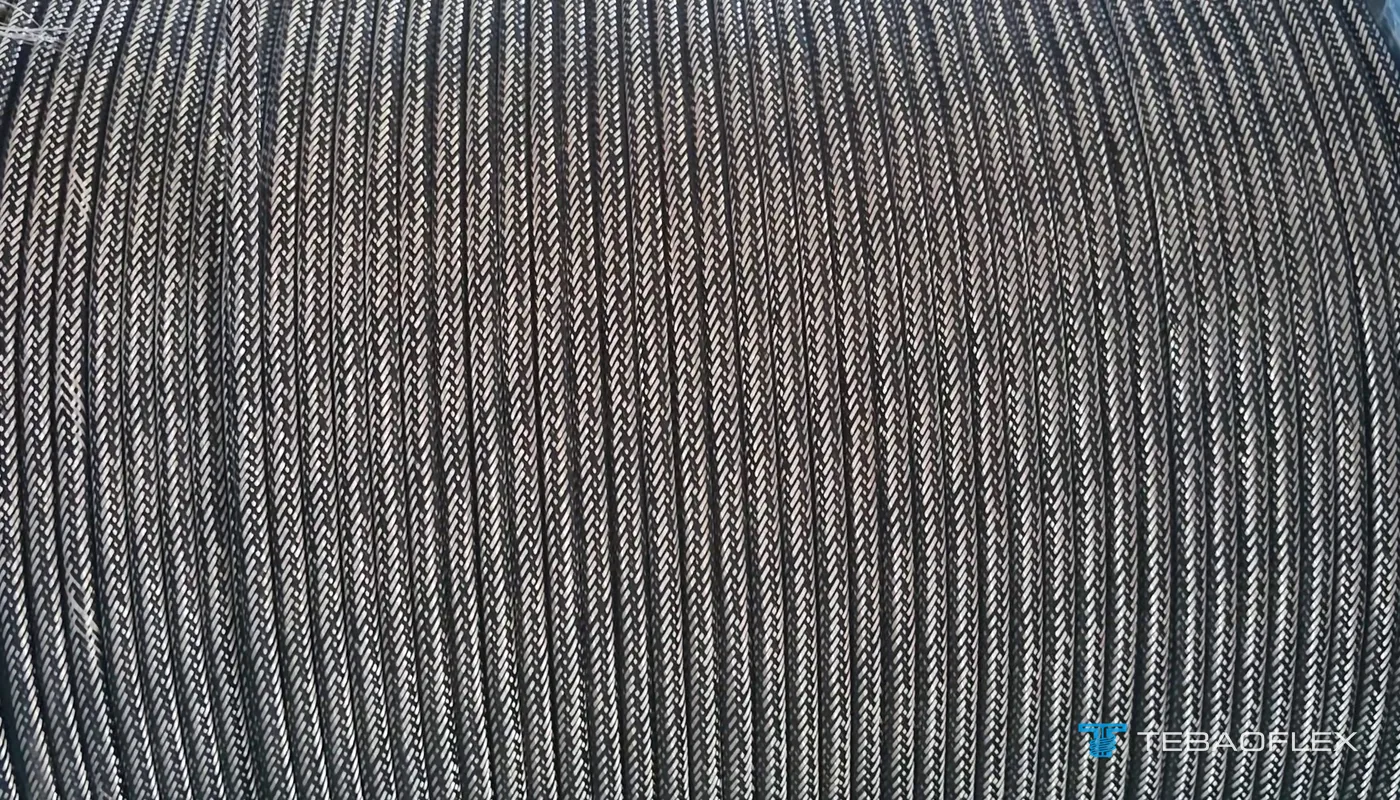
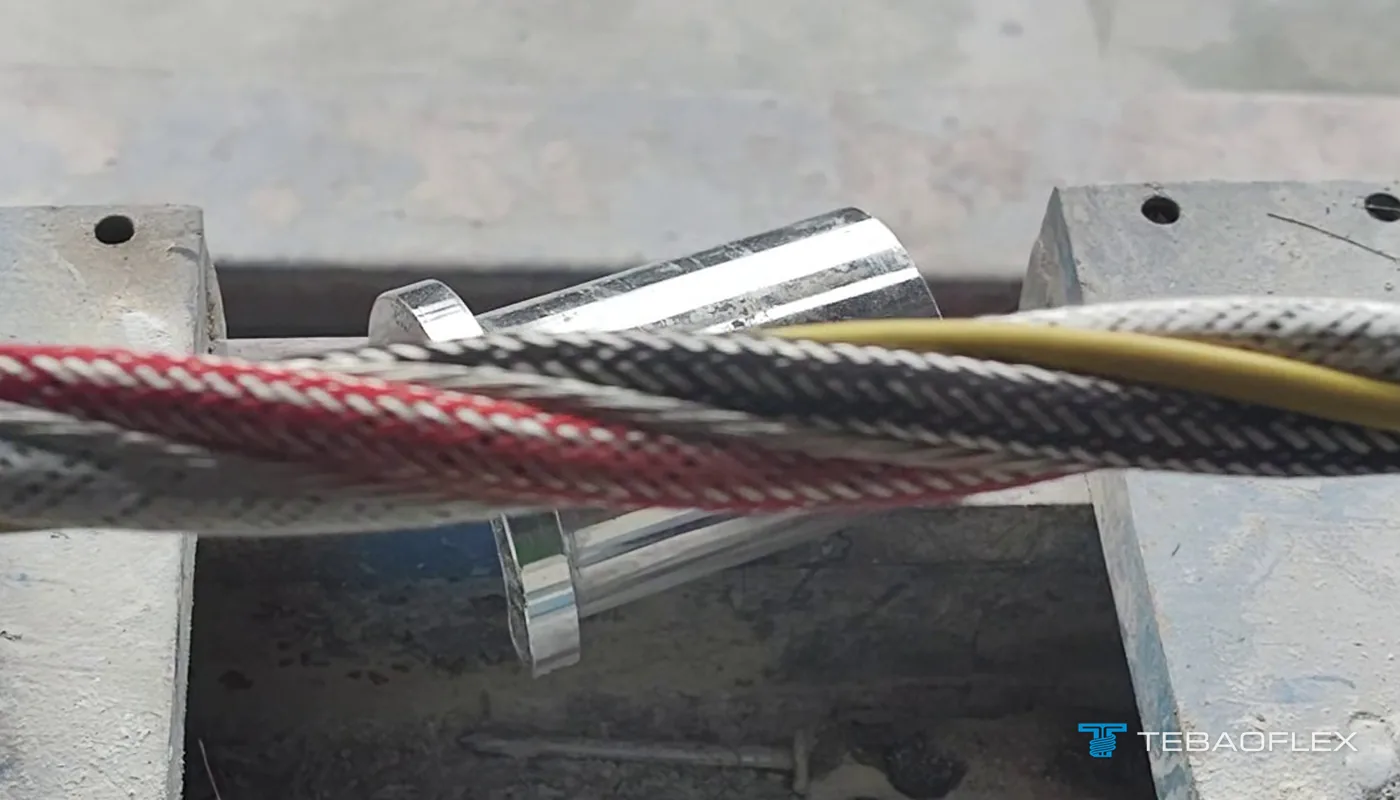
A cable distributor in Peru ordered 2 kV Type SHD-GC shielded portable mining cable for mobile mining equipment, with three 6 AWG power conductors, two 10 AWG grounding conductors and one 10 AWG ground-check conductor: 3×6 AWG + 2×10 AWG + 1×10 AWG, printed 3×6+2×10+1x10AWG on the jacket. TEBAOFLEX made the cable with flexible stranded copper power conductors, tinned-copper grounding and ground-check conductors, EPR insulation, a composite tinned-copper and polyamide braid shield over each power conductor, a reinforcing braid and an orange TPU jacket.
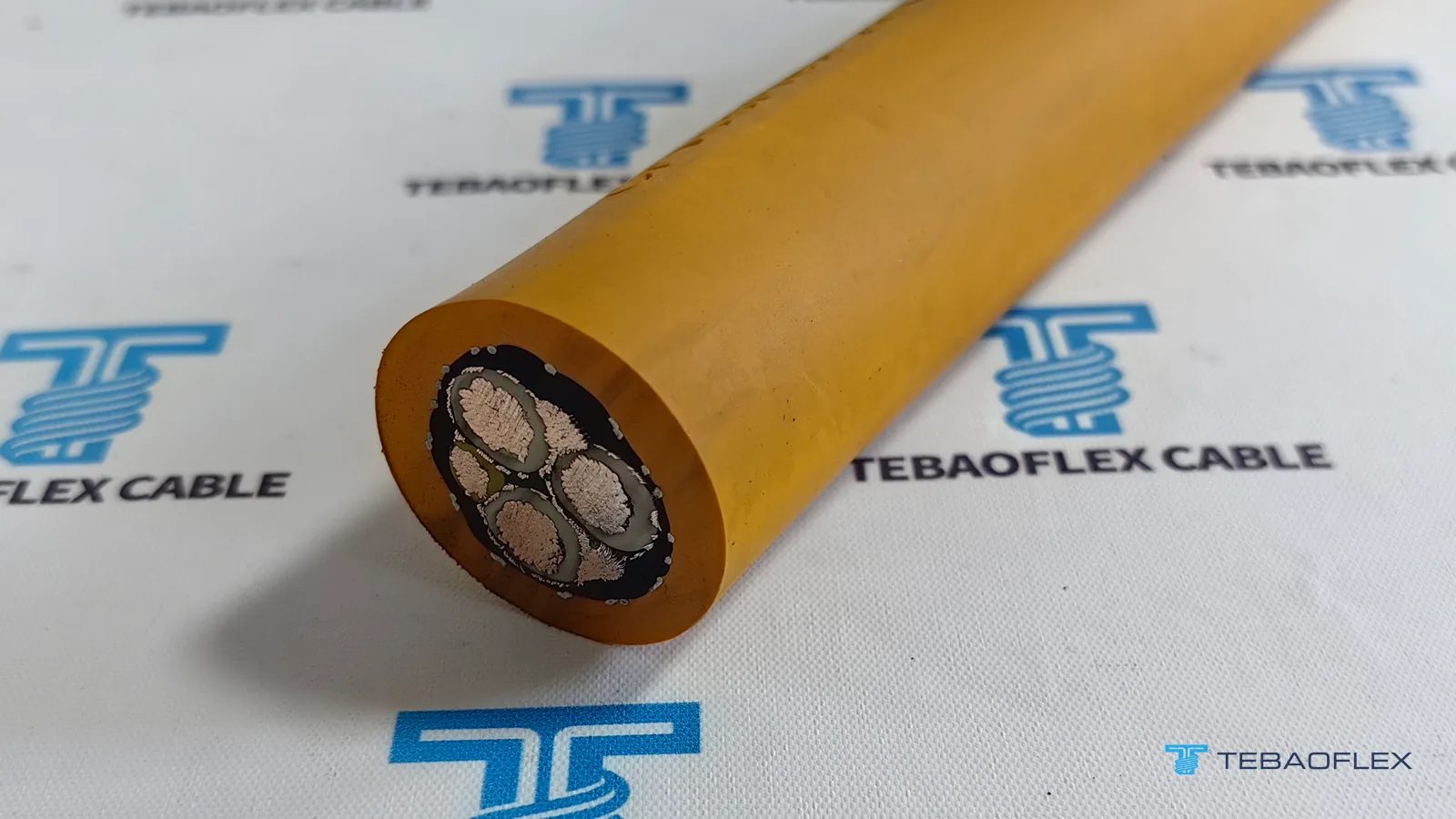
Project at a glance
| Application | Portable power cable for mobile mining equipment on circuits up to 2,000 V, supplied through a distributor |
|---|---|
| Customer | Cable distributor in Peru (name not published) |
| Cable | Type SHD-GC shielded portable mining cable, 2 kV, 3×6 AWG + 2×10 AWG + 1×10 AWG |
| Conductors | 3 × 6 AWG flexible stranded copper power; 2 × 10 AWG tinned copper grounding (bare); 1 × 10 AWG tinned copper ground check (yellow insulation) |
| Shield | Non-conducting bedding tape and a composite tinned-copper and polyamide braid, at least 60 % coverage, over each insulated power conductor, with colour tracers for phase identification |
| Insulation, reinforcement and jacket | EPR insulation; reinforcing braid under the jacket; orange TPU jacket |
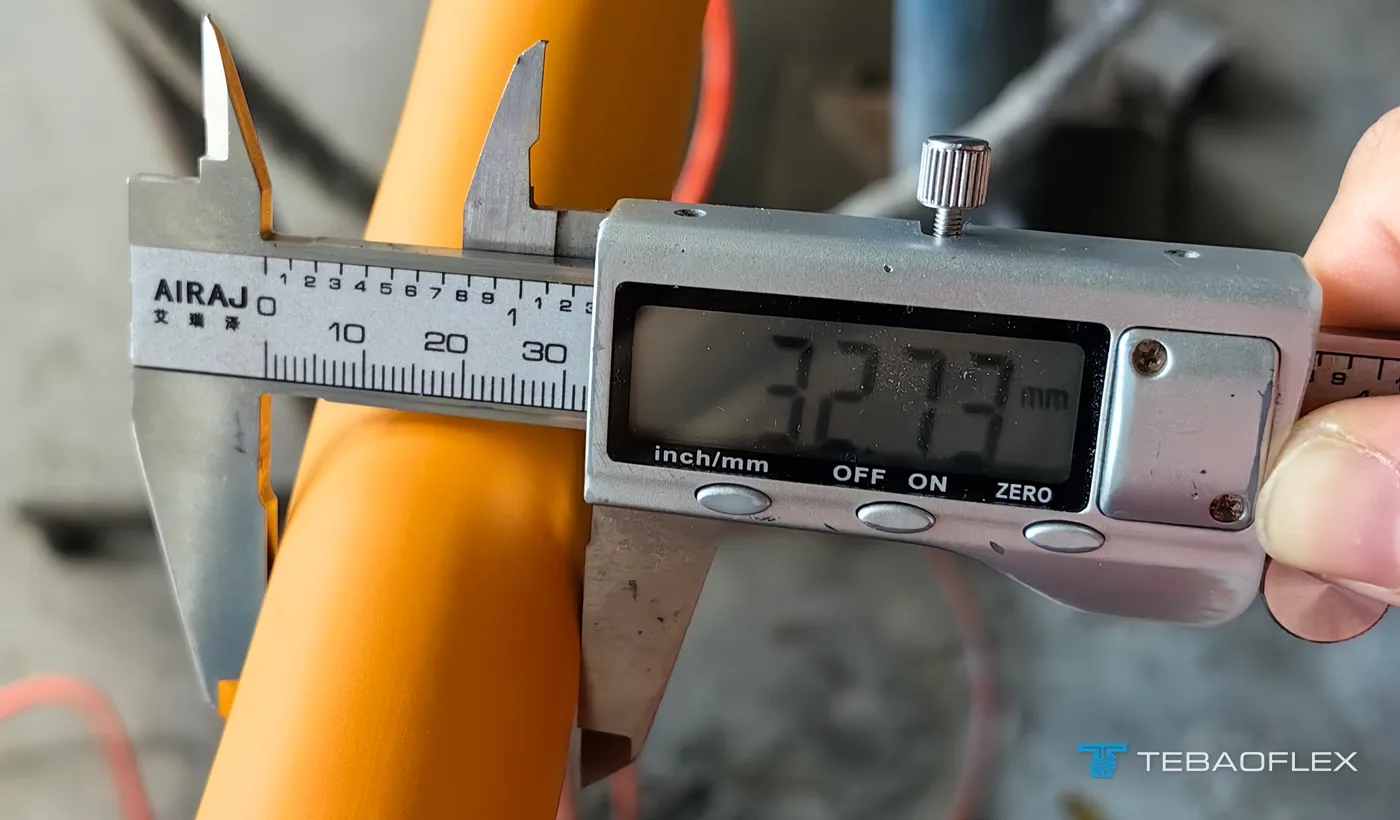
| Outside diameter | About 32.7 mm, measured with a caliper on a sample |
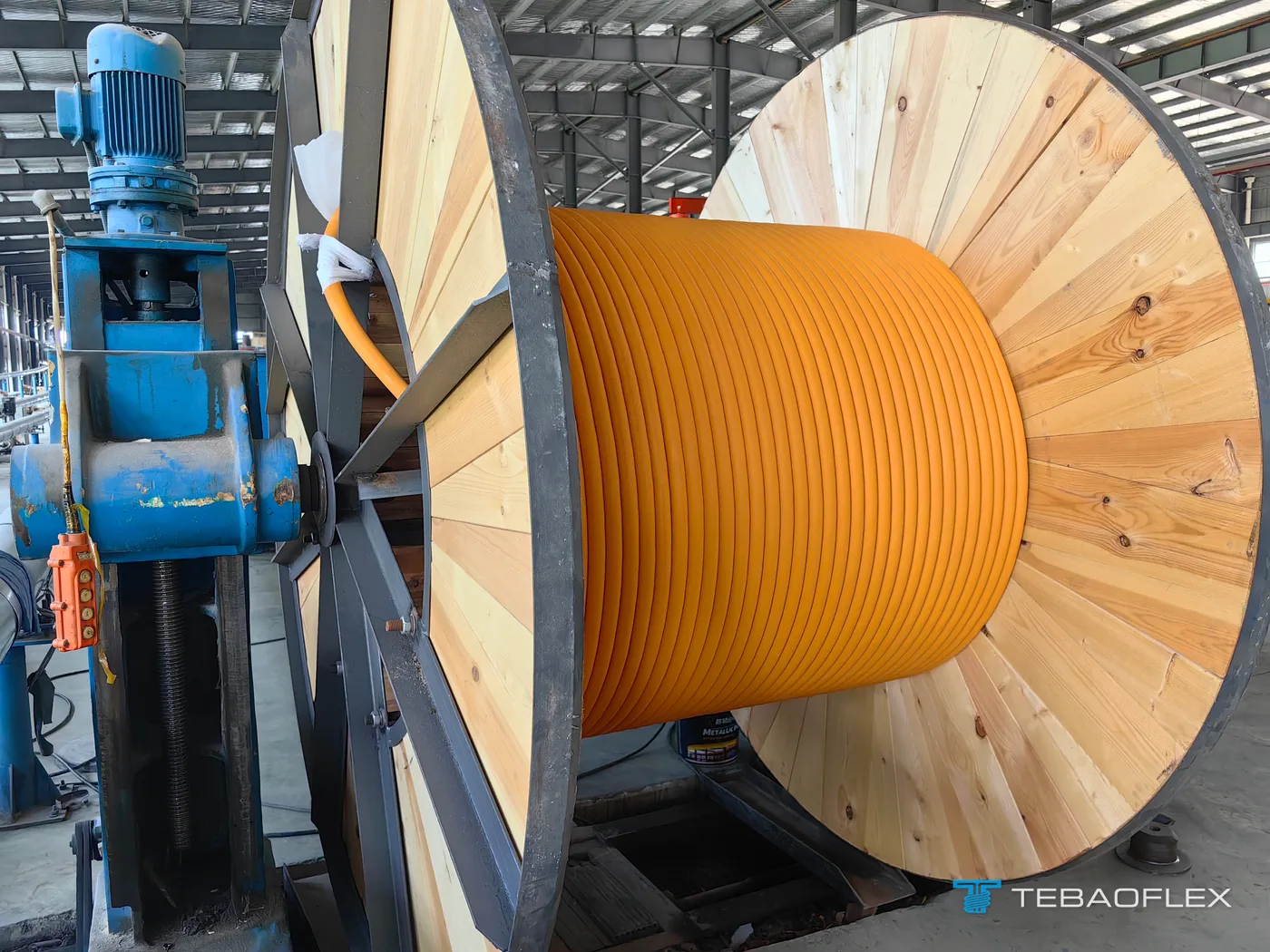
| Shipment | Wooden drums with steel-framed flanges in one 20 ft container, Shanghai to Callao, loaded in August 2026 |
What does SHD-GC 2 kV 3×6 + 2×10 + 1×10 AWG mean?
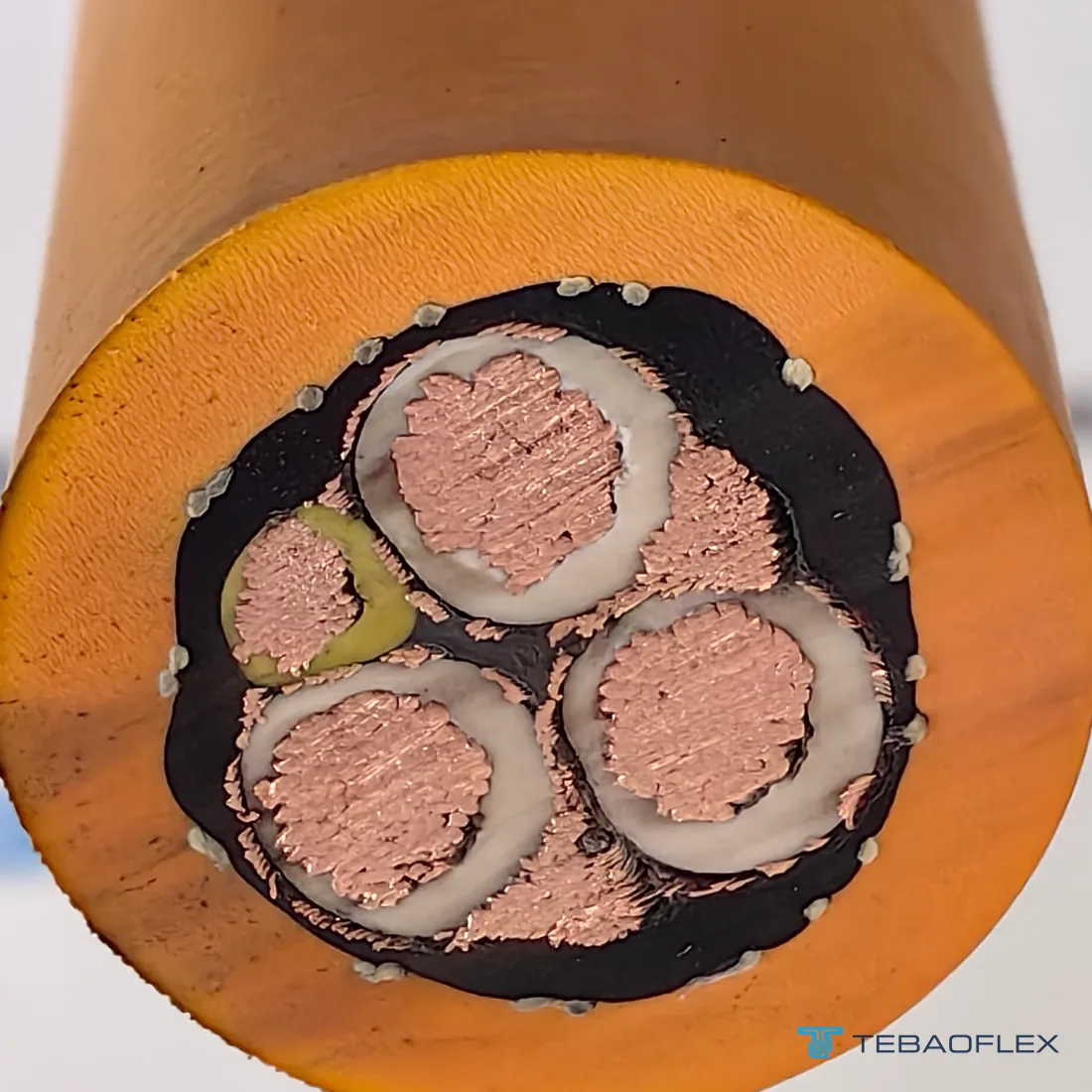
Type SHD-GC is the name in ANSI/ICEA S-75-381 / NEMA WC 23058 (formerly WC 58) for a round portable mining cable with a shield over each power conductor, two grounding conductors and one ground-check conductor, made for 2 kV up to 25 kV (NEMA WC 58 scope). 3×6 AWG + 2×10 AWG + 1×10 AWG lists every conductor under the jacket: three 6 AWG (13.3 mm²) power conductors for the three phases, two 10 AWG (5.3 mm²) grounding conductors and one 10 AWG ground-check conductor. The letters themselves are decoded in our article on what Type SHD means in mining cables.
- Power conductors: 3 × 6 AWG (13.3 mm²), flexible stranded copper
- Insulation: EPR on each power conductor
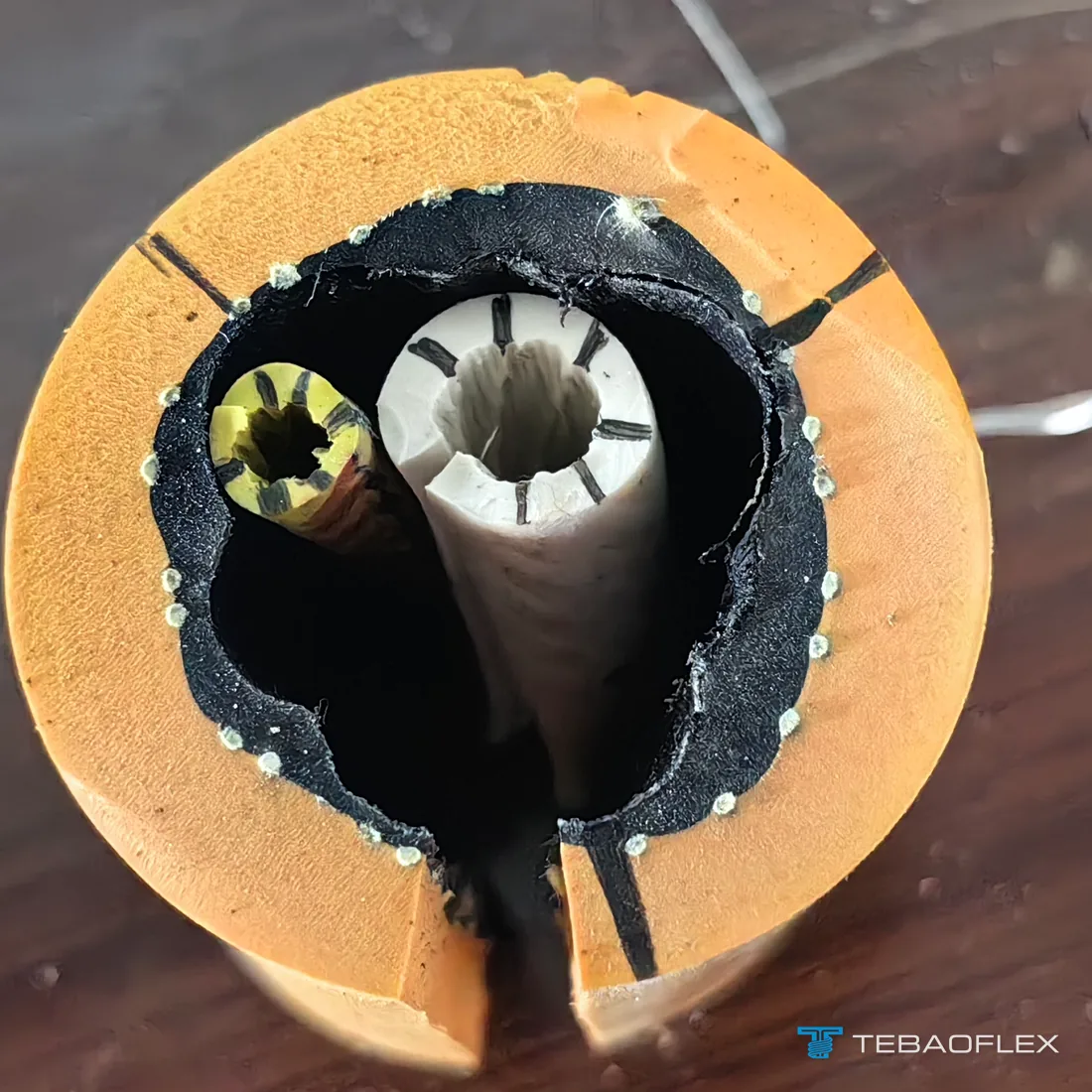
- Shield: non-conducting bedding tape and a composite tinned-copper and polyamide braid (at least 60 % coverage) over each insulated power conductor, with a colour tracer for phase identification
- Grounding conductors: 2 × 10 AWG bare tinned copper, in the spaces between the power cores
- Ground-check conductor: 1 × 10 AWG tinned copper, yellow EPR insulation
- Reinforcing braid under the jacket (rubber fillers keep the core round)
- Jacket: orange TPU (thermoplastic polyurethane), hot-embossed with the print
| Item | This order |
|---|---|
| Designation on the jacket | 3×6+2×10+1x10AWG |
| Voltage rating | 2 kV (2,000 V) |
| Power conductors | 3 × 6 AWG, flexible stranded copper |
| Insulation | EPR on each power conductor |
| Shield | Non-conducting bedding tape and a composite tinned-copper and polyamide braid, at least 60 % coverage, over each insulated power conductor; no extruded semiconducting layers at 2 kV |
| Grounding conductors | 2 × 10 AWG bare tinned copper |
| Ground-check conductor | 1 × 10 AWG tinned copper, yellow EPR insulation |
| Reinforcement | Reinforcing braid under the jacket |
| Jacket | Orange TPU |
| Outside diameter | About 32.7 mm on a sample |
| Minimum bend radius | 6 × overall diameter per the product data sheet, about 200 mm for this cable; the reel, sheave and roller design is confirmed separately |
The 2 kV reference data for the 6 AWG size, with 133 strands, a DC resistance of 0.436 Ω per 1,000 ft at 25 °C and a 93 A rating at 40 °C ambient, is in the 2 kV table on the SHD-GC 2 kV to 25 kV cable page. The same page lists the 5 kV to 25 kV sizes. On this order the grounding conductors are bare, which is the normal SHD-GC construction: lying against the braids, they keep every shield at ground potential along the whole length. State in the enquiry if your specification calls for anything different.
Why a shield over each power conductor at 2,000 V?
The braid around each insulated power conductor lies against the bare grounding conductors and is bonded to ground at the terminations, so it sits at ground potential along the whole cable. When a rock, a run-over or a cut works through the jacket, the first metal it meets is this grounded braid, not a live conductor. If the damage goes on through the insulation to the conductor, the fault current passes from the conductor through the grounded braid and the grounding conductors back to the power centre, where the ground-fault protection opens the circuit; damage that stops short of the conductor exposes only metal at ground potential.
In an unshielded cable the same damage can leave an energized conductor exposed to the people and the machine around the cable. At 2 kV this is the reason to choose SHD-GC over the unshielded Type G-GC 2 kV cable, which carries the same grounding and ground-check conductors.
- Damage from outside (a rock, a run-over, a cut) works inwards through the jacket, the reinforcing braid and the fillers
- The braid shield is at ground potential, so the first metal the damage meets is grounded; anything that goes on through the insulation to the conductor is already touching that grounded braid
- The fault current flows from the conductor through the grounded braid and the grounding conductors back to the power centre
- The ground-fault protection at the power centre opens the circuit
- Nothing reachable from outside is energized: damage that stops at the braid exposes only grounded metal, and a fault through to the conductor is cleared by the protection
Which type a mine must use is written in its own rules. In United States coal mines, trailing cables on circuits above 1,000 V must have a metallic shield around each power conductor, grounding conductors of at least half the power-conductor area and an insulated ground-check conductor no smaller than 10 AWG (30 CFR 75.804 underground, 77.804 at surface mines), so a 2 kV-rated cable on such a circuit is SHD-GC; on circuits at 1,000 V and below either type may be specified. Colombia's RETIE (Ministry of Mines and Energy, Resolution 40284 of 2026, Book 3, Articles 3.28.6.1 and 3.28.6.3) names SHD-GC “or similar” cables for mobile mining equipment, insulated for at least 2 kV on circuits up to 1,000 V and at least 5 kV from 1,000 to 4,600 V. In Peru, the mining safety regulation (Supreme Decree 024-2016-EM, Article 360) applies the National Electrical Code and the technical standard Uso de la Electricidad en Minas (R.M. 308-2001-EM/VME) to every electrical installation in a mine. That standard requires portable power cables to be made to NEMA WC 58 or similar and, above 750 V, to be of type SHD, SHD-GC or similar. For drills, electric shovels and other movable equipment above 300 V it requires ground-fault protection and ground-conductor monitoring at the source, a ground-fault voltage of 100 V or less where practicable, and couplers whose ground pin closes first and opens last and whose ground-check pin closes last and opens first. The choice between the shielded and the unshielded type, and what the ground-check conductor does, is set out in our guide to SHD-GC, Type G-GC and Type W mining cables; a 2 kV Type G-GC order for Mexico is documented in the Type G-GC 3×4/0 AWG project record.
Why an orange TPU jacket with a reinforcing braid?
The distributor's enquiry asked for SHD-GC (EPR-TPU): EPR insulation under a thermoplastic polyurethane (TPU) jacket instead of the usual CPE. TPU is chosen for cables that are dragged behind machines, wound on reels and run over, because it resists abrasion and tearing better than CPE in most published comparisons and stays flexible in cold weather; the reinforcing braid under the jacket adds tensile and tear strength. Orange makes the cable easy to see on the ground.
CPE and TPU are both used on SHD-GC cables, and TEBAOFLEX extrudes both. CPE is a thermoset that is crosslinked after extrusion and is the usual choice where oil, heat and weather are the main exposures; TPU is a thermoplastic with a harder, more abrasion-resistant surface that keeps its flexibility at low temperature, and ICEA S-75-381 lists thermoplastic polyurethane alongside the extra-heavy-duty crosslinked jackets. The product data sheet gives −40 °C for the CPE selections, with TPU options reviewable for −50 °C service. Not every TPU grade behaves the same: cold flexibility and resistance to water depend on the polymer, so a cable that will lie in water or work in very cold weather should say so in the enquiry. How the two compounds compare in abrasion tests, and what else in the construction decides jacket life, is covered in our article on abrasion-resistant mining cable jackets. State the lowest site temperature, the ground conditions and whether the cable runs on a reel, so the jacket compound and the reinforcement can be matched to the duty.
How much current can a 3×6 AWG SHD-GC 2 kV cable carry, including on a reel?
The ampacity of the three-conductor (3/C) 6 AWG SHD-GC, the current it can carry continuously, is 93 A in the TEBAOFLEX 2 kV reference data, with the conductor at 90 °C and 40 °C ambient air. On a reel the wound turns heat one another and shed heat poorly, so the ICEA reel factors reduce the 93 A rating to about 79 A with one layer on the reel and 33 A with four.
| Layers on the reel | ICEA factor | Current from 93 A (calculated) |
|---|---|---|
| 1 | 0.85 | 79 A |
| 2 | 0.65 | 60 A |
| 3 | 0.45 | 42 A |
| 4 | 0.35 | 33 A |
A US federal mine-safety bulletin on trailing cable overheating on equipment cable reels (PIB P10-20) lists these ICEA factors among its remedies, while noting that they assume continuous current rather than the on/off duty of most reeled machines. The values above are selection figures calculated from the datasheet rating, not test results for this order. For a machine that reels its cable, send the number of layers that stay on the reel and the duty cycle, so the conductor size can be checked against them.
The two 10 AWG grounding conductors together hold about 20.8 kcmil (10.5 mm²) of copper, against 26.2 kcmil (13.3 mm²) in each 6 AWG power conductor, so the ground path is about four fifths of one phase. US underground coal-mine rules set the minimum grounding-conductor area at one-half of the power conductor for power conductors of 6 AWG and larger, and equal to the power conductor below 6 AWG (30 CFR 75.701-4); 30 CFR 75.804 applies the same one-half rule to shielded high-voltage cables, with an internal ground-check conductor of at least 10 AWG, so the layout of this order is in line with that reference. Splitting the ground into two bare conductors lets them sit in the spaces between the three shielded cores and keeps the cable round.
What the jacket print says, and whose name is on it
The print is hot-embossed into the TPU jacket as it is extruded, so it is formed in the jacket surface rather than inked onto it. On this order it begins with the distributor's own brand name rather than TEBAOFLEX, followed by the voltage (2kV), the type (TYPE SHD-GC Mining Cable), the conductor sizes (3×6+2×10+1x10AWG) and the reference to ICEA S-75-381. Private-label printing of this kind is written into the order; without it, the print carries the TEBAOFLEX name.
| Printed item | Meaning |
|---|---|
| Brand name | The distributor's own brand, printed for resale under its name |
| 2kV TYPE SHD-GC Mining Cable | Voltage rating 2,000 V; shielded portable mining cable with grounding conductors and a ground-check conductor |
| 3×6+2×10+1x10AWG | Three 6 AWG power conductors, two 10 AWG grounding conductors, one 10 AWG ground-check conductor |
| ICEA S-75-381 Standard | The standard the construction is designed and made to; it is a reference, not a third-party certification |
From enquiry to shipment
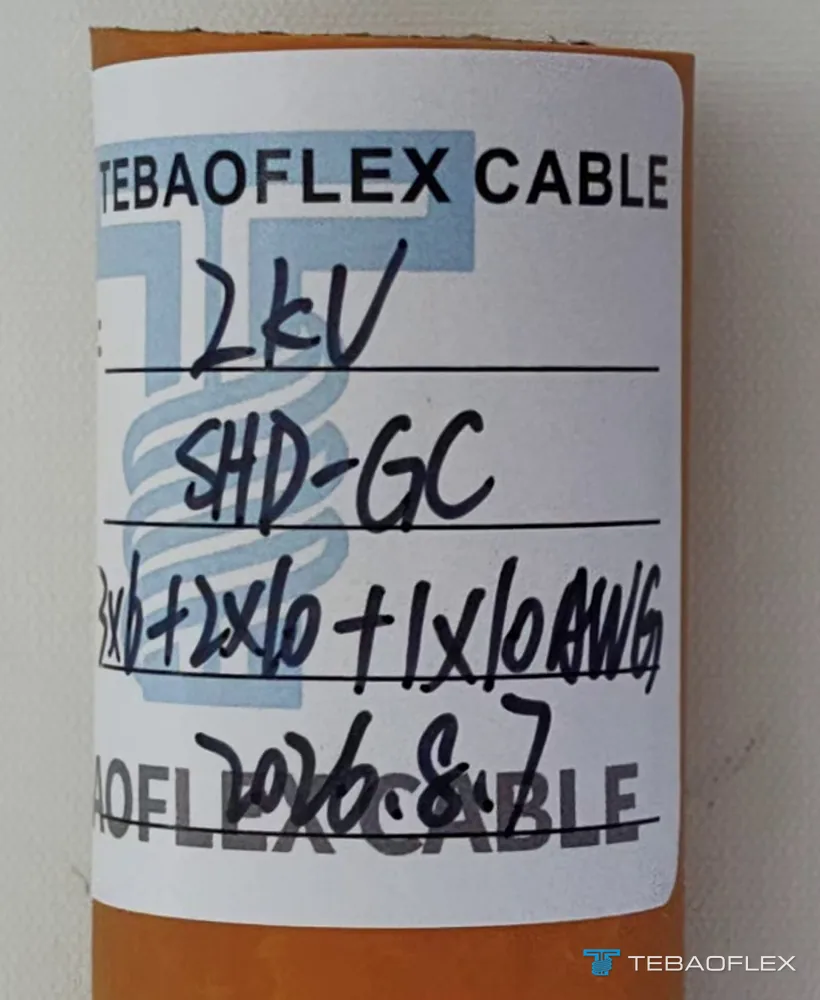
The enquiry came in as SHD-GC (EPR-TPU) 3×8+2×10+1×12 AWG 2 kV and G-GC (EPR-TPU) 3×8+2×10+1×10 AWG 2 kV. The order was then placed as three constructions, all 2 kV: this SHD-GC 3×6 + 2×10 + 1×10 AWG, an SHD-GC 3×4 + 2×8 + 1×10 AWG and a Type G-GC 3×8 + 2×12 + 1×10 AWG. The cut sample of the 3×6 AWG cable was labelled on 7 August 2026; the drums were loaded into one 20 ft container in the middle of August and sailed from Shanghai to Callao at the end of the month.
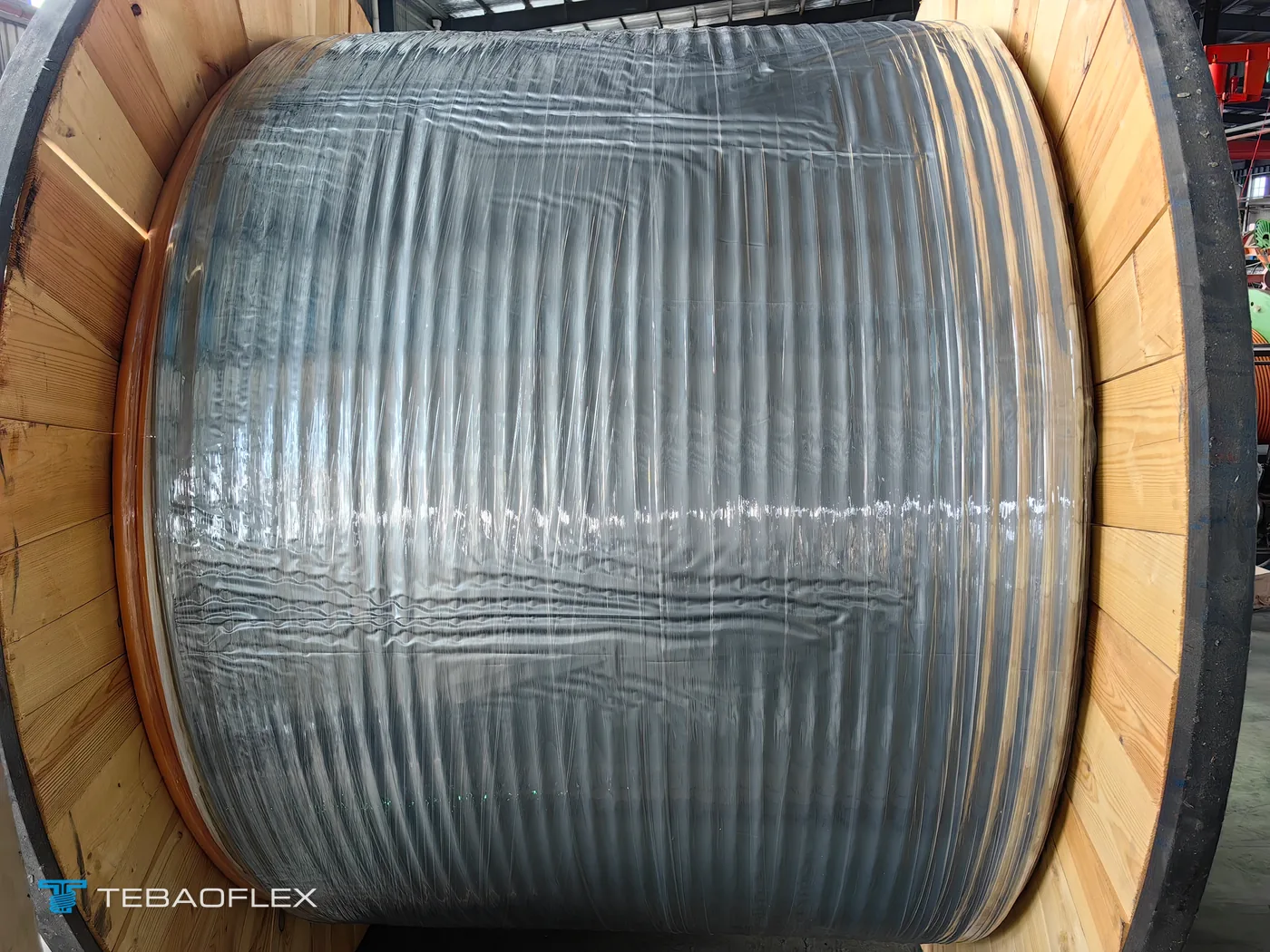
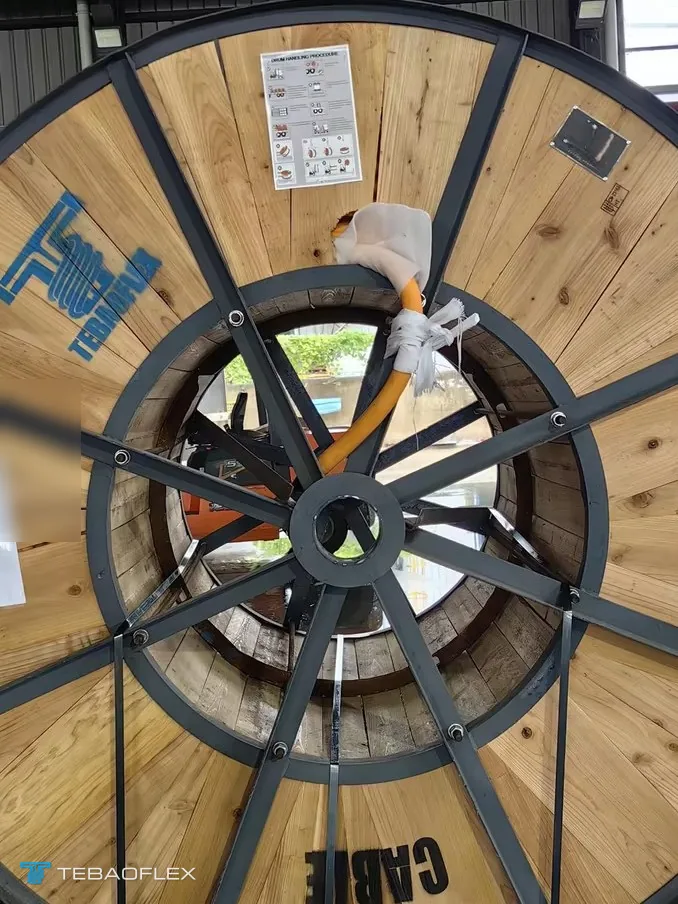
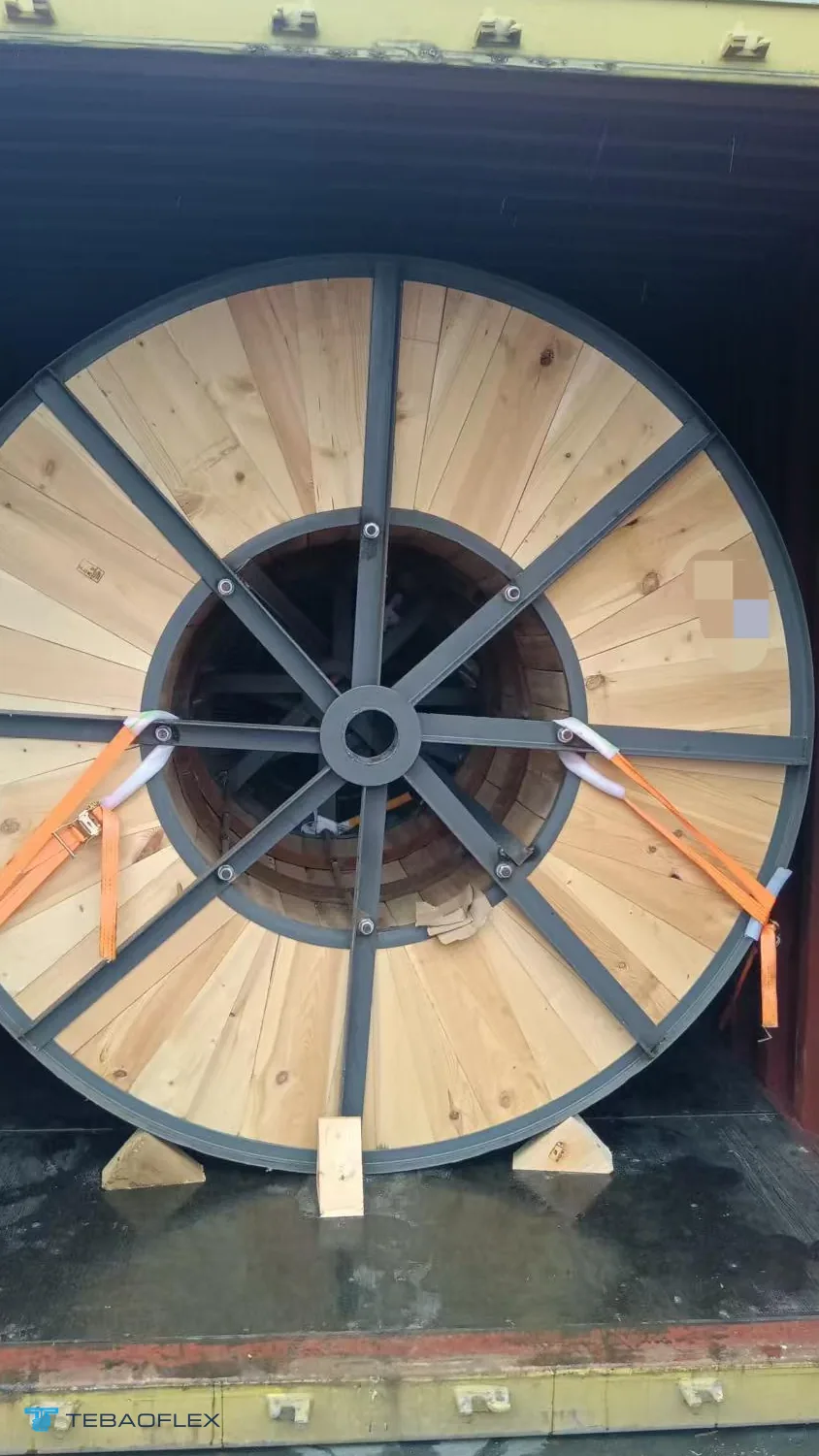
The shipment travelled with a certificate of origin on the Form for China-Peru FTA, issued by Chinese customs. Under the China-Peru Free Trade Agreement, in force since 1 March 2010, the importer presents this certificate with the import declaration to request the preferential tariff treatment. Ask for it with the order when the delivery is to Peru: it is issued per consignment, names the goods and the vessel, and is valid for one year from issue; which tariff line the cable falls under, and the duty that applies, is for the importer and its customs broker to confirm.
What to send for an SHD-GC 2 kV quote
- Circuit voltage, and whether the specification calls for a shielded (SHD-GC) or an unshielded (Type G-GC) cable
- Conductor sizes as power + grounding + ground check, for example 3×6 AWG + 2×10 AWG + 1×10 AWG (Latin American Spanish enquiries also write this as 3×6 + 2 tierras + 1 piloto)
- Jacket compound (CPE or TPU) and colour, and bare or insulated grounding conductors
- Whether the cable runs on a reel, and how many layers stay on it in service
- Length on each shipping drum and number of drums
- Jacket print required, including your own brand name if the cable is for resale
- Lowest and highest ambient temperature at the site
- Documents required with the delivery, such as the certificate of origin, and the delivery port
The construction, the 2 kV to 25 kV size tables and the datasheet are on our SHD-GC shielded cable page. Where the circuit needs no shield, the unshielded 2 kV construction is our Type G-GC 2,000 V cable, and other trailing and reeling cables for mines are listed under mining and tunnelling cables. As of August 2026, TEBAOFLEX's minimum order is 50 m for standard and custom cables alike. Lead times range from 7 to 45 working days depending on the product type and its customisation; the written quotation confirms the lead time for your order, and transit and customs time depend on the route.
Send your conductor sizes and drum lengths for a quote →
Questions on SHD-GC 2 kV 3×6 AWG mining cable
What is SHD-GC 2kV 3×6+2×10+1×10 AWG cable?
It is a round shielded portable mining power cable rated 2,000 V with three 6 AWG power conductors, two 10 AWG grounding conductors and one 10 AWG ground-check conductor. Type SHD-GC is the ANSI/ICEA S-75-381 / NEMA WC 23058 (formerly WC 58) type with a shield over each power conductor, grounding conductors and a ground-check conductor, made from 2 kV up to 25 kV. This order for a distributor in Peru was made with copper power conductors, tinned-copper grounding and ground-check conductors, EPR insulation, braid shields, a reinforcing braid and an orange TPU jacket.
What is the difference between SHD-GC and G-GC at 2 kV?
Both are 2,000 V portable mining cables with grounding conductors and one ground-check conductor. SHD-GC adds a grounded braid shield around each insulated power conductor, so anything that cuts through to a power conductor is already touching grounded metal: the fault goes to ground and the protection clears it, instead of leaving an energized conductor exposed. G-GC has no shield over the power conductors. The mine's electrical specification or the national rules decide which one is required.
Can the jacket be printed with my own brand name?
Yes. The print is hot-embossed into the jacket during extrusion and is written for each order. A distributor can have its own brand name in the print, as on this order, followed by the voltage, the type, the conductor sizes and the standard reference. Without a request, the print carries the TEBAOFLEX name.
Is SHD-GC 2 kV cable made to order?
Yes. SHD-GC cables are made to order, because the conductor sizes, jacket compound and colour, print and drum lengths differ from one buyer to the next. As of August 2026, the minimum order is 50 m and lead times range from 7 to 45 working days depending on the construction; the written quotation confirms the lead time for a specific order.
How do buyers in Peru write this cable in an enquiry?
The enquiry behind this order wrote SHD-GC (EPR-TPU) 3×8+2×10+1×12 AWG 2 kV: the type, the insulation and jacket materials in brackets, the conductor sizes with AWG once at the end, and the voltage class. Peru's mining rules call the cable a cable portátil de potencia or cable de arrastre and describe the ground check as monitoreo del conductor de tierra; the Latin American shorthand 3×6 + 2 tierras + 1 piloto is also understood. On the jacket the same cable is printed 3×6+2×10+1x10AWG.