


Industrial Cable Guide
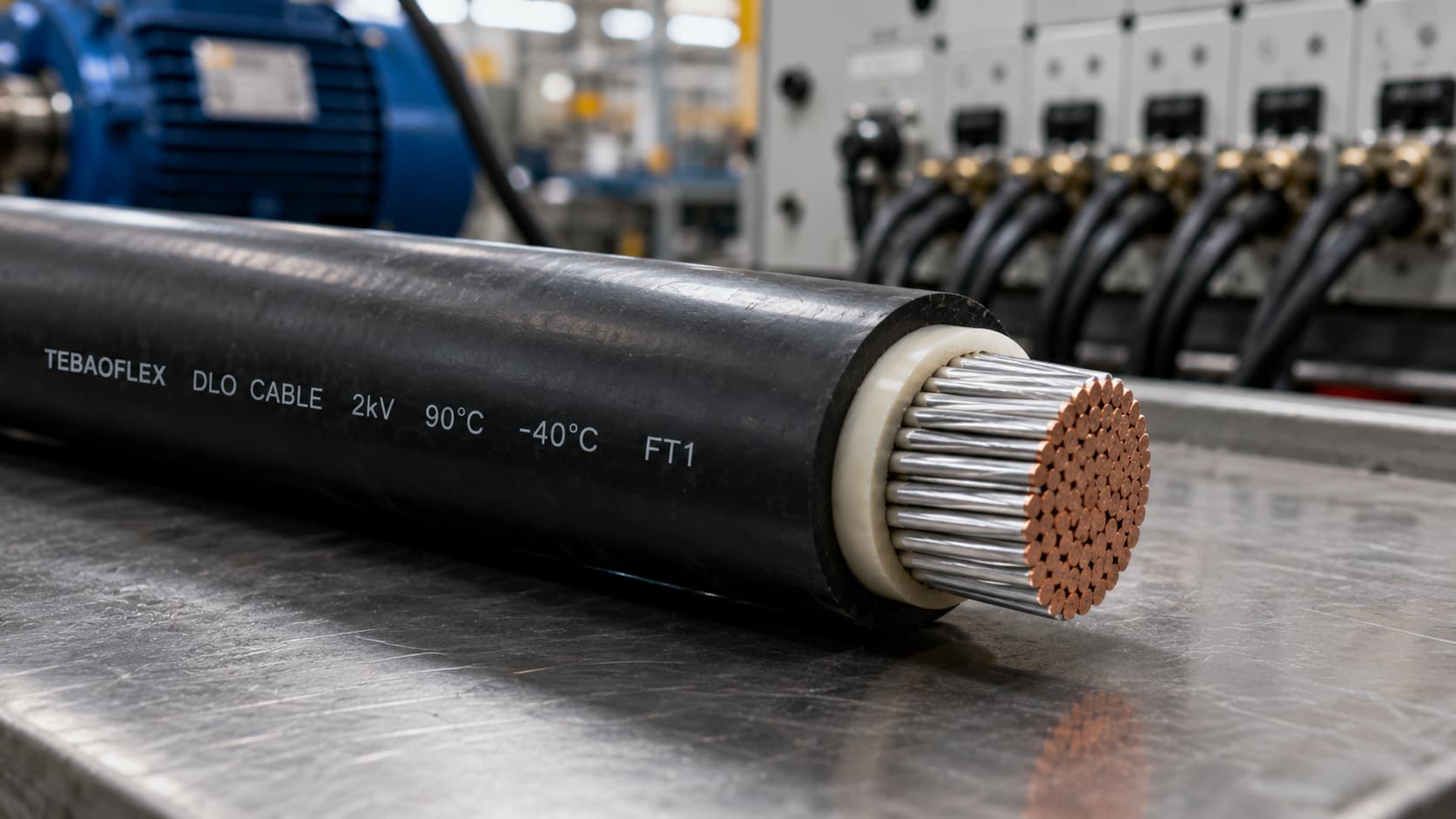
What is DLO cable? DLO means Diesel Locomotive Cable. It is a flexible, single-conductor power cable commonly built with a rope-lay tinned copper conductor, EPR insulation and an XL-CPE jacket. Although it began in diesel-electric locomotive wiring, specified DLO constructions are now used for motors, generators, mining equipment, UPS systems, battery connections and other demanding power links.
What Is DLO Cable? The Quick Answer
DLO is a cable family name, not a complete installation approval. A typical 2 kV DLO cable combines a fine-stranded tinned copper conductor with separate EPR insulation and an XL-CPE jacket. The construction gives installers a flexible high-current conductor, while the exact sheath marking tells an engineer whether a particular size also carries RHH/RHW-2, RW90, cable-tray, flame-test or MSHA identification.
| Full name | Diesel Locomotive Cable |
|---|---|
| Common configuration | One flexible power conductor |
| Typical DLO voltage class | 2,000 V / 2 kV |
| Conductor | Rope-lay Class I tinned annealed copper |
| Insulation | EPR insulation |
| Jacket | XL-CPE jacket |
| Normal temperature | Up to 90°C wet or dry for the specified TEBAOFLEX construction |
| TEBAOFLEX size range | 12 AWG through 1111 kcmil |
The full size table, marking scope and quotation options are available on the TEBAOFLEX 2 kV DLO cable product page. Product data should always be checked against the exact cable supplied rather than against a generic description found online.
What Does DLO Stand For?
The acronym has locomotive roots; your project does not need a locomotive to need the cable.
DLO stands for Diesel Locomotive Cable. Diesel-electric locomotives use a diesel engine to drive a generator, and electrical power then feeds traction motors that turn the wheels. The original cable duty therefore called for substantial current capacity, routing flexibility and a jacket able to tolerate demanding equipment spaces.
The acronym describes that origin, but it no longer limits every correctly marked DLO cable to locomotives. Modern product records also identify uses in transit vehicles, mining and earth-moving equipment, drilling rigs, motor leads, generator connections, wind-power equipment and industrial power systems. The decisive question is not “Does the application contain a locomotive?” It is “Does the ordered construction, listing and installation method fit the circuit?”
How DLO Cable Is Constructed
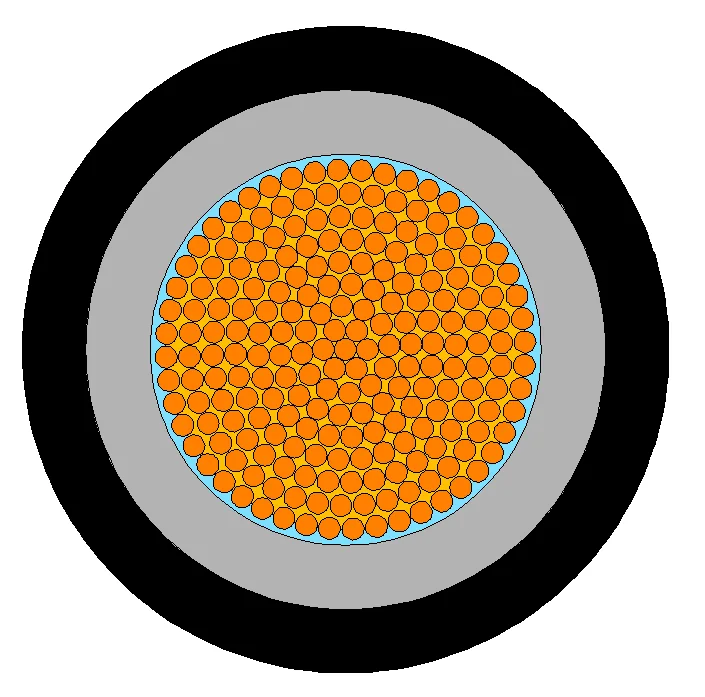
The four basic layers explain both the flexibility and the selection limits of DLO cable. ASTM separates the requirements for tin-coated copper wire from the geometry of rope-lay conductors: ASTM B33 covers tin-coated soft or annealed copper wire, while ASTM B172 addresses rope-lay conductors with bunch-stranded members. A project specification should identify the required edition and conductor details rather than naming only “flexible copper.”
1. Rope-Lay Tinned Copper Conductor
A Class I DLO conductor is assembled from many small copper strands. Those strands allow the conductor to bend more readily than conventional building-wire stranding of the same approximate copper area. Tin coating protects the copper surface and is useful where moisture or industrial atmospheres make bare copper oxidation a concern.
Fine stranding changes the termination as well as the handling. A mechanical or compression lug must be identified for the conductor class and strand range. If a connector captures only part of the strand bundle, the practical result can be a poor contact area, loose strands or excess heating. “The cable fits into the lug” is not an acceptance test.
2. Separator or Binder
A separator over the conductor prevents the thermoset insulation from bonding into the small interstices between strands. It also helps the installer remove insulation without unnecessarily disturbing the conductor bundle. The separator is not an electrical screen and should not be described as one.
3. EPR Insulation
Ethylene propylene rubber (EPR) provides the primary dielectric layer. The supplied TEBAOFLEX construction pairs EPR insulation with an XL-CPE jacket for the stated 2 kV DLO design. Why a flexing power cable uses rubber rather than cross-linked polyethylene is explained in how EPR insulation differs from XLPE.
4. XL-CPE Jacket
XL-CPE forms the outer mechanical and environmental layer. The exact compound, marking and approved application remain specification items, so confirm them against the ordered datasheet.
DLO Ratings and Markings Are Not All the Same
A recurring procurement mistake is to copy every approval seen on one DLO data sheet into a specification for another product. The safer method is to treat each line of sheath printing as evidence with a defined scope. UL lists heavy-duty flexible power cable under UL Subject 2806 product categories; that category reference does not prove that every cable sold as DLO is listed.
| Marking or reference | What it tells the buyer | What still needs checking |
|---|---|---|
| DLO / HDFPC 2 kV | Heavy-duty flexible power-cable family and voltage class | Exact listing, construction and intended installation |
| RHH / RHW-2 | Thermoset-insulated building-wire type and dry/wet use represented by the marking | Voltage, conductor size, adopted code and terminal limitations |
| RW90 | Canadian thermoset wire designation where certified | Certificate, size scope and Canadian installation rules; in this range the scope begins at 8 AWG |
| CT use / TC-ER | Tray-related use for a specifically marked construction | Size and route; TEBAOFLEX’s current scope starts at 1/0 AWG |
| FT4 / IEEE 1202 | Vertical flame-propagation test evidence for the identified construction | Applicable size and certificate; a flame test does not define every installation permission |
| MSHA approval number | Identifies a cable accepted within an MSHA approval record | Exact manufacturer, cable type, size and permanent marking |
ANSI/NEMA WC 70 / ICEA S-95-658 covers power cables rated 2,000 V or less. IEEE 1202 defines a flame-propagation test method. Neither reference alone is a certificate for a particular reel of cable.
For mining procurement, check the approval number against the official MSHA approved-product lists. MSHA status should be tied to the actual sheath marking and certificate, not inferred from a black jacket or from the word “mining” in an application list.
Where Is DLO Cable Used?
Locomotives and Transit Equipment
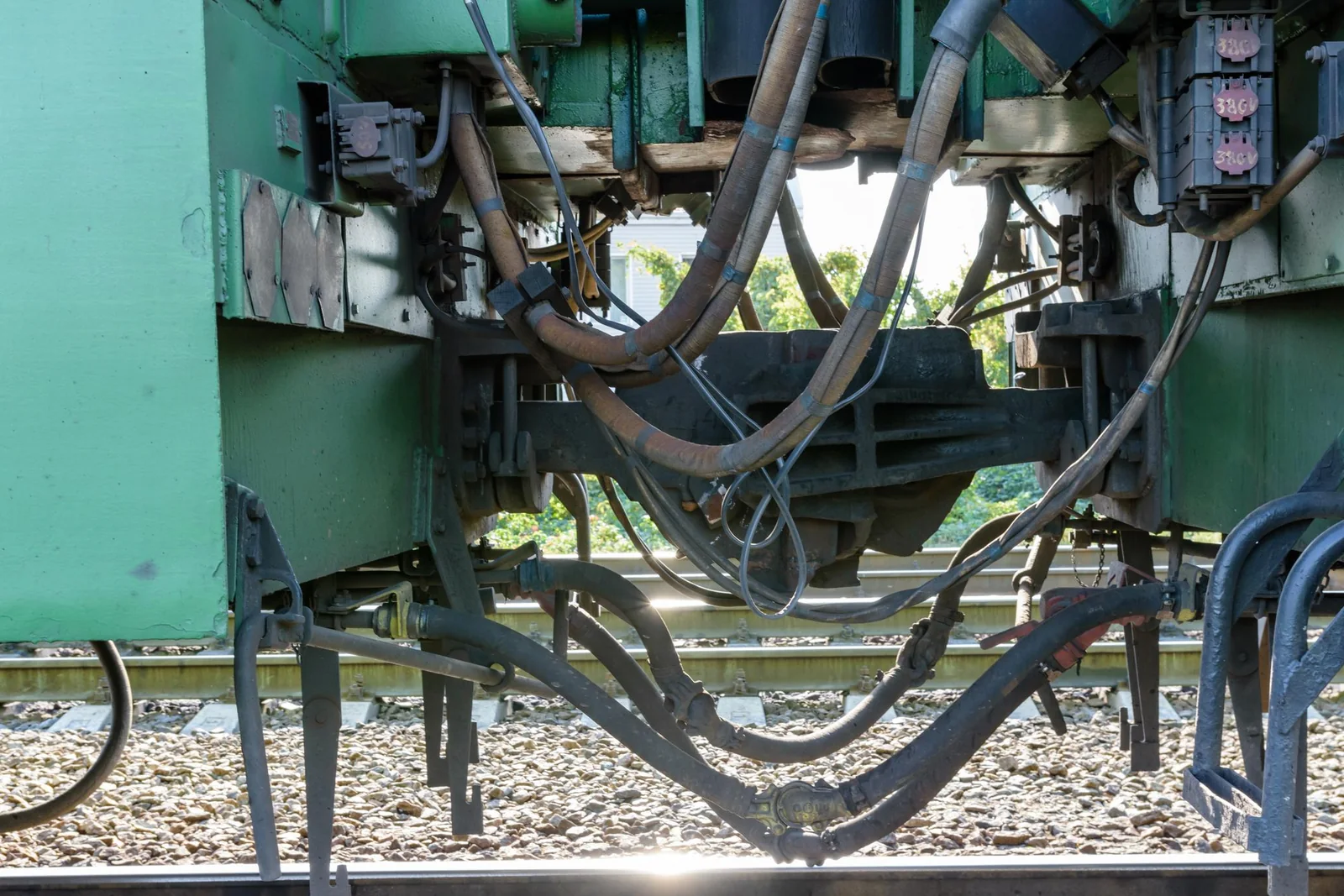
DLO remains a practical option for generator-to-traction equipment links, power wiring inside diesel-electric locomotives and specified railway or transit vehicle circuits. Routing space, vibration, heat, oil exposure and termination design all matter. The cable family name does not replace the vehicle manufacturer’s drawing or transit authority specification.
On traction motor leads and main generator connections the lug is chosen by strand designation, not kcmil alone; the locomotive DLO cable lug case study shows cast copper 1100/24 lugs made to a buyer’s worn sample for 444.4 kcmil DLO.
Mining, Drilling and Earth-Moving Equipment
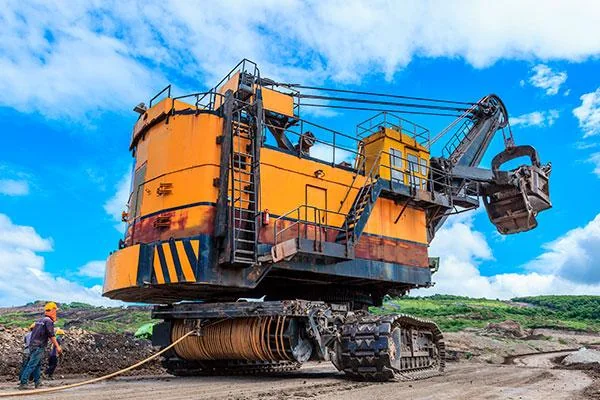
The combination of fine stranding and a thermoset jacket is useful for power leads on drills, excavators, shovels and other electrically driven equipment. DLO should not automatically be selected for a continuously reeling route. Reeling introduces repeated bending, torsion, tension and drum geometry that may require a purpose-designed Type W mining cable or another reeling construction.
Motors, Generators and Industrial Power Links
DLO cable can simplify routing between a generator, motor, transformer, switchgear section or other equipment where a flexible single conductor is permitted. The equipment terminal must accept the strand class, conductor material and operating temperature. Cable ampacity then has to be selected for the actual route; see the companion DLO cable ampacity chart and selection guide.
UPS, Battery and Data-Centre Power
UPS systems, battery banks, energy-storage cabinets, switchgear and busway links can create demand for flexible high-current conductors. These installations frequently involve multiple parallel conductors and dense cable routes, so grouping, terminal temperature, cable-tray marking, short-circuit duty and connector compatibility deserve more attention than the nominal 2 kV cable rating.
Wind and Other Energy Equipment
Specified DLO constructions are used as flexible power leads in wind-turbine generator systems and other industrial energy equipment. A buyer should confirm whether movement is occasional routing flex, vibration, or continuous dynamic flexing; those are different mechanical duties.
DLO Cable Compared with Welding Cable, Type W and SOOW
These cable families overlap in flexibility, but they do different jobs. A substitution decision should start with the circuit and marking, not with outside diameter or how easily the cable coils.
| Cable family | Typical construction | Best starting question | Important limit |
|---|---|---|---|
| DLO cable | Single fine-stranded conductor, separate EPR insulation and XL-CPE jacket | Do I need a flexible, marked power conductor up to 2 kV? | Approval, tray use and ampacity vary by marking, size and installation |
| WCT welding cable | Very flexible conductor with welding-lead insulation or jacket | Is this an arc-welder secondary circuit? | Do not assume welding cable is approved as general power wiring |
| Type W cable | Heavy-duty portable multi-conductor power cable | Does the equipment need several conductors in one portable cable? | Core count, grounding arrangement and movement duty differ from single-conductor DLO |
| SOOW cable | 600 V portable cord with multiple insulated conductors and an oil/weather-resistant jacket | Is this a lower-voltage portable cord connection? | Voltage, conductor size range and mechanical duty differ |
Installation and Termination Checks
- Read the complete sheath marking. Record the manufacturer, type, voltage, conductor size and every approval mark.
- Confirm the route. Free air, conduit, duct, trough and cable tray do not have the same thermal conditions or permissions.
- Match the connector to the strand class. Use a lug, ferrule or connector identified for fine-stranded DLO/Class I conductors.
- Use the specified tooling. Follow the connector manufacturer’s die, compression count and inspection instructions.
- Protect the bend. Respect the size-specific minimum bend radius and avoid forcing a heavy cable directly at the terminal.
- Control movement. Support the cable so vibration, weight and handling loads do not transfer into the electrical connection.
A 1111 kcmil conductor is flexible relative to its copper area, but it is not light or effortless to handle. Plan reel position, pulling equipment, support spacing and termination access before the cable arrives.
How to Specify DLO Cable for a Quotation
A useful RFQ gives the factory enough information to check both electrical and mechanical suitability. Include:
- Required cable marking or a clear photograph of the existing cable.
- Circuit voltage, system type and applicable project standard.
- Conductor size in AWG or kcmil and total quantity per colour.
- Load current, installation method, ambient temperature and conductor grouping.
- Equipment type and whether the cable is fixed, occasionally flexed or continuously moving.
- Required RHH/RHW-2, RW90, CT-use, FT4/IEEE 1202 or MSHA scope.
- Jacket colour, sequential length marking, logo or project identification.
- Cut lengths, reel size, packing, inspection, certificate and routine-test requirements.
TEBAOFLEX can provide nominal dimensions, mass, bending radius and electrical data for the selected size. The approved order data sheet should control production and receiving inspection.
Common DLO Cable Specification Mistakes
- Treating “DLO” as a complete approval: the type name does not prove UL, CSA, tray or MSHA scope.
- Using free-air ampacity for an enclosed route: the cable cannot dissipate heat the same way in a raceway or dense bundle.
- Selecting a standard lug by nominal AWG alone: strand count and connector listing matter.
- Assuming flexible means continuous reeling: repeated bending and torsion may require another construction.
- Copying every application from a catalogue: the final installation must match the delivered cable marking and local rules.
- Ignoring weight and bend radius: large DLO sizes need planned handling, support and termination space.
DLO Cable FAQ
Is DLO cable always rated 2 kV?
Two kilovolts is a common DLO rating, including the TEBAOFLEX construction discussed here. Do not infer the rating from the acronym alone; verify the voltage printed on the delivered cable and the product data sheet.
Can DLO cable be installed in conduit?
It may be used in conduit when the exact RHH/RHW-2 or other applicable marking, conductor size and local electrical rules permit the installation. Conduit fill, pulling tension, bend radius, ampacity and terminal temperature still require engineering review.
Can DLO cable be installed in cable tray?
Only use it as a tray conductor when the delivered cable carries the required tray-use marking and the selected size is within that scope. For the current TEBAOFLEX range, CT-use and associated tray-flame scope begin at 1/0 AWG.
Is DLO cable the same as welding cable?
No. Both can be flexible, but DLO is a separately insulated and jacketed power-cable construction with its own voltage and optional approval markings. Welding cable is normally selected for arc-welder secondary leads.
Why is DLO cable tinned?
The tin coating protects the surface of the annealed copper strands and can improve corrosion resistance during service and termination. It does not make an unsealed connection waterproof or eliminate the need for compatible lugs and environmental protection.
Next Step: Match the Cable to the Circuit
DLO cable is a flexible 2 kV power-cable option, but the correct order is defined by conductor size, installation, temperature, terminal system and required approval marks. Review the TEBAOFLEX DLO cable specifications or send your cable marking and project requirements for a technical quotation.