

Project record · Vietnam · Coal-fired power plant ship unloader
8.7/15 kV Reeling Cable with 24 Fibers for a Ship Unloader — Duyen Hai 2, Vietnam
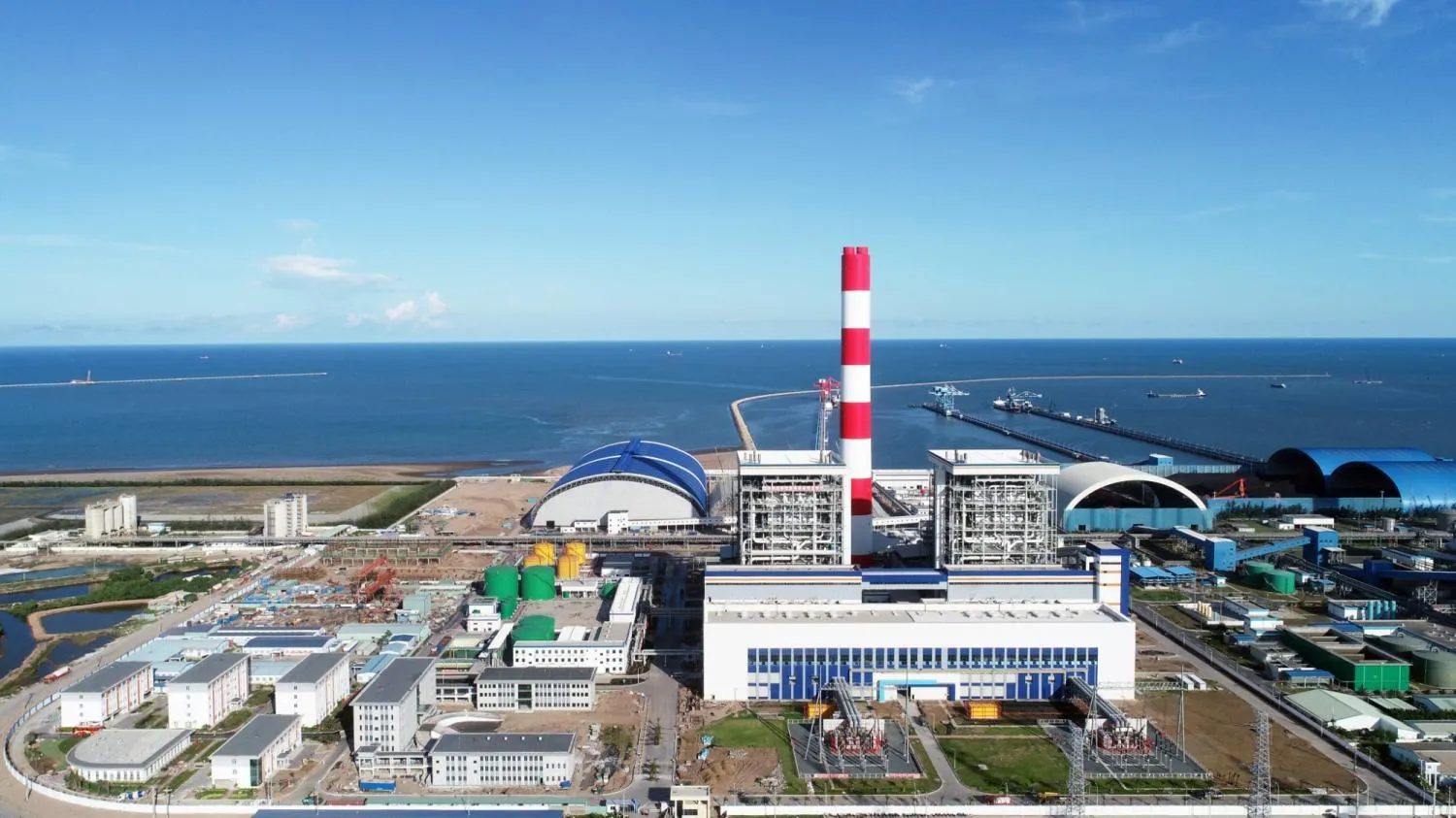
The ship unloader at Duyen Hai 2 Thermal Power Plant needed its reeling cable replaced. The installed cable was European. The tender accepted an equivalent, but only a close one: 8.7/15 kV, three power cores, earth conductors, 20 control cores and 24 single-mode fibers in one sheath, with the overall diameter held inside a 3 mm window. TEBAOFLEX built this ship unloader reeling cable in both sizes to the tender drawing. The finished cables measured 57.94 mm and 63.94 mm, inside the windows. The order was placed and shipped in August 2026.
Project record
| Location | Duyen Hai 2 Thermal Power Plant, Mu U Hamlet, Dan Thanh Commune, Duyen Hai District, Tra Vinh Province, Vietnam |
|---|---|
| Plant type | Coal-fired thermal power plant |
| Buyer | A Vietnamese tendering company (name not published) |
| Equipment | Ship unloader with a motorized cable reel |
| Scope | Replacement of the installed medium voltage reeling cable |
| Installed cable | Tratos (Italy); the tender accepted equivalent offers that met the specification |
| Cable type | (N)TSCGEWÖU-type rubber reeling cable with an integrated fiber optic element |
| Size 1 | 3×35 + 3×35/3 + (20×2.5)C + 24FO (9/125), 8.7/15 kV |
| Size 2 | 3×70 + 2×35/2 + (20×2.5)C + 24FO (9/125), 8.7/15 kV |
| Diameter window | 56–59 mm (Size 1); 62–65 mm (Size 2), tolerance included |
| Measured diameter | 57.94 mm (Size 1); 63.94 mm (Size 2) |
| Temperature range | −40 °C to +90 °C |
| Minimum bend radius | 8 × D static, 12 × D dynamic |
| Export paperwork | Certificate of Origin Form E (ASEAN–China FTA) |
| Ordered and shipped | August 2026 |
What a ship unloader asks of its reeling cable
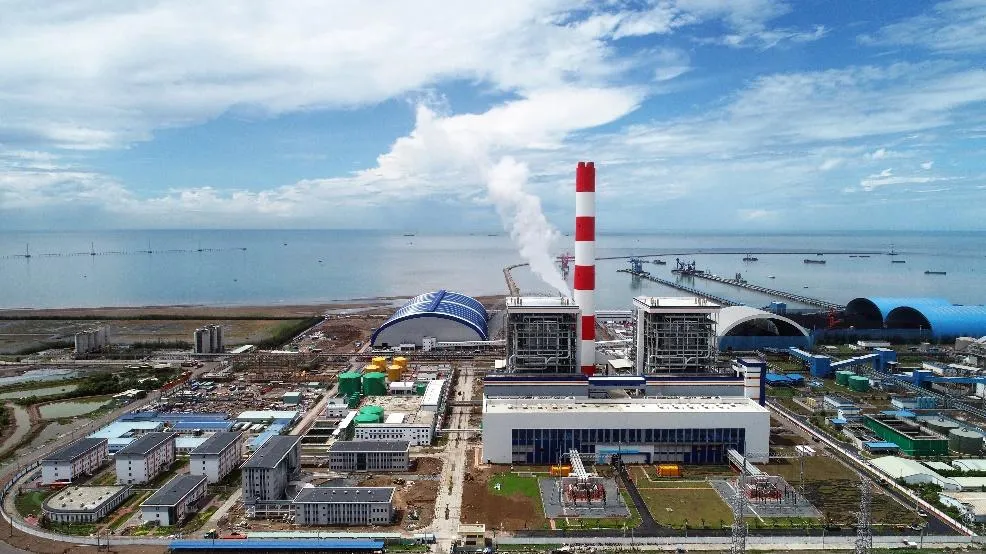
A ship unloader is a large rail-mounted machine that travels along the jetty, moving from hatch to hatch while a vessel is discharged. Everything it needs comes through one cable wound on a motorized reel: medium voltage power for the travel, hoist and conveyor drives, control signals, and the fiber link to the control room. As the machine travels away from the feed point, the reel pays cable out. As it travels back, the reel winds it in under tension.
Mechanically: the cable is bent onto the drum and straightened again on every travel, under tension, many times per vessel. Without anti-torsion reinforcement the cores work loose, twist and eventually break through the sheath.
Environmentally: the Duyen Hai coast is tropical and saline. The sheath sits in full sun, monsoon rain, salt air and coal dust, and lies on the jetty surface when it pays out.
Electrically and for data: one sheath carries 8.7/15 kV power, 20 control cores and 24 fibers. A fault in any of them stops the unloader, and with it the coal supply to the boilers.
A power plant can do without a lot of things for a day. Coal is not one of them.
Why the plant looked beyond Europe, and why it was not easy
The installed cable came from Tratos, a well-known Italian manufacturer. The buyer told us the problem plainly: a European replacement meant a long lead time. Looking for the same cable in China had not gone well, because very few Chinese factories make medium voltage reeling cable with an integrated fiber element. The buyer found TEBAOFLEX, reviewed photos and videos of reeling cables from orders we had already delivered, and asked us to support the tender.
The tender itself was clear: “The factory accepts equivalent offers, as long as they meet the specifications.” We told the buyer two things before any price was discussed:
1. Full bid support. Datasheets, cross-section drawings, construction details and process documents for the whole tender package.
2. A one-to-one build. We would build to the installed cable’s construction and parameters, so the plant gets the same diameter, electrical performance and service life, not a “similar” cable.
The diameter window was the real specification
The buyer then sent a revised technical document with one change that shaped the rest of the job:
| Size | Tender window (tolerance included) | Our design value |
|---|---|---|
| 3×35 + 3×35/3E + 20×2.5 + 24FO | 56–59 mm | 56.2 mm |
| 3×70 + 3×35/3E + 20×2.5 + 24FO | 62–65 mm | 63.7 mm |
When we said we would control the diameter tightly, the buyer answered: “In a tender, we have to follow the specification as closely as possible.” That is the right attitude, because on a reeling cable the diameter matters more than it looks.
The reel is already built around the old cable. The drum barrel, flange width, spiral guide and level-wind are all sized for a particular diameter. Too thick, and the drum holds fewer metres, the unloader loses travel and the cable can rub the flanges. Too thin, and it winds loosely, the layers shift and the reel’s tension control no longer matches the cable.
Bend radius scales with diameter. Minimum bend radius is a multiple of D, so every extra millimetre of diameter adds 12 mm to the dynamic bend radius the reel has to allow.
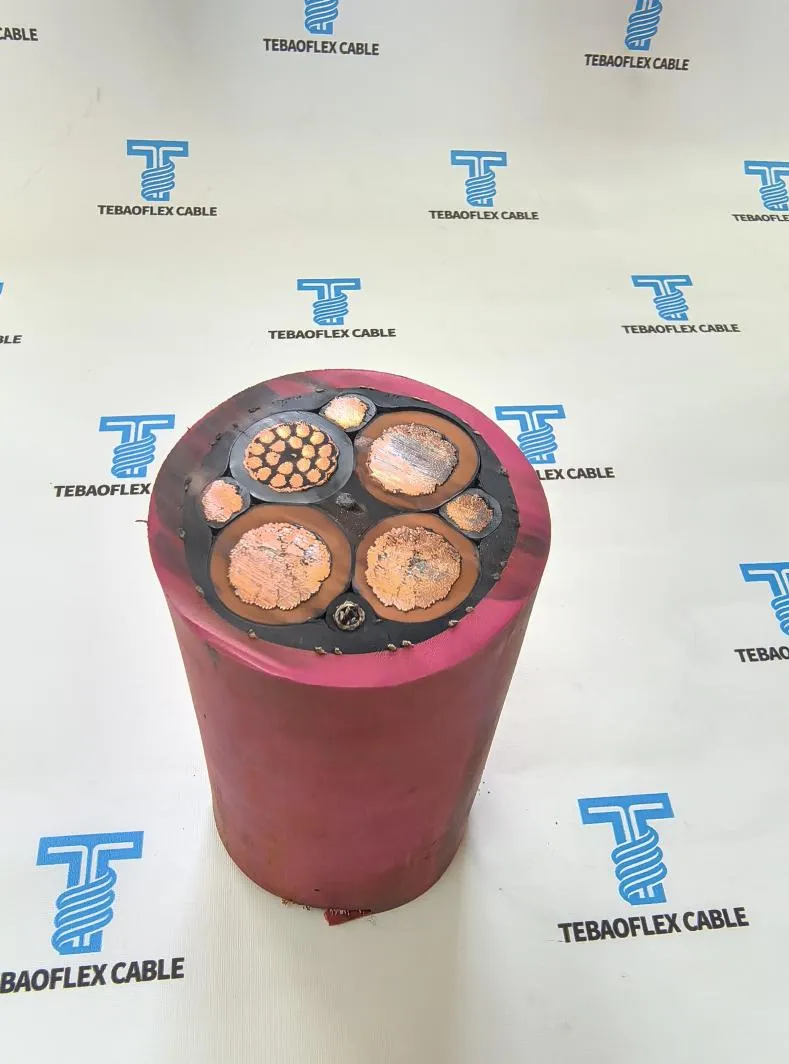
A 3 mm window is tight for this construction. Around 40 elements sit under one sheath: three screened power cores, earth cores, 20 control cores, a fiber unit, an inner sheath, an aramid braid and an outer sheath. Each extrusion adds its own tolerance, and the final diameter is the sum of all of them.
“Three earth cores will be more expensive, won’t they?”
This was the buyer’s sharpest technical question, and it deserves a precise answer because the notation confuses people. In a reeling cable designation, the earth conductor is written as total cross-section / number of cores:
- 3×35/3 means three earth cores sharing 35 mm² in total, so each core is about 11.7 mm².
- 2×35/2 means two earth cores sharing 35 mm² in total, so each core is 17.5 mm².
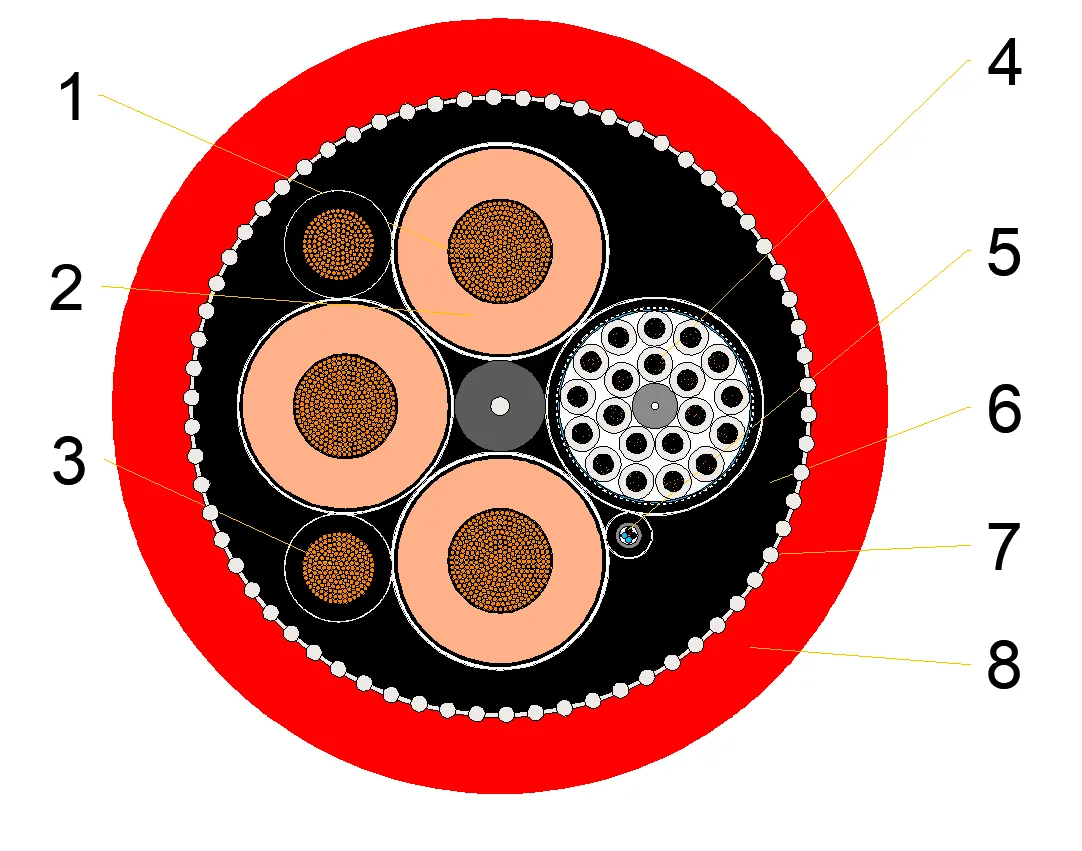
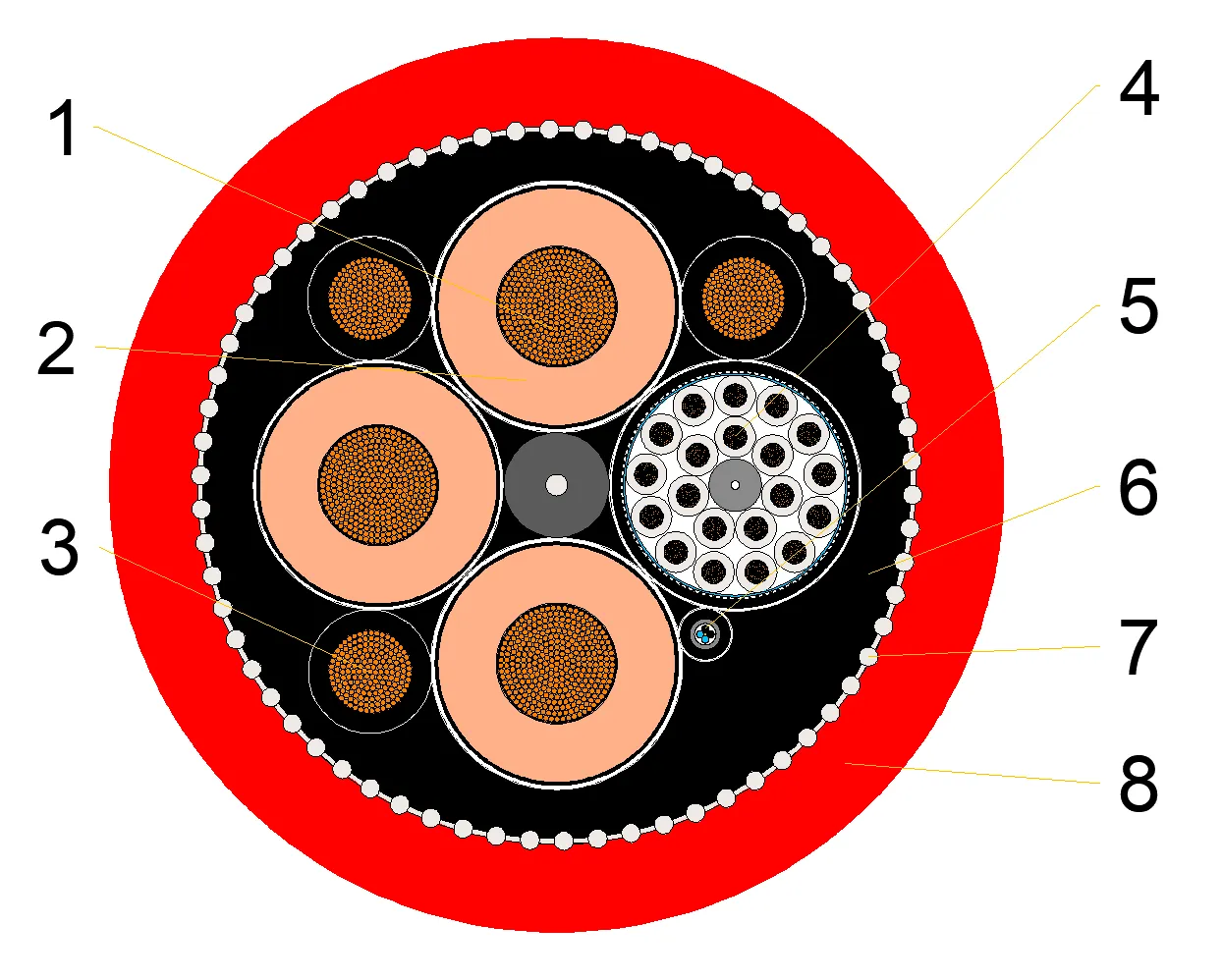
The copper is the same, and so is the earth-fault current capacity. Only the split differs. Three smaller earth cores nest symmetrically in the gaps between the three power cores, which keeps the cable round and the diameter under control. Two larger cores suit the layout of the bigger 3×70 cable. The price did not change, and each size was built with the layout that holds its diameter best:
| Delivered size | Earth conductor | Per core | Total |
|---|---|---|---|
| 3×35 + 3×35/3 + (20×2.5)C + 24FO | 3 cores | ≈ 11.7 mm² | 35 mm² |
| 3×70 + 2×35/2 + (20×2.5)C + 24FO | 2 cores | 17.5 mm² | 35 mm² |
Why both sizes carry 24 fibers
The buyer asked us to revise the quotation and datasheet so both cables showed 24 fibers; earlier drafts had mentioned other counts. Our answer was simple: we build both at 24FO, and the price is the same.
Twenty-four single-mode fibers are the usual choice on a ship unloader. They leave room for the PLC network, CCTV, anti-collision and positioning systems, plus spares. A spare fiber in the cable costs almost nothing. A missing one means pulling a new cable. The standard version of this construction is our medium voltage reeling cable with fiber optic (24FO).
| Fiber optic element parameter | Value |
|---|---|
| Fiber type | Single-mode, 9/125 µm |
| Fiber count | 24 |
| Attenuation at 1310 nm | < 0.4 dB/km |
| Attenuation at 1550 nm | < 0.3 dB/km |
| Numerical aperture | 0.14 ± 0.02 |
| Chromatic dispersion at 1310 nm | < 3.5 ps/(nm·km) |
| Chromatic dispersion at 1550 nm | < 18 ps/(nm·km) |
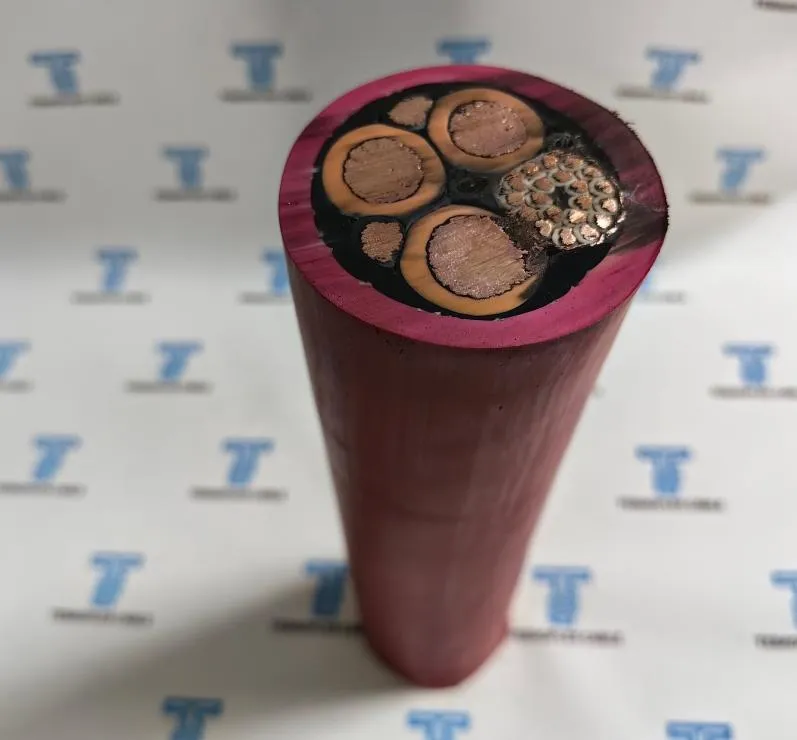
What is the minimum bending radius?
The buyer asked this for both cables. Our answer: 8 × D static and 12 × D dynamic, with an operating temperature range of −40 °C to +90 °C. Using the measured diameters, those multiples become numbers a reel designer can check:
| Size | Measured D | Static bend radius (8 × D) | Dynamic bend radius (12 × D) |
|---|---|---|---|
| 3×35 + 3×35/3 + (20×2.5)C + 24FO | 57.94 mm | ≈ 464 mm | ≈ 695 mm |
| 3×70 + 2×35/2 + (20×2.5)C + 24FO | 63.94 mm | ≈ 512 mm | ≈ 767 mm |
The dynamic figure is the one that matters on the unloader: the drum barrel, and any guide or roller the cable passes over while moving, should not bend it tighter than that. The fiber element is why we do not relax the rule. Copper forgives a tight bend far more readily than glass does.
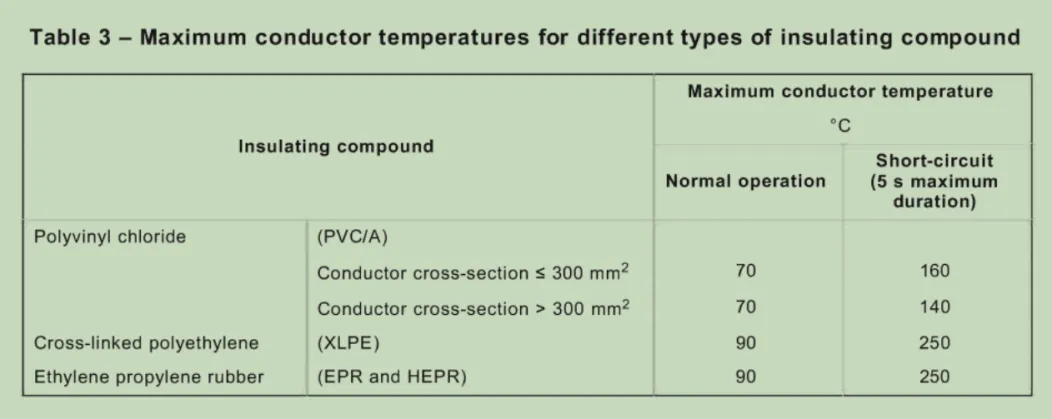
The +90 °C upper limit comes from the EPR insulation, whose maximum conductor temperature is 90 °C in normal operation and 250 °C during a short circuit of up to 5 s.
Can the supplier issue C/O Form E for Vietnam?
This question came early, and it matters for the price. Vietnam grants preferential import duty on Chinese goods under the ASEAN–China Free Trade Agreement, but only with a Certificate of Origin Form E. Without it the landed cost rises, and an equivalent offer can lose its price advantage at customs.
1. Every order we ship to Vietnam needs Form E, so issuing it is routine for us.
2. The original Form E is issued by the Chinese authorities once the goods are loaded and the vessel has left the Chinese port.
3. The originals then go to the buyer to clear the goods with the duty preference.
Construction, layer by layer
Both sizes use the same eight-part construction. Only the power conductor size and the earth-core layout change.
| # | Element | Material | Function on a ship unloader reel |
|---|---|---|---|
| 1 | Power conductors (3×35 or 3×70) | Electrolytic tinned copper, Class 5 finely stranded, anti-bending lay; semi-conductive tape conductor screen | High flex life on the drum; tinning resists corrosion in salt air; the screen keeps the electric field even |
| 2 | Power core insulation | EPR, type 3GI3; semi-conductive tape insulation screen | Holds 8.7/15 kV while staying flexible; rated 90 °C |
| 3 | Earth conductors (3×35/3 or 2×35/2) | Tinned copper, Class 5, EPR 3GI3 insulated | 35 mm² total earth, laid in the gaps between the power cores for a round cable |
| 4 | Control cores (20×2.5) | Tinned copper, Class 5, EPR 3GI3 insulated | Unloader control and interlock signals in the same cable |
| 5 | Fiber optic element | 24 single-mode fibers, 9/125 µm | PLC, CCTV and positioning data to the control room |
| 6 | Inner sheath | Rubber, type 5GM3, pressure-extruded | Fills the gaps and fixes the core positions so they cannot migrate under reeling |
| 7 | Anti-torsion braid | Aramid (Kevlar) fiber mesh | Carries tensile load and resists twisting during pay-out and wind-in |
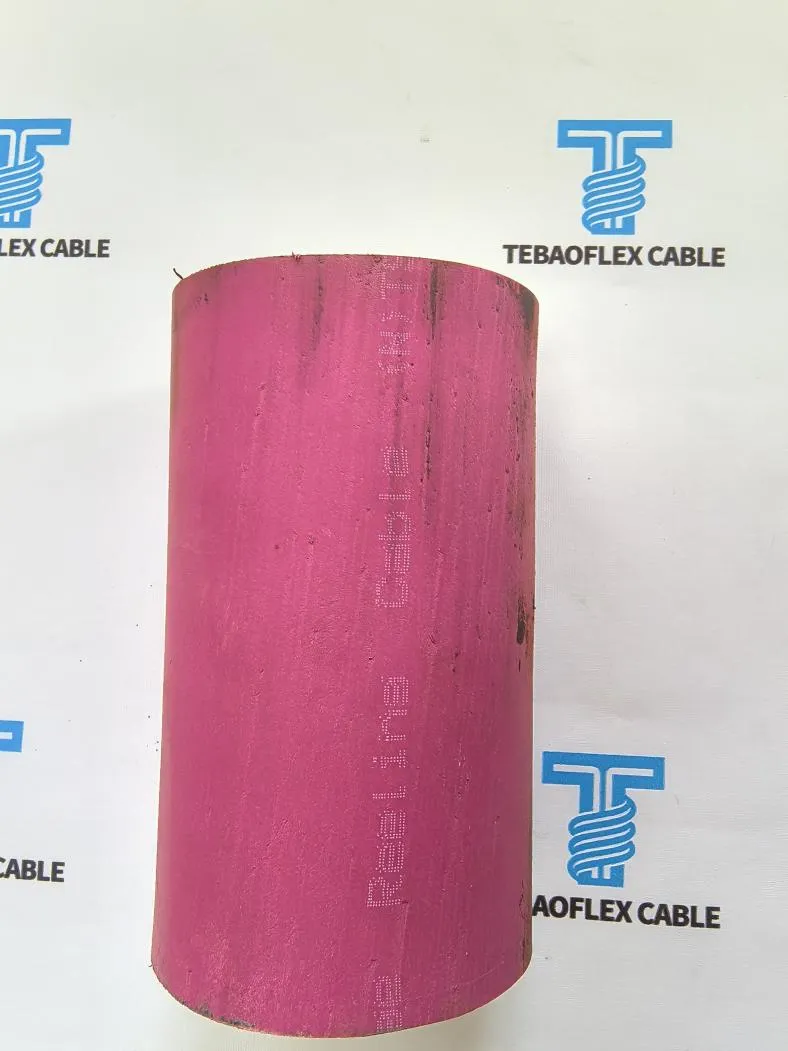
| 8 | Outer sheath | Rubber, type 5GM5, red | Resists abrasion, tearing, water, UV, weather, cold and corrosion |
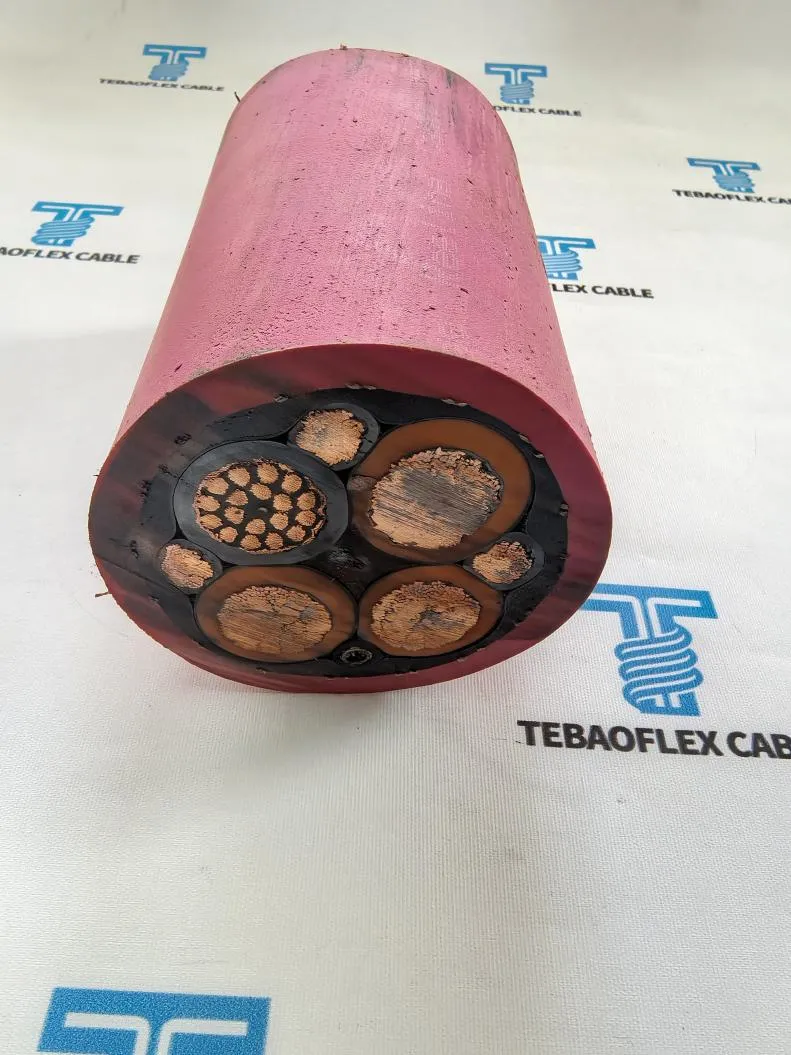
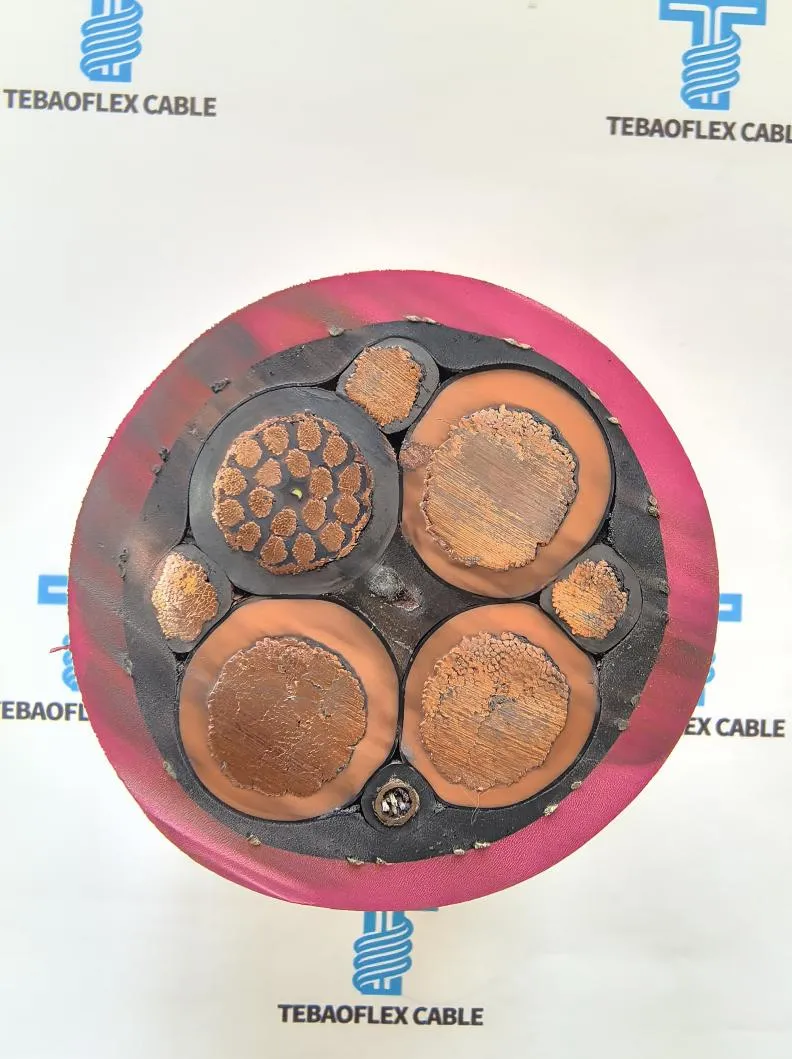
Two of these layers do most of the work on a reeling duty:
The pressure-extruded inner sheath (layer 6). If the cores are only loosely wrapped, they move against each other on every wind, and over months that becomes a twisted core bundle. Extruding the inner sheath under pressure locks each power, earth, control and fiber element in position.
The aramid braid (layer 7). A motorized reel pulls on the cable in both directions. The braid takes that tension and resists torsion, so the copper and the fibers do not have to.
Measured, not declared: the diameter results
This is the number the tender turned on, so we measured it on the finished cable rather than quoting the design value.
| Size | Tender window | Design value | Measured on finished cable | Margin to upper limit |
|---|---|---|---|---|
| 3×35 + 3×35/3 + (20×2.5)C + 24FO | 56–59 mm | 56.2 mm | 57.94 mm | 1.06 mm |
| 3×70 + 2×35/2 + (20×2.5)C + 24FO | 62–65 mm | 63.7 mm | 63.94 mm | 1.06 mm |
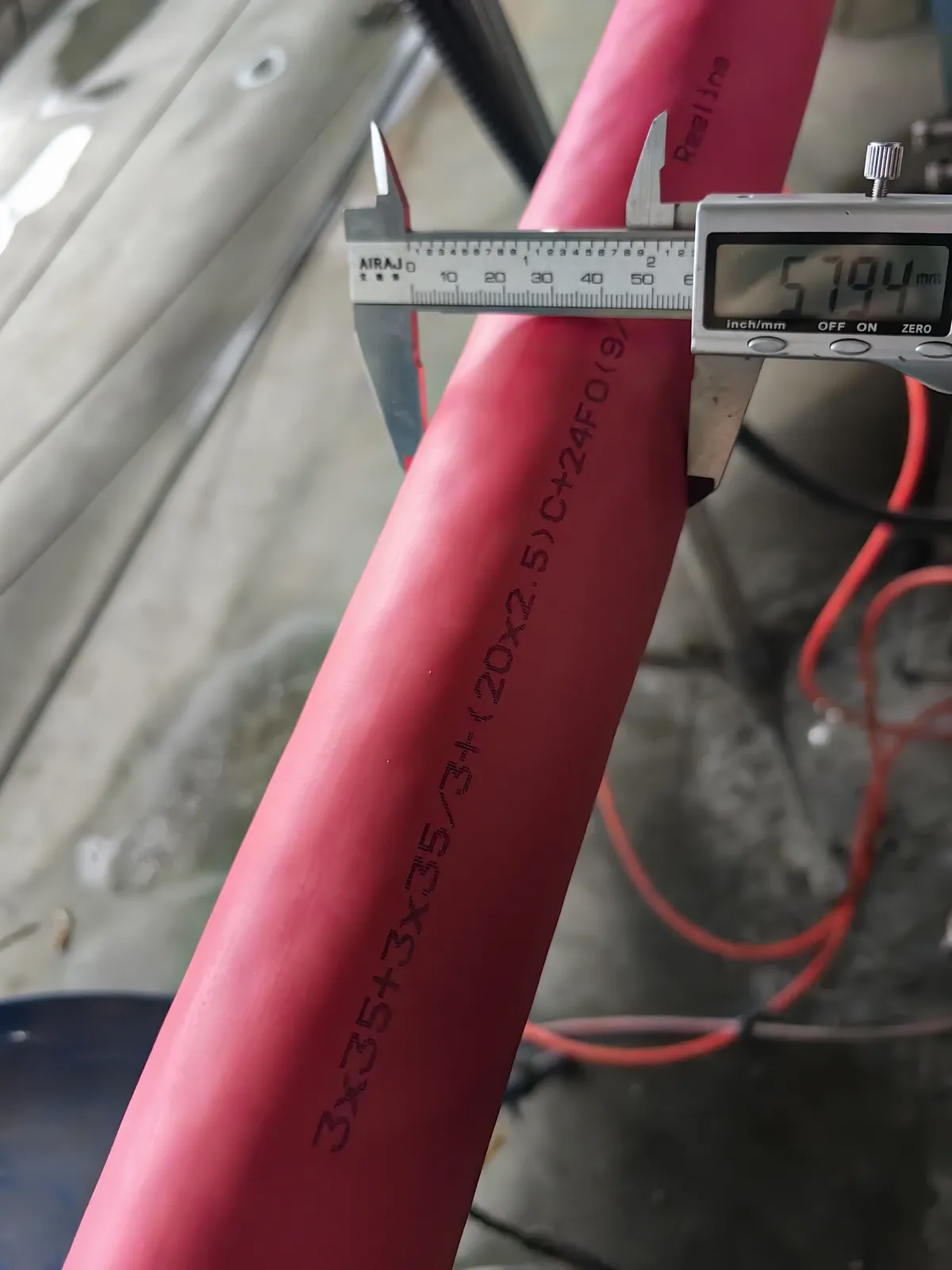
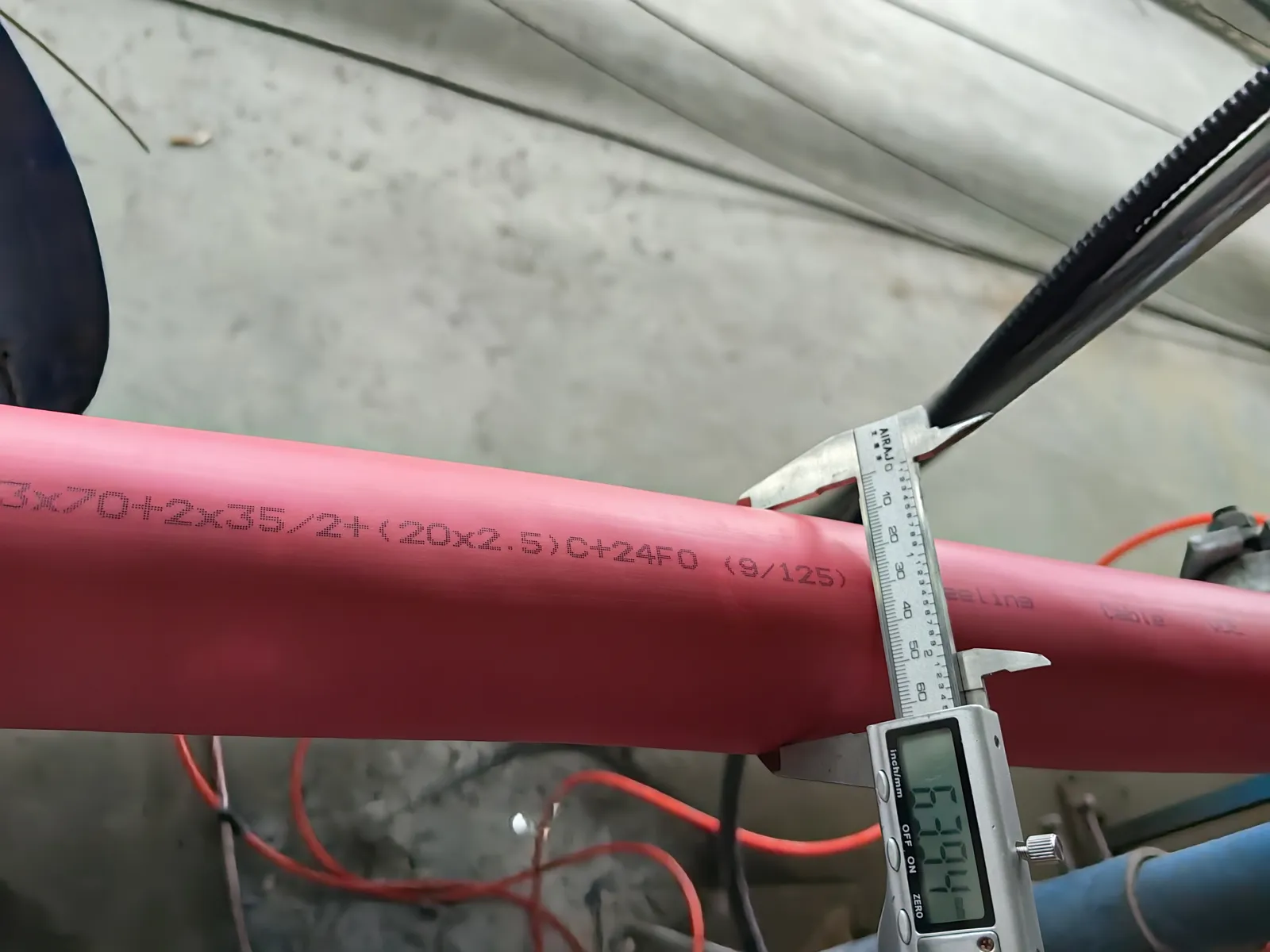
Both cables finished near the middle of their windows, with about 1 mm to spare at the top. The 3×35 cable came out above its design value but well inside the tender limit. The tender window, not our design value, is the acceptance figure, and that is the figure we control in production.
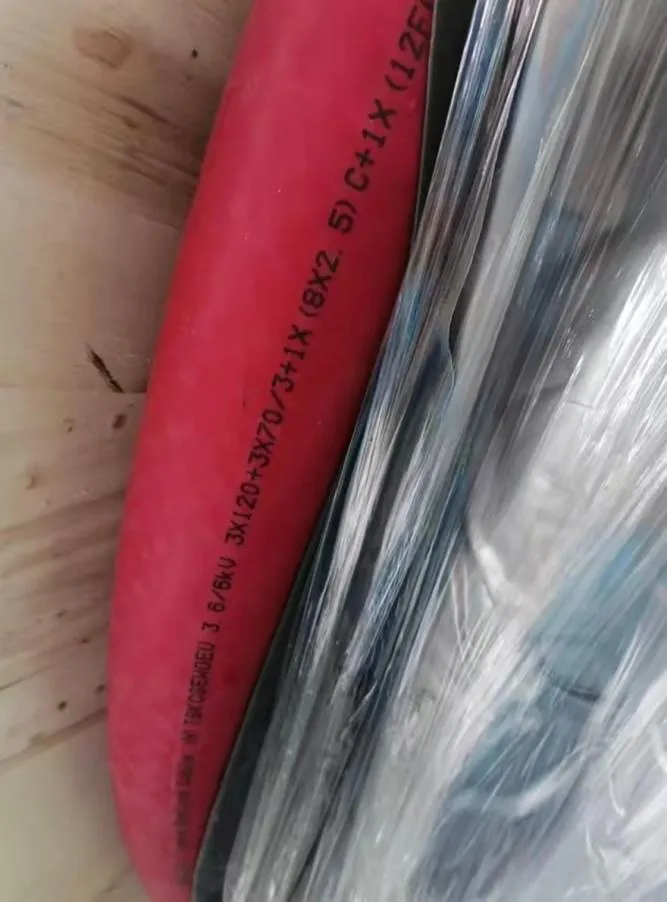
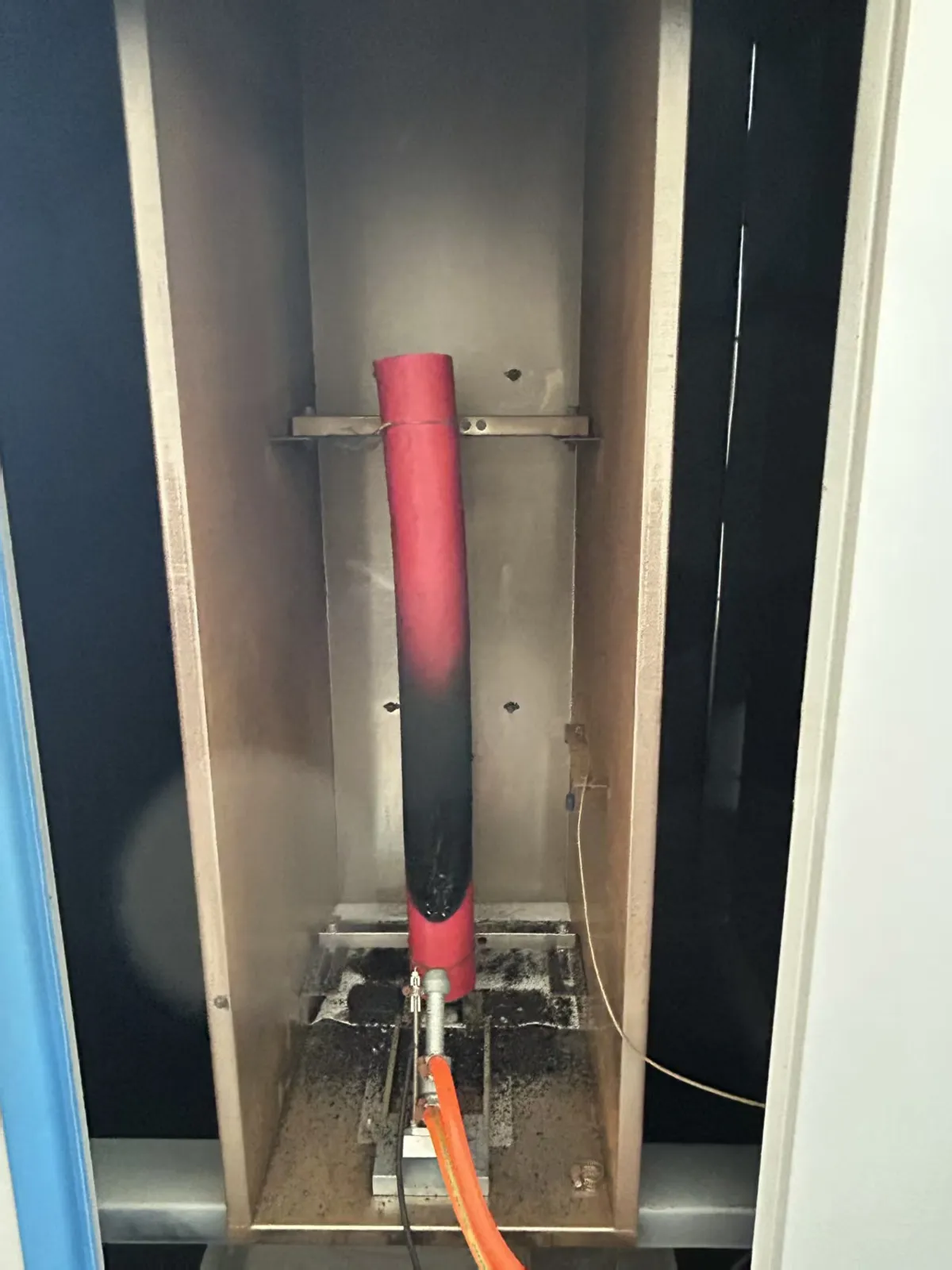
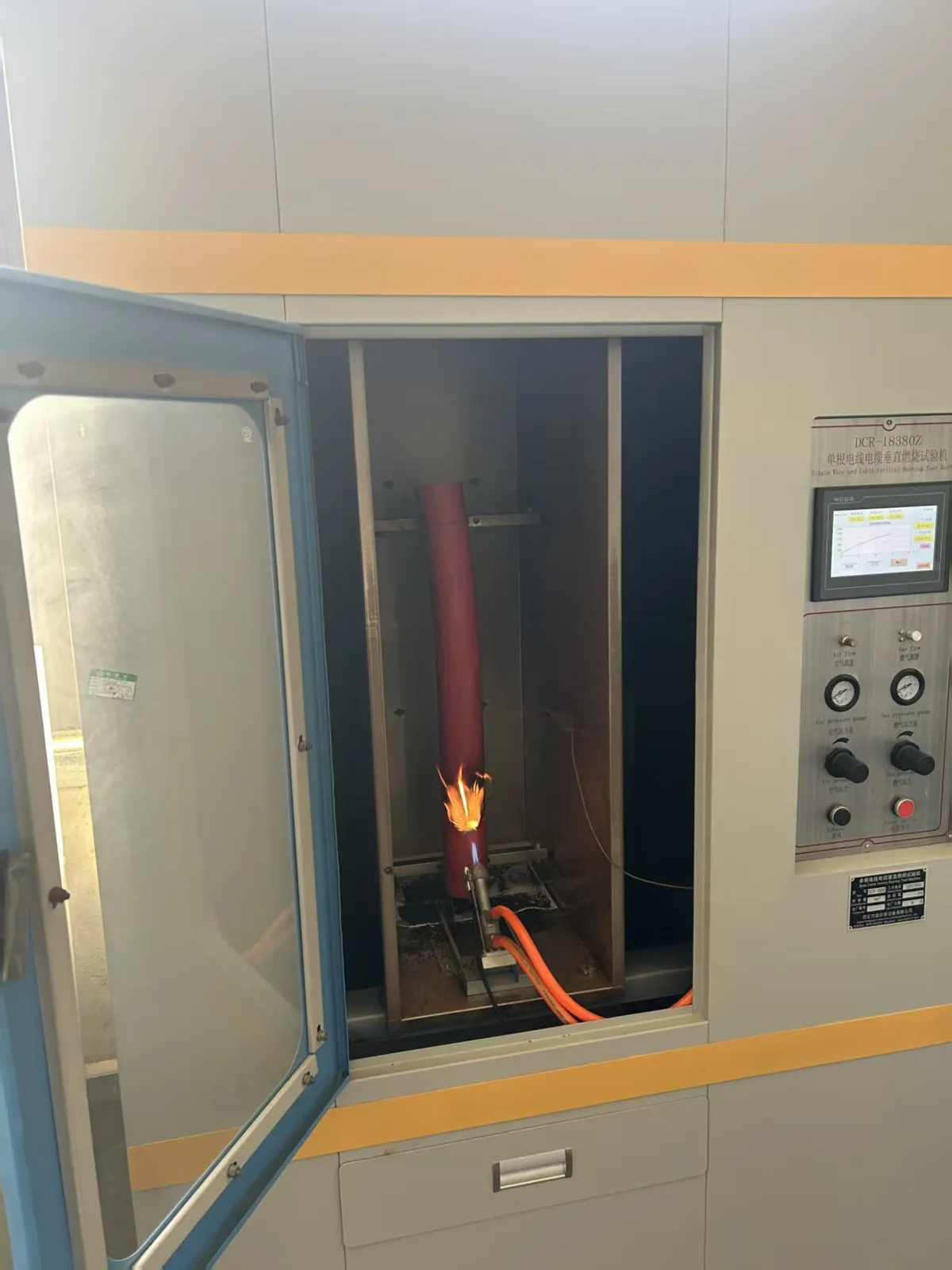
Flame test and factory checks
Before shipment the cable went through the checks documented on this page: a flame test on a sample length, and diameter measurement on the finished cable against the tender window.
Reeling, packing and container loading
A reeling cable can be ruined before it ever reaches the reel: a kink during take-up, a drum that is too small, or a forklift fork through the lagging. The finished cable was wound onto wooden shipping drums sized for its bend radius, then loaded by forklift into containers for the voyage to Vietnam.
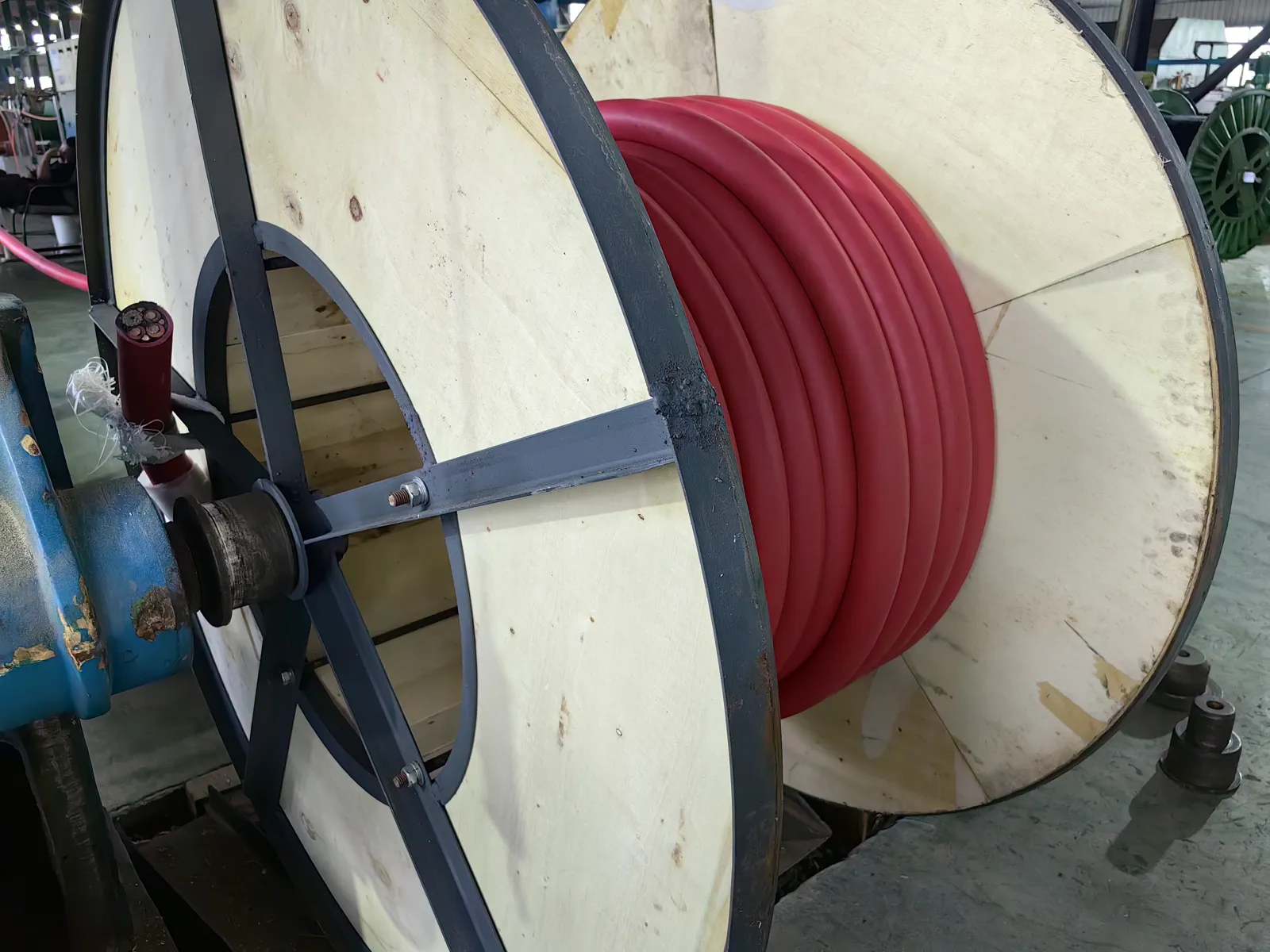
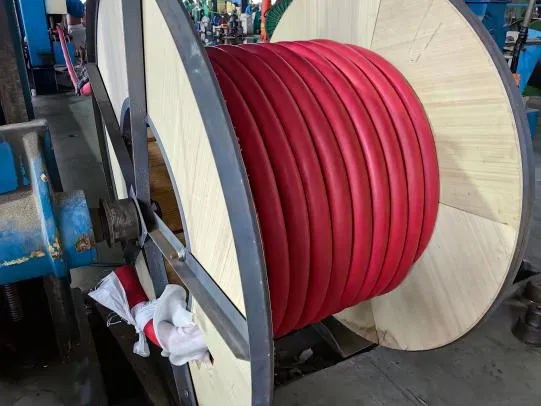
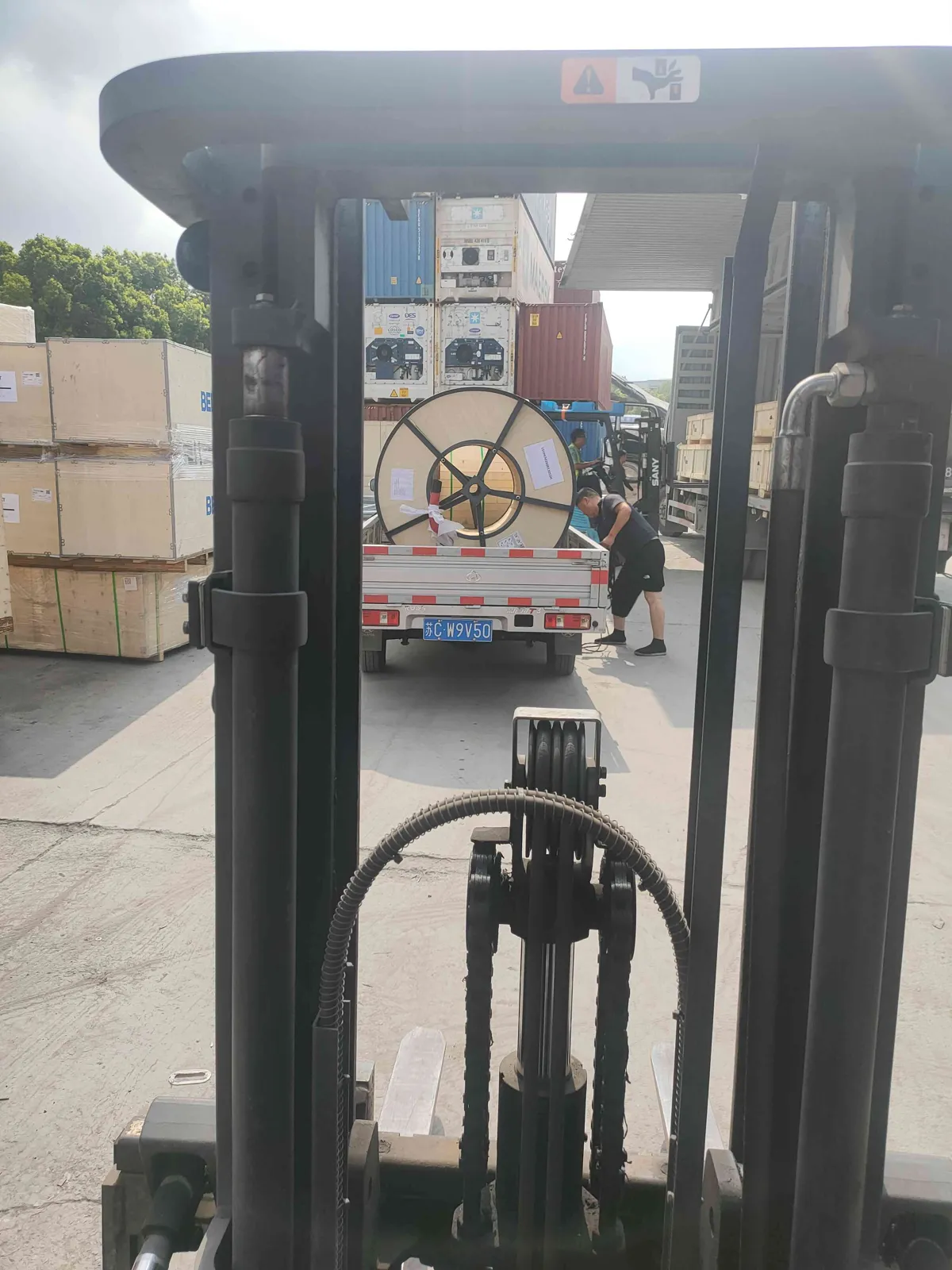
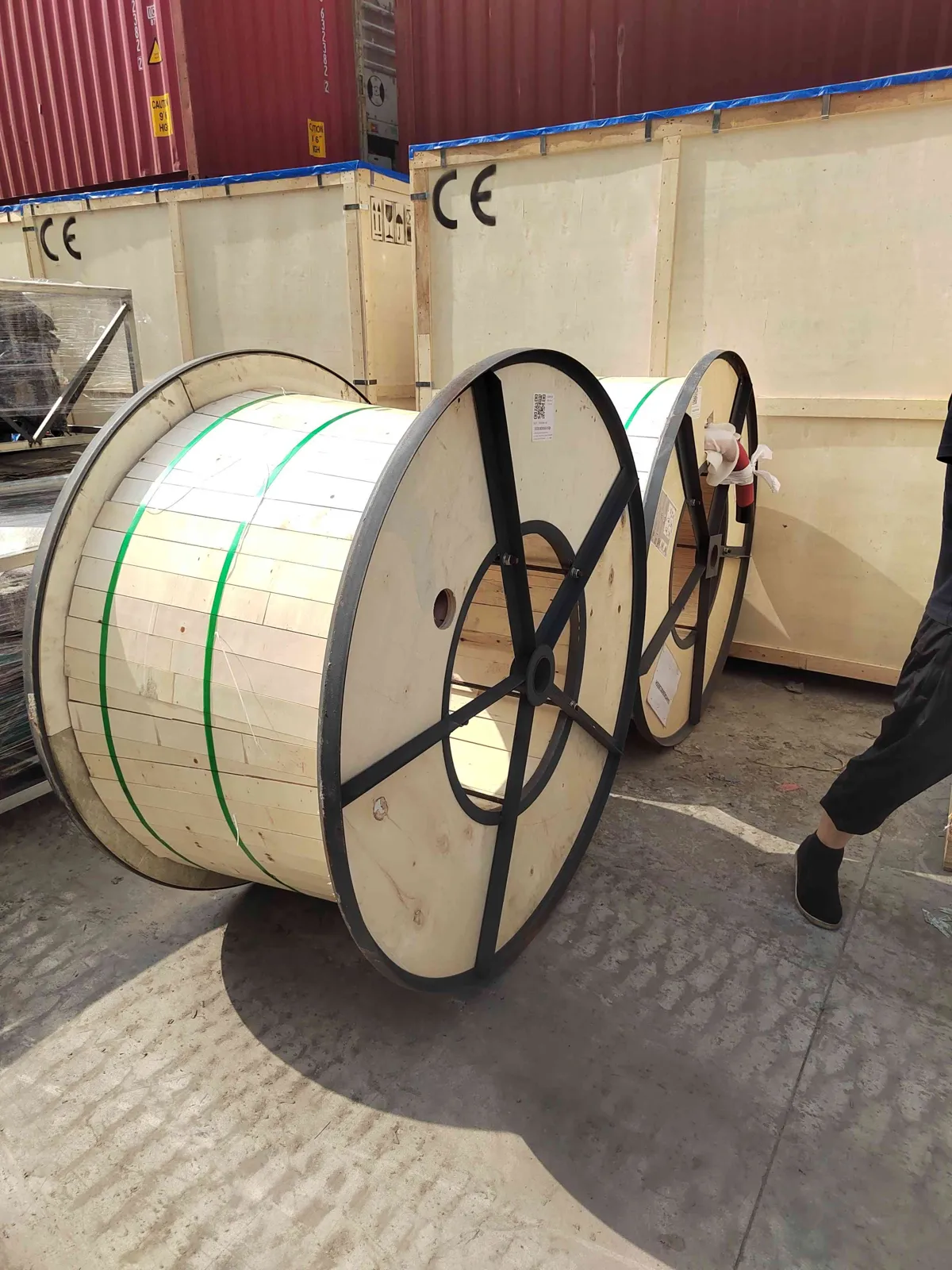
Near the end the buyer asked two practical questions: how the finished cable is brought to the exact diameter, and how it is packed and loaded. The photos above are our answer. We would rather show the drum than describe it.
Why the delivered price worked
The buyer was open about how the end user buys: “My customer’s approach is to meet with each company individually and negotiate for a lower price. In the end, they will purchase from the company that offers the lowest price.” That is a normal tender. Here is what we told them, and why it held up:
1. The price was already our best. We did not start high to leave room to negotiate. In our experience, European quotations for this construction, from brands such as Tratos or Prysmian, run two to three times ours.
2. The real competition is European and American brands. In China very few factories can build medium voltage reeling cable with an integrated fiber element, and cable companies that receive this inquiry often buy the cable from specialist factories like ours.
3. TEBAOFLEX is TOP 3 in China for this cable. The top two mainly supply China’s state-owned mining projects. For an export tender that leaves the end user a practical choice: a European brand at a much higher budget, or Chinese manufacturing from a factory that specializes in this cable.
4. Specialization keeps cost down. Our factory is built around mining and reeling cables. Rubber mixing, extrusion, braiding, cabling and packing run on our own 12 production lines, so nothing is bought in at a margin.
5. Quality could be checked before committing. We offered the buyer a free sample to verify the construction before placing the order.
Our factory videos are public on YouTube, so the buyer and the end user could check the production lines and finished reeling cables for themselves. Each video opens on YouTube in a new tab:
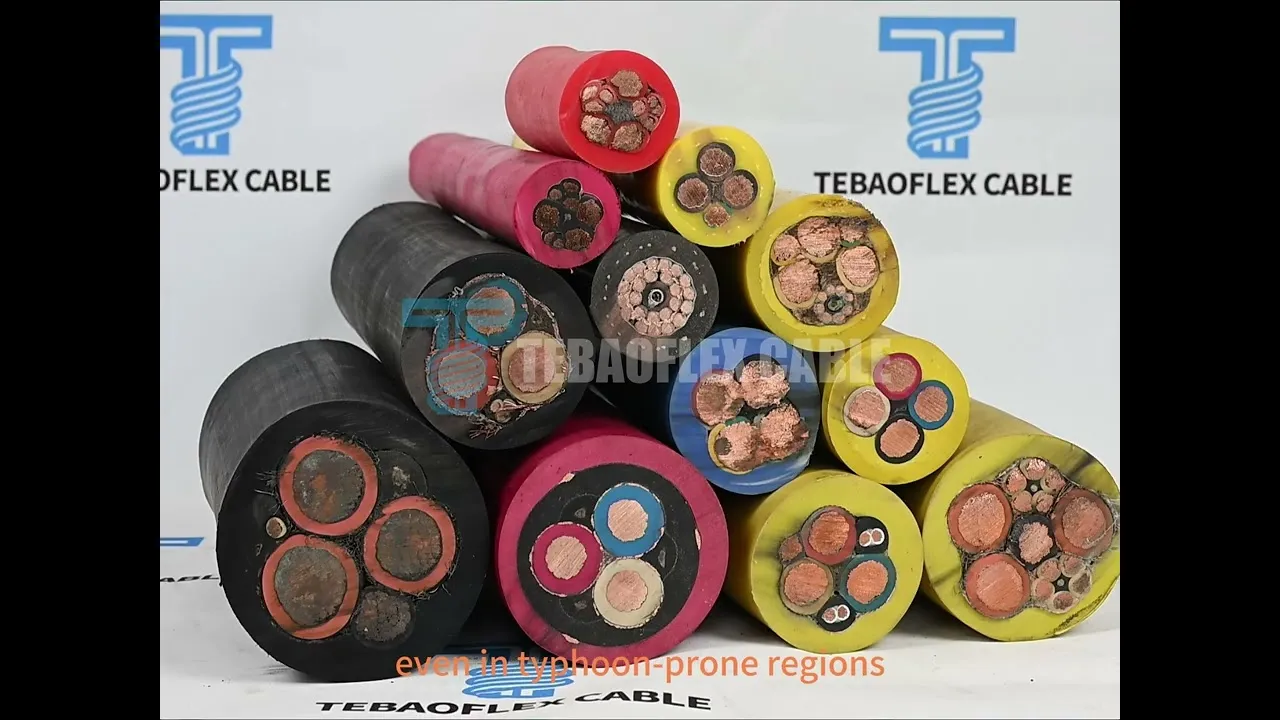 TEBAOFLEX CABLE Port applicationPort application: TEBAOFLEX reeling cables on port equipment · Watch on YouTube ↗
 TEBAOFLEX CABLE Reeling applicationReeling application: TEBAOFLEX cable on a motorized drum · Watch on YouTube ↗
Where this construction is used besides ship unloaders
The same idea, medium voltage power, control and fiber in one reeling cable, applies wherever a large machine travels on rails and draws power from a motorized reel.
Coal handling at power plants. Ship unloaders, stacker-reclaimers and bucket-wheel machines in the coal yard.
Ports and bulk terminals. Ship loaders and ship-to-shore container cranes, where fiber is now expected for remote operation and CCTV.
Steel mills and cement plants. Stacker-reclaimers and scraper reclaimers on raw material stockyards.
Open-pit mining. Bucket-wheel excavators, spreaders and mobile crushers fed through reeling drums.
What we review for a similar MV reeling cable replacement
- The installed cable’s type code and sheath print (a photo is enough)
- Rated voltage (U0/U)
- Power, earth and control core sizes
- Fiber count and fiber type
- Allowed overall diameter window
- Reel type: monospiral or level-wind
- Drum barrel diameter and flange width
- Travel length and cable length per reel
- Reeling speed and acceleration, if known
- Guide rollers or cable funnel on the route
- Ambient range and site conditions
- Tender, equivalence and certificate of origin requirements
The two that change a quotation most are the diameter window and the fiber count. Everything else usually has a straightforward answer.
Related constructions
- 8.7/15 kV medium voltage reeling cable with integrated 24FO fiber optics
- NTSCGEWOEU / (N)TSCGEWÖU MV crane reeling cable, 3.6/6 to 12/20 kV
- R-(N)TSCGEWÖU reeling cable for cranes and mining
- (N)TSKCGEWÖU medium voltage reeling cable
- Reeling cable constructions for drum duty
- Crane cable manufacturer: reeling, festoon and port cables
- Reeling cable vs trailing cable: how to choose
- Port and festoon cables
Questions on this application
What cable type is used on a ship unloader reel at a coal-fired power plant?
Usually a medium voltage rubber reeling cable of the (N)TSCGEWÖU family: EPR-insulated power cores, earth and control cores, and often a fiber optic element, all under a heavy-duty rubber sheath with anti-torsion reinforcement. At Duyen Hai 2 the ship unloader runs on 8.7/15 kV cable with 20 control cores and 24 single-mode fibers.
Is a cable with 3×35/3 earth cores more expensive than one with 2×35/2?
No. Both notations mean 35 mm² of earth conductor in total. 3×35/3 splits it into three cores of about 11.7 mm²; 2×35/2 splits it into two cores of 17.5 mm². The copper is the same. The layout is chosen for roundness and diameter control, not cost.
What is the minimum bending radius of an 8.7/15 kV reeling cable?
For this construction, 8 × D static and 12 × D dynamic. On the 57.94 mm cable that is about 464 mm static and 695 mm dynamic. On the 63.94 mm cable it is about 512 mm static and 767 mm dynamic. The dynamic value is what the drum and guides must respect.
Why do ship unloader reeling cables use 24 fibers?
Twenty-four single-mode fibers cover PLC communication, CCTV, positioning and anti-collision systems, with spares. Adding spare fibers at manufacture costs very little compared with replacing a reeling cable later to gain capacity.
Can a Chinese-made reeling cable replace a Tratos or Prysmian cable in a tender?
Yes, when the tender accepts equivalents and the cable is built to the same construction and parameters. That is what happened here: we built both sizes to the tender drawing, controlled the diameter to the tender window, and supported the bid documentation.
How tightly can the overall diameter of a reeling cable be controlled?
For this project the tender allowed a 3 mm window including tolerance. The finished cables measured 57.94 mm (window 56–59 mm) and 63.94 mm (window 62–65 mm), both about 1 mm below the upper limit.
Can you supply C/O Form E for cable shipped to Vietnam?
Yes. Every order we ship to Vietnam goes with Form E, which gives preferential import duty under the ASEAN–China Free Trade Agreement. The original is issued by the Chinese authorities after the vessel has left the Chinese port and is then sent to the buyer.
Can we get a sample before ordering?
Yes. We offered a free sample on this project so the buyer could check the construction before committing; samples are free and you cover the freight. For reeling cables we can also send cross-section photos, sheath-print photos and diameter measurements of the actual cable.