What changes price
Conductor alloy and plating, insulation family, braid or shield, voltage, wall thickness, testing, marking, length and packing.

Heat-resistant wire and cable selection
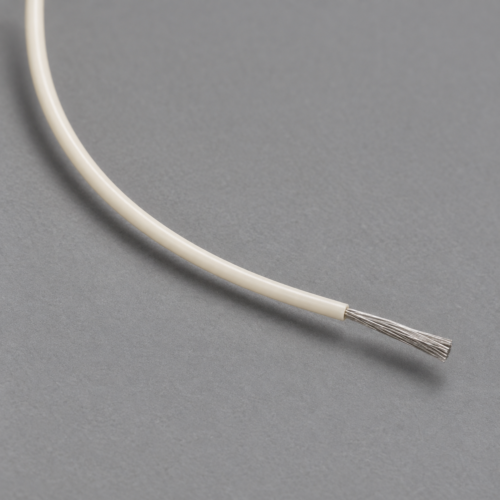
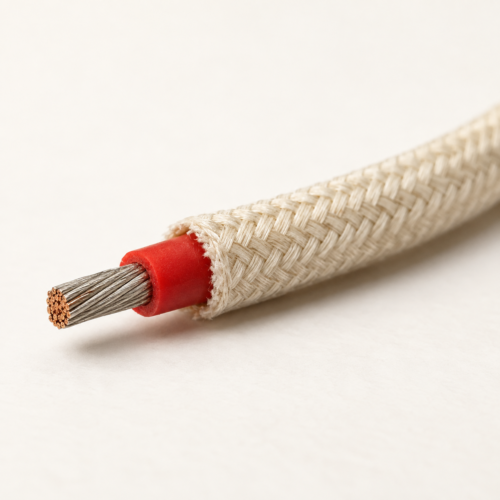
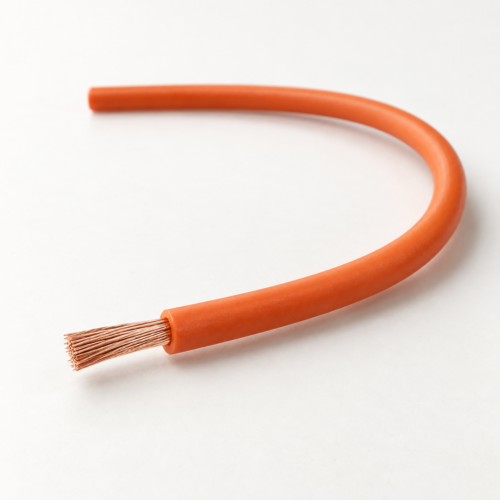
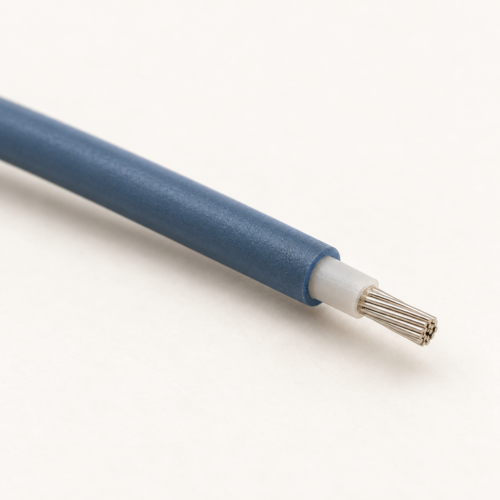
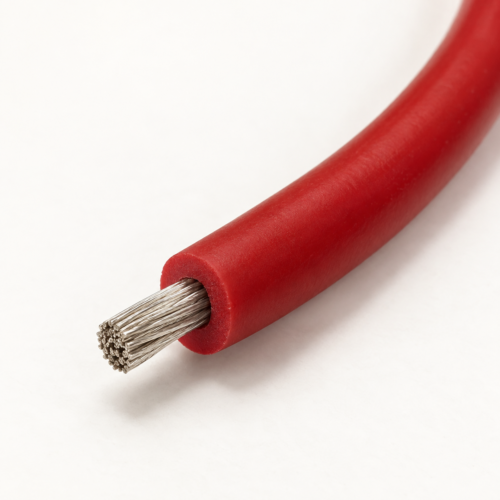
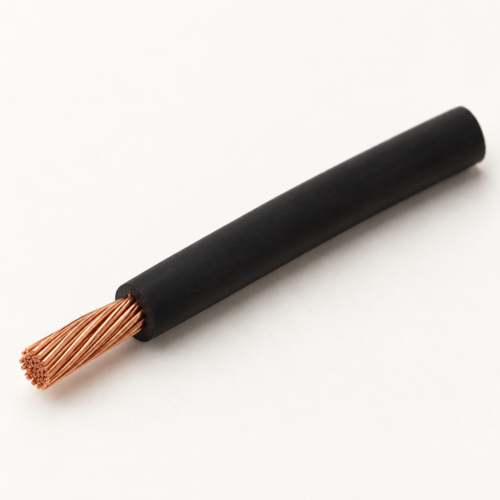
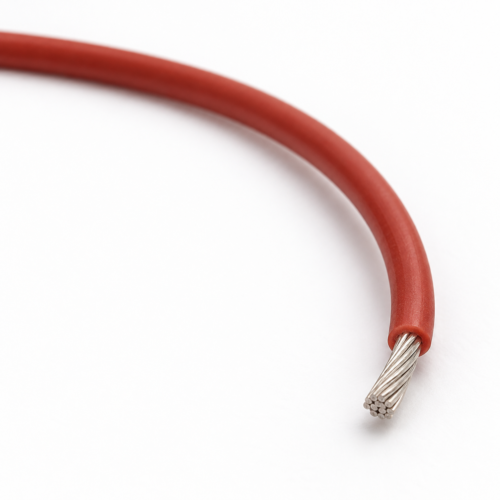
TEBAOFLEX manufactures high temperature cable and high temp wire for motors, ovens, ignition, lighting and industrial equipment. Select by continuous and peak temperature, then verify voltage, conductor plating, flexing, chemical exposure, shielding and installation method. The range includes silicone and SiHF cable, PTFE, FEP and PFA hook-up wire, self-regulating heat trace for roof, pipe and tank duties, glass- and aramid-braided leads, high-voltage ignition wire, TGGT constructions to 250°C and MGT mica-glass wire for higher-temperature duties.
Choose the exact UL style by insulation, temperature and voltage. The named product page gives the conductor sizes, wall and finished dimensions for its construction; styles in the same material family are not automatic substitutes.
| UL style | Construction and rating | Confirm before RFQ |
|---|---|---|
| PVC, FEP and PFA | ||
| UL 1056 | PVC · 105°C · 600 V | Internal refrigeration and appliance wiring; check the PVC wall and route. |
| UL 1813 | FEP · 200°C · 3 kV | High-voltage internal equipment lead; confirm spacing and termination. |
| UL 1933 | PFA · 250°C · 300 V | Thin-wall, small-gauge lead; confirm the reference construction. |
| UL 10485 | PFA · 250°C · 600 V | Thin PFA wire for compact, small-gauge connections. |
| UL 10503 | PFA · 250°C · 600 V | Compare conductor size and finished diameter with UL 10485. |
| Silicone and glass-covered silicone | ||
| UL 3232 | Silicone, optional nylon · 105°C · 300 V | Specify whether the optional outer covering is required. |
| UL 3123 | Silicone · 150°C · 600 V | Internal hook-up wire; check bend space and AWG. |
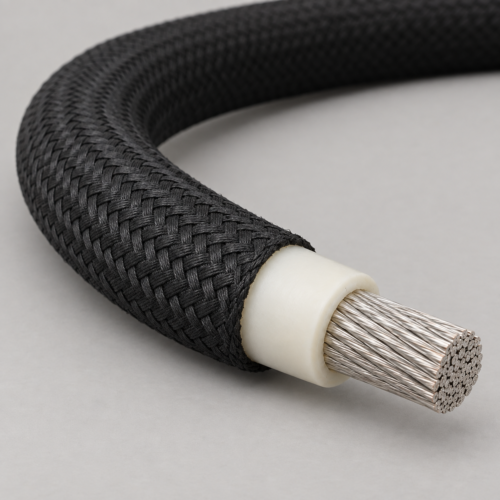
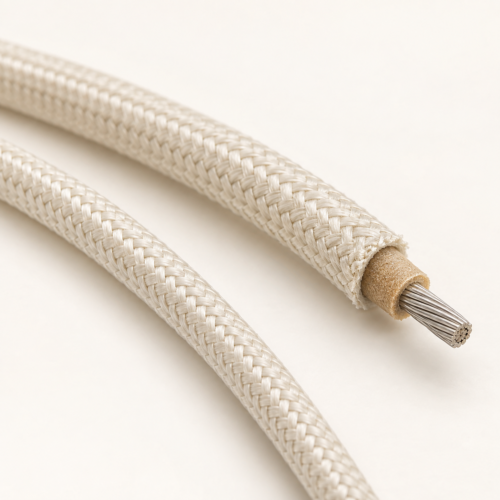
| UL 3074 | Silicone + fiberglass braid · 200°C · 600 V | Covered 12 AWG reference construction; check the finished diameter. |
| UL 3644 | Silicone · 150/200°C options · 1 kV | Uncovered appliance wire; select the required temperature grade. |
| UL 3645 | Silicone + fiberglass braid · 150/200°C options · 1 kV | Covered appliance wire; allow for the extra braid in the entry. |
| Ignition and motor leads | ||
| UL 3257 | Silicone ignition · 250°C · 10 kV AC / 25 kV DC | Confirm the waveform, pulse duty and terminal spacing. |
| UL 3580 | Silicone motor lead · 150°C · 1 kV | Check motor exit temperature, bend allowance and connection. |
| Mica-glass | ||
| UL 5334 / UL 5335 | Mica-glass · 450°C · 300/600 V | Choose UL 5334 for 300 V or UL 5335 for 600 V. |
| UL 5359 | Mica-glass · 200/450°C options · 600 V | Choose the construction temperature grade before sizing. |
| UL 5390 | Mica-glass · 550°C · 300 V | Higher temperature does not increase the 300 V rating. |
Self-regulating heat trace is selected by the pipe, tank or roof duty, supply voltage, required heat output and the cable's energized and unpowered temperature limits. These heating cables serve a different purpose from the UL AWM equipment wires above. For an RFQ, include the surface, insulation, lowest ambient temperature, circuit length and any washdown or exposure requirement.
| Heating cable route | Rating / configuration | Select when |
|---|---|---|
| Roof and gutter self-regulating heating cable | 6 W/ft at 40°F; 120 V or 208–277 V | Roof edges, gutters or downspouts need freeze protection; confirm supply and circuit design. |
| Pipe and tank self-regulating heat trace cable | 230 V; 10–40 W/m | The route needs pipe or vessel heat maintenance; specify the output and exposure. |
| Fluoropolymer-jacket self-regulating heat trace cable | 230 V; 10–40 W/m | An outer fluoropolymer jacket is specified; confirm the actual chemical and washdown conditions. |
| High-temperature self-regulating heat trace cable | 230 V; 120°C series | The pipe or vessel exposure calls for a higher-temperature construction; verify energized duty against the datasheet. |
| Steam-cleanable self-regulating heat trace cable | 230 V; 110°C energized / 130°C unpowered exposure | Cleaning cycles expose the unpowered cable to steam; specify cycle temperature and duration. |
Compare these covered constructions by temperature, voltage, core count and the purpose of the outer braid. A single-conductor motor lead, a multicore cable and a mica-glass assembly are different ordering routes even where their temperature ratings overlap.
| Cable family | Rating | Selection detail |
|---|---|---|
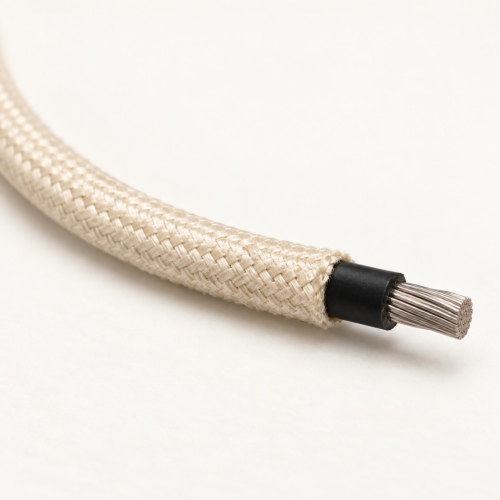
| SFF-2 / SRML fiberglass-braided silicone lead wire | 150°C; 600 V | Single-conductor silicone lead with a glass braid; confirm AWG and finished diameter. Compare UL 3074 glass-braided silicone wire for a distinct 200°C construction. |
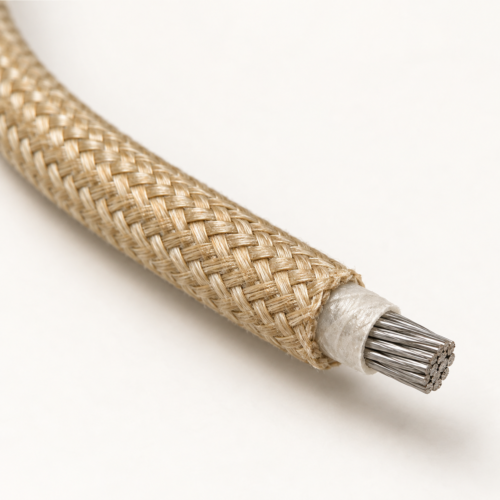
| UL 3410 aramid-braided motor lead wire | 200°C; 600 V | Large-section motor-lead route with an aramid covering; confirm conductor size and cable entry. |
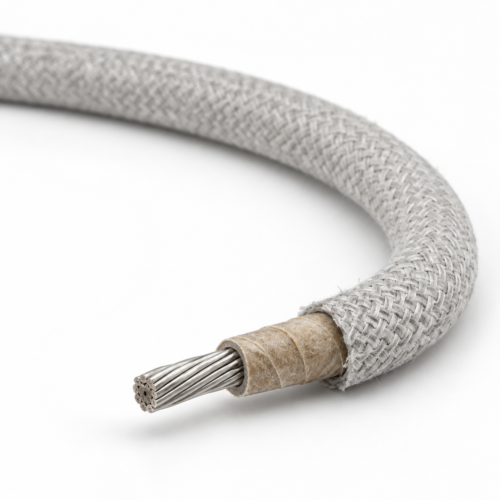
| Multicore mica-glass high-temperature cable | 450°C; 600 V | Multiple conductors for higher-temperature equipment wiring; specify cores and any moisture-barrier variant. Single-core MGT lead wire is a separate construction. |
| SRG-K multicore silicone-aramid braided cable | 200°C; 600 V | Multicore silicone cable with an outer aramid braid; confirm core count, termination and braid requirement. |
| Need | Shortlist | Confirm before RFQ |
|---|---|---|
| Flexible equipment wiring | Silicone or SiHF cable | Continuous heat, flexing, voltage, jacket and braid |
| Thin-wall hook-up | PTFE, FEP or PFA wire | Temperature method, voltage, wall, chemicals and conductor plating |
| Above 200°C | TGGT or MGT family | Peak exposure, plating, abrasion, termination and flexibility |
| High-voltage ignition | Silicone, PFA or mica-glass ignition wire | AC/DC voltage, pulse duty, heat, creepage and termination |
Use the high-temperature insulation rating guide when comparing UL, EN and IEC datasheets. Exact MGT, TGGT and UL AWM style intent belongs on the corresponding product page.
Conductor alloy and plating, insulation family, braid or shield, voltage, wall thickness, testing, marking, length and packing.
Continuous and peak temperature, duration, voltage, conductor size, cores, material, movement, chemicals, shielding, application, standard, length and quantity.
Use the official IEC 60216-1:2025 record to confirm the scope of thermal-endurance testing. A material thermal index is not automatically the allowed temperature of a finished cable installation.